68% of organizations reported fraud attempts over the past year, with 62% of businesses citing generative AI as a key driver behind the surge in invoice fraud. 68% of organizations reported fraud attempts over the past year, with 62% of businesses citing generative AI as a key driver behind the surge in invoice fraud.

GenAI or GenAFraud – How to use AI Proactively to Fight Against Invoice Fraud

2026/02/14 23:28
Okuma süresi: 5 dk

68% of organizations reported fraud attempts over the past year, with 62% of businesses citing generative AI as a key driver behind the surge in invoice fraud. AP and invoice fraud led to a global loss of $485.6 billion, according to the Nasdaq Verafin’s 2024 Global Financial Crime Report. CFOs and CIOs cannot afford to think of AP fraud as a back-office issue. In today’s volatile landscape, such as the ongoing tariff tensions, SAP migrations, and the looming threat of a market correction, CFOs must prioritize investments that maximize ROI and reduce the risk of financial and reputational loss. 

Fraudsters are being funded like big businesses. With the advancement of readily available AI technologies, accounts payable (AP) fraud tactics are becoming more sophisticated, and the volume and complexity of these transactions are making it difficult for traditional fraud protection methods to keep up. To outpace this new wave of digital deception, businesses must shift from reactive defenses to proactive, AI-driven fraud prevention and future-proof AP operations.  

A New Bandit with GenAI  

Fraudsters leverage generative AI to deceive finance teams with alarming precision. Understanding the most common schemes is the first step for CFOs and AP teams. From hyper-realistic fake invoices to deepfake audio mimicking executives, mischaracterized payments, and subtle data manipulation, these tools make fraudulent requests nearly indistinguishable from legitimate ones. Fraudsters use these tactics to slip through internal controls and only being discovered after the damage is done.  

Unlike traditional fraud, GenAI-powered attacks operate at scale and speed. Phishing emails, fake websites, and AI-altered communications can now be auto-generated and personalized in seconds. In some cases, AI even crafts entire email threads that appear to come from trusted vendors or internal stakeholders.  

This surge in advanced, malicious tech makes manual detection nearly impossible, leaving AP departments struggling to flag inconsistencies in real-time. Without the proper safeguards, businesses remain vulnerable to significant financial and reputational losses.  

A Lack of Fraud Protection  

Today’s global economic uncertainties – ranging from shifting trade tariffs to regional regulatory changes – are increasing pressure on finance teams to process payments quickly and accurately. That strain is further compounded in regions facing local disruptions, such as post-election policy changes or economic volatility, making it even easier for fraud to slip through the cracks. In the rush to stay on top of invoices, mistakes are easier to miss mistakes and scams harder to spot – especially when processes are manual. Internal and external fraudsters can exploit process gaps to conceal unauthorized transactions, making them harder to catch during routine audits.   

With 90% of organizations lacking a dedicated fraud prevention team, AP departments are often overstretched and under-equipped. As a result, they tend to prioritize speed over thorough verification. Decentralized operations and remote work have introduced further blind spots. Gaps in communication and accountability make it difficult to catch discrepancies early. Without real-time visibility and consistent verification protocols, fraudulent activity can go unnoticed for weeks.   

To stay protected, businesses need connected, proactive systems that support both scale and speed. Fraudsters are counting on businesses to stay slow and reactive to acquire the millions of dollars they steal from them each year.  

Simplify Protection Through Automation  

AI-powered solutions can meticulously examine every transaction with precision and consistency and equip AP teams to identify threats in real time, protecting their organizations from the threat of profit loss, invoice errors, and fraud. These tools use sophisticated algorithms to analyze historical transaction data, establishing a baseline of normal behavior to flag anomalies within the accounts payable process.  

When suspicious activity is flagged, automated workflows can pause payments or escalate alerts instantly, giving teams time to investigate before any damage is done. This early detection capability helps businesses mitigate financial losses, protect their reputations, and avoid increasingly advanced fraud threats.  

The Strategic Response:    

Waiting until fraud strikes is too late. It’s no longer a question of if an organization will be targeted but when. Taking a proactive approach ensures a plan is in place to both prevent attacks and minimize the impact if one does occur. The responsibility for financial losses, reputational damage, and business disruption ultimately falls on the CFO, making it essential they lead the shift toward stronger AP defenses.  

It begins with a clear-eyed audit of existing AP workflows to identify verification, approval, and oversight gaps. From there, CFOs should implement AI-powered automation that integrates seamlessly with ERP systems. As fraud tactics evolve, AP teams must remain alert. Human awareness is still a vital layer of protection. One that can make the difference between catching an attack early and missing it entirely.  

One company that illustrates the impact of automation is KION, a global leader in warehouse equipment. Facing growing fraud and error risks from manual invoice processing, KION adopted AI-driven AP automation. Over 90% of its payments are automatically validated in real-time using pre-set rules. This reduces errors, minimizes fraud risk, and gives the finance team full control and visibility over every transaction.  

While AI offers tremendous promise in the fight against fraud, its effectiveness depends on the quality and integrity of the data it processes. That’s why CFOs must act decisively, not only to implement new technologies but also to ensure the systems supporting them are clean, connected, and reliable.  

In a landscape where fraud is advancing faster than most businesses can react, CFOs must spearhead the transformation of their AP functions. Integrating AI is no longer just a defensive measure; it’s a strategic step toward long-term resilience.  

The longer finance leaders delay, the more vulnerable their organizations become. AI is no longer optional; it’s essential. Those who modernize now with smart, secure, and scalable solutions will be best positioned to reduce risk, protect their reputation, and future-proof the financial core of the business.  

Piyasa Fırsatı
FIGHT Logosu
FIGHT Fiyatı(FIGHT)
$0.007285
$0.007285$0.007285
-3.96%
USD
FIGHT (FIGHT) Canlı Fiyat Grafiği
Sorumluluk Reddi: Bu sitede yeniden yayınlanan makaleler, halka açık platformlardan alınmıştır ve yalnızca bilgilendirme amaçlıdır. MEXC'nin görüşlerini yansıtmayabilir. Tüm hakları telif sahiplerine aittir. Herhangi bir içeriğin üçüncü taraf haklarını ihlal ettiğini düşünüyorsanız, kaldırılması için lütfen [email protected] ile iletişime geçin. MEXC, içeriğin doğruluğu, eksiksizliği veya güncelliği konusunda hiçbir garanti vermez ve sağlanan bilgilere dayalı olarak alınan herhangi bir eylemden sorumlu değildir. İçerik, finansal, yasal veya diğer profesyonel tavsiye niteliğinde değildir ve MEXC tarafından bir tavsiye veya onay olarak değerlendirilmemelidir.

Ayrıca Şunları da Beğenebilirsiniz

Bitcoin Hyper Not Far from $20M, Whales Keep Buying: See What This $BTC Layer-2 Plans
Bitcoin Hyper Not Far from $20M, Whales Keep Buying: See What This $BTC Layer-2 Plans

To the uninitiated, Bitcoin and crypto are synonymous – and it’s only fair, given that the granddaddy of all crypto has been the face of the industry ever since it burst onto the scene a few years back. Since 2020, Bitcoin has generated over 1,500% in returns. Basically, crypto is so much about Bitcoin. All […]
Paylaş
Bitcoinist2025/09/22 16:37
ECB-president hernieuwt aanval op Bitcoin terwijl euro daalt

ECB-president hernieuwt aanval op Bitcoin terwijl euro daalt

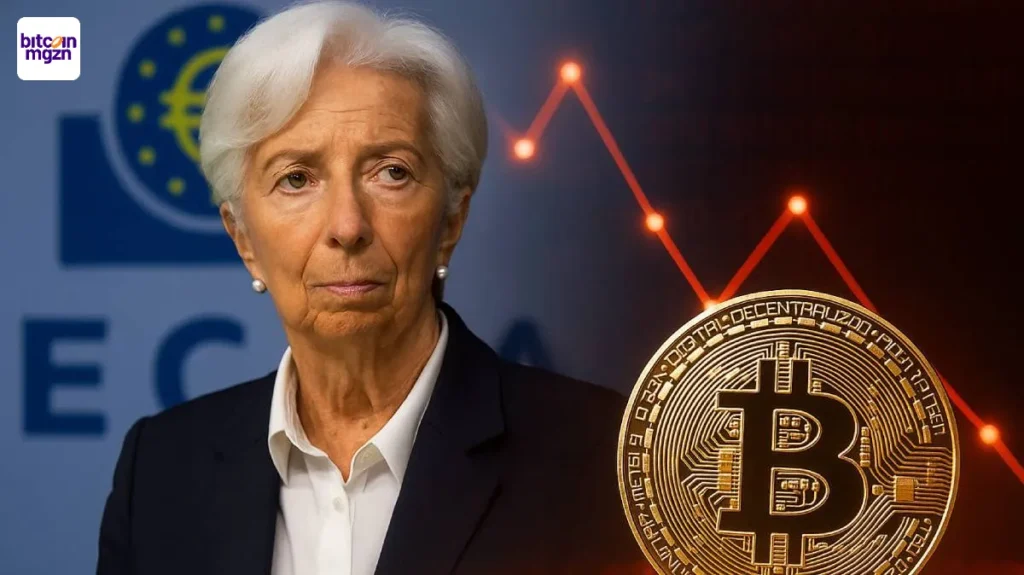
Snelle crypto updates? Connect op Instagram! Check onze Instagram   ECB-president Christine Lagarde noemt Bitcoin waardeloos en waarschuwt voor zijn speculatieve aard. Haar uitspraken komen op een moment dat DeFi groeit en de euro onder druk staat, wat de discussie over geld en controle opnieuw tot leven brengt. ECB houdt vast aan kritiek op Bitcoin en DeFi De Europese Centrale Bank (ECB) blijft vasthouden aan haar scherpe toon over Bitcoin. Volgens president Christine Lagarde ontbreekt de munt het fundament dat echt geld kenmerkt. Ze noemt het een speculatief middel zonder onderliggende waarde, en benadrukt dat de ECB het publieke vertrouwen in geld moet beschermen. Terwijl de digitale economie zich steeds meer richting decentralisatie beweegt, probeert de bank haar rol als stabiele pijler te behouden. ECB (European Central Bank) De European Central Bank (ECB) is de centrale bank van de eurozone en bepaalt samen met de nationale banken het monetaire beleid voor de euro. Ze houdt de inflatie in de gaten, bepaalt de rente en zorgt voor stabiliteit van het financiële systeem. In de cryptowereld speelt de ECB vooral een rol met het onderzoek en de voorbereidingen voor een digitale euro, een eigen centrale bank digitale munt (CBDC). Daarmee wil de bank inspelen op de groei van digitaal geld en alternatieven zoals stablecoins. Voor de crypto-industrie is dit belangrijk omdat een digitale euro de concurrentie en het speelveld voor private stablecoins kan veranderen. De waarschuwing van Lagarde past in een bredere strategie van de ECB. De opkomst van decentrale financiële systemen (DeFi) wordt gezien als een uitdaging voor de invloed van centrale banken. In die waarschuwing lijkt ook iets van zelfbescherming door te klinken: het behoud van macht over monetair beleid. Voorstanders van Bitcoin wijzen juist op de kracht van schaarste, transparantie en onafhankelijkheid; eigenschappen die fiatgeld in hun ogen steeds meer verliest. “How many bitcoin do you own?” That’s how it starts, a stupid question from the host. From there, it goes downhill fast. Christine Lagarde repeats every tired anti-bitcoin cliché the ECB has ever pushed. Let’s go… 1️⃣ “Bitcoin has no intrinsic value.” Neither does fiat.… pic.twitter.com/uMqtEHvkD0 — Eli Nagar (@EliNagarBrr) October 7, 2025 De euro verzwakt terwijl crypto aan invloed wint Ondertussen verliest de euro langzaam maar zeker aan koopkracht. Sinds de invoering in 2002 is de munt ruim veertig procent van haar reële waarde kwijtgeraakt. Dat voedt de twijfel over de houdbaarheid van het huidige fiatstelsel en vergroot de interesse in alternatieven zoals Bitcoin en andere cryptovaluta. Binnen de Europese cryptogemeenschap worden de woorden van de ECB dan ook met de nodige scepsis onthaald. Been 22 years, physical $Euro coins and banknotes entered circulation on January 1st 2002. Since then, this fiasco lost 40% of its buying power according to “official” stats. Won’t even mention real stats, or you’d be dumping ALL your Eurobolivars for #Bitcoin right now. pic.twitter.com/Rp3KinVfPm — Vandelay ₿TC Industries ⚡ (@VandelayBTC) January 3, 2024 DeFi-platforms en stablecoins winnen terrein in Europa, juist omdat ze nieuwe mogelijkheden bieden voor rendement en autonomie. Waar Lagarde waarschuwt voor volatiliteit, zien veel gebruikers vooral vrijheid in een systeem dat zich niets aantrekt van centrale banken. De groei van DeFi laat zien dat vertrouwen niet alleen via instituties ontstaat, maar ook via technologie. Monetaire controle en vertrouwen in het digitale tijdperk De standpunten van de ECB leggen een oud spanningsveld bloot: de strijd tussen stabiliteit en vrijheid. Aan de ene kant verdedigt de bank haar rol als bewaker van orde, aan de andere kant tonen cryptomarkten dat vertrouwen ook buiten traditionele kanalen kan bestaan. Terwijl de ECB pleit voor zekerheid en voorspelbaarheid, zoeken investeerders steeds vaker transparantie en zelfbeschikking. Lagarde’s uitspraken passen in een wereldwijde trend waarin centrale banken proberen hun gezag te behouden in een economie die snel verandert. Toch klinkt steeds luider de vraag of die vorm van controle nog houdbaar is. Nieuwe technologieën maken directe waardeoverdracht mogelijk,zonder tussenkomst van banken. Dat idee wringt natuurlijk met de kern van het bestaande financiële systeem. Exactly. It was narrative management. They feel threatened. That’s why real questions about monetary policy, inflation, and accountability never make it to the script. — Eli Nagar (@EliNagarBrr) October 8, 2025 De toekomst van waarde: centraal of gedecentraliseerd? De discussie tussen de ECB en de cryptowereld draait om meer dan geld. Het gaat om vertrouwen, transparantie en macht over waarde. Zolang de euro verder verzwakt en decentrale technologieën blijven groeien, lijkt de kloof tussen centrale banken en de cryptosector alleen maar groter te worden. Hoeveel invloed de ECB kan behouden, hangt af van haar vermogen zich aan te passen aan dit nieuwe tijdperk. De strijd om waarde is niet enkel economisch, maar ook ideologisch. In dat licht voelt de opkomst van Bitcoin minder als een bedreiging, en meer als een logisch gevolg van de zoektocht naar onafhankelijkheid in geld. Koop je Bitcoin via Best Wallet Best wallet is een topklasse crypto wallet waarmee je anoniem crypto kan kopen. Met meer dan 60 chains gesupport kan je al je main crypto coins aanschaffen via Best Wallet. Best wallet - betrouwbare en anonieme wallet Best wallet - betrouwbare en anonieme wallet Meer dan 60 chains beschikbaar voor alle crypto Vroege toegang tot nieuwe projecten Hoge staking belongingen Lage transactiekosten Best wallet review Koop nu via Best Wallet Let op: cryptocurrency is een zeer volatiele en ongereguleerde investering. Doe je eigen onderzoek. Het bericht ECB-president hernieuwt aanval op Bitcoin terwijl euro daalt is geschreven door Sebastiaan Krijnen en verscheen als eerst op Bitcoinmagazine.nl.
Paylaş
Coinstats2025/10/11 03:16
What SBI Really Owns in Ripple May Surprise XRP Investors

What SBI Really Owns in Ripple May Surprise XRP Investors

The post What SBI Really Owns in Ripple May Surprise XRP Investors appeared on BitcoinEthereumNews.com. SBI Holdings Chairman Yoshitaka Kitao has confirmed that
Paylaş
BitcoinEthereumNews2026/02/16 16:14