

Study Suggests WLFI Could Act as an Early Warning Signal for Crypto
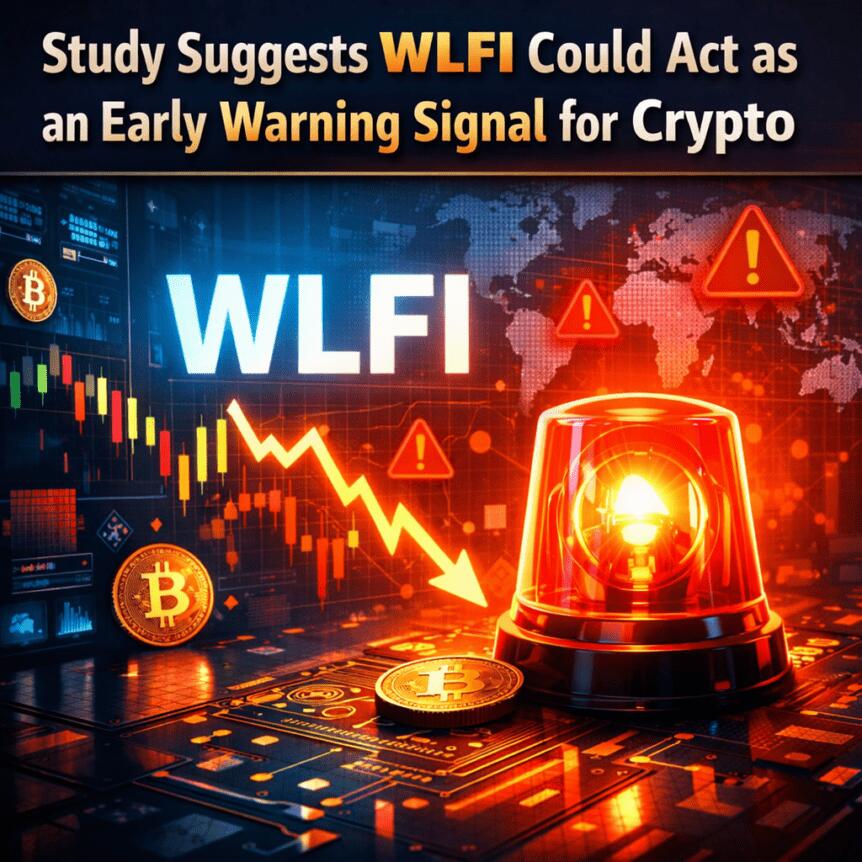
A new Amberdata analysis suggests that a niche DeFi token linked to the Trump family may have warned markets of stress well ahead of a broader crypto downturn. The study examines activity around World Liberty Financial Token (WLFI) on Oct. 10, 2025, a day when roughly $6.93 billion in leveraged crypto positions were liquidated within an hour. On the same day, Bitcoin and Ether moved decisively lower, with smaller altcoins bearing heavier losses. At the time, Bitcoin was hovering near $121,000, showing limited immediate stress, while WLFI exhibited a pronounced decline hours before the wider market sell-off began to unfold.
The Amberdata report, available here, investigates how WLFI’s unusual price and liquidity dynamics interacted with the rest of the market as tariff news circulates in the political arena. The exploration follows a market episode in which macro headlines translated into rapid, asset-specific reactions, highlighting how a single instrument can behave as a bellwether in a highly leveraged crypto ecosystem.
“A five-hour lead time is hard to dismiss as coincidence,” said Mike Marshall, the analyst who authored the work. “That duration is what separates a genuinely actionable warning from a statistical artefact.” The study emphasizes that this signal is not a claim of insider trading but an observation about how the architecture of crypto markets can amplify the relevance of smaller, highly leveraged tokens when headline-driven stress hits liquidity chains.
WLFI anomalies before the selloff
Researchers focused on three telltale patterns that contrasted WLFI with the broader market: a surge in trading activity, a divergence from Bitcoin, and extreme leverage. WLFI’s hourly volume spiked to roughly $474 million, about 21.7 times its normal level, within minutes of tariff-related political news. At the same time, funding rates on WLFI perpetual futures climbed to about 2.87% every eight hours, translating to an annualized borrowing cost near 131%. These indicators fed into a narrative that the token was disproportionately sensitive to stress, even as the rest of the market looked comparatively placid shortly before the wave of liquidations hit.
The study does not assert insider knowledge or illicit trading; rather, it argues that the market structure can magnify the impact of asset-specific signals. One striking observation was WLFI’s holder base, which appears concentrated among politically connected participants, unlike the widely distributed ownership seen in Bitcoin. Marshall described the pattern as “instrument-specific,” with activity concentrated primarily in WLFI rather than across the crypto complex.
Timing mattered. The data show volume acceleration occurring roughly three minutes after public tariff headlines spilled into the market. Marshall notes that such rapid movement points to prepared execution rather than a collective, retail interpretation of headlines in real time. The implication, for researchers and market participants, is that under particular regulatory or geopolitical moments, an asset with high leverage and a tight, politically connected user base can become a pressure point in a broader liquidation cascade.
Another facet of the analysis ties WLFI’s stress to the mechanics of crypto collateral. In many trading venues, traders pledge a range of assets as collateral for borrowed positions. When WLFI’s price declined sharply, the value of those collateral pools fell, prompting forced liquidations of holdings like Bitcoin and Ether (CRYPTO: BTC, CRYPTO: ETH) to meet margin calls. In a market already under strain, those liquidations can amplify selling pressure across the broader ecosystem, pushing prices lower and triggering a wider selloff in a short span of time.
While WLFI’s decline appeared to precede the broader market’s weakness, Amberdata’s analysis stresses that the link is not deterministic. The report cautions against overinterpreting a single event as a predictive blueprint. Still, the authors argue that the episode offers a compelling glimpse into how leverage, asset-specific dynamics, and headline-driven liquidity shocks can interact in ways that amplify risk for other assets.
“If this were superior analysis (sophisticated participants reading the tariff headlines faster and drawing better conclusions) you’d expect to see that reflected more broadly,” Marshall said. “What we actually saw was concentrated activity in WLFI first.” The timing underscores a broader theme in crypto markets: signal concentration can precede systemic moves, at least in certain stress scenarios.
WLFI’s role in a market-wide cascade
Amberdata’s contemporaneous measurements indicate that WLFI’s realized volatility surged to levels nearly eight times those of Bitcoin during the stressed period, underscoring how sensitive highly leveraged assets can become when macro news hits. The researchers emphasize that such patterns do not necessarily predict downturns in a universal sense; instead, they can reveal how micro-architecture—structure of leverage, liquidity distribution, and collateralization—can produce early stress signals within a single instrument that eventually feeds into broader market dynamics.
From the perspective of risk managers and traders, the WLFI episode offers a cautionary note about risk concentration and cross-asset contagion. The fact that perimeter assets with concentrated ownership and high leverage can falter first means that monitoring instrument-specific signals may help identify pockets of fragility before they cascade. It also highlights the importance of robust margin and collateral frameworks that can absorb sudden shifts without triggering a rapid domino effect across correlated assets such as BTC and ETH.
Beyond the immediate market mechanics, the report sits at the intersection of policy headlines and digital asset pricing. The per-minute reaction time to tariff news illustrated how quickly information can translate into liquidity discipline—especially for assets that exist in a tight governance loop and are used as collateral in high-leverage positions. In a space where liquidity conditions can change in minutes, observers say the WLFI episode demonstrates why market participants must consider asset-level dynamics as a potential early warning tool, even if it does not guarantee predictive accuracy in every case.
Researchers acknowledge that WLFI’s linkage to the broader market depends on a confluence of factors—headline risk, macro policy signals, and the health of the DeFi ecosystem. The study’s broader implication is not that WLFI alone can forecast downturns; rather, it highlights how ecosystem fragility—driven by leverage, concentrated ownership, and instrument-specific behavior—can materialize in ways that precede shared downturns. As the crypto market continues to evolve, such signals may become an integral part of risk dashboards for sophisticated traders and institutions alike.
In a landscape where large-cap assets often dominate liquidity analyses, this episode serves as a reminder that smaller tokens with outsized leverage and targeted holder bases can temporarily steer attention toward systemic risk factors that would otherwise remain hidden. The question for market participants is whether these signals can be corroborated through additional data sets and repeated across multiple events, a task that will require more observations and longer time horizons to confirm transferability.
For now, Amberdata’s report remains a compelling case study in market microstructure: a single instrument with a distinctive balance of leverage and concentration can illuminate how stress travels through a network of collateralized positions, triggering liquidations that ripple through the broader market. As regulators and participants weigh the implications, the WLFI episode underscores the ongoing need for transparent data and robust risk controls in a crypto ecosystem that remains vulnerable to headline-driven shocks.
What to watch next
- Whether the WLFI signal can be replicated across other event windows or markets, and how often such lead times occur in future stress scenarios.
- Any regulatory or investigative developments related to WLFI, including disclosures about its holdings and governance structure.
- Shifts in liquidity provision and margin requirements on major derivative platforms amid geopolitical headlines.
- Further research from data providers validating instrument-specific stress signals and their predictive value for market-wide liquidations.
Sources & verification
- Amberdata, “coincidence or signal: did WLFI telegraph cryptos’ $6.93B meltdown?” (Oct. 2025) and related data on WLFI activity around Oct. 10, 2025.
- Cointelegraph, coverage of the Oct. 10, 2025 market crash and leveraged liquidations linked to tariff headlines.
- Senators request probe into WLFI stake and related governance questions (UAE-linked stake in WLFI).
- Reports on WLFI plans for foreign exchange and remittance platforms, highlighting the token’s evolving governance footprint.
Market signal and the WLFI episode: what it means for investors and the ecosystem
This article was originally published as Study Suggests WLFI Could Act as an Early Warning Signal for Crypto on Crypto Breaking News – your trusted source for crypto news, Bitcoin news, and blockchain updates.
Ayrıca Şunları da Beğenebilirsiniz

Bitcoin Hyper Not Far from $20M, Whales Keep Buying: See What This $BTC Layer-2 Plans
ECB-president hernieuwt aanval op Bitcoin terwijl euro daalt
