

CLARITY Act Gains Momentum as Ripple CEO Predicts April Passage

This article was first published on The Bit Journal.
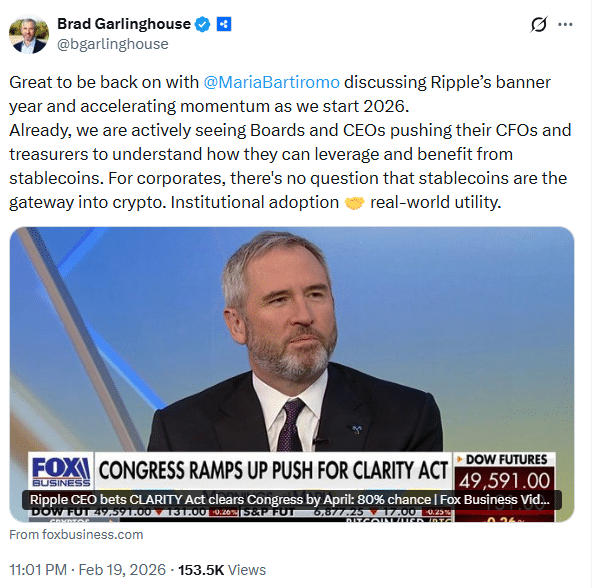
Ripple CEO Brad Garlinghouse has lifted market expectations around the CLARITY Act. He predicts an 80% chance the bill will pass Congress by the end of April 2026. His comments followed fresh meetings with White House officials and senior financial leaders.
The bill seeks to set firm rules for U.S. digital assets. It aims to define who regulates which tokens. That focus on clear lines of control has drawn strong attention from exchanges, developers, and traders.
CLARITY Act Gains Momentum After Industry Meetings
Garlinghouse shared his outlook after a new round of talks in Washington. He said negotiators had made “real progress” in recent weeks. In his view, both the crypto sector and the banking industry now understand that delay carries a cost.
He encouraged all sides to agree to a viable compromise. He emphasized that rules matter more than winning, as opposed to being right. His comments captured the frustration that the industry had felt over the years of case-by-case regulation.
 Source: X
Essentially, the CLARITY Act is intended to address one fundamental question. When is a token a security, and when is it a commodity? Currently, many projects are in a state of limbo, which makes them vulnerable to regulatory actions.
Supporters say the bill would give firms a clear checklist. They could design products to fit the right rulebook from day one. Backers also argue that stable guidelines would make it easier for large institutions to enter the market.
Splitting Oversight Between SEC and CFTC
A major goal of the CLARITY Act is to settle the split between regulators. The U.S. Securities and Exchange Commission, or SEC, has treated many tokens as securities. The Commodity Futures Trading Commission, or CFTC, has claimed authority over others.
This overlap has created confusion. Some firms have faced investigations after years of operating in the open. The bill seeks to define bright lines. It would assign assets to one agency or the other based on set tests.
Stablecoin Rewards Remain the Toughest Fight
The fiercest debate around the CLARITY Act centers on stablecoin rewards. Banks fear that high yield programs on digital dollars could drain deposits from checking and savings accounts. Those deposits fund loans to small firms, farmers, and property buyers.
Crypto platforms argue that flexible rewards are key to growth. They say strict caps could push users to offshore products instead. Dollar-pegged tokens such as Tether and USDC, issued by Circle, sit at the heart of the dispute.
Political Pressure Builds Ahead of Midterms
For lawmakers, the CLARITY Act has become a test of their stance on digital assets. Crypto policy now appears in many campaign messages. Some voters see it as a symbol of innovation and financial freedom. Others see it as a risk to consumers and banks.
Treasury officials have warned about sudden shifts of capital into high-reward products. At the same time, business groups argue that the U.S. is losing ground to hubs with clearer rules.
Ripple’s Legal Shadow and Push for Clear Rules
Garlinghouse often points to his company’s past legal battle with regulators. That clash lasted for years and cost large sums in legal fees. The case highlighted how uncertain labels can reshape a project’s fate overnight.
Ripple, the company he leads, uses this history to argue for early guidance instead of retroactive claims. Its stance is simple. Firms should know the rules before they launch a token, not discover them in court.
XRP Traders React With Cautious Optimism
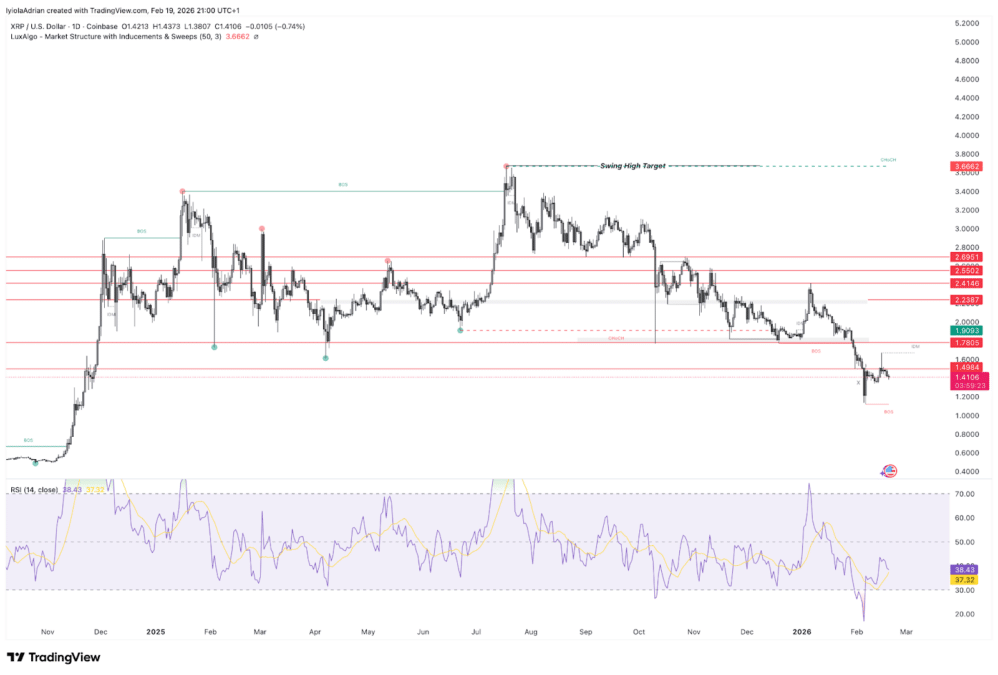
XRP traders have followed every update on the talks. The token has moved within a wide band between $1.09 and $1.67 in recent sessions. After rejecting a key resistance level, price action has turned more cautious.
 Source: TradingView
Trading volume has increased more than 35% in the past 24 hours, according to data from CoinMarketCap. That surge in activity indicates newfound interest, despite the slight price slip.
The Relative Strength Index is below the neutrality level of 50. That indicates that sellers have an advantage, but not an overwhelming one.
Broader Market Impact and Liquidity Hopes
Analysts say a final deal on the market structure bill could unlock fresh liquidity. Large asset managers prefer markets with clear and stable rules. Some already offer spot Bitcoin and Ether products. A broader framework could allow them to expand into other tokens with more confidence.
Still, specialists warn against assuming an instant bull run. Any shift in risk appetite will depend on rates, global growth, and investor sentiment. Clear rules can invite capital. They cannot force investors to take risk if macro conditions stay weak.
Conclusion
The CLARITY Act now sits near the center of U.S. crypto policy. Garlinghouse’s 80% passage estimate has drawn attention from traders and policy experts alike. Talks have narrowed key gaps, yet the fight over stablecoin rewards remains intense.
If the bill becomes law, it could define the future shape of the U.S. digital asset market. It would draw firmer lines between regulators and offer long-sought guidance to builders and investors. Until then, the sector will watch every signal from Washington and adjust its bets in real time.
Appendix: Glossary of Key Terms
CFTC: The U.S. Commodity Futures Trading Commission, which oversees the commodity and derivatives markets.
Stablecoin: A crypto that is tied to another asset, like the U.S. Dollar.
Token Classification: The act of determining what is a security and what is a commodity in the digital age.
Regulatory Framework The system of regulations governing a particular industry.
Market Structure: The rules of the road in which the markets and assets trade under.
Frequently Asked Questions About CLARITY Act
1- What is the CLARITY Act?
It is a proposed U.S. law that would set clear rules for digital assets and assign them to either the SEC or the CFTC.
2- Why do banks care about this bill?
Banks worry that generous stablecoin rewards could pull deposits out of traditional accounts and limit their ability to lend.
3- How might the bill affect crypto firms?
It could give them a stable rulebook. That would help with product design, risk planning, and attracting institutional partners.
4- What does it mean for XRP holders?
Clear rules may reduce legal shocks and support long-term confidence. But XRP’s price will still depend on wider market trends.
References
Cryptotimes
CoinGape
Read More: CLARITY Act Gains Momentum as Ripple CEO Predicts April Passage">CLARITY Act Gains Momentum as Ripple CEO Predicts April Passage
Ayrıca Şunları da Beğenebilirsiniz

Trump 'ashamed' of 'unpatriotic and disloyal' Supreme Court after tariff decision

The Evolution of Fashion Trends in 2026
