Ethereum co-founder Vitalik Buterin has outlined a new framework for crypto security, offering practical strategies rooted in redundancy, multi-angle verificationEthereum co-founder Vitalik Buterin has outlined a new framework for crypto security, offering practical strategies rooted in redundancy, multi-angle verification

Vitalik Buterin Explains How Crypto Can Protect Users When Perfect Security Remains Impossible

2026/02/23 06:08
Okuma süresi: 3 dk

Ethereum co-founder Vitalik Buterin has outlined a new framework for crypto security, offering practical strategies rooted in redundancy, multi-angle verification, and human-centric design.

He argues that the best way to protect users is to close the gap between their intent and system behavior.

Vitalik Buterin Explains How Crypto Can Protect Users When Perfect Security Remains Impossible

Vitalik Buterin Explains Closing the Gap Between User Intent and System Security

Buterin’s insights, dismantling the idea of perfect security, arrive at a time when crypto platforms continue to face wallet hacks, smart contract exploits, and complex privacy risks.

By merging security with user experience, Buterin provides developers with a roadmap for balancing protection with usability.

Buterin reframes security as an effort to minimize the divergence between what users want and what systems do.

While user experience broadly addresses this gap, security specifically targets tail-risk scenarios in which adversarial behavior could lead to severe consequences.

He points out that even a seemingly simple action, like sending 1 ETH to a recipient, involves assumptions about identity, blockchain forks, and common-sense knowledge that cannot be fully encoded.

More intricate objectives, such as preserving privacy, add layers of complexity: metadata patterns, message timing, and behavioral signals can all leak sensitive information. This makes it difficult to distinguish between “trivial” and “catastrophic” losses.

The challenge mirrors early debates in AI safety, where specifying goals strongly proved notoriously difficult. In crypto, translating human intent into code faces a similar barrier.

Redundancy and Multi-Angle Verification

To compensate for these limitations, Buterin advocates redundancy: users specify intent through multiple overlapping methods. Systems act only when all specifications align.

This approach applies across Ethereum wallets, operating systems, formal verification, and hardware security.

For instance, programming type systems require developers to specify both program logic and expected data structures; mismatches prevent compilation.

Formal verification adds mathematical property checks to ensure code behaves as intended. Transaction simulations allow users to preview on-chain consequences before confirming actions.

Post-assertions require both action and expected outcomes to match. Multisig wallets and social recovery mechanisms distribute authority across multiple keys. This ensures that single-point failures do not compromise security.

The Role of AI in Security

Buterin also envisions large language models (LLMs) as a complementary tool, describing them as “a simulation of intent.”

Generic LLMs mirror human common sense, while user-fine-tuned models can detect what is normal or unusual for an individual.

Integrating LLMs with traditional redundancy methods could enhance mismatch detection without creating single points of failure.

Balancing Security and Usability

Critically, Buterin emphasizes that security should not translate into unnecessary friction for routine actions.

 Low-risk tasks should be easy or even automated, while risky actions, such as transfers to new addresses or unusually large sums, require additional verification.

This calibrated approach ensures protection without frustrating users.

By blending redundancy, multi-angle verification, and AI-assisted insights, Buterin offers a roadmap for crypto platforms to reduce risk while maintaining usability.

Perfect security may be unattainable, but a layered, human-centered approach can safeguard users and strengthen trust in decentralized systems.

Piyasa Fırsatı
Notcoin Logosu
Notcoin Fiyatı(NOT)
$0.0003631
$0.0003631$0.0003631
-1.86%
USD
Notcoin (NOT) Canlı Fiyat Grafiği
Sorumluluk Reddi: Bu sitede yeniden yayınlanan makaleler, halka açık platformlardan alınmıştır ve yalnızca bilgilendirme amaçlıdır. MEXC'nin görüşlerini yansıtmayabilir. Tüm hakları telif sahiplerine aittir. Herhangi bir içeriğin üçüncü taraf haklarını ihlal ettiğini düşünüyorsanız, kaldırılması için lütfen [email protected] ile iletişime geçin. MEXC, içeriğin doğruluğu, eksiksizliği veya güncelliği konusunda hiçbir garanti vermez ve sağlanan bilgilere dayalı olarak alınan herhangi bir eylemden sorumlu değildir. İçerik, finansal, yasal veya diğer profesyonel tavsiye niteliğinde değildir ve MEXC tarafından bir tavsiye veya onay olarak değerlendirilmemelidir.

Ayrıca Şunları da Beğenebilirsiniz

If you put $1,000 in Intel at the start of 2025, here’s your return now

If you put $1,000 in Intel at the start of 2025, here’s your return now

The post If you put $1,000 in Intel at the start of 2025, here’s your return now appeared on BitcoinEthereumNews.com. Intel (NASDAQ: INTC) and Nvidia (NASDAQ: NVDA) announced a new partnership on Thursday, September 18, working on several generations of custom data center and computing chips designed to boost performance in hyperscale, enterprise, and consumer applications. As part of the collaboration, Nvidia, the undisputed leader of the semiconductor sector, will also invest $5 billion in Intel by purchasing its common stock at a price of $23.28 per share. Following the news, Intel stock jumped more than 30% in pre-market trading, while Nvidia saw a 3% uptick, a welcome change following weeks of shaky performance and controversies regarding its Chinese sales. Trading at $31.34 at the time of writing, INTC shares are up 54.99% year-to-date (YTD). INTC YTD stock price. Source: Google Accordingly, a $1,000 investment in the tech company at the start of the year would now be worth $1,549.90, giving you a return of $549.90. ‘The next era of computing’ The move follows a wave of fresh backing for the struggling Intel, including a nearly $9 billion U.S. government purchase of a 10% stake just weeks ago and a $2 billion investment from Japan’s SoftBank. As such, the deal has the potential to put Intel back into the game after years of trying to catch up not just with Nvidia but also AMD (NASDAQ: AMD) and Broadcom (NASDAQ: AVGO). “This historic collaboration tightly couples NVIDIA’s AI and accelerated computing stack with Intel’s CPUs and the vast x86 ecosystem — a fusion of two world-class platforms. Together, we will expand our ecosystems and lay the foundation for the next era of computing,” wrote Nvidia founder and chief executive officer (CEO), Jensen Huang.  However, the U.S. government’s direct involvement suggests that more is at stake than simply propping up Intel, as it likely reflects a broader concern about keeping America competitive…
Paylaş
BitcoinEthereumNews2025/09/18 22:47
In an era of agent explosion, how should we cope with AI anxiety?
In an era of agent explosion, how should we cope with AI anxiety?

Author: XinGPT AI is yet another movement for technological equality. A recent article titled "The Internet is Dead, Agents Live On" went viral on social media
Paylaş
PANews2026/02/23 11:33
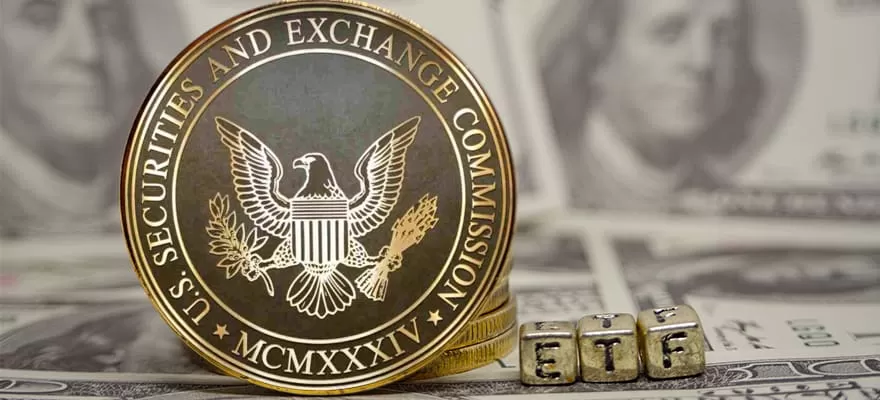
SEC Approves! Paving the Way for Altcoin ETFs: New Decision Closely Concerns 12 Altcoins Including XRP!

SEC Approves! Paving the Way for Altcoin ETFs: New Decision Closely Concerns 12 Altcoins Including XRP!

The SEC has approved general listing standards for cryptocurrency ETFs, covering 12 altcoins including XRP, Solana (SOL). Continue Reading: SEC Approves! Paving the Way for Altcoin ETFs: New Decision Closely Concerns 12 Altcoins Including XRP!
Paylaş
Coinstats2025/09/18 21:32