Sales in the current technology market look very different from what they did five years ago. Companies observe investing in qualified leads and holding strong Sales in the current technology market look very different from what they did five years ago. Companies observe investing in qualified leads and holding strong

Tonya Turrell on B2B Demand Generation: Why Technology Buying Has Changed in 2026

2026/02/27 00:31
Okuma süresi: 4 dk
Bu içerikle ilgili geri bildirim veya endişeleriniz için lütfen [email protected] üzerinden bizimle iletişime geçin.

Sales in the current technology market look very different from what they did five years ago. Companies observe investing in qualified leads and holding strong first meetings. But then, the prospect disappears. 

Why this happens has been a serious question across the B2B world. Tonya Turrell, a business leader and founder of TechnologyMatch.com (previously The Launchpad), explains why conversion rates are falling, why buyers are harder to engage, and what modern demand generation requires. She provides research-backed insights that explain why traditional sales methods no longer produce the same results.

Tonya Turrell on B2B Demand Generation: Why Technology Buying Has Changed in 2026

Her findings show how the market has changed. Buyer expectations are different, sales processes are longer, and competition is stronger. Success now depends on strategy, patience, and understanding.

As she explains, “What you are experiencing is not a lead quality problem. It is a market-wide transformation in how technology is bought, sold, and evaluated.”

Why B2B Demand Generation Results Have Changed

The B2B buying environment has evolved rapidly since 2020. According to Turrell’s research, seven major forces are reshaping how companies build pipelines and close deals.

  1. A generational shift in buyers:
  • Most B2B buyers today are Millennials or Gen Z.
  • They conduct independent research before speaking with sales teams.
  • Many buyers are already 70% through their decision process before first contact.
  • They compare multiple vendors and avoid aggressive sales tactics.
  • If the first interaction fails to meet expectations, they disengage quickly.
  1. Declining sales rep tenure and expertise:
  • Average sales rep tenure has dropped to around 18 months.
  • Shorter tenure means weaker product knowledge and less consultative skill.
  • Many reps dominate conversations instead of listening to buyer needs.
  • TechnologyMatch.com’s analysis shows sales effectiveness scores averaging 40 out of 100.
  1. Complex buying committees:
  • Enterprise purchases now involve 6–13 stakeholders.
  • Decisions cross departments, including finance, legal, IT, and operations.
  • Even interested prospects must build internal agreement before moving forward.
  • Many deals stall because teams cannot reach consensus.
  1. Market saturation and competitive noise:
  • The number of SaaS vendors has grown dramatically.
  • Buyers evaluate far more options than in previous years.
  • Higher competition increases customer acquisition costs and slows conversions.
  1. A shift toward profitability-focused buying:
  • Companies now demand a fast return on investment.
  • CFO approval is required for most purchases.
  • Buyers must justify spending through clear business cases.
  1. Longer sales cycles and statistical realities:
  • It now takes roughly twice as many leads to build the same pipeline as before 2020.
  • Enterprise sales cycles may run 6–12 months or longer.
  • Small pilot campaigns often fail to show true market potential.
  1. AI-powered buyer research:
  • Buyers use AI tools to evaluate solutions before meetings.
  • They arrive informed, skeptical, and highly selective.
  • Generic pitches quickly lose attention.

These factors reveal how buyers have more control, more information, and higher expectations than ever before. Demand generation now requires a stronger focus on value and relevance.

What This Means for Sales Teams and Pipeline Strategy

Turrell also provides guidance for companies that want to improve performance in this environment. She emphasizes that strategy must evolve alongside buyer behavior. Companies should incorporate strategies such as:

  1. Discovery must lead every interaction:
  • Buyers expect conversations centered on their challenges.
  • Sales teams should ask questions before presenting solutions.
  • Balanced talk-to-listen ratios improve deal progression.
  1. Speed and personalization drive engagement:
  • Follow-up within 24 hours increases conversion rates.
  • Messages should address specific business problems.
  • Generic product information rarely works.
  1. Multi-stakeholder engagement is essential:
  • Relying on one contact limits deal progress.
  • Sales teams must identify decision-makers early.
  • Champions need tools to persuade internal committees.
  1. Financial value must be clearly demonstrated:
  • ROI calculators and cost-savings models support approval.
  • Business-case materials help buyers secure leadership support.
  1. Persistence matters more than ever:
  • Deals often progress slowly.
  • Continued value-driven engagement keeps opportunities alive.

How Tonya Turrell’s Work Through TechnologyMatch.com Supports Modern B2B Growth

Through TechnologyMatch.com, Turrell helps organizations adapt to the new sales environment with practical frameworks and market intelligence. TechnologyMatch.com’s tools (MatchIQ) evaluate discovery quality and engagement patterns, and companies gain measurable feedback on performance gaps. Teams receive direction on improving conversations and follow-up practices. 

The platform also connects technology vendors with qualified buyers, helping companies secure sales appointments, build pipeline opportunities, and improve engagement with decision-makers.

Conclusion

The modern B2B technology market demands patience, insight, and adaptability because buyer expectations have evolved and sales cycles are longer; therefore, competition is intense. Through TechnologyMatch.com, Tonya Turrell provides companies with a clear understanding of this new reality and connects buyers and vendors. 

Comments
Sorumluluk Reddi: Bu sitede yeniden yayınlanan makaleler, halka açık platformlardan alınmıştır ve yalnızca bilgilendirme amaçlıdır. MEXC'nin görüşlerini yansıtmayabilir. Tüm hakları telif sahiplerine aittir. Herhangi bir içeriğin üçüncü taraf haklarını ihlal ettiğini düşünüyorsanız, kaldırılması için lütfen [email protected] ile iletişime geçin. MEXC, içeriğin doğruluğu, eksiksizliği veya güncelliği konusunda hiçbir garanti vermez ve sağlanan bilgilere dayalı olarak alınan herhangi bir eylemden sorumlu değildir. İçerik, finansal, yasal veya diğer profesyonel tavsiye niteliğinde değildir ve MEXC tarafından bir tavsiye veya onay olarak değerlendirilmemelidir.

Ayrıca Şunları da Beğenebilirsiniz

Shocking OpenVPP Partnership Claim Draws Urgent Scrutiny

Shocking OpenVPP Partnership Claim Draws Urgent Scrutiny

The post Shocking OpenVPP Partnership Claim Draws Urgent Scrutiny appeared on BitcoinEthereumNews.com. The cryptocurrency world is buzzing with a recent controversy surrounding a bold OpenVPP partnership claim. This week, OpenVPP (OVPP) announced what it presented as a significant collaboration with the U.S. government in the innovative field of energy tokenization. However, this claim quickly drew the sharp eye of on-chain analyst ZachXBT, who highlighted a swift and official rebuttal that has sent ripples through the digital asset community. What Sparked the OpenVPP Partnership Claim Controversy? The core of the issue revolves around OpenVPP’s assertion of a U.S. government partnership. This kind of collaboration would typically be a monumental endorsement for any private cryptocurrency project, especially given the current regulatory climate. Such a partnership could signify a new era of mainstream adoption and legitimacy for energy tokenization initiatives. OpenVPP initially claimed cooperation with the U.S. government. This alleged partnership was said to be in the domain of energy tokenization. The announcement generated considerable interest and discussion online. ZachXBT, known for his diligent on-chain investigations, was quick to flag the development. He brought attention to the fact that U.S. Securities and Exchange Commission (SEC) Commissioner Hester Peirce had directly addressed the OpenVPP partnership claim. Her response, delivered within hours, was unequivocal and starkly contradicted OpenVPP’s narrative. How Did Regulatory Authorities Respond to the OpenVPP Partnership Claim? Commissioner Hester Peirce’s statement was a crucial turning point in this unfolding story. She clearly stated that the SEC, as an agency, does not engage in partnerships with private cryptocurrency projects. This response effectively dismantled the credibility of OpenVPP’s initial announcement regarding their supposed government collaboration. Peirce’s swift clarification underscores a fundamental principle of regulatory bodies: maintaining impartiality and avoiding endorsements of private entities. Her statement serves as a vital reminder to the crypto community about the official stance of government agencies concerning private ventures. Moreover, ZachXBT’s analysis…
Paylaş
BitcoinEthereumNews2025/09/18 02:13
A Netflix ‘KPop Demon Hunters’ Short Film Has Been Rated For Release

A Netflix ‘KPop Demon Hunters’ Short Film Has Been Rated For Release

The post A Netflix ‘KPop Demon Hunters’ Short Film Has Been Rated For Release appeared on BitcoinEthereumNews.com. KPop Demon Hunters Netflix Everyone has wondered what may be the next step for KPop Demon Hunters as an IP, given its record-breaking success on Netflix. Now, the answer may be something exactly no one predicted. According to a new filing with the MPA, something called Debut: A KPop Demon Hunters Story has been rated PG by the ratings body. It’s listed alongside some other films, and this is obviously something that has not been publicly announced. A short film could be well, very short, a few minutes, and likely no more than ten. Even that might be pushing it. Using say, Pixar shorts as a reference, most are between 4 and 8 minutes. The original movie is an hour and 36 minutes. The “Debut” in the title indicates some sort of flashback, perhaps to when HUNTR/X first arrived on the scene before they blew up. Previously, director Maggie Kang has commented about how there were more backstory components that were supposed to be in the film that were cut, but hinted those could be explored in a sequel. But perhaps some may be put into a short here. I very much doubt those scenes were fully produced and simply cut, but perhaps they were finished up for this short film here. When would Debut: KPop Demon Hunters theoretically arrive? I’m not sure the other films on the list are much help. Dead of Winter is out in less than two weeks. Mother Mary does not have a release date. Ne Zha 2 came out earlier this year. I’ve only seen news stories saying The Perfect Gamble was supposed to come out in Q1 2025, but I’ve seen no evidence that it actually has. KPop Demon Hunters Netflix It could be sooner rather than later as Netflix looks to capitalize…
Paylaş
BitcoinEthereumNews2025/09/18 02:23
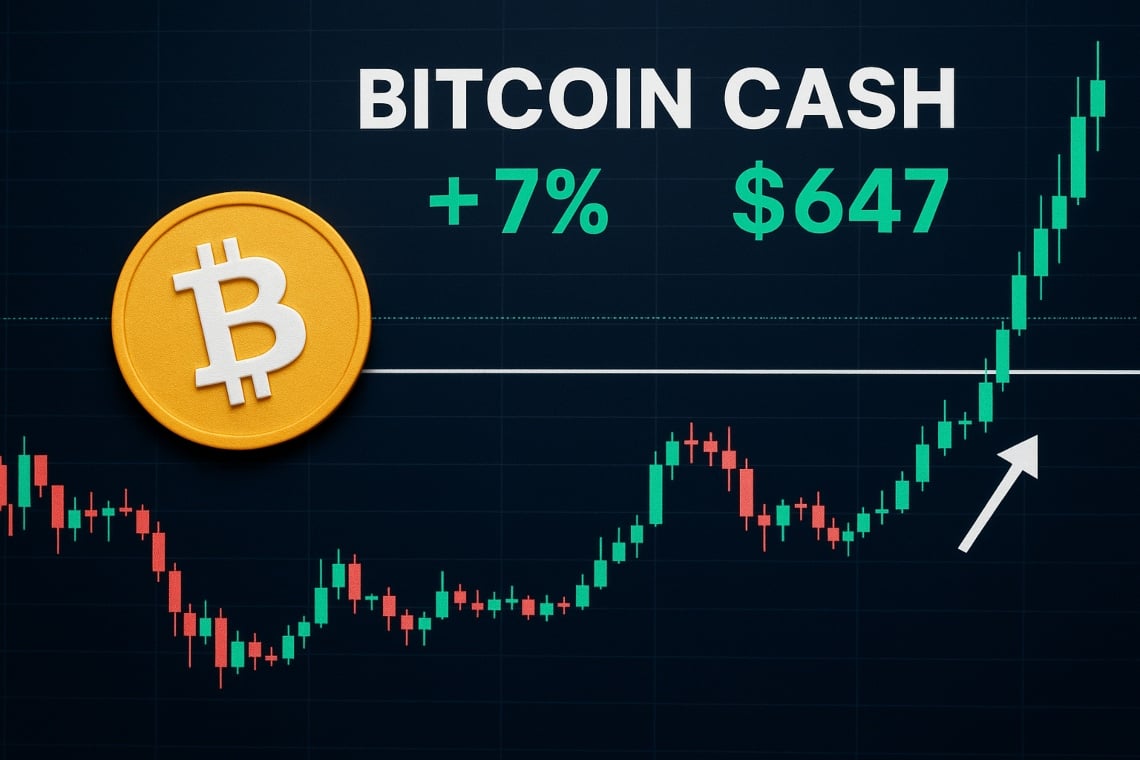
Bitcoin Cash: price +7% at $647, breakout and key levels (09/18/2025)

Bitcoin Cash: price +7% at $647, breakout and key levels (09/18/2025)

Bitcoin Cash gains 7% and reaches $647, hitting highs not seen since last April: the movement fits into a risk-on climate.
Paylaş
The Cryptonomist2025/09/18 21:47