Trump’s Decisive Stance: US Will Consult Israel on Ending Iran War But Retains Final Authority
BitcoinWorld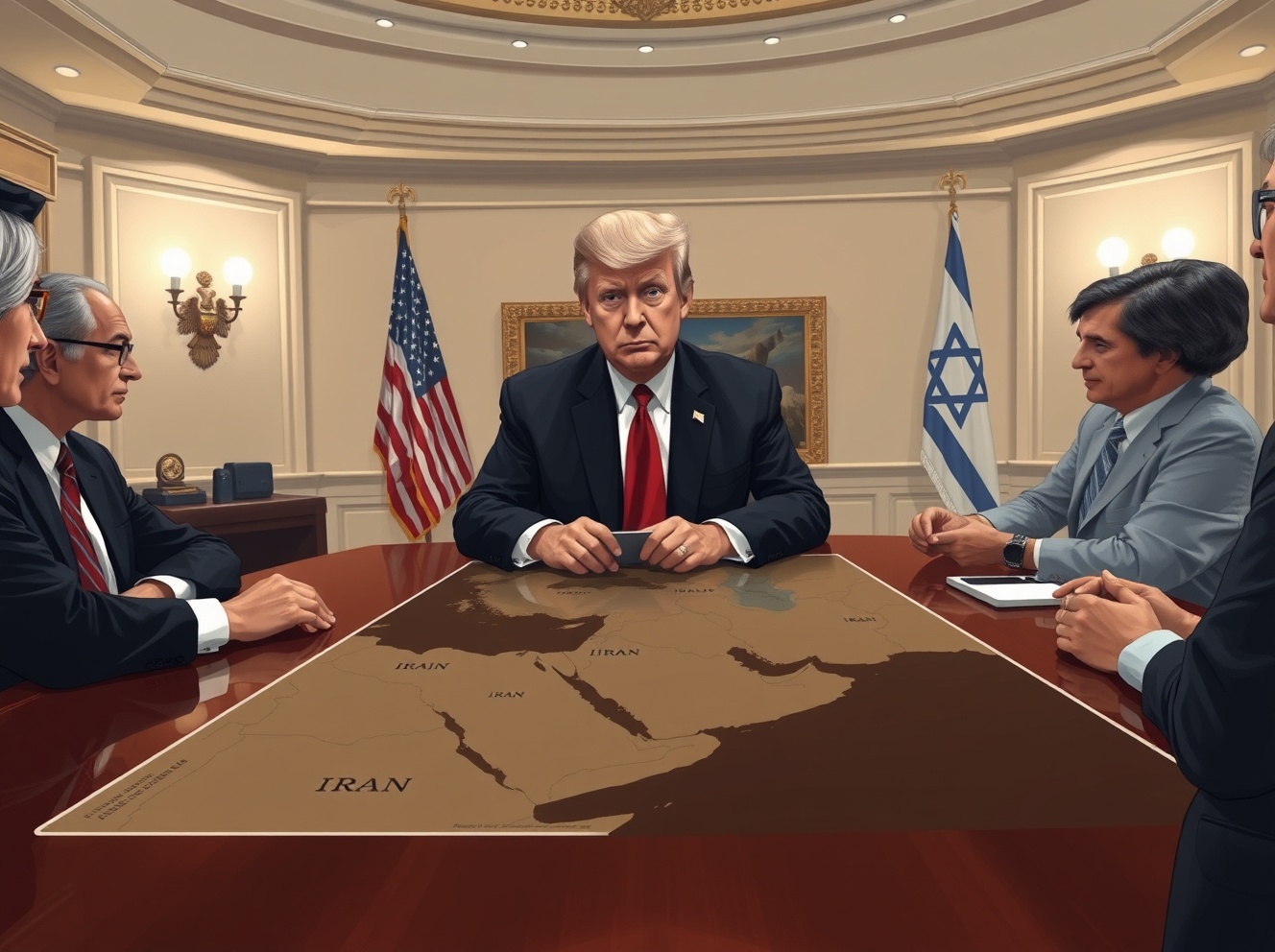
Trump’s Decisive Stance: US Will Consult Israel on Ending Iran War But Retains Final Authority
WASHINGTON, D.C., March 2025 – In a significant statement regarding Middle East policy, former President Donald Trump has articulated a nuanced approach to concluding the ongoing conflict with Iran, emphasizing consultation with Israel while unequivocally asserting ultimate American decision-making authority. This declaration, initially reported by Wu Blockchain, immediately sparked extensive analysis among foreign policy experts and regional observers about the future trajectory of US involvement in the region and the complex dynamics of the Washington-Tel Aviv alliance.
Trump’s Iran War Consultation Framework with Israel
Former President Trump’s recent comments establish a clear procedural framework for determining the conclusion of hostilities with Iran. He explicitly stated that the United States would engage in substantive consultations with Israeli leadership regarding the timing and conditions for ending the conflict. However, he simultaneously emphasized that the final determination would rest solely with American authorities. This balanced approach reflects a recognition of Israel’s significant security interests in the region while reaffirming American strategic autonomy.
Historically, the US-Israel relationship has featured close military and intelligence coordination, particularly concerning Iranian nuclear ambitions and regional influence. The current conflict, which escalated following Iran’s accelerated uranium enrichment and proxy attacks on US assets, represents the most direct military confrontation between Washington and Tehran in decades. Trump’s statement therefore carries substantial weight for ongoing operations and diplomatic channels.
Historical Context of US-Israel Strategic Coordination
The consultation framework Trump described exists within a long history of US-Israel security cooperation. Since the establishment of the Jewish state in 1948, the United States has provided over $150 billion in military assistance, creating what analysts term a “special relationship.” This partnership intensified following the 1979 Iranian Revolution, with both nations viewing the Islamic Republic as a primary regional threat.
Key moments in this strategic alignment include:
- 1980s Cooperation: Shared intelligence during the Iran-Iraq War
- 1990s Policy: Coordinated containment strategies against Iranian nuclear programs
- 2015 Tensions: Israeli opposition to the Joint Comprehensive Plan of Action (JCPOA)
- 2020s Escalation: Increased joint military exercises and intelligence sharing
Trump’s presidency (2017-2021) notably strengthened this alliance through several actions. He withdrew from the JCPOA in 2018, recognized Jerusalem as Israel’s capital, and brokered the Abraham Accords. Consequently, his current statements about consulting Israel on war termination align with his established foreign policy pattern while introducing new procedural clarity.
Expert Analysis of Consultation Versus Command
Foreign policy specialists emphasize the distinction between consultation and joint decision-making in international relations. Dr. Eleanor Vance, Senior Fellow at the Council on Foreign Relations, explains, “Consultation implies information exchange and consideration of allied perspectives, but it does not confer veto power. Trump’s formulation maintains traditional US prerogatives while acknowledging Israel’s legitimate security concerns.”
This approach contrasts with several historical precedents. During the 1991 Gulf War, President George H.W. Bush coordinated extensively with coalition partners but maintained unilateral control over operational timing. Conversely, in the 2003 Iraq invasion, the Bush administration proceeded despite significant international opposition, including from traditional allies.
The table below illustrates different consultation models in recent US conflicts:
| Conflict | Primary Ally Consulted | Decision Authority | Outcome |
|---|---|---|---|
| Afghanistan (2001) | NATO Coalition | US-Led with NATO Input | Multilateral Agreement |
| Iraq (2003) | United Kingdom | US Primacy | US-UK Led Invasion |
| Libya (2011) | France/UK/NATO | UN Mandate with Shared Command | Coalition Operations |
| Iran Conflict (2024-) | Israel | US Final Authority | Ongoing |
Regional Implications and Security Calculations
Trump’s statement carries immediate implications for Middle Eastern geopolitics. Regional powers monitor US-Israel coordination closely, particularly regarding Iranian influence. Saudi Arabia and the United Arab Emirates, despite normalizing relations with Israel through the Abraham Accords, maintain complex positions toward Iran, balancing security concerns with economic interests.
Israeli security officials historically prioritize preventing Iranian nuclear capability above other considerations. The Israeli government has repeatedly stated it would act unilaterally if necessary to prevent a nuclear-armed Iran. Therefore, consultation on conflict termination timing directly addresses Israeli red lines while preserving US flexibility.
Meanwhile, Iranian leadership faces its own calculations. Supreme Leader Ali Khamenei and President Ebrahim Raisi must weigh domestic economic pressures against strategic objectives. The conflict has exacerbated existing sanctions, with inflation exceeding 50% and currency depreciation accelerating. Consequently, Tehran may perceive diplomatic openings in Trump’s consultation framework, potentially creating negotiation pathways previously unavailable.
Military and Diplomatic Timelines
The timing element in Trump’s statement represents a critical variable. Military analysts identify several factors influencing conflict duration:
- Operational Objectives: Defined goals for degrading Iranian capabilities
- Regional Stability: Preventing power vacuums and militia resurgence
- International Diplomacy: Parallel negotiations through European and UN channels
- Domestic Politics: US and Israeli electoral calendars and public opinion
Current operations reportedly focus on disabling key nuclear facilities and degrading Islamic Revolutionary Guard Corps (IRGC) infrastructure. However, complete demilitarization remains unlikely without ground invasion, which neither US nor Israeli leadership currently advocates. Therefore, consultation likely centers on defining acceptable degradation levels before transitioning to diplomatic solutions.
Legal and Constitutional Considerations
The American constitutional framework grants war powers to both executive and legislative branches. The 1973 War Powers Resolution requires presidential consultation with Congress before introducing armed forces into hostilities. While Trump’s statement addresses international consultation, domestic legal requirements remain equally significant.
Historical precedent shows varying adherence to these requirements. President Obama sought congressional authorization for Syrian strikes in 2013 but proceeded with limited operations when approval stalled. President Trump ordered the 2020 strike killing Qasem Soleimani under existing Authorizations for Use of Military Force (AUMF). The current conflict operates under similar legal authorities, though some legislators advocate updated AUMF legislation specific to Iran.
Furthermore, consultation with Israel, while politically significant, carries no formal legal weight in US decision-making processes. The Constitution vests commander-in-chief authority solely in the presidency, with treaty obligations requiring Senate ratification. No mutual defense treaty exists between the US and Israel, though numerous memoranda of understanding establish cooperation frameworks.
Conclusion
Former President Trump’s declaration regarding US consultation with Israel on ending the Iran war while retaining final American authority establishes a clear procedural framework for conflict resolution. This approach balances alliance management with national sovereignty, reflecting both historical cooperation patterns and contemporary strategic realities. The statement’s emphasis on consultation acknowledges Israel’s legitimate security concerns, particularly regarding Iranian nuclear capabilities and regional proxies. However, the reaffirmation of US decision-making authority maintains traditional American prerogatives in foreign policy and military operations. As the conflict continues, this consultation framework will likely influence both operational timelines and diplomatic outreach, potentially creating pathways for negotiated solutions while maintaining pressure on Iranian leadership. The ultimate test will be whether consultation produces coordinated policies that enhance regional stability while protecting American and Israeli security interests.
FAQs
Q1: What exactly did President Trump say about consulting Israel on the Iran war?
Trump stated that the United States would consult with Israel regarding the timing for ending the conflict with Iran, but emphasized that America would make the final decision independently.
Q2: How does this consultation differ from joint decision-making?
Consultation involves sharing information and considering ally perspectives, while joint decision-making would grant Israel equal authority. Trump’s framework maintains US ultimate authority while valuing Israeli input.
Q3: What historical precedents exist for US consultation with allies on war termination?
During the 1991 Gulf War, President Bush consulted extensively with coalition partners. In Afghanistan, NATO played significant advisory roles. However, the US typically retains final decision authority in major military operations.
Q4: How might this consultation affect regional dynamics in the Middle East?
Close US-Israel coordination may reassure Gulf allies about Iranian containment but could complicate relations with countries seeking balanced American engagement. It signals continued US commitment to regional security partnerships.
Q5: Does this consultation have any legal basis in US law or treaties?
No formal treaty requires US-Israel consultation on military operations. The process is political rather than legal, based on decades of security cooperation and memoranda of understanding between the two nations.
This post Trump’s Decisive Stance: US Will Consult Israel on Ending Iran War But Retains Final Authority first appeared on BitcoinWorld.
Ayrıca Şunları da Beğenebilirsiniz

Myriad Moves: Odds Rise on XRP All-Time High, Plummet on Bitcoin Dominance

‘Bitcoin Is Going to Die’ – The Latest Death Warning Comes from Oscar-Nominated Actor