

Trump’s Stark Warning: US Could Attack Iranian Power Facilities But Will Not – Nuclear Tensions Escalate
BitcoinWorld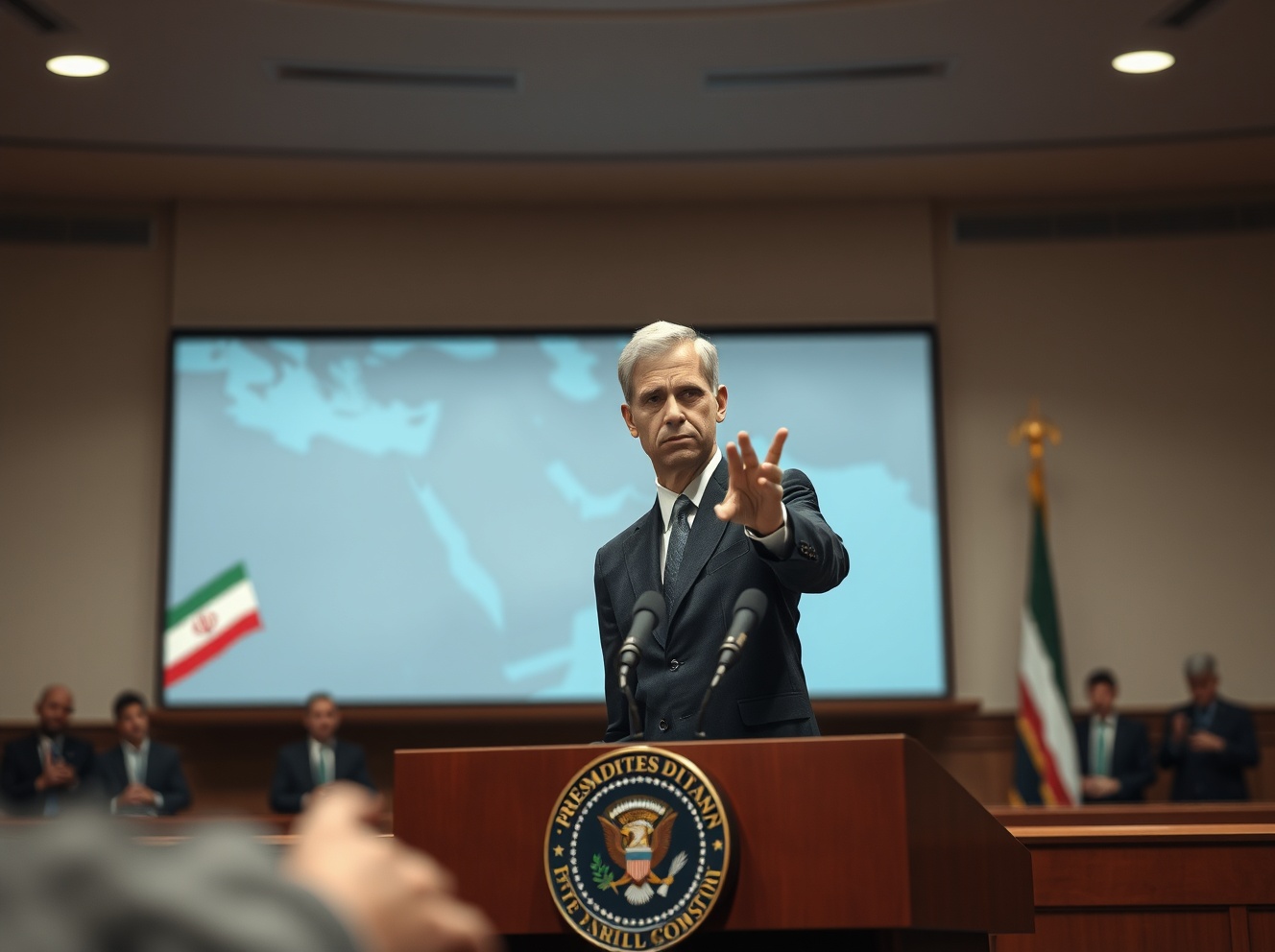
Trump’s Stark Warning: US Could Attack Iranian Power Facilities But Will Not – Nuclear Tensions Escalate
WASHINGTON, D.C. — President Donald Trump delivered a significant statement about U.S. military capabilities regarding Iran during a press conference this week. He declared that American forces have “virtually annihilated” Iranian military capacity. Furthermore, Trump revealed the United States possesses the capability to strike Iran’s power generation infrastructure. However, he emphasized the administration chooses not to exercise this option at present.
Trump’s Calculated Warning on Iranian Power Facilities
President Trump’s remarks about Iranian power facilities represent a deliberate escalation in rhetoric. The statement serves as both a warning and a demonstration of restraint. Military analysts note that power generation sites constitute critical infrastructure. Targeting them would significantly impact civilian populations and economic activity. Consequently, such actions typically carry substantial humanitarian and diplomatic consequences.
The Trump administration has maintained consistent pressure on Iran through multiple channels. These include economic sanctions, diplomatic isolation, and military posturing. Trump’s latest comments align with this comprehensive strategy. They signal capability without immediate intent to escalate to full-scale conflict. However, experts warn that verbal escalations can create unpredictable dynamics in already tense regions.
Background of US-Iran Military Confrontations
Recent years have witnessed several direct confrontations between U.S. and Iranian forces. The January 2020 drone strike that killed Iranian General Qasem Soleimani marked a major escalation. Iran responded with missile attacks on Iraqi bases housing American troops. These exchanges brought the two nations to the brink of broader conflict. Since then, both sides have engaged in periodic skirmishes, primarily in Iraqi and Syrian territories.
Military Balance and Regional Dynamics
Trump’s claim about “virtually annihilating” Iranian military capacity requires contextual analysis. While U.S. forces maintain overwhelming technological superiority, Iran possesses significant asymmetric capabilities. These include:
- Missile Arsenal: Iran maintains the largest missile inventory in the Middle East
- Proxy Networks: Extensive influence over militia groups across Iraq, Syria, Lebanon, and Yemen
- Naval Capabilities: Ability to disrupt shipping in the strategically vital Strait of Hormuz
- Cyber Warfare: Developed cyber capabilities for targeting infrastructure
The United States Central Command regularly assesses Iranian military strength. Their reports indicate Iran has suffered significant equipment losses in recent conflicts. However, they also acknowledge Iran’s continued ability to project regional influence through unconventional means.
Nuclear Development Concerns and Diplomatic Context
President Trump revealed that Iran has expressed determination to continue nuclear development. This statement comes amid collapsed negotiations over the Joint Comprehensive Plan of Action (JCPOA). The 2015 nuclear agreement imposed restrictions on Iran’s nuclear program in exchange for sanctions relief. The Trump administration withdrew from the agreement in May 2018, reinstating stringent economic sanctions.
International Atomic Energy Agency (IAEA) reports show Iran has gradually increased uranium enrichment levels since 2019. The country now enriches uranium to 60% purity, significantly closer to weapons-grade levels. However, Iranian officials maintain their nuclear program remains peaceful. They cite energy needs and scientific development as primary motivations.
| Date | Development | Uranium Enrichment Level |
|---|---|---|
| May 2018 | US withdraws from JCPOA | 3.67% (JCPOA limit) |
| July 2019 | Iran exceeds JCPOA stockpile limits | 4.5% |
| January 2021 | Iran begins 20% enrichment | 20% |
| April 2021 | Natanz facility sabotage incident | 20% |
| June 2022 | IAEA reports insufficient cooperation | 60% |
| Present | Ongoing negotiations stalemate | 60% |
Strategic Importance of Oil Supply Routes
President Trump issued a specific warning regarding oil supply disruption. “If Iran disrupts the oil supply, we will launch an even more powerful attack,” he stated. This reference highlights the strategic significance of Middle Eastern oil corridors. Approximately 20% of global oil consumption passes through the Strait of Hormuz. Iran’s geographical position allows it to potentially block this vital waterway.
The U.S. Fifth Fleet, based in Bahrain, maintains constant patrols in the region. Their mission includes ensuring freedom of navigation through international waters. Recent years have seen multiple incidents involving tankers in Gulf waters. Iranian forces have seized vessels and allegedly conducted attacks on shipping. The U.S. has responded with increased naval presence and coordination with regional allies.
Economic Implications of Regional Instability
Oil market analysts monitor U.S.-Iran tensions closely. Any significant disruption to Middle Eastern oil exports could trigger global economic consequences. Prices would likely spike, affecting consumers and industries worldwide. Furthermore, prolonged instability might accelerate transition to alternative energy sources. However, most experts believe neither side desires major conflict that would severely disrupt oil flows.
Analysis of US Operational Status in Iran
Trump’s statement that “the U.S. operation in Iran is nearing completion” requires examination. The United States maintains no permanent military bases within Iran itself. However, American forces operate extensively throughout the broader Middle East. These include bases in neighboring countries like Iraq, Qatar, Bahrain, and the United Arab Emirates. From these locations, U.S. forces conduct intelligence, surveillance, and reconnaissance missions focused on Iran.
Additionally, the U.S. supports various opposition groups and maintains cyber capabilities targeting Iranian infrastructure. The “operation” Trump references likely encompasses this broad spectrum of activities rather than conventional military deployment. Defense officials typically avoid discussing ongoing operations in detail for security reasons.
International Reactions and Diplomatic Fallout
Regional powers have responded cautiously to Trump’s statements. Gulf Cooperation Council members, particularly Saudi Arabia and the United Arab Emirates, generally support U.S. pressure on Iran. However, they also express concern about potential escalation that could directly affect their territories. European nations have called for restraint and continued diplomatic engagement. Meanwhile, Russia and China have criticized U.S. actions as destabilizing to regional security.
The United Nations Secretary-General has reiterated calls for dialogue and de-escalation. Multiple Security Council resolutions address both Iranian nuclear activities and regional stability concerns. However, the Council remains divided, reflecting broader geopolitical tensions among permanent members.
Conclusion
President Trump’s statements regarding Iranian power facilities reveal the continuing high-stakes confrontation between Washington and Tehran. His combination of demonstrated capability and stated restraint reflects a calculated approach to coercive diplomacy. The warning about oil supply disruption underscores the economic dimensions of this geopolitical struggle. Meanwhile, concerns about Iran’s nuclear development persist despite diplomatic efforts. As the U.S. operation in the region continues, the international community watches closely. The balance between pressure and escalation remains delicate, with significant implications for global energy markets and regional stability.
FAQs
Q1: What exactly did President Trump say about Iranian power facilities?
President Trump stated that the United States military has the capability to attack Iran’s power generation facilities but has chosen not to do so, while warning of stronger responses if Iran disrupts oil supplies.
Q2: How has Iran responded to these statements?
Iranian officials have not issued an immediate formal response to these specific comments, but generally characterize U.S. threats as psychological warfare and maintain their right to self-defense.
Q3: What is the current status of Iran’s nuclear program?
According to IAEA reports, Iran continues uranium enrichment at 60% purity levels and has accumulated stockpiles beyond JCPOA limits, though Iranian officials maintain the program’s peaceful nature.
Q4: How would attacks on power facilities affect Iranian civilians?
Targeting electrical infrastructure would likely cause widespread blackouts affecting hospitals, water systems, communications, and basic services, with humanitarian organizations warning of severe civilian consequences.
Q5: What is the strategic importance of the Strait of Hormuz mentioned by Trump?
The Strait of Hormuz is a narrow waterway between Iran and Oman through which approximately 20% of global oil consumption passes, making it one of the world’s most critical energy chokepoints.
This post Trump’s Stark Warning: US Could Attack Iranian Power Facilities But Will Not – Nuclear Tensions Escalate first appeared on BitcoinWorld.
Ayrıca Şunları da Beğenebilirsiniz

Ethereum unveils roadmap focusing on scaling, interoperability, and security at Japan Dev Conference

👨🏿🚀TechCabal Daily – Folded by a paper cut
