Banks urged to use tech to expand MSME lending
By Katherine K. Chan, Reporter
PHILIPPINE BANKS should invest in technology that can analyze informal financial records used by micro, small and medium enterprises (MSME) to help expand access to credit, a financial technology firm said.
In an interview with BusinessWorld, Munkh Abdullaki Mikael, head of sales at AND Solutions, said lenders need tools that could interpret nontraditional financial documents instead of relying on stricter regulations to boost MSME lending.
He said the Philippines should focus on improving banks’ ability to evaluate small businesses’ financial data rather than reimposing mandated lending quotas.
“Maybe it’s much better that they don’t reimpose that limit and the fees, because the fees are not the only actionable item to resolve this issue,” Mr. Mikael said via Zoom. “It simply needs a more cooperative approach.”
Many small businesses in the Philippines still keep financial records using handwritten logbooks, particularly small neighborhood shops and family-run enterprises.
Such records are often not accepted by banks as reliable documentation for income verification, making it difficult for these businesses to qualify for loans.
Mr. Mikael said most commercial banks lack the capability to analyze these types of documents as part of their credit assessment process.
“With today’s capabilities, the commercial banks we speak of do not have the tools to assess such documents as income verification,” he said. “They cannot confirm whether these businesses are able to pay back loans.”
He said banks could bridge the gap by adopting technologies that interpret informal records and convert them into usable financial information for credit evaluation.
One possible approach is for banks to provide standardized bookkeeping templates that MSMEs can use to record transactions.
The data from these templates could then be analyzed using algorithms designed to measure credit risk.
“There should be an algorithm that can calculate the risk to be quite lower for such documents,” Mr. Mikael said, adding that tools powered by artificial intelligence (AI) could help lenders analyze these records.
Technologies such as AI-based document recognition systems can extract data from handwritten or scanned records and convert them into structured information that banks can assess when evaluating loan applications.
Despite policy efforts to support small businesses, lending to MSMEs remains a small share of the Philippine banking system’s overall loan portfolio.
Data from the Bangko Sentral ng Pilipinas showed that banks extended P574.8 billion in loans to MSMEs as of end-December, up 5.23% from P546.22 billion a year earlier and 7.14% higher than the P536.51 billion recorded in the third quarter.
However, MSME loans accounted for only 4.73% of the industry’s P12.143-trillion loan book in October to December.
Mr. Mikael said reinstating mandated lending quotas might not necessarily address the problem, noting that banks might simply opt to pay penalties rather than meet the required lending levels.
Under the Magna Carta for MSMEs, banks were previously required to allocate 8% of their loan portfolios to micro and small enterprises and 2% to medium-sized firms.
The requirement expired in June 2018, a decade after the law was enacted.
While the lending quotas are no longer in place, the central bank continues to monitor banks’ MSME lending as part of its policy and supervisory oversight.
Ayrıca Şunları da Beğenebilirsiniz

Xenea Wallet Daily Quiz March 16, 2026: Claim Your Free Crypto Coins Now
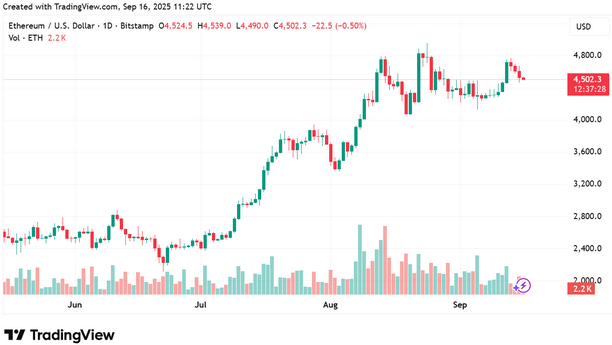
Ethereum Price Prediction: ETH Targets $10,000 In 2026 But Layer Brett Could Reach $1 From $0.0058