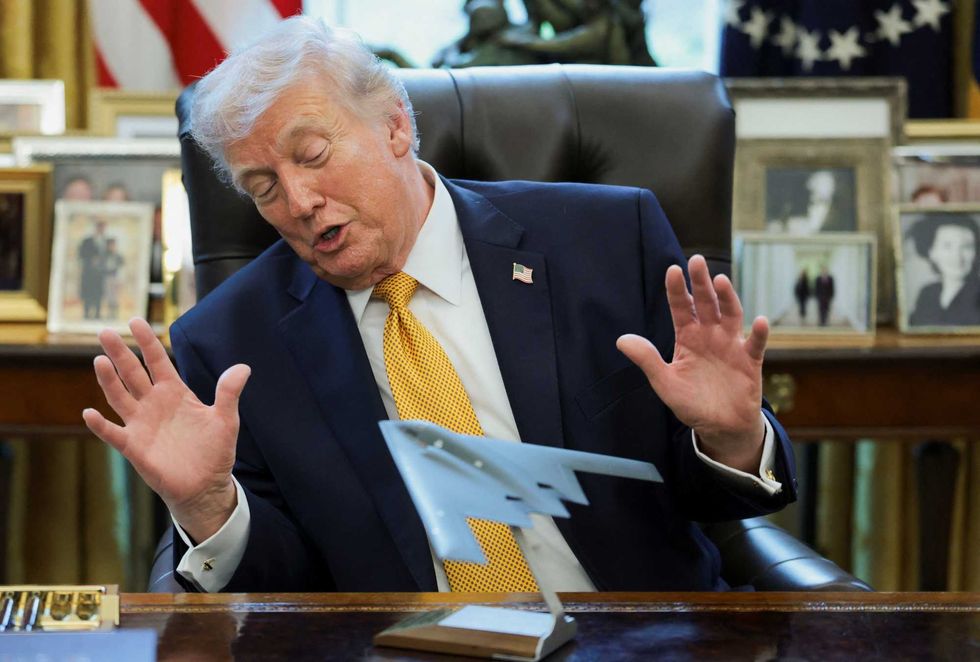
Trump Urges Federal Reserve to Hold Special Meeting and Cut Rates Immediately
Trump Urges Federal Reserve to Hold Special Meeting and Cut Interest Rates Immediately
Former U.S. President Donald Trump has called on the Federal Reserve to convene a special meeting and immediately reduce interest rates, a move that has sparked renewed discussion about monetary policy and the direction of the American economy.
Trump’s comments come amid ongoing debates about inflation, economic growth, and the role of central banks in managing financial stability. The statement has quickly drawn attention from economists, investors, and policymakers who closely follow developments involving the Federal Reserve’s decision making process.
The remarks circulated widely on social media after being highlighted by the Crypto Rover account on the platform X. The Hokanews editorial team later reviewed the statement while compiling coverage of developments affecting financial markets and economic policy.
Although the Federal Reserve operates independently from political leadership, Trump’s call for an immediate rate cut underscores the ongoing political and economic pressures surrounding interest rate policy in the United States.
 |
| Source: XPost |
The Federal Reserve’s Role in the U.S. Economy
The Federal Reserve, often referred to simply as the Fed, serves as the central bank of the United States.
Its primary responsibilities include managing monetary policy, maintaining financial stability, regulating banks, and promoting maximum employment while controlling inflation.
One of the Fed’s most powerful tools is its ability to adjust interest rates.
By raising or lowering interest rates, the central bank can influence borrowing costs across the economy.
When rates are lowered, borrowing becomes cheaper, which can encourage investment, consumer spending, and business expansion.
Conversely, higher interest rates tend to slow economic activity by making borrowing more expensive.
Because these decisions affect everything from mortgage rates to corporate financing, changes in interest rates can have significant impacts on financial markets.
Trump’s History of Criticizing the Federal Reserve
During his presidency, Donald Trump frequently voiced criticism of the Federal Reserve and its interest rate policies.
Trump often argued that lower interest rates would support economic growth and strengthen U.S. competitiveness in global markets.
At various points during his administration, he publicly urged the central bank to reduce borrowing costs in order to stimulate investment and maintain economic momentum.
Trump’s recent call for a special meeting and immediate rate cut reflects a continuation of his long standing views on monetary policy.
However, the Federal Reserve traditionally operates independently of political influence, making decisions based on economic data and analysis rather than direct requests from political figures.
What a Special Fed Meeting Would Mean
The Federal Reserve normally holds scheduled meetings throughout the year through its Federal Open Market Committee.
These meetings involve discussions among central bank officials about the state of the economy and potential adjustments to interest rates.
While most rate decisions occur during scheduled sessions, the Fed does have the authority to hold emergency or special meetings if economic conditions require immediate action.
Historically, such emergency meetings have occurred during periods of significant financial stress.
For example, during major economic crises or market disruptions, the Fed has occasionally acted outside its normal schedule to adjust interest rates or implement financial support measures.
Trump’s suggestion that the Fed should hold a special meeting suggests he believes immediate action may be necessary.
Economic Conditions and Rate Policy
Interest rate policy is heavily influenced by economic indicators such as inflation, employment levels, and overall economic growth.
In recent years, central banks around the world have faced complex challenges as they attempt to balance inflation control with economic stability.
Higher interest rates are often used to slow inflation by reducing spending and borrowing.
However, maintaining rates that are too high for extended periods can potentially slow economic growth.
Economists therefore carefully analyze data related to consumer prices, wage growth, and financial market conditions when determining appropriate monetary policy.
Trump’s call for immediate rate cuts reflects concerns shared by some market participants who believe lower borrowing costs could stimulate economic activity.
Financial Markets React to Policy Discussions
Statements involving the Federal Reserve often influence financial markets.
Investors closely monitor comments from political leaders, central bank officials, and economic analysts for signals about potential changes in interest rate policy.
Even speculation about rate adjustments can affect stock prices, bond yields, and currency markets.
Lower interest rates typically make borrowing cheaper for businesses and consumers, which can support economic growth and corporate profitability.
However, rate cuts can also weaken a country’s currency and influence capital flows across international markets.
Because of these factors, the Federal Reserve’s decisions carry significant implications for global financial systems.
The Debate Over Central Bank Independence
Central bank independence has long been considered an important principle in modern economic governance.
Independent central banks are generally expected to make policy decisions based on economic analysis rather than political pressure.
Supporters of central bank independence argue that it helps maintain stability and credibility in financial markets.
If monetary policy were heavily influenced by political considerations, it could potentially lead to short term decisions that undermine long term economic stability.
At the same time, political leaders frequently express opinions about economic policy, particularly during periods of economic uncertainty.
Trump’s recent comments highlight the ongoing tension between political leadership and central bank independence.
Global Context of Interest Rate Policies
The Federal Reserve is not the only central bank navigating complex economic conditions.
Central banks around the world have been adjusting interest rates in response to inflation trends, economic growth concerns, and geopolitical developments.
Institutions such as the European Central Bank, the Bank of England, and the Bank of Japan all face similar challenges in balancing inflation control with economic expansion.
Changes in U.S. interest rates often have ripple effects across global financial markets.
Because the U.S. dollar remains the world’s primary reserve currency, decisions by the Federal Reserve can influence investment flows, exchange rates, and borrowing costs internationally.
The Impact on Cryptocurrency and Digital Assets
Interest rate policies also affect emerging financial sectors such as cryptocurrency markets.
Digital asset investors often watch central bank decisions closely because changes in liquidity and borrowing costs can influence risk appetite among investors.
Lower interest rates can encourage investment in higher risk assets, including cryptocurrencies.
Conversely, higher rates may lead investors to favor safer financial instruments such as government bonds.
The comments about a potential rate cut gained additional attention in cryptocurrency communities after being shared through the Crypto Rover account on X.
The Hokanews editorial team later reviewed the remarks while covering broader financial market developments.
Economic Uncertainty and Policy Debate
The global economic environment remains complex, shaped by inflation pressures, geopolitical tensions, and shifting financial conditions.
Policymakers face difficult decisions when determining how to adjust interest rates in response to these factors.
Some economists argue that maintaining higher rates may be necessary to ensure inflation remains under control.
Others believe that lower rates could support economic growth and reduce the risk of recession.
The debate over the appropriate direction for monetary policy continues among economists, policymakers, and financial analysts.
Looking Ahead
Whether the Federal Reserve will respond to Trump’s suggestion for a special meeting remains uncertain.
The central bank typically communicates policy changes through official channels following internal deliberations among its leadership.
Future decisions will likely depend on economic data and financial market conditions.
As global markets continue to evolve, discussions surrounding interest rate policy are expected to remain a central focus for investors and policymakers alike.
Conclusion
Donald Trump’s call for the Federal Reserve to hold a special meeting and immediately cut interest rates has reignited debate over U.S. monetary policy.
The comments highlight ongoing discussions about the role of interest rates in shaping economic growth, inflation control, and financial market stability.
The statement gained attention after being highlighted by the Crypto Rover account on the social platform X and was later cited by the Hokanews editorial team in its reporting on financial developments.
While the Federal Reserve ultimately determines its policy independently, the conversation surrounding interest rates remains one of the most closely watched topics in global economic discussions.
hokanews.com – Not Just Crypto News. It’s Crypto Culture.
Writer @Ethan
Ethan Collins is a passionate crypto journalist and blockchain enthusiast, always on the hunt for the latest trends shaking up the digital finance world. With a knack for turning complex blockchain developments into engaging, easy-to-understand stories, he keeps readers ahead of the curve in the fast-paced crypto universe. Whether it’s Bitcoin, Ethereum, or emerging altcoins, Ethan dives deep into the markets to uncover insights, rumors, and opportunities that matter to crypto fans everywhere.
Disclaimer:
The articles on HOKANEWS are here to keep you updated on the latest buzz in crypto, tech, and beyond—but they’re not financial advice. We’re sharing info, trends, and insights, not telling you to buy, sell, or invest. Always do your own homework before making any money moves.
HOKANEWS isn’t responsible for any losses, gains, or chaos that might happen if you act on what you read here. Investment decisions should come from your own research—and, ideally, guidance from a qualified financial advisor. Remember: crypto and tech move fast, info changes in a blink, and while we aim for accuracy, we can’t promise it’s 100% complete or up-to-date.
Ayrıca Şunları da Beğenebilirsiniz

Eric Trump bets Fed rate cut will send crypto stocks skyrocketing

MYX Finance price surges again as funding rate points to a crash