

Russia’s Alarming Military Cooperation with Iran Expands Drone and Sanctions Evasion Networks
BitcoinWorld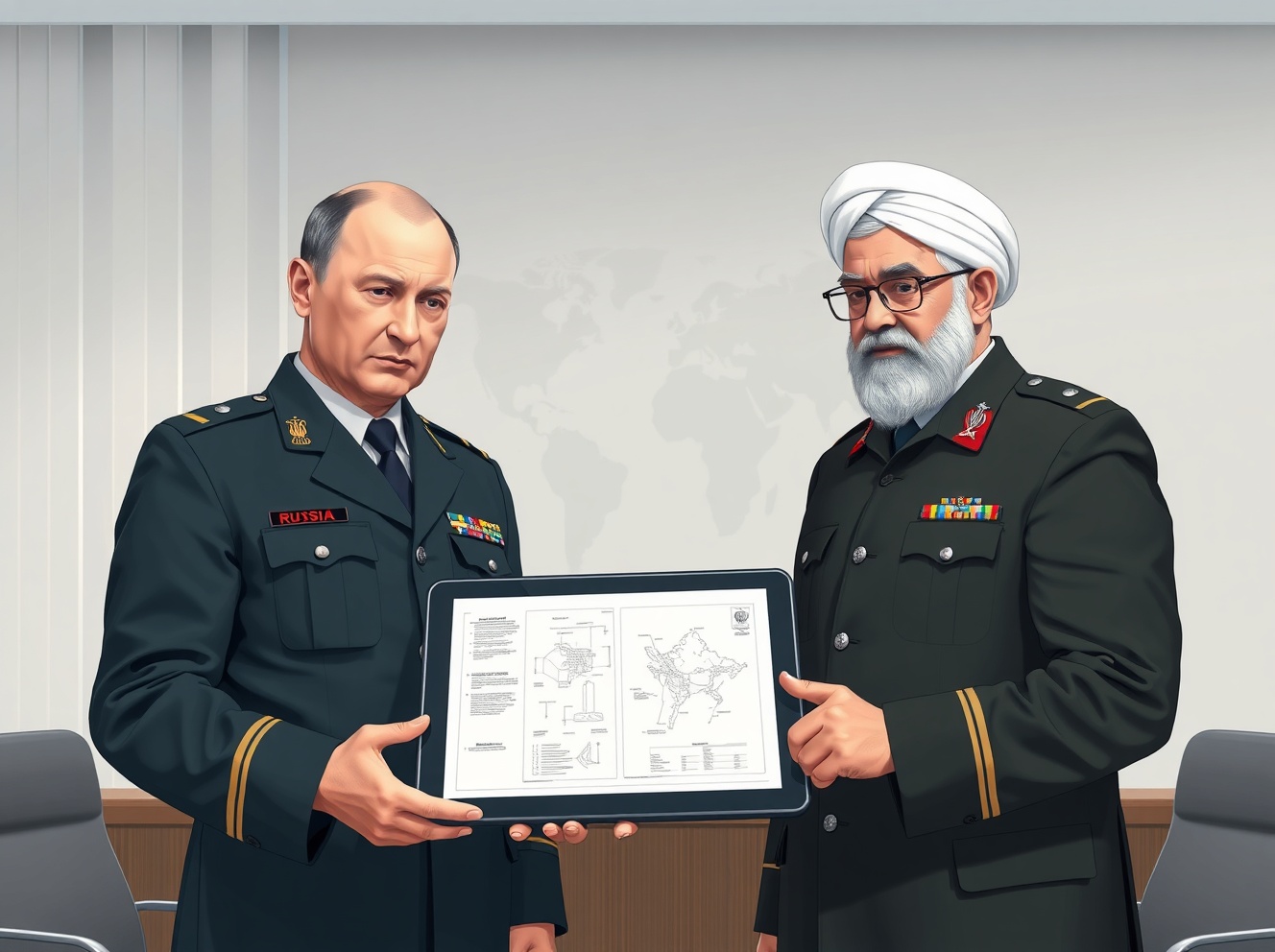
Russia’s Alarming Military Cooperation with Iran Expands Drone and Sanctions Evasion Networks
MOSCOW/TEHRAN, March 2025 – Russia and Iran are significantly deepening their strategic military partnership, according to recent analyses and international reports, creating a formidable alliance with profound implications for global security architecture. This expanding cooperation, centered on advanced weapons technology and sophisticated sanctions evasion, represents a pivotal shift in Eurasian geopolitics. Consequently, Western intelligence agencies are now monitoring the alliance’s activities with heightened concern.
Russia’s Military Cooperation with Iran Enters a New Phase
The foundation of contemporary Russo-Iranian military ties was solidified during the Ukraine conflict. Initially, Iran supplied Russia with hundreds of Shahed-136 loitering munitions, commonly called “kamikaze drones.” These weapons provided a crucial, cost-effective strike capability for Russian forces. In return, Russia has reportedly offered Iran unprecedented levels of technical support and military hardware. For instance, Western officials confirm that Russia is assisting Iran with its aerospace and missile programs. Furthermore, this partnership now extends into joint training exercises and intelligence sharing, creating a deeply integrated defense relationship.
Analysts point to several key drivers for this alliance. Primarily, both nations face extensive international sanctions and seek to reduce their dependency on Western technology. Additionally, they share strategic interests in challenging U.S. influence in the Middle East and Central Asia. A 2024 report from the International Institute for Strategic Studies (IISS) noted that the cooperation is “mutually reinforcing,” allowing both countries to circumvent export controls and develop capabilities they could not achieve independently.
The Core of the Partnership: Drone Technology and Beyond
The most visible element of this cooperation remains unmanned aerial systems (UAS). Iran’s drone program, built under decades of sanctions, offered Russia an immediate battlefield solution. However, the relationship has evolved far beyond simple arms transfers. Russia is now providing advanced components and manufacturing knowledge. Specifically, this includes:
• Satellite Navigation and Guidance: Russian GLONASS technology is enhancing the accuracy of Iranian drones.
• Engine Technology: Collaboration on more powerful and reliable drone engines.
• Electronic Warfare (EW) Systems: Joint development of counter-drone and signal-jamming equipment.
• Co-production Facilities: Evidence suggests Russia is helping Iran establish factories to mass-produce advanced drones.
This technological exchange is not one-way. Iran has gained access to Russian Sukhoi Su-35 fighter jet technology and advanced air defense systems like the S-400. A recent table illustrates the key areas of exchange:
| Technology from Iran to Russia | Technology from Russia to Iran |
|---|---|
| Shahed-136 & Mohajer-6 Drones | Su-35 Fighter Jet Components |
| Asymmetric Warfare Tactics | S-400 Air Defense Technology |
| Small-Boat Swarm Tactics | Satellite Imagery & Intelligence |
| Sanctions Evasion Networks | Advanced Aerospace Engineering |
Expert Analysis on Strategic Motivations
Dr. Anya Petrova, a senior fellow at the Center for Eurasian Studies, explains the strategic calculus. “This is a marriage of necessity and opportunity,” she states. “Russia acquires proven, low-cost drone technology that has undergone real-world testing in conflicts across the Middle East. Conversely, Iran receives long-sought-after high-tech military assets and legitimacy from a major world power. Their collaboration on sanctions evasion through third countries and cryptocurrency transactions is perhaps the most resilient aspect of their partnership.”
Geopolitical Impacts and International Response
The deepening alliance directly challenges security in Europe and the Middle East. For NATO, the proliferation of advanced Iranian drones, enhanced by Russian technology, comulates European air defense planning. Meanwhile, in the Middle East, Israel views the potential transfer of Russian air defense systems to Iran as a top-tier threat. The United States and the European Union have responded with successive rounds of sanctions targeting entities and individuals involved in the drone trade. However, the effectiveness of these measures is increasingly questioned as both nations develop more sophisticated financial workarounds.
Regional powers are adjusting their strategies accordingly. For example, Gulf Cooperation Council (GCC) states are investing heavily in counter-drone technology and deepening security ties with external partners. The alliance also influences conflicts in Syria and Yemen, where both Russian and Iranian interests align in supporting the Assad regime and Houthi forces, respectively. This creates a unified bloc that can project power across the region, altering the balance of influence.
Conclusion
The expansion of military cooperation between Russia and Iran represents a significant and enduring feature of the global security landscape. This partnership, built on shared adversarial relationships with the West and complementary military needs, has matured into a comprehensive strategic alliance. It facilitates critical technology transfer, strengthens sanctions-busting networks, and projects power into multiple theaters. Therefore, the international community must understand this evolving Russia-Iran military cooperation not as a temporary convenience but as a long-term strategic alignment with lasting consequences for global stability and non-proliferation efforts.
FAQs
Q1: What is the main focus of Russia-Iran military cooperation?
The core focus is the exchange of drone technology and manufacturing expertise, with Iran supplying combat-proven drones to Russia and Russia providing advanced aerospace, satellite, and air defense technology to Iran.
Q2: How does this cooperation help both countries evade sanctions?
They have developed complex networks using third-country intermediaries, cryptocurrency transactions, and shell companies to procure restricted components and finance their military programs, making traditional financial sanctions less effective.
Q3: What are the immediate security implications for the Middle East?
The partnership enhances Iran’s military capabilities, particularly in air power and missile technology, which directly threatens regional rivals like Israel and Saudi Arabia and could trigger a new arms race.
Q4: Has NATO expressed concern about this alliance?
Yes, NATO officials have repeatedly warned about the threat posed by Iranian drones used by Russia in Ukraine and the broader implications of technology and tactical knowledge sharing between the two sanctioned states.
Q5: Could this partnership lead to a formal defense treaty?
While a full NATO-style mutual defense pact is unlikely in the near term, analysts believe the countries are moving toward a more formalized, long-term strategic partnership agreement that includes binding commitments on military and security collaboration.
This post Russia’s Alarming Military Cooperation with Iran Expands Drone and Sanctions Evasion Networks first appeared on BitcoinWorld.
Ayrıca Şunları da Beğenebilirsiniz

Will XRP Price Increase In September 2025?

MSTR’s latest BTC purchase offers insight into its evolving funding model

