Crypto investment frenzy: Why South Korea has become one of the hottest markets in the world
Author: Zen, PANews
Looking at the global cryptocurrency market, few markets can compare with Korean investors in terms of madness. They have repeatedly pushed up the price of coins on local exchanges, and even spawned a unique phenomenon called "Kimchi Premium" - the same Bitcoin is often 3 to 5 percentage points more expensive in South Korea than in the global market.
On February 3 this year, affected by Trump's tariff war concerns, South Korea's Bitcoin "Kimchi Premium" soared to 9.7% at 2 a.m., setting a 10-month high since April 2024. The Kimchi premium usually rises during bull markets, but it can also surge during panic selling, due to lower selling pressure on Korean exchanges than in global markets.
In the altcoin market, which is more favored by Korean investors, this premium is even crazier. In July last year, the AVAIL token soared 1,300% on the day of listing on the Korean crypto exchange Bithumb, which was quite different from the increase in most other centralized exchanges, with the premium exceeding 200% at its highest point.
Baek Yeon-joo, a researcher at the Korea Institute of Finance, pointed out in a paper titled "A Study on the Virtual Asset Market and Price Gouging in Korea" that "South Korea has a high proportion of asset transactions outside the world's top ten virtual assets, making it easy to become the target of price manipulation." And these manipulated investors are very much like the players in Netflix's hit Korean drama "Squid Game" - without understanding the rules, they are driven by the temptation of money and throw themselves into the game without hesitation.
Crypto fever sweeps South Korea, with a surge in investors from all walks of life
According to Dong-A Ilbo , on March 21, Ahn Do-jae, a member of the Democratic Party of Korea, disclosed that the data he received from five domestic virtual currency exchanges, including Upbit, Bithumb, Coinone, Korbit, and Gopax, showed that at the end of last year, there were 9,667,023 investors with tradable accounts on these exchanges, accounting for about 18.7% of the total population of South Korea, an increase of 52.6% compared with the previous year. The total size of crypto assets held by these investors reached 105.01 trillion won (about 71.5 billion US dollars).
This cryptocurrency craze has not only swept ordinary investors, but also showed a trend of widespread penetration among public officials. According to the South Korean Government Officials Ethics Committee on March 27, more than 20% of the 2,047 public officials surveyed held cryptocurrencies, slightly higher than the national average. The 411 officials who invested in crypto assets held a total of 14.4 billion won (9.8 million U.S. dollars) worth of cryptocurrencies, with an average investment of nearly 24,000 U.S. dollars per person.
The surge in the number of investors has also brought considerable profit growth to South Korean cryptocurrency exchanges. The Korea Herald reported that Dunamu, the operator of South Korea's largest cryptocurrency exchange Upbit, saw its operating profit increase by 85% year-on-year to 1.19 trillion won (US$811 million) in 2024.
In fact, the trading scope of Korean crypto investors is not limited to local platforms. In recent years, the trend of funds flowing to overseas exchanges has become increasingly obvious. According to the South Korean Financial Intelligence Agency (FIU) disclosed in November last year, in the first half of 2023, the total amount of crypto assets transferred from domestic exchanges in South Korea to overseas exchanges reached 52.3 trillion won, of which 203,000 users chose Binance or Coinbase.
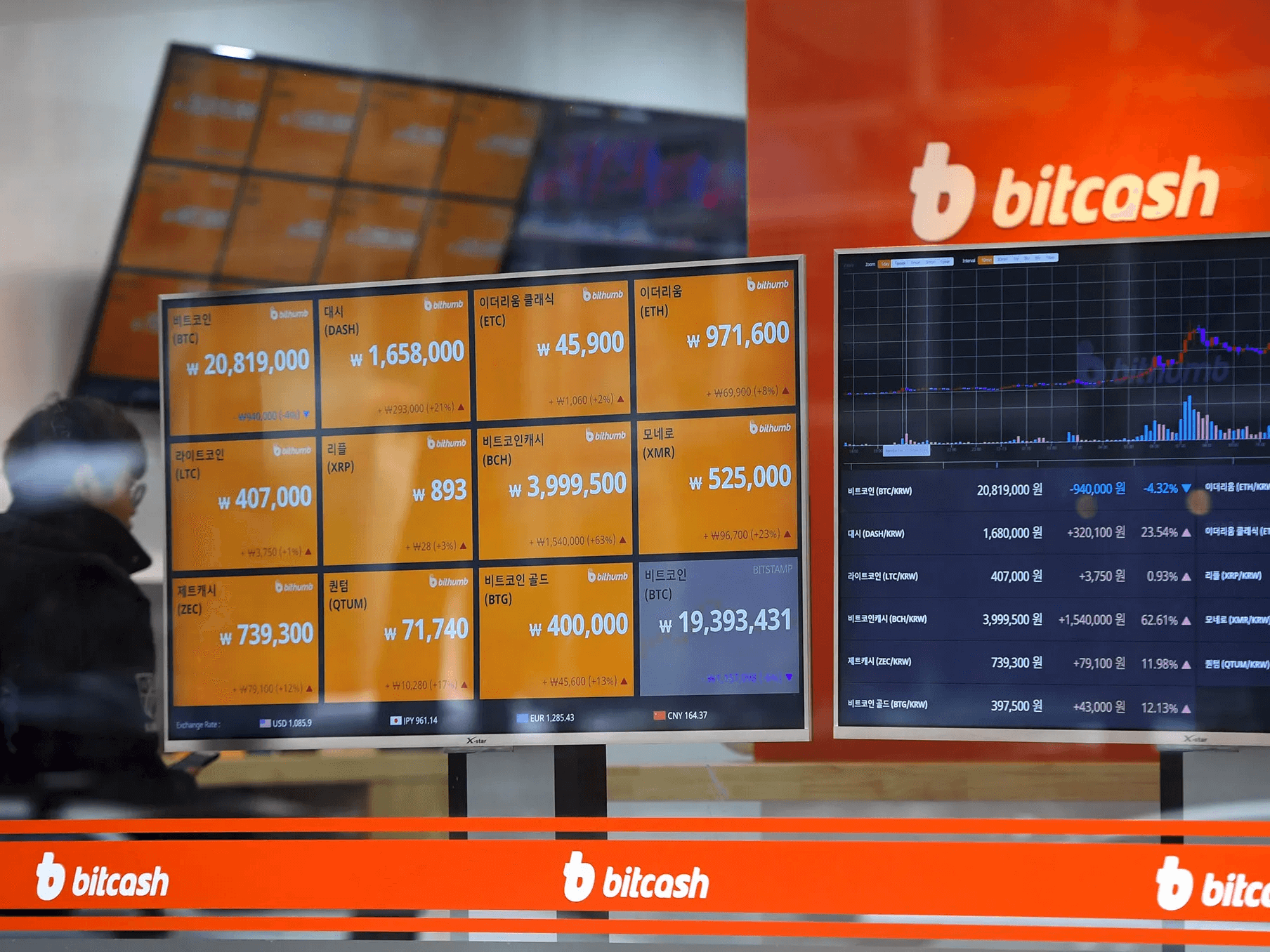
In addition to the large number of participants and the large scale of funds, Korean investors also have a more aggressive risk appetite and prefer to invest in highly volatile altcoins. About 80% of the crypto assets traded on Upbit are tokens other than Bitcoin and Ethereum, making the Korean cryptocurrency market a "speculative playground."
So, what exactly makes Koreans so keen on crypto investment? According to the "State of the Korean Cryptocurrency Market" report released by Presto Labs last year, South Korea has been one of the largest markets in the cryptocurrency field since 2017, and the Korean won has been ranked second in the global legal currency trading volume. The report said that South Korea's crypto investment boom has benefited from cultural factors such as extremely high Internet penetration and a tech-savvy population, as well as a risk-averse investment culture and a single-ethnic society where trends spread rapidly.
In addition, Korean society's extreme desire for money and material things has also become a breeding ground for speculators.
Materialism and “Money Above All”
In recent years, the term "financial therapy" (금융치료) has become popular among young office workers in South Korea, which refers to using money to heal a wounded heart, relieve depression or stress. It is not difficult to imagine that when a worker who has worked hard and is exhausted is feeling depressed, when a salary or bonus suddenly arrives, the joy that arises spontaneously will instantly dilute the stress, and even greatly reduce physical discomfort.
From a scientific point of view, this kind of "financial therapy" may be feasible. Humans are born with a reward mentality and desire to be rewarded accordingly for their efforts. For Generation M, who were born between 1981 and 1996 and grew up in the era of globalization and the Internet, and Generation Z, who were born between 1997 and 2010, on the one hand, they regard money as an important measure of personal value, and on the other hand, they are under great economic pressure and attach great importance to returns. Therefore, when they receive corresponding economic rewards, their psychological pressure will be relieved.
To some extent, the widespread acceptance of "financial therapy" by South Korea's M and Z generations shows that in the Korean economic system and with little social security, the idea of accumulating money as the primary goal has become deeply rooted. This phenomenon was also confirmed by the World Values Survey (WVS), an international research project, in its last round of the World Values Survey in 2018. The survey found that 45% of South Koreans consider themselves "materialists", which is significantly higher than Japan (21.6%), France (19.2%) and the United States (14.4%).

According to a survey released by the Pew Research Center in November 2021, South Koreans put economic stability first, with the highest proportion choosing "material happiness" as the source of meaning in life, followed by physical and mental health and family relationships. This is in stark contrast to the other 14 countries surveyed, which listed "family and children" as the primary source of a meaningful life. Based on this mentality, many South Koreans tend to let money dominate even in the field of interpersonal communication.
This strong desire for money has also led many South Koreans, especially the younger generation, to choose leveraged investments. According to statistics from the Financial Supervisory Service (FSS), South Koreans' accumulated debts reached 476.9 trillion won in the year ending October 2024, of which nearly 28% (134 trillion won) was borrowed by individuals in their 20s and 30s.
In addition, Korean society is full of strong jealousy and comparison psychology, which can be seen from the proverb "My stomach hurts when my cousin buys land" (사촌이땅을사면배가아프다). In this environment, people are more likely to envy and be jealous of those who have wealth. Especially when money is regarded as the most important criterion for measuring success, some Koreans have a stronger desire for wealth.
The desire for wealth and finance has also made ordinary investors flock to so-called successful investors. Therefore, crypto KOLs have considerable influence in South Korea. They post information through YouTube or Telegram communities to guide fans to buy a certain project or use their rebate link to register for a certain exchange. The top KOLs can receive millions of dollars in rebates every month. The well-known anchor Inbeom even launched his own meme coin BugsCoin. But KOLs are often accompanied by huge controversies of "cutting leeks", while South Korea's retail leeks are like weeds, growing again in the spring breeze, and they continue to move forward even after experiencing two major crises of Terra and FTX.
Regarding the above phenomenon, Professor Jeon Hong-jin of the Department of Mental Health Medicine at Samsung Seoul Hospital said that if you get used to "financial therapy", you will have a stronger desire for money, and over time, you will need to get more and more money to achieve the same psychological satisfaction. However, material resources are limited after all, so financial therapy cannot be a permanent solution. He also added: "If you indulge in cryptocurrency or stock investment in order to "receive financial therapy", it may cause more serious psychological problems."
Under the solidified wealth order, the crypto market becomes a breakthrough
In South Korea, where class and wealth are severely solidified, opportunities for the younger generation to accumulate assets are usually limited. However, under the influence of the "money first" concept, when the failure of traditional investment methods is intertwined with the lack of wealth growth channels, it has formed a driving force to promote the prosperity of the Korean crypto market to a certain extent.
In South Korea, wealth accumulation has long relied on the real estate and stock markets. In particular, real estate, which was considered a major investment in the past, has become an important factor that has dragged down economic growth and exacerbated social inequality. The common point between these two types of assets is that the accumulation of wealth often relies on people who enter the market early and hold it for a long time, thus forming a huge vested interest group. These groups have created a "Matthew effect" in wealth growth by controlling asset prices, policy influence and market access thresholds. For ordinary citizens, especially the younger generation, this gap is widening.
Due to the extremely high entry threshold of the real estate market, young people can hardly realize wealth growth through this traditional channel even if they have a stable income. Although the stock market has seen the emergence of "Donghak Ants" (referring to South Korean retail investors), the market is still essentially dominated by large capital, that is, institutional investors, and individual investors have limited influence in the market.
"South Korean society has shifted to a survival of the fittest mentality," said Han Young-seop, director of the Korea Institute of Social Finance. "The country does not have a strong social security system like Northern Europe. There are also many debates around issues such as the depletion of the state pension. The older generation mainly discusses these issues from their perspective, and young people have little say."
Amid the anxiety about reality and the future, the cryptocurrency market provides a different path to wealth accumulation. Due to its decentralized nature, it is relatively uncontrolled by vested interest groups. For vested interests in the traditional wealth system, the cryptocurrency market may be a strange and difficult-to-understand game rule, because it does not follow the operating logic of the traditional financial market and is full of multiple factors such as technology, community drive, and market sentiment.
In addition, the cryptocurrency industry itself is still in its infancy, allowing young people with limited funds to enter. Even though many people expect the cryptocurrency market to go through a process similar to the Internet bubble and may experience a bubble burst, they are still optimistic that it will eventually grow and thus achieve asset growth.
Against the backdrop of unstable employment, stagnant income, and declining social mobility, cryptocurrency has become a "symbol of hope" by providing a new opportunity to accumulate wealth for those who have difficulty improving their economic status through traditional means. In other words, the cryptocurrency market may be a new market spawned by the inequality caused by South Korea's traditional wealth accumulation model.
Of course, this hope comes with risks.
It is worth noting that, unlike what everyone imagines, the latest disclosure by Democratic Party member An Daojie also shows that the number of middle-aged and elderly crypto investors in South Korea has increased significantly, with about a quarter of cryptocurrency investors over 50 years old. Among the "big players" with more than 1 billion won in virtual currency, half of them are over 50 years old.
Professor Zhao Yancheng of the School of International Commerce at Deoksung Women's University believes that before the craze in the Korean crypto market turns into a frenzy, Korean society must seriously consider reasonable solutions. The core of the solution should be to strongly regulate the long-standing monopoly behavior of vested interest groups that transcends the law and fundamentally correct the already seriously skewed wealth distribution system.
Ayrıca Şunları da Beğenebilirsiniz

BlackRock boosts AI and US equity exposure in $185 billion models

Alameda Research recovers 500 BTC, still holds over $1B in assets