Jack Dorsey’s decentralized messaging app Bitchat experienced a massive surge in downloads in Madagascar during violent protests over water and electricity shortages, which forced authorities to impose dusk-to-dawn curfews across the capital. Google Trends data shows “Bitchat” searches spiking from zero to 100 in Antananarivo as protesters sought censorship-resistant communication alternatives.Source: Google Trends Poverty and Infrastructure Crisis Fuel Violent Demonstrations The peer-to-peer application operates without internet infrastructure using Bluetooth Low Energy mesh networks, allowing encrypted messages to hop between devices within 30-meter ranges. Chrome-Stats shows Bitchat has been downloaded 365,307 times since launch, with over 21,000 downloads in the last day and more than 71,000 in the past week. Protests erupted on Thursday as thousands of mostly young protesters marched through Antananarivo, demanding the restoration of reliable water and electricity services. Police fired tear gas to disperse crowds who barricaded roads with burning tires and rocks before looting shopping malls, banks, and attacking homes of lawmakers close to President Andry Rajoelina. The government sacked its energy minister and imposed curfews from 7 PM to 5 AM to restore public order. Madagascar faces severe poverty, with 75% of its 30 million population living below the World Bank’s poverty line, while only 6.6 million citizens have internet access. Mesh Networks Enable Communication During Civil Unrest Bitchat adoption in Madagascar follows similar patterns observed during recent protests in Nepal and Indonesia. Nepal recorded 48,781 downloads on September 8 as youth-led demonstrations against corruption and social media bans left 22 dead and forced Prime Minister KP Sharma Oli’s resignation. The application requires no phone numbers, email addresses, or account registration while providing end-to-end encryption through X25519 key exchange and AES-256-GCM protocols. Each device functions as both a client and a server, creating self-organizing networks that are resilient to centralized attacks or single points of failure. Messages fragment into 500-byte chunks, enabling transmission across multiple device hops with up to seven relay points. The store-and-forward system caches messages for offline users up to 12 hours, ensuring delivery even when direct connections are unavailable. Random peer IDs are generated for each session, protecting user privacy while eliminating the need for persistent identifiers. Emergency wipe capabilities, accessible through triple-tap commands, instantly clear local data if devices are compromised or confiscated. Dorsey launched the beta in July 2025, filling TestFlight’s 10,000 capacity within hours. The weekend project focuses on disaster coordination, event overflow communication, and building cross-community bridges during internet shutdowns or government censorship campaigns. Western Governments Target Encrypted Communications Simultaneously The European Union advances its controversial “Chat Control” regulation, which requires messaging apps to scan every message, photo, and video before encryption. Fifteen EU countries currently support the proposal, though it falls short of the 65% population threshold required for passage. The Child Sexual Abuse Regulation mandates client-side scanning where software checks content on user devices before transmission. Supporters argue the measure combats child abuse material, while critics warn it enables mass surveillance and weakens encryption, protecting financial privacy. Parallel pressures exist in the United States, where Telegram CEO Pavel Durov has stated that his company avoids building infrastructure due to concerns about government surveillance. The NSA previously attempted to influence global encryption standards to make them easier to break, facts revealed through Edward Snowden’s leaks. For the EU, Germany holds the pivotal vote and has yet to take a final stance ahead of the anticipated October 14 Council vote. Platforms like Signal have suggested they would exit the EU market rather than compromise on encryption standards. For cryptocurrency users, the regulation poses a threat to the encryption protecting wallet transactions, private keys, and identity data. Client-side scanning could theoretically extend to peer-to-peer payments, decentralized finance (DeFi) protocols, or wallet operations, thereby undermining the principles of decentralization. Crypto advocates predict that the proposal might drive users toward decentralized Web3 platforms, which are designed for privacy by default. Major tech companies, including Google and Starlink, have invested in mesh networking solutions as decentralized infrastructure alternatives.Source: BitChat Explorer Global adoption of censorship-resistant tools continues accelerating, with Indonesia recording 12,581 Bitchat downloads during August protests over parliamentary allowances and police brutality, similar to Nepal. Russia also contributed 8,749 downloads while the United States registered 8,211 users during the same timeJack Dorsey’s decentralized messaging app Bitchat experienced a massive surge in downloads in Madagascar during violent protests over water and electricity shortages, which forced authorities to impose dusk-to-dawn curfews across the capital. Google Trends data shows “Bitchat” searches spiking from zero to 100 in Antananarivo as protesters sought censorship-resistant communication alternatives.Source: Google Trends Poverty and Infrastructure Crisis Fuel Violent Demonstrations The peer-to-peer application operates without internet infrastructure using Bluetooth Low Energy mesh networks, allowing encrypted messages to hop between devices within 30-meter ranges. Chrome-Stats shows Bitchat has been downloaded 365,307 times since launch, with over 21,000 downloads in the last day and more than 71,000 in the past week. Protests erupted on Thursday as thousands of mostly young protesters marched through Antananarivo, demanding the restoration of reliable water and electricity services. Police fired tear gas to disperse crowds who barricaded roads with burning tires and rocks before looting shopping malls, banks, and attacking homes of lawmakers close to President Andry Rajoelina. The government sacked its energy minister and imposed curfews from 7 PM to 5 AM to restore public order. Madagascar faces severe poverty, with 75% of its 30 million population living below the World Bank’s poverty line, while only 6.6 million citizens have internet access. Mesh Networks Enable Communication During Civil Unrest Bitchat adoption in Madagascar follows similar patterns observed during recent protests in Nepal and Indonesia. Nepal recorded 48,781 downloads on September 8 as youth-led demonstrations against corruption and social media bans left 22 dead and forced Prime Minister KP Sharma Oli’s resignation. The application requires no phone numbers, email addresses, or account registration while providing end-to-end encryption through X25519 key exchange and AES-256-GCM protocols. Each device functions as both a client and a server, creating self-organizing networks that are resilient to centralized attacks or single points of failure. Messages fragment into 500-byte chunks, enabling transmission across multiple device hops with up to seven relay points. The store-and-forward system caches messages for offline users up to 12 hours, ensuring delivery even when direct connections are unavailable. Random peer IDs are generated for each session, protecting user privacy while eliminating the need for persistent identifiers. Emergency wipe capabilities, accessible through triple-tap commands, instantly clear local data if devices are compromised or confiscated. Dorsey launched the beta in July 2025, filling TestFlight’s 10,000 capacity within hours. The weekend project focuses on disaster coordination, event overflow communication, and building cross-community bridges during internet shutdowns or government censorship campaigns. Western Governments Target Encrypted Communications Simultaneously The European Union advances its controversial “Chat Control” regulation, which requires messaging apps to scan every message, photo, and video before encryption. Fifteen EU countries currently support the proposal, though it falls short of the 65% population threshold required for passage. The Child Sexual Abuse Regulation mandates client-side scanning where software checks content on user devices before transmission. Supporters argue the measure combats child abuse material, while critics warn it enables mass surveillance and weakens encryption, protecting financial privacy. Parallel pressures exist in the United States, where Telegram CEO Pavel Durov has stated that his company avoids building infrastructure due to concerns about government surveillance. The NSA previously attempted to influence global encryption standards to make them easier to break, facts revealed through Edward Snowden’s leaks. For the EU, Germany holds the pivotal vote and has yet to take a final stance ahead of the anticipated October 14 Council vote. Platforms like Signal have suggested they would exit the EU market rather than compromise on encryption standards. For cryptocurrency users, the regulation poses a threat to the encryption protecting wallet transactions, private keys, and identity data. Client-side scanning could theoretically extend to peer-to-peer payments, decentralized finance (DeFi) protocols, or wallet operations, thereby undermining the principles of decentralization. Crypto advocates predict that the proposal might drive users toward decentralized Web3 platforms, which are designed for privacy by default. Major tech companies, including Google and Starlink, have invested in mesh networking solutions as decentralized infrastructure alternatives.Source: BitChat Explorer Global adoption of censorship-resistant tools continues accelerating, with Indonesia recording 12,581 Bitchat downloads during August protests over parliamentary allowances and police brutality, similar to Nepal. Russia also contributed 8,749 downloads while the United States registered 8,211 users during the same time

Jack Dorsey’s Bitchat Explodes in Madagascar as Protesters Ditch Government-Controlled Comms

2025/09/29 21:06
Okuma süresi: 4 dk

Jack Dorsey’s decentralized messaging app Bitchat experienced a massive surge in downloads in Madagascar during violent protests over water and electricity shortages, which forced authorities to impose dusk-to-dawn curfews across the capital.

Google Trends data shows “Bitchat” searches spiking from zero to 100 in Antananarivo as protesters sought censorship-resistant communication alternatives.
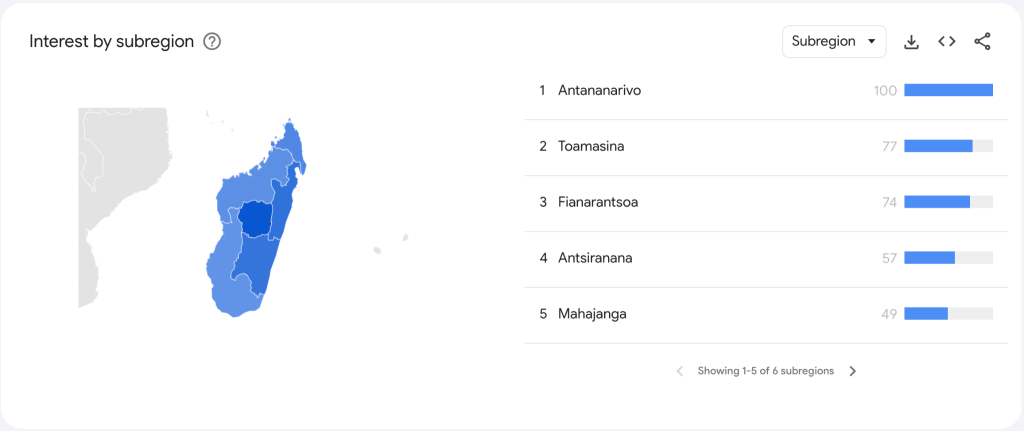
Dorsey's Bitchat Explodes in Madagascar as Protesters Ditch Government-Controlled CommsSource: Google Trends

Poverty and Infrastructure Crisis Fuel Violent Demonstrations

The peer-to-peer application operates without internet infrastructure using Bluetooth Low Energy mesh networks, allowing encrypted messages to hop between devices within 30-meter ranges.

Chrome-Stats shows Bitchat has been downloaded 365,307 times since launch, with over 21,000 downloads in the last day and more than 71,000 in the past week.

Protests erupted on Thursday as thousands of mostly young protesters marched through Antananarivo, demanding the restoration of reliable water and electricity services.

Police fired tear gas to disperse crowds who barricaded roads with burning tires and rocks before looting shopping malls, banks, and attacking homes of lawmakers close to President Andry Rajoelina.

The government sacked its energy minister and imposed curfews from 7 PM to 5 AM to restore public order.

Madagascar faces severe poverty, with 75% of its 30 million population living below the World Bank’s poverty line, while only 6.6 million citizens have internet access.

Mesh Networks Enable Communication During Civil Unrest

Bitchat adoption in Madagascar follows similar patterns observed during recent protests in Nepal and Indonesia.

Nepal recorded 48,781 downloads on September 8 as youth-led demonstrations against corruption and social media bans left 22 dead and forced Prime Minister KP Sharma Oli’s resignation.

The application requires no phone numbers, email addresses, or account registration while providing end-to-end encryption through X25519 key exchange and AES-256-GCM protocols.

Each device functions as both a client and a server, creating self-organizing networks that are resilient to centralized attacks or single points of failure.

Messages fragment into 500-byte chunks, enabling transmission across multiple device hops with up to seven relay points.

The store-and-forward system caches messages for offline users up to 12 hours, ensuring delivery even when direct connections are unavailable.

Random peer IDs are generated for each session, protecting user privacy while eliminating the need for persistent identifiers.

Emergency wipe capabilities, accessible through triple-tap commands, instantly clear local data if devices are compromised or confiscated.

Dorsey launched the beta in July 2025, filling TestFlight’s 10,000 capacity within hours.

The weekend project focuses on disaster coordination, event overflow communication, and building cross-community bridges during internet shutdowns or government censorship campaigns.

Western Governments Target Encrypted Communications Simultaneously

The European Union advances its controversial “Chat Control” regulation, which requires messaging apps to scan every message, photo, and video before encryption.

Fifteen EU countries currently support the proposal, though it falls short of the 65% population threshold required for passage.

The Child Sexual Abuse Regulation mandates client-side scanning where software checks content on user devices before transmission.

Supporters argue the measure combats child abuse material, while critics warn it enables mass surveillance and weakens encryption, protecting financial privacy.

Parallel pressures exist in the United States, where Telegram CEO Pavel Durov has stated that his company avoids building infrastructure due to concerns about government surveillance.

The NSA previously attempted to influence global encryption standards to make them easier to break, facts revealed through Edward Snowden’s leaks.

For the EU, Germany holds the pivotal vote and has yet to take a final stance ahead of the anticipated October 14 Council vote.

Platforms like Signal have suggested they would exit the EU market rather than compromise on encryption standards.

For cryptocurrency users, the regulation poses a threat to the encryption protecting wallet transactions, private keys, and identity data.

Client-side scanning could theoretically extend to peer-to-peer payments, decentralized finance (DeFi) protocols, or wallet operations, thereby undermining the principles of decentralization.

Crypto advocates predict that the proposal might drive users toward decentralized Web3 platforms, which are designed for privacy by default.

Major tech companies, including Google and Starlink, have invested in mesh networking solutions as decentralized infrastructure alternatives.

Dorsey's Bitchat Explodes in Madagascar as Protesters Ditch Government-Controlled CommsSource: BitChat Explorer

Global adoption of censorship-resistant tools continues accelerating, with Indonesia recording 12,581 Bitchat downloads during August protests over parliamentary allowances and police brutality, similar to Nepal.

Russia also contributed 8,749 downloads while the United States registered 8,211 users during the same time.

Sorumluluk Reddi: Bu sitede yeniden yayınlanan makaleler, halka açık platformlardan alınmıştır ve yalnızca bilgilendirme amaçlıdır. MEXC'nin görüşlerini yansıtmayabilir. Tüm hakları telif sahiplerine aittir. Herhangi bir içeriğin üçüncü taraf haklarını ihlal ettiğini düşünüyorsanız, kaldırılması için lütfen [email protected] ile iletişime geçin. MEXC, içeriğin doğruluğu, eksiksizliği veya güncelliği konusunda hiçbir garanti vermez ve sağlanan bilgilere dayalı olarak alınan herhangi bir eylemden sorumlu değildir. İçerik, finansal, yasal veya diğer profesyonel tavsiye niteliğinde değildir ve MEXC tarafından bir tavsiye veya onay olarak değerlendirilmemelidir.

Ayrıca Şunları da Beğenebilirsiniz

CEO Sandeep Nailwal Shared Highlights About RWA on Polygon

CEO Sandeep Nailwal Shared Highlights About RWA on Polygon

The post CEO Sandeep Nailwal Shared Highlights About RWA on Polygon appeared on BitcoinEthereumNews.com. Polygon CEO Sandeep Nailwal highlighted Polygon’s lead in global bonds, Spiko US T-Bill, and Spiko Euro T-Bill. Polygon published an X post to share that its roadmap to GigaGas was still scaling. Sentiments around POL price were last seen to be bearish. Polygon CEO Sandeep Nailwal shared key pointers from the Dune and RWA.xyz report. These pertain to highlights about RWA on Polygon. Simultaneously, Polygon underlined its roadmap towards GigaGas. Sentiments around POL price were last seen fumbling under bearish emotions. Polygon CEO Sandeep Nailwal on Polygon RWA CEO Sandeep Nailwal highlighted three key points from the Dune and RWA.xyz report. The Chief Executive of Polygon maintained that Polygon PoS was hosting RWA TVL worth $1.13 billion across 269 assets plus 2,900 holders. Nailwal confirmed from the report that RWA was happening on Polygon. The Dune and https://t.co/W6WSFlHoQF report on RWA is out and it shows that RWA is happening on Polygon. Here are a few highlights: – Leading in Global Bonds: Polygon holds 62% share of tokenized global bonds (driven by Spiko’s euro MMF and Cashlink euro issues) – Spiko U.S.… — Sandeep | CEO, Polygon Foundation (※,※) (@sandeepnailwal) September 17, 2025 The X post published by Polygon CEO Sandeep Nailwal underlined that the ecosystem was leading in global bonds by holding a 62% share of tokenized global bonds. He further highlighted that Polygon was leading with Spiko US T-Bill at approximately 29% share of TVL along with Ethereum, adding that the ecosystem had more than 50% share in the number of holders. Finally, Sandeep highlighted from the report that there was a strong adoption for Spiko Euro T-Bill with 38% share of TVL. He added that 68% of returns were on Polygon across all the chains. Polygon Roadmap to GigaGas In a different update from Polygon, the community…
Paylaş
BitcoinEthereumNews2025/09/18 01:10
Shocking Kenya Token Scam Takes Over Crypto Twitter

Shocking Kenya Token Scam Takes Over Crypto Twitter

The post Shocking Kenya Token Scam Takes Over Crypto Twitter appeared on BitcoinEthereumNews.com. Kenya’s former Prime Minister was apparently hacked to promote a scam token project. The announcement post on his X profile was deleted, and its video was almost certainly a deepfake. The project’s name and branding closely resemble another semi-official project with glaring red flags. This confusing quagmire raises many remaining questions. Sponsored Sponsored What is Kenya Token? Kenya has an underrated presence in the international crypto community, with pockets of grassroots adoption and major business partnerships conducted by the government. However, the new “Kenya Token” apparently tried to profit from this situation rather than contribute to it. Faked Kenya Token Announcement. Source: X Raila Odinga, the country’s former Prime Minister, was apparently hacked to announce the Kenya Token project. Soon after, though, it was removed, prompting concerns about a hack. Comparing the accompanying video to Odinga’s actual speaking voice, it seems extremely likely that this post was an AI-generated deepfake. The scam may have fallen apart, but there are many unanswered questions. These red flags could be an important lesson, especially as scam prevention techniques are failing the community. Who’s Behind This Scam? Sponsored Sponsored For example, analysts discovered a massive level of insider bundling with Kenya Digital Token (KDT). This is a totally separate asset apparently endorsed by sitting government officials, so the scam project may have tried to piggyback on KDT’s branding. Even this semi-official project was covered in red flags, however. Immediately after one KDT wallet conducted a TGE, 141 other accounts sniped 20% of the total supply. The site marketed these tokens as “locked for the people,” but they’re in private hands. Kenya Digital Token (KDT) is heavily bundled 150 connected addresses own 20% of the supply – worth $60M “Locked for the people” pic.twitter.com/vCVtq1WCRc — Bubblemaps (@bubblemaps) July 11, 2025 This led the community to…
Paylaş
BitcoinEthereumNews2025/09/19 06:40
Gold rises to near $5,100 as Trump’s tariffs boost haven demand, US-Iran talks eyed

Gold rises to near $5,100 as Trump’s tariffs boost haven demand, US-Iran talks eyed

The post Gold rises to near $5,100 as Trump’s tariffs boost haven demand, US-Iran talks eyed appeared on BitcoinEthereumNews.com. Gold price (XAU/USD) edges higher
Paylaş
BitcoinEthereumNews2026/02/23 07:49