The post Trump Officials Trade Bitcoin Funds on Tariff News appeared on BitcoinEthereumNews.com. As US President Donald Trump’s tariffs create an unpredictable trade environment, some members of his administration have been investing in sectors influenced by his policies, including Bitcoin (BTC).  On Tuesday, the Trump administration announced it would extend the tariff delay on China. At the same time, the United States Commerce Department will introduce aluminum tariffs on over 400 different products, including wind turbines, mobile cranes, railcars, motorcycles and construction equipment. The unpredictability of Trump’s trade tariffs has raised concerns among national trade groups like the National Foreign Trade Council (NFTC), which said they are “delaying growth, disrupting operations, and raising legal concerns among companies.” Amid this uncertainty, officials connected with the Trump administration have deepened their ties with crypto and businesses affected by his trade policies.  Lutnick’s firm buys Bitcoin amid tariffs Recent filings with the Securities and Exchange Commission, as reported by Sludge, show that US Secretary of Commerce Howard Lutnick, via his family-controlled firm, Cantor Fitzgerald, has been actively investing or divesting in sectors affected by Trump’s economic policies.  While US law does include certain provisions to protect against conflicts of interest, Lutnick received a waiver on July 8, which allows him to participate “in particular matters … that may have a direct and predictable effect on Cantor Fitzgerald.”  Lutnick received a waiver to participate in commerce affairs affecting his firm. Source: The White House According to an Aug. 14 filing with the SEC and subsequent analysis from Quiver Quantitative, Cantor Fitzgerald invested in a Fidelity Wise Origin Bitcoin Fund (FTBC) as well as stock in companies like chip producer AMD, Tesla, Alibaba and Robinhood.  Cantor’s investments in FTBC and trading platform Robinhood numbered $120.7 million and $116.8 million, respectively. This came after Bo Hines, executive director of the Presidential Council of Advisers on Digital Assets, suggested after… The post Trump Officials Trade Bitcoin Funds on Tariff News appeared on BitcoinEthereumNews.com. As US President Donald Trump’s tariffs create an unpredictable trade environment, some members of his administration have been investing in sectors influenced by his policies, including Bitcoin (BTC).  On Tuesday, the Trump administration announced it would extend the tariff delay on China. At the same time, the United States Commerce Department will introduce aluminum tariffs on over 400 different products, including wind turbines, mobile cranes, railcars, motorcycles and construction equipment. The unpredictability of Trump’s trade tariffs has raised concerns among national trade groups like the National Foreign Trade Council (NFTC), which said they are “delaying growth, disrupting operations, and raising legal concerns among companies.” Amid this uncertainty, officials connected with the Trump administration have deepened their ties with crypto and businesses affected by his trade policies.  Lutnick’s firm buys Bitcoin amid tariffs Recent filings with the Securities and Exchange Commission, as reported by Sludge, show that US Secretary of Commerce Howard Lutnick, via his family-controlled firm, Cantor Fitzgerald, has been actively investing or divesting in sectors affected by Trump’s economic policies.  While US law does include certain provisions to protect against conflicts of interest, Lutnick received a waiver on July 8, which allows him to participate “in particular matters … that may have a direct and predictable effect on Cantor Fitzgerald.”  Lutnick received a waiver to participate in commerce affairs affecting his firm. Source: The White House According to an Aug. 14 filing with the SEC and subsequent analysis from Quiver Quantitative, Cantor Fitzgerald invested in a Fidelity Wise Origin Bitcoin Fund (FTBC) as well as stock in companies like chip producer AMD, Tesla, Alibaba and Robinhood.  Cantor’s investments in FTBC and trading platform Robinhood numbered $120.7 million and $116.8 million, respectively. This came after Bo Hines, executive director of the Presidential Council of Advisers on Digital Assets, suggested after…

Trump Officials Trade Bitcoin Funds on Tariff News

2025/08/22 13:09
Okuma süresi: 5 dk
Bu içerikle ilgili geri bildirim veya endişeleriniz için lütfen [email protected] üzerinden bizimle iletişime geçin.

As US President Donald Trump’s tariffs create an unpredictable trade environment, some members of his administration have been investing in sectors influenced by his policies, including Bitcoin (BTC). 

On Tuesday, the Trump administration announced it would extend the tariff delay on China. At the same time, the United States Commerce Department will introduce aluminum tariffs on over 400 different products, including wind turbines, mobile cranes, railcars, motorcycles and construction equipment.

The unpredictability of Trump’s trade tariffs has raised concerns among national trade groups like the National Foreign Trade Council (NFTC), which said they are “delaying growth, disrupting operations, and raising legal concerns among companies.”

Amid this uncertainty, officials connected with the Trump administration have deepened their ties with crypto and businesses affected by his trade policies. 

Lutnick’s firm buys Bitcoin amid tariffs

Recent filings with the Securities and Exchange Commission, as reported by Sludge, show that US Secretary of Commerce Howard Lutnick, via his family-controlled firm, Cantor Fitzgerald, has been actively investing or divesting in sectors affected by Trump’s economic policies. 

While US law does include certain provisions to protect against conflicts of interest, Lutnick received a waiver on July 8, which allows him to participate “in particular matters … that may have a direct and predictable effect on Cantor Fitzgerald.” 

Lutnick received a waiver to participate in commerce affairs affecting his firm. Source: The White House

According to an Aug. 14 filing with the SEC and subsequent analysis from Quiver Quantitative, Cantor Fitzgerald invested in a Fidelity Wise Origin Bitcoin Fund (FTBC) as well as stock in companies like chip producer AMD, Tesla, Alibaba and Robinhood. 

Cantor’s investments in FTBC and trading platform Robinhood numbered $120.7 million and $116.8 million, respectively. This came after Bo Hines, executive director of the Presidential Council of Advisers on Digital Assets, suggested after a White House interview in April that the government could use tariffs to fund purchases for the newly created Strategic Bitcoin Reserve.

Related: US should fund Bitcoin strategic reserve with tariff surplus: Author

Meanwhile, Cantor’s other investments have been deemed by analysts as either resistant to tariff policies, in the case of Chinese e-commerce site Alibaba or directly benefitting from tariffs, in the case of Tesla.

Bartlett Naylor, financial policy advocate at the watchdog Public Citizen, told Sludge, “When the Oxford English Dictionary next updates its conflict-of-interest definition, it’ll use Cantor Fitzgerald’s crypto ventures and the Lutnick connection as prime example.”

Other members of Trump’s inner circle have shown reported instances of conflict of interest. David Sacks, the administration’s crypto and AI Czar, sold some $200 million in crypto investments at the beginning of Trump’s second term to avoid such claims.

However, following the divestment, Sacks also received a similar waiver to Lutnick, claiming that “the financial interests covered by this waiver are not so substantial as to be deemed likely to affect the integrity of your services to the Government.”

On July 11, US-based AI firm Vultron announced that it received $22 million in Sacks’ venture capital firm, Craft Ventures. The firm, which is pursuing federal contracts, even noted Sacks in its announcement, stating:

The investment from Sacks’ firm comes as AI firms are expanding investments in data centers and racing for predominance. AI development has been cast as a top priority for the Trump administration. The White House released its AI action plan on July 10, which included investing in production capacity for AI hardware. Trump has also negotiated hardline deals with individual tech companies that produce semiconductors for AI.

Uncertainty as Trump delays another 90 days

On Tuesday, US Treasury Secretary Scott Bessent said that the status quo of 90-day delays with China was “working pretty well.”

In an interview with CNBC, he said that the tariffs were projected to bring in $300 billion in revenue but that he’d “have to revise that up substantially. … We’re going to bring down the deficit to GDP. We’ll start paying down the debt, and then at that point that can be used as an offset to the American people.”

Trade groups are less optimistic about the effects the tariffs are having on the American economy. The NFTC said that “economists and industry experts warn of broad potential impacts on supply chains.”

The trade group said that the tariffs are creating uncertainty and increasing the cost of raw materials across supply chains. 

Related: Tariffs, explained: How they work and why they matter

“In sectors like advanced manufacturing, the stakes are particularly high. Four in five companies said tariffs threaten their ability to innovate in areas critical to competitiveness, from fuel efficiency to safety and sustainability,” it said.

The tariffs don’t just affect big business but everyday consumers as well. The Budget Lab at Yale University said in an Aug. 7 report that “the price level from all 2025 tariffs rises by 1.8% in the short-run, the equivalent of an average per household income loss of $2,400 in 2025.”

Tariffs have reportedly impacted the price of coffee. Source: David Frum

Tariffs on imported food have led to jumps in domestic produce. In July, wholesale prices for domestic fresh and dry vegetables were 38.9% higher than the year before. 

Tariffs have yet to critically impact construction materials, but Home Depot, a large home improvement and construction materials chain, said homeowners were delaying large projects, as prices increased due to tariffs. The company said it is trying to offset the effect tariffs will have on prices by diversifying its supply chain. 

The US and world economy are still waiting to feel the full impact of Trump’s unpredictable trade policy. While this has led to uncertainty and some increased costs for investors, it’s clear that some members of his administration are prepared to use that to their own gain. 

Magazine: Bitcoin’s long-term security budget problem: Impending crisis or FUD?

Source: https://cointelegraph.com/news/howard-lutnick-buys-bitcoin-amid-tariffs?utm_source=rss_feed&utm_medium=feed&utm_campaign=rss_partner_inbound

Piyasa Fırsatı
Whiterock Logosu
Whiterock Fiyatı(WHITE)
$0.00007914
$0.00007914$0.00007914
-3.86%
USD
Whiterock (WHITE) Canlı Fiyat Grafiği
Sorumluluk Reddi: Bu sitede yeniden yayınlanan makaleler, halka açık platformlardan alınmıştır ve yalnızca bilgilendirme amaçlıdır. MEXC'nin görüşlerini yansıtmayabilir. Tüm hakları telif sahiplerine aittir. Herhangi bir içeriğin üçüncü taraf haklarını ihlal ettiğini düşünüyorsanız, kaldırılması için lütfen [email protected] ile iletişime geçin. MEXC, içeriğin doğruluğu, eksiksizliği veya güncelliği konusunda hiçbir garanti vermez ve sağlanan bilgilere dayalı olarak alınan herhangi bir eylemden sorumlu değildir. İçerik, finansal, yasal veya diğer profesyonel tavsiye niteliğinde değildir ve MEXC tarafından bir tavsiye veya onay olarak değerlendirilmemelidir.

Ayrıca Şunları da Beğenebilirsiniz

Solana co-founder urges need for Bitcoin to adopt quantum resistance for future security

Solana co-founder urges need for Bitcoin to adopt quantum resistance for future security

The post Solana co-founder urges need for Bitcoin to adopt quantum resistance for future security appeared on BitcoinEthereumNews.com. Solana co-founder Anatoly Yakovenko is urging the Bitcoin community to begin transitioning to quantum-resistant security measures, warning that advances in quantum computing may arrive faster than expected. Speaking during a Sept. 18 session at the All-In Summit, said the accelerating pace of technological breakthroughs means Bitcoin should not wait until the threat is imminent. According to him: “We should migrate Bitcoin to a quantum-resistant signature scheme. This is my bet, and it’s because so many technologies are converging right now, and this asymptotic rate of AI and how fast it’s accelerating—going from a research paper to an implementation—is astounding. So I would try to encourage folks to speed things up.” Yakovenko’s position is unsurprising, as market concerns over Bitcoin’s vulnerability to quantum-powered attacks have gained momentum following companies like Google reporting advances in the space. Considering this, he argued that these major tech firms’ adoption of quantum-resistant cryptography should signal the right time for Bitcoin to migrate its security architecture. The Solana co-founder furthered: “My key for this is Google and Apple adopting a quantum-resistant cryptographic stack. This is the time to go migrate, because now the consumer side of it is effectively solved and you don’t have to kind of wait. So you watch where Google’s going.” However, despite Yakovenko’s warnings, industry experts remain split on the technological advancements timeline as some argue that breakthroughs could occur within this decade, while others contend that the risks remain distant. Regardless of when its implementation occurs, Yakovenko stressed that the technology would be both a challenge and an opportunity. He said: “For the general public, quantum computing is such a massive unlock in terms of how much we can process that it’s going to be as big of a wealth creator, if we pull it off, as AI.” Bitcoin remains resilient…
Paylaş
BitcoinEthereumNews2025/09/19 23:06
Why The Green Bay Packers Must Take The Cleveland Browns Seriously — As Hard As That Might Be

Why The Green Bay Packers Must Take The Cleveland Browns Seriously — As Hard As That Might Be

The post Why The Green Bay Packers Must Take The Cleveland Browns Seriously — As Hard As That Might Be appeared on BitcoinEthereumNews.com. Jordan Love and the Green Bay Packers are off to a 2-0 start. Getty Images The Green Bay Packers are, once again, one of the NFL’s better teams. The Cleveland Browns are, once again, one of the league’s doormats. It’s why unbeaten Green Bay (2-0) is a 8-point favorite at winless Cleveland (0-2) Sunday according to betmgm.com. The money line is also Green Bay -500. Most expect this to be a Packers’ rout, and it very well could be. But Green Bay knows taking anyone in this league for granted can prove costly. “I think if you look at their roster, the paper, who they have on that team, what they can do, they got a lot of talent and things can turn around quickly for them,” Packers safety Xavier McKinney said. “We just got to kind of keep that in mind and know we not just walking into something and they just going to lay down. That’s not what they going to do.” The Browns certainly haven’t laid down on defense. Far from. Cleveland is allowing an NFL-best 191.5 yards per game. The Browns gave up 141 yards to Cincinnati in Week 1, including just seven in the second half, but still lost, 17-16. Cleveland has given up an NFL-best 45.5 rushing yards per game and just 2.1 rushing yards per attempt. “The biggest thing is our defensive line is much, much improved over last year and I think we’ve got back to our personality,” defensive coordinator Jim Schwartz said recently. “When we play our best, our D-line leads us there as our engine.” The Browns rank third in the league in passing defense, allowing just 146.0 yards per game. Cleveland has also gone 30 straight games without allowing a 300-yard passer, the longest active streak in the NFL.…
Paylaş
BitcoinEthereumNews2025/09/18 00:41
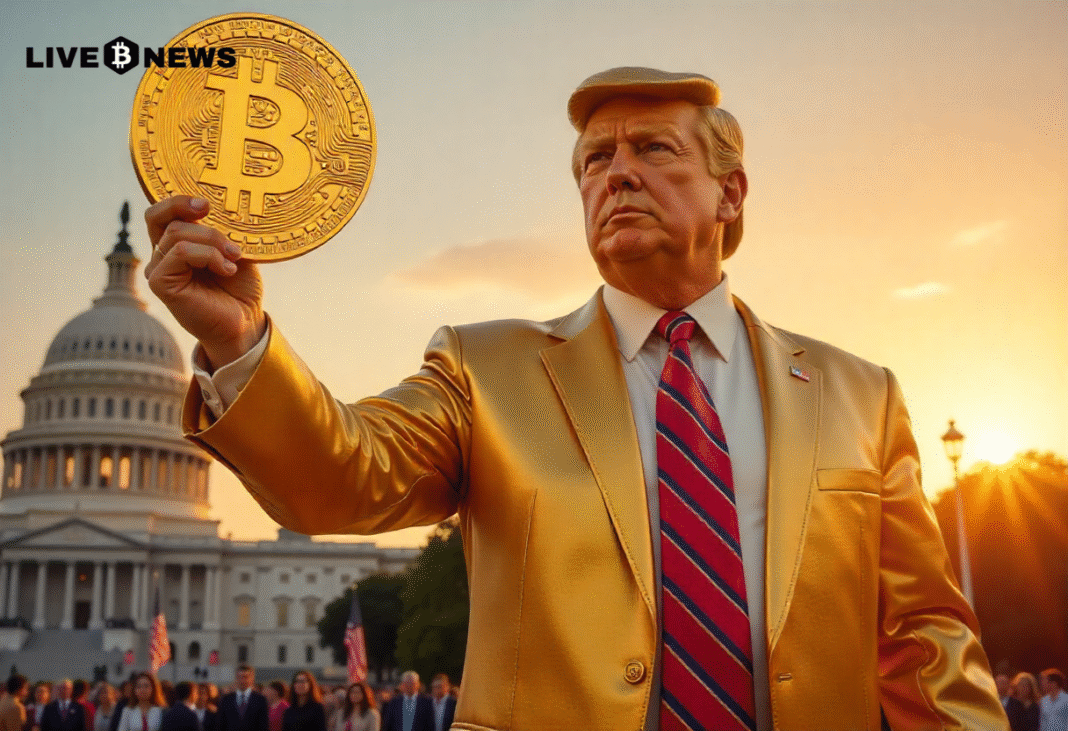
Golden Trump Statue Holding Bitcoin Appears Near U.S. Capitol

Golden Trump Statue Holding Bitcoin Appears Near U.S. Capitol

Golden Trump statue holding Bitcoin appears near U.S. Capitol, symbolizing crypto’s challenge to traditional finance and sparking political and cultural debate. A striking golden statue of U.S. President Donald Trump appeared outside the U.S. Capitol this week. The 12-foot figure is holding a large Bitcoin symbol in one hand. This was spotted on September 17 […] The post Golden Trump Statue Holding Bitcoin Appears Near U.S. Capitol appeared first on Live Bitcoin News.
Paylaş
LiveBitcoinNews2025/09/19 07:00