A new Galaxy Research report finds that the primary beneficiaries of the meme coins are not the traders, but the infrastructure providers.  Platforms such as launchpads, decentralized exchanges (DEXs), and automated trading bots capture substantial revenues. Meanwhile, the majority of individual participants incur losses in what is called a zero-sum game with negative expected value (EV). The Meme Coin Paradox: Mass Participation, Concentrated Profits  Meme coins, often described as tokens created around internet jokes or cultural trends with no utility, have been around for over a decade. Notably, the surge in popularity and ease of creation has sparked a full-scale boom. Millions of new tokens have flooded the market in the past few years. Traders are frequently drawn to this space by the promise of quick profits. Nonetheless, Galaxy Digital noted that,  “Trading them is less about fundamentals and more about what can be described as ‘cultural arbitrage’: predicting or front-running attention cycles, e.g., buying the token for a viral TikTok trend before the market recognizes it is viral. In the long run, the vast majority of market participants end up losing money trading meme coins, and in many respects, it’s just plain gambling.” In the latest report, Galaxy Digital’s research analyst Will Owens explained that the meme coin ecosystem functions as a stack. Here, the flow of money is mostly concentrated in the infrastructure that supports creation and trading. Meme Coin Ecosystem Structure. Source: Galaxy Digital At the base level, blockchains like Solana dominate. It hosts over 32 million tokens, a more than 300% increase since early 2024. The blockchain accounts for 56% of the 57 million meme coins across major chains, including Ethereum, Base, and BNB Chain.  “Base and BSC also host significant activity, while Ethereum hosts bigger tokens and a less cutthroat culture,” the report reads. Solana’s low fees and high throughput have made it the preferred venue, with meme coins accounting for approximately 20- 30% of its DEX trading volume, down from 60% in January. Next, launchpads form a critical layer, enabling rapid token deployment. Solana’s Pump.fun, which debuted in early 2024, exemplifies this trend by industrializing the process through bonding curves that guarantee liquidity at minimal cost.  The platform has created about 12.9 million tokens, which make up 40.31% of the total 32 million Solana tokens. Tokens launched on Pump.fun boast an aggregated fully diluted market cap (FDMC) exceeding $4.8 billion, though this peaked above $10 billion earlier in the year.  “The power-law distribution of value among Pump.fun tokens is astonishing. Out of nearly 12.9 million tokens launched on the platform, just 12 account for more than half of all fully diluted market cap (FDMC). Those dozen tokens collectively represent $2.69 billion, or 56% of the total $4.8 billion FDMC, while the other 44% is split among the remaining millions of tokens,” Owens noted. Furthermore, Pump.fun has generated significant fees from creation and trading. In summer 2024, it briefly lost ground to competitors like LetsBonk. Nonetheless, the launchpad reclaimed dominance through innovations such as Project Ascend, which introduces dynamic fee models for creators, and integrations with streamers for interactive launches. Meanwhile, DEX aggregators and automated market makers (AMMs) like Jupiter, Raydium, Orca, and Pump.fun’s in-house PumpSwap further extract value by handling immediate post-launch trading. These platforms benefit from high volumes, with meme coins fueling user acquisition and ecosystem growth. Trading bots, including Axiom, BONKbot, and Trojan, enhance this by enabling sniping—purchasing tokens at inception—and rapid execution, contributing to a hyper-competitive, player-versus-player (PvP) environment.  “Axiom, for example, has broken $200 million in cumulative revenue with a team of less than 10 individuals,” the report highlighted. Lastly, token deployers, insiders, and key opinion leaders (KOLs) also reap rewards. Developers and insiders often retain large supply portions in hidden wallets, dumping into retail liquidity for gains. KOLs on platforms like X amplify narratives through coordinated campaigns. “X (formerly Twitter) communities and Telegram groups amplify memes and coordinate shilling campaigns. Communities are incentivized to push their token higher, with collective belief substituting for fundamentals. KOLs are a huge part of this layer,” the analyst wrote. Key Crypto KOLs on X. Source: Galaxy Digital Are Retail Traders the Biggest Losers in the Meme Coin Boom?  In contrast, most traders face structural disadvantages. The report revealed that the median hold time for Solana meme coins is around 100 seconds. This is quite a drop from 300 seconds a year prior. “This means that the average participant isn’t ‘holding’ a token for hours, let alone days. Instead, they’re rotating rapidly, scalping a few percent profit against other traders in what is essentially a PvP trading game,” Owens detailed. Risks abound, including honeypots—tokens that allow buys but block sells—rug pulls, where insiders withdraw liquidity, and vamping, where copycats siphon value from originals. High-profile incidents, such as the LIBRA token incident, have resulted in millions in trader losses while insiders profited.  This ecosystem paradox highlights a broader trend: while meme coins serve as onramps to cryptocurrency, drawing new users into wallets and DEXs, the speculative frenzy primarily enriches a concentrated group of infrastructure owners.  For most participants, trading remains negative EV. Thus, meme coins may look like a casino, but it’s the house — not the players — that always wins.A new Galaxy Research report finds that the primary beneficiaries of the meme coins are not the traders, but the infrastructure providers.  Platforms such as launchpads, decentralized exchanges (DEXs), and automated trading bots capture substantial revenues. Meanwhile, the majority of individual participants incur losses in what is called a zero-sum game with negative expected value (EV). The Meme Coin Paradox: Mass Participation, Concentrated Profits  Meme coins, often described as tokens created around internet jokes or cultural trends with no utility, have been around for over a decade. Notably, the surge in popularity and ease of creation has sparked a full-scale boom. Millions of new tokens have flooded the market in the past few years. Traders are frequently drawn to this space by the promise of quick profits. Nonetheless, Galaxy Digital noted that,  “Trading them is less about fundamentals and more about what can be described as ‘cultural arbitrage’: predicting or front-running attention cycles, e.g., buying the token for a viral TikTok trend before the market recognizes it is viral. In the long run, the vast majority of market participants end up losing money trading meme coins, and in many respects, it’s just plain gambling.” In the latest report, Galaxy Digital’s research analyst Will Owens explained that the meme coin ecosystem functions as a stack. Here, the flow of money is mostly concentrated in the infrastructure that supports creation and trading. Meme Coin Ecosystem Structure. Source: Galaxy Digital At the base level, blockchains like Solana dominate. It hosts over 32 million tokens, a more than 300% increase since early 2024. The blockchain accounts for 56% of the 57 million meme coins across major chains, including Ethereum, Base, and BNB Chain.  “Base and BSC also host significant activity, while Ethereum hosts bigger tokens and a less cutthroat culture,” the report reads. Solana’s low fees and high throughput have made it the preferred venue, with meme coins accounting for approximately 20- 30% of its DEX trading volume, down from 60% in January. Next, launchpads form a critical layer, enabling rapid token deployment. Solana’s Pump.fun, which debuted in early 2024, exemplifies this trend by industrializing the process through bonding curves that guarantee liquidity at minimal cost.  The platform has created about 12.9 million tokens, which make up 40.31% of the total 32 million Solana tokens. Tokens launched on Pump.fun boast an aggregated fully diluted market cap (FDMC) exceeding $4.8 billion, though this peaked above $10 billion earlier in the year.  “The power-law distribution of value among Pump.fun tokens is astonishing. Out of nearly 12.9 million tokens launched on the platform, just 12 account for more than half of all fully diluted market cap (FDMC). Those dozen tokens collectively represent $2.69 billion, or 56% of the total $4.8 billion FDMC, while the other 44% is split among the remaining millions of tokens,” Owens noted. Furthermore, Pump.fun has generated significant fees from creation and trading. In summer 2024, it briefly lost ground to competitors like LetsBonk. Nonetheless, the launchpad reclaimed dominance through innovations such as Project Ascend, which introduces dynamic fee models for creators, and integrations with streamers for interactive launches. Meanwhile, DEX aggregators and automated market makers (AMMs) like Jupiter, Raydium, Orca, and Pump.fun’s in-house PumpSwap further extract value by handling immediate post-launch trading. These platforms benefit from high volumes, with meme coins fueling user acquisition and ecosystem growth. Trading bots, including Axiom, BONKbot, and Trojan, enhance this by enabling sniping—purchasing tokens at inception—and rapid execution, contributing to a hyper-competitive, player-versus-player (PvP) environment.  “Axiom, for example, has broken $200 million in cumulative revenue with a team of less than 10 individuals,” the report highlighted. Lastly, token deployers, insiders, and key opinion leaders (KOLs) also reap rewards. Developers and insiders often retain large supply portions in hidden wallets, dumping into retail liquidity for gains. KOLs on platforms like X amplify narratives through coordinated campaigns. “X (formerly Twitter) communities and Telegram groups amplify memes and coordinate shilling campaigns. Communities are incentivized to push their token higher, with collective belief substituting for fundamentals. KOLs are a huge part of this layer,” the analyst wrote. Key Crypto KOLs on X. Source: Galaxy Digital Are Retail Traders the Biggest Losers in the Meme Coin Boom?  In contrast, most traders face structural disadvantages. The report revealed that the median hold time for Solana meme coins is around 100 seconds. This is quite a drop from 300 seconds a year prior. “This means that the average participant isn’t ‘holding’ a token for hours, let alone days. Instead, they’re rotating rapidly, scalping a few percent profit against other traders in what is essentially a PvP trading game,” Owens detailed. Risks abound, including honeypots—tokens that allow buys but block sells—rug pulls, where insiders withdraw liquidity, and vamping, where copycats siphon value from originals. High-profile incidents, such as the LIBRA token incident, have resulted in millions in trader losses while insiders profited.  This ecosystem paradox highlights a broader trend: while meme coins serve as onramps to cryptocurrency, drawing new users into wallets and DEXs, the speculative frenzy primarily enriches a concentrated group of infrastructure owners.  For most participants, trading remains negative EV. Thus, meme coins may look like a casino, but it’s the house — not the players — that always wins.

Who Really Profits From Meme Coins? Galaxy Says It’s Not the Traders

2025/10/02 13:30
Okuma süresi: 4 dk

A new Galaxy Research report finds that the primary beneficiaries of the meme coins are not the traders, but the infrastructure providers. 

Platforms such as launchpads, decentralized exchanges (DEXs), and automated trading bots capture substantial revenues. Meanwhile, the majority of individual participants incur losses in what is called a zero-sum game with negative expected value (EV).

The Meme Coin Paradox: Mass Participation, Concentrated Profits 

Meme coins, often described as tokens created around internet jokes or cultural trends with no utility, have been around for over a decade. Notably, the surge in popularity and ease of creation has sparked a full-scale boom. Millions of new tokens have flooded the market in the past few years.

Traders are frequently drawn to this space by the promise of quick profits. Nonetheless, Galaxy Digital noted that, 

In the latest report, Galaxy Digital’s research analyst Will Owens explained that the meme coin ecosystem functions as a stack. Here, the flow of money is mostly concentrated in the infrastructure that supports creation and trading.
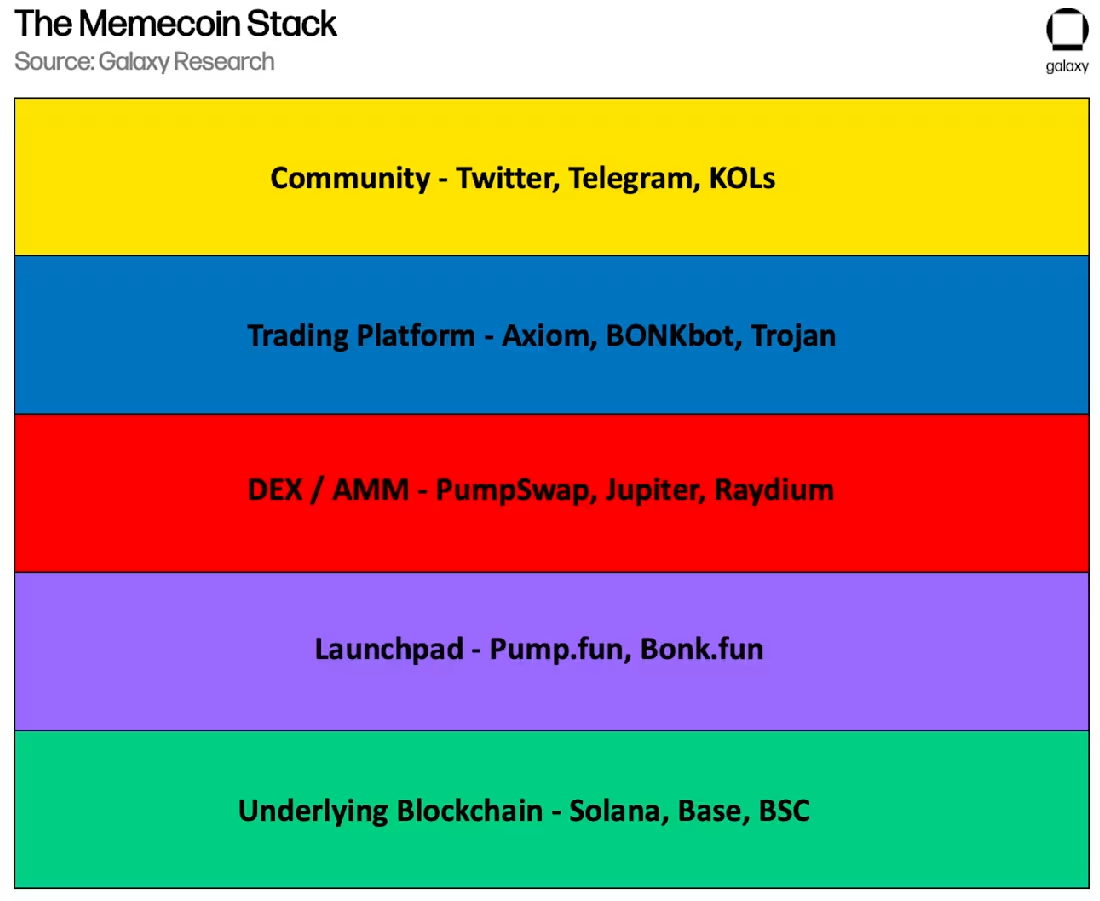
Meme Coin Ecosystem Structure. Meme Coin Ecosystem Structure. Source: Galaxy Digital

At the base level, blockchains like Solana dominate. It hosts over 32 million tokens, a more than 300% increase since early 2024. The blockchain accounts for 56% of the 57 million meme coins across major chains, including Ethereum, Base, and BNB Chain. 

Solana’s low fees and high throughput have made it the preferred venue, with meme coins accounting for approximately 20- 30% of its DEX trading volume, down from 60% in January.

Next, launchpads form a critical layer, enabling rapid token deployment. Solana’s Pump.fun, which debuted in early 2024, exemplifies this trend by industrializing the process through bonding curves that guarantee liquidity at minimal cost. 

The platform has created about 12.9 million tokens, which make up 40.31% of the total 32 million Solana tokens. Tokens launched on Pump.fun boast an aggregated fully diluted market cap (FDMC) exceeding $4.8 billion, though this peaked above $10 billion earlier in the year. 

Furthermore, Pump.fun has generated significant fees from creation and trading. In summer 2024, it briefly lost ground to competitors like LetsBonk. Nonetheless, the launchpad reclaimed dominance through innovations such as Project Ascend, which introduces dynamic fee models for creators, and integrations with streamers for interactive launches.

Meanwhile, DEX aggregators and automated market makers (AMMs) like Jupiter, Raydium, Orca, and Pump.fun’s in-house PumpSwap further extract value by handling immediate post-launch trading. These platforms benefit from high volumes, with meme coins fueling user acquisition and ecosystem growth.

Trading bots, including Axiom, BONKbot, and Trojan, enhance this by enabling sniping—purchasing tokens at inception—and rapid execution, contributing to a hyper-competitive, player-versus-player (PvP) environment. 

Lastly, token deployers, insiders, and key opinion leaders (KOLs) also reap rewards. Developers and insiders often retain large supply portions in hidden wallets, dumping into retail liquidity for gains. KOLs on platforms like X amplify narratives through coordinated campaigns.
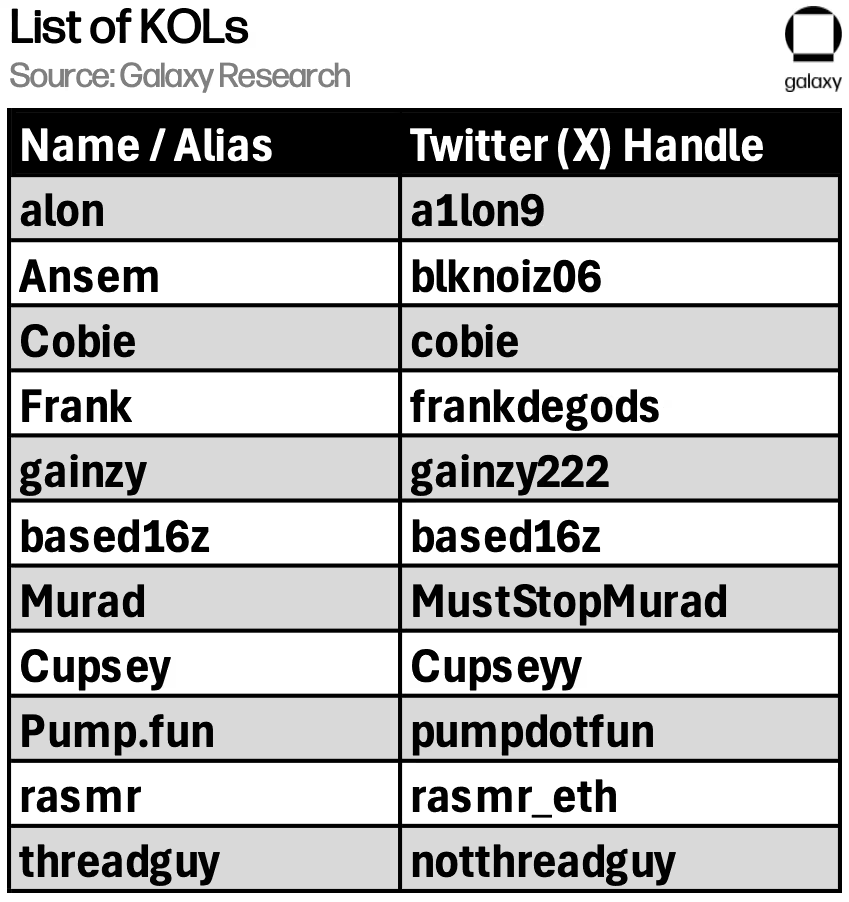
Key Crypto KOLs on XKey Crypto KOLs on X. Source: Galaxy Digital

Are Retail Traders the Biggest Losers in the Meme Coin Boom? 

In contrast, most traders face structural disadvantages. The report revealed that the median hold time for Solana meme coins is around 100 seconds. This is quite a drop from 300 seconds a year prior.

Risks abound, including honeypots—tokens that allow buys but block sells—rug pulls, where insiders withdraw liquidity, and vamping, where copycats siphon value from originals. High-profile incidents, such as the LIBRA token incident, have resulted in millions in trader losses while insiders profited. 

This ecosystem paradox highlights a broader trend: while meme coins serve as onramps to cryptocurrency, drawing new users into wallets and DEXs, the speculative frenzy primarily enriches a concentrated group of infrastructure owners. 

For most participants, trading remains negative EV. Thus, meme coins may look like a casino, but it’s the house — not the players — that always wins.

Piyasa Fırsatı
Memecoin Logosu
Memecoin Fiyatı(MEME)
$0.0006274
$0.0006274$0.0006274
-0.96%
USD
Memecoin (MEME) Canlı Fiyat Grafiği
Sorumluluk Reddi: Bu sitede yeniden yayınlanan makaleler, halka açık platformlardan alınmıştır ve yalnızca bilgilendirme amaçlıdır. MEXC'nin görüşlerini yansıtmayabilir. Tüm hakları telif sahiplerine aittir. Herhangi bir içeriğin üçüncü taraf haklarını ihlal ettiğini düşünüyorsanız, kaldırılması için lütfen [email protected] ile iletişime geçin. MEXC, içeriğin doğruluğu, eksiksizliği veya güncelliği konusunda hiçbir garanti vermez ve sağlanan bilgilere dayalı olarak alınan herhangi bir eylemden sorumlu değildir. İçerik, finansal, yasal veya diğer profesyonel tavsiye niteliğinde değildir ve MEXC tarafından bir tavsiye veya onay olarak değerlendirilmemelidir.

Ayrıca Şunları da Beğenebilirsiniz

XRP Struggles Below $2: Why Is It Not Going Up?

XRP Struggles Below $2: Why Is It Not Going Up?

XRP (CRYPTO: XRP) remains below the $2 mark since mid-January, but rising network activity and institutional inflows are fueling speculation of a potential Q2 rebound
Paylaş
Coinstats2026/02/26 21:51
XRP Volume Rises 212% on Singapore Exchange as Institutional Appetite Grows

XRP Volume Rises 212% on Singapore Exchange as Institutional Appetite Grows

The post XRP Volume Rises 212% on Singapore Exchange as Institutional Appetite Grows appeared on BitcoinEthereumNews.com. Singapore-based crypto exchange Bitrue
Paylaş
BitcoinEthereumNews2026/02/26 22:12
Satoshi-Era Mt. Gox’s 1,000 Bitcoin Wallet Suddenly Reactivated

Satoshi-Era Mt. Gox’s 1,000 Bitcoin Wallet Suddenly Reactivated

The post Satoshi-Era Mt. Gox’s 1,000 Bitcoin Wallet Suddenly Reactivated appeared on BitcoinEthereumNews.com. X account @SaniExp, which belongs to the founder of the Timechain Index explorer, has published data showing that a dormant BTC wallet was activated after hibernating for six years. However, it was set up 13 years ago, according to the tweet — the time when Satoshi Nakamoto’s shadow was still casting itself around, so to speak. The X post states that the tweet belongs to infamous early Bitcoin exchange Mt. Gox, which suffered from a major hack in the early 2010s, and last year it began paying out compensation to clients who lost their crypto in that hack. The deadline was eventually extended to October 2025. Mt. Gox’s wallet with 1,000 BTC reactivated The above-mentioned data source shared a screenshot from the Timechain Index explorer, showing multiple transactions marked as confirmed and moving a total of 1,000 Bitcoins. This amount of crypto is valued at $116,195,100 at the time of the initiated transaction. Last year, Mt. Gox began to move the remains of its gargantuan funds to pay out compensations to its creditors. Earlier this year, it also made several massive transactions to partner exchanges to distribute funds to Mt. Gox investors. All of the compensations were promised to be paid out by Oct. 31, 2025. The aforementioned transaction is likely preparation for another payout. The exchange was hacked for several years due to multiple unnoticed security breaches, and in 2014, when the site went offline, 744,408 Bitcoins were reported stolen. Source: https://u.today/satoshi-era-mtgoxs-1000-bitcoin-wallet-suddenly-reactivated
Paylaş
BitcoinEthereumNews2025/09/18 10:18