Lending

Lending protocols form the backbone of the decentralized money market, allowing users to lend or borrow digital assets without intermediaries. Using smart contracts, platforms like Aave and Morpho automate interest rates based on supply and demand while requiring over-collateralization for security. The 2026 lending landscape features advanced permissionless vaults and institutional-grade credit lines. This tag covers the evolution of capital efficiency, liquidations, and the integration of diverse collateral types, including LSTs and tokenized RWAs.

15505 Articles
Created: 2026/02/02 18:52
Updated: 2026/02/02 18:52
Crypto News: Record $73B in Lending Shows Market Rebuilt Leverage Stack After FTX Collapse

Crypto News: Record $73B in Lending Shows Market Rebuilt Leverage Stack After FTX Collapse

The post Crypto News: Record $73B in Lending Shows Market Rebuilt Leverage Stack After FTX Collapse appeared on BitcoinEthereumNews.com. Key Insights: In the latest crypto news, loans reached a record $73.6 billion in the third quarter of 2025. It surpasses the previous peak of $69.4 billion set in the fourth quarter of 2021, according to Galaxy Digital Research. The combined loan amount nearly tripled from the first quarter of 2024 as retail investors added leverage. The timing mirrored that of late 2021, when lending peaked just before scandals and bankruptcies caused a crypto market crash. In the latest crypto news, the digital assets lending sector set a new record in the third quarter of 2025, with combined loans reaching $73.6 billion, as digital asset prices soared to all-time highs. Galaxy Digital Research reported the figure surpassed the previous peak of $69.4 billion established in the fourth quarter of 2021. The latest crypto loan amount represented nearly triple the level recorded in the first quarter of 2024, when the industry showed signs of revival following approval of US spot Bitcoin exchange-traded funds. Activity increased through the year as the sector blossomed under the pro-crypto agenda of the second President Donald Trump administration. Bitcoin price tumbled more than 20% in recent weeks after setting record highs, triggering concerns over a new bear market. The timing of the lending peak relative to price reversals echoed the pattern observed in late 2021, when activity peaked before scandals and bankruptcies triggered a market crash. Crypto News: Leverage-Driven Market with Evolving Architecture The record lending figure confirmed the current cycle operated as leverage-driven rather than spot-only. In the latest crypto news, retail investors borrowed to leverage long positions, and hedge funds tapped lending for basis trades and short-term liquidity. On the other hand, the digital asset treasury (DAT) companies borrowed against Bitcoin and Ethereum holdings to generate yields. As loans reached all-time highs alongside prices,…

Author: BitcoinEthereumNews
Best Crypto Under $0.1? Analysts Are Eyeing 500% Upside

Best Crypto Under $0.1? Analysts Are Eyeing 500% Upside

As the market moves toward utility-oriented projects, investors have been looking more towards new DeFi crypto projects that exhibit viable growth. Mutuum Finance (MUTM) is one of those projects that have yet to slow down in 2025, the latest crypto coin which has attracted powerful demand throughout its ongoing presale. With DeFi being this way, […]

Author: Cryptopolitan
BlockDAG, Ethena, MemeCore & Ethereum Classic

BlockDAG, Ethena, MemeCore & Ethereum Classic

The post BlockDAG, Ethena, MemeCore & Ethereum Classic appeared on BitcoinEthereumNews.com. Crypto Presales Explore the top crypto to buy in 2025, including BlockDAG’s institutional allocation, Ethena’s DeFi innovations, MemeCore’s gamified smart contracts, & Ethereum Classic’s stable Solidity support. In the race for the best crypto ROI in 2025, developers play a crucial role in driving value. With growing crypto grant programs and developer-centric initiatives, 2025 is shaping up to be a year of significant opportunities for those building and contributing to blockchain ecosystems. Among the top cryptos to buy for high ROI, BlockDAG, Ethena (ENA), MemeCore, and Ethereum Classic (ETC) stand out for their focus on developer engagement, strong technical features, and clear paths to reward. BlockDAG’s “Amazing Chain Race” and its $50,000 developer grants, Ethena’s surge driven by DeFi tools, MemeCore’s gamified contracts, and Ethereum Classic’s stability for Solidity developers are all critical factors that make these coins attractive investments for developers. 1. BlockDAG (BDAG): Developer-Focused and Event-Driven Momentum BlockDAG is positioning itself as one of the top cryptos to buy for developers, particularly with its developer-centric approach and robust technical features. The “Amazing Chain Race”, a six-phase global buildathon, has already attracted over 100 projects, to reach 500+ by launch. The initiative offers $50,000 in developer grants and bounties, available for both solo developers and teams building tools, decentralised applications (dApps), and services on the BDAG testnet. BlockDAG’s blockchain infrastructure is now live, featuring 15K transactions per second (TPS) throughput, Ethereum Virtual Machine (EVM) compatibility, and a real-time explorer. These features make it an attractive option for developers looking to build in a high-performance environment. The platform’s focus on accelerating smart contract libraries, cross-chain tooling, and DeFi integrations aligns with the needs of the developer community, positioning BlockDAG as a major player in the space. In addition to the technical features, BlockDAG’s presale fundraising success, raising over $435 million,…

Author: BitcoinEthereumNews
Top Crypto to Buy in 2025: BlockDAG, Ethena, MemeCore & Ethereum Classic Lead the Charge

Top Crypto to Buy in 2025: BlockDAG, Ethena, MemeCore & Ethereum Classic Lead the Charge

In the race for the best crypto ROI in 2025, developers play a crucial role in driving value. With growing […] The post Top Crypto to Buy in 2025: BlockDAG, Ethena, MemeCore & Ethereum Classic Lead the Charge appeared first on Coindoo.

Author: Coindoo
Monad ICO loans 160M tokens to five market makers

Monad ICO loans 160M tokens to five market makers

Coinbase published a token sales disclosure for the Monad ICO that contains detailed information about its market maker operators and how many tokens are loaned to each firm. Coinbase’s disclosure may be one of the first cases where a large…

Author: Crypto.news
SUIG Lends 2 Million SUI to Bluefin to Boost DeFi Market Liquidity

SUIG Lends 2 Million SUI to Bluefin to Boost DeFi Market Liquidity

TLDR: SUIG lends 2 million SUI to Bluefin in a new liquidity partnership. The deal grants SUIG a 5% share of Bluefin’s revenue in SUI. Bluefin trading volumes grew to $4.2B monthly by August 2025. Bluefin’s total value locked reached $150M since May 2025. SUI Group Holdings has entered a partnership with Bluefin to accelerate [...] The post SUIG Lends 2 Million SUI to Bluefin to Boost DeFi Market Liquidity appeared first on Blockonomi.

Author: Blockonomi
PBOC ramps up offshore financing to boost the yuan

PBOC ramps up offshore financing to boost the yuan

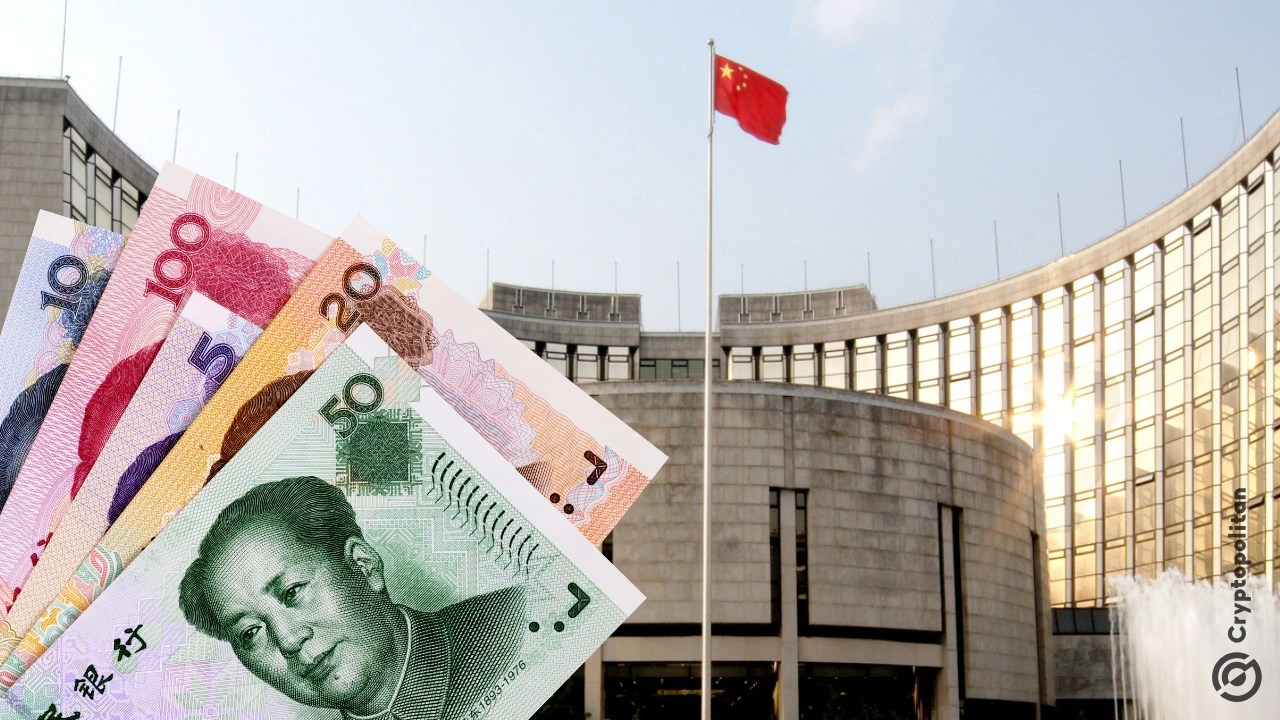
The post PBOC ramps up offshore financing to boost the yuan appeared on BitcoinEthereumNews.com. The People’s Bank of China (PBOC) aims to make the yuan a global funding currency, encouraging companies and financial institutions overseas to borrow and use the yuan. The bank said it will offer overseas companies and banks loans, trade financing, and yuan bonds to make the currency easier to trade and invest worldwide. The People’s Bank of China offers funding overseas through the yuan The central bank will now offer foreign companies direct loans in yuan to help them buy domestic bonds and to cover the costs of imports or exports through trade financing. The bank aims to eliminate any challenges that foreign users encounter when attempting to access the yuan and to encourage more nations to utilize the currency for their business projects. Borrowing in yuan is also cheaper than borrowing in U.S. dollars because China has robust domestic economic policies that make loans and bonds denominated in yuan more affordable. Overseas companies will be able to save a significant amount of money and make their projects more profitable due to low interest rates. Economist Xiaojia Zhi from Credit Agricole CIB said lower yields in China will encourage more overseas firms to borrow in yuan or issue panda and Dim Sum bonds. As a result, the yuan will become stronger and more widely accepted globally. The PBOC also aims to increase the supply of yuan available outside China, enabling banks and governments to borrow without concern for a potential shortage. These options will help China’s trade and industrial supply chains in other countries grow, as businesses will be able to pay suppliers and partners in yuan.  More institutions use the yuan as China expands its financial ties globally The global financial messaging network, Swift, reported that the yuan was the second most used currency in trade finance markets in…

Author: BitcoinEthereumNews
This New Crypto Could Be the Next Solana, And It’s Still Under $0.05

This New Crypto Could Be the Next Solana, And It’s Still Under $0.05

The post This New Crypto Could Be the Next Solana, And It’s Still Under $0.05 appeared on BitcoinEthereumNews.com. Investors are again in mode of recovery in the crypto market and are eyeing the next big break out project before the next bull cycle can. In history, certain of the largest gains are made via early-phase token holdings of robust technology and long-term usefulness, which Solana accomplished when it was still young.  Today, however, a new decentralized finance (DeFi) token under the name Mutuum Finance (MUTM) is a token of similar reasons because its momentum is gaining traction and its development is approaching a major product milestone. Mutuum Finance (MUTM) Mutuum Finance is developing a decentralized lending and borrowing protocol that aims to introduce a greater level of openness and efficiency to digital asset markets. The purpose of the platform is to bridge the depositors and the borrowers in automated smart contracts that eliminate middle men yet have complete on-chain accountability. Its Peer-to-Contract (P2C) system enables users to place deposits in the supported assets, including ETH or USDT, in liquidity pools and receive variable APY interest. To illustrate, when a user loans out 10 ETH to a pool with an approximate APY of 7%, it lends that amount to the pool and they are given back in the form of mtTokens, also known as yield-Sensitive tokens that reflect its loans. These mtTokens automatically grow in value due to accumulating interest, so there is no issue in yield collection and it is transparent. Mutuum Finance is also a supporter of Peer-to-peer (P2P) lending of assets not belonging to the key liquidity pools. Borrowers are able to make their own loan conditions as they use crypto as collateral with the loan-to-value (LTV) ratios dictating the number of loans they can take. An example is an asset of 70% LTV that gives a borrower the option of borrowing 70% of his asset…

Author: BitcoinEthereumNews
Is "Delta Neutral" truly "neutral"? A series of hidden mines are buried underwater.

Is "Delta Neutral" truly "neutral"? A series of hidden mines are buried underwater.

Author: Azuma; Editor: Hao Fangzhou Produced by: Odaily Planet Daily DeFi is once again in the spotlight. As the most vibrant narrative direction in the industry over the past few years, DeFi carries the expectation of the continued evolution and expansion of the cryptocurrency industry. I firmly believe in its vision and am accustomed to deploying more than 70% of my stablecoin positions in various on-chain interest-earning strategies, and I am willing to take on a certain degree of risk for this. However, with the recent series of security incidents, the lingering effects of some historical events and the inherent problems that were previously hidden have gradually come to light, creating a dangerous atmosphere throughout the DeFi market. As a result, the Odaily author himself chose to withdraw most of his on-chain funds last week. What exactly happened? First half of the chapter: Opaque high-interest stablecoins Last week saw several noteworthy security incidents in the DeFi sector. While the Balancer hack could be considered an isolated incident, the successive de-pegging of two so-called yield-generating stablecoin protocols, Stream Finance (xUSD) and Stable Labs (USDX), exposed some fundamental problems. What xUSD and USDX have in common is that they are both packaged as synthetic stablecoins similar in model to Ethena (USDe), primarily utilizing a Delta-neutral hedging arbitrage strategy to maintain their peg and generate returns. This type of interest-bearing stablecoin has been very popular in this cycle. Because the business model itself is not particularly complex, and given the precedent of USDe's partial success, various stablecoins have emerged in large numbers, even experimenting with every possible combination of the 26 letters of the alphabet with the word USD. However, the reserves and strategies of many stablecoins, including xUSD and USDX, are not transparent enough, but they still attract a large influx of funds due to sufficiently high yields. Stablecoins can manage to function during relatively calm market fluctuations, but the cryptocurrency market is always prone to unexpected and massive volatility. Trading Strategy's analysis (see "In-depth Analysis of the Truth Behind xUSD De-anchoring: The Domino Crisis Triggered by the 10.11 Crash" (https://www.odaily.news/zh-CN/post/5207356)) states that the key reason for xUSD's significant de-anchoring is that Stream Finance's opaque off-chain trading strategy encountered the exchange's "automatic liquidation" (ADL) during the extreme market conditions on October 11th (for a detailed explanation of the ADL mechanism, see "Detailed Explanation of the ADL Mechanism of Perpetual Contracts: Why Are Your Profitable Trades Automatically Liquidated?" (https://www.odaily.news/zh-CN/post/5206797)). This disrupted the original Delta-neutral hedging balance, and Stream Finance's overly aggressive leverage strategy further amplified the imbalance, ultimately leading to Stream Finance's de facto insolvency and the complete de-anchoring of xUSD. The situation with Stable Labs and its USDX is likely similar. Although its official announcement attributed the de-pegging to "market liquidity conditions and liquidation dynamics," the protocol's situation may be even worse, given that it has consistently failed to disclose reserve details and fund transfer details as requested by the community. Furthermore, the unusual behavior of the founder's address allegedly using USDX and sUSDX as collateral to lend out mainstream stablecoins on lending platforms, seemingly unwilling to repay despite incurring interest costs exceeding 100%, suggests that the protocol's situation is indeed more serious. The situation with xUSD and USDX exposes serious flaws in the emerging stablecoin protocol model. Due to a lack of transparency, these protocols have significant black-box strategies. Many protocols claim to be Delta-neutral in their marketing, but their actual position structure, leverage ratios, hedging exchanges, and even liquidation risk parameters are not disclosed. External users have almost no way to verify whether they are truly "neutral," effectively making them the ones who transfer risk to others. A classic scenario for this type of risk is that users invest in mainstream stablecoins such as USDT and USDC to mint emerging stablecoins such as xUSD and USDX in order to earn attractive returns. However, once the protocol fails (it's important to distinguish between a genuine failure and a staged event), users will be placed in a completely passive position. Their stablecoins will quickly de-peg in a panic sell-off. If the protocol is conscientious, it may use its remaining funds to make some compensation (even if it does, retail investors are usually the last to receive compensation). If it is not conscientious, it will simply be a soft exit scam or the matter will be left unresolved. However, it's unfair to condemn all Delta-neutral interest-bearing stablecoins outright. From an industry expansion perspective, emerging stablecoins actively exploring diversified yield paths have their positive aspects. Some protocols, like Ethena, provide clear disclosures (Ethena's TVL has also shrunk significantly recently, but the situation is different; Odaily will elaborate on this in a separate article later). However, the current situation is that you don't know how many protocols that haven't disclosed information or have insufficient disclosure have already encountered problems similar to xUSD and USDX. When writing this article, I can only assume innocence, so I can only use examples of protocols that have "collapsed." But from the perspective of your own portfolio security, I would recommend assuming guilt if there is suspicion. Second half of the chapter: Loan agreements and the "Curator" of the capital pool Some might ask, "Why not just avoid these emerging stablecoins?" This leads to the two main protagonists in the second half of this round of DeFi systemic risk: modular lending protocols and Curator (the community seems to have gradually gotten used to translating it as "curator," and Odaily will use this translation directly below). Regarding the role of curators and their contribution to this round of risks, we provided a detailed explanation last week in the article "What is the role of a Curator in DeFi? Could it be a hidden mine in this cycle?" (https://www.odaily.news/zh-CN/post/5207336). Those interested can directly access the article, while those who have read the original article can skip the following paragraphs. In short, professional institutions such as Gauntlet, Steakhouse, MEV Capital, and K3 Capital act as managers, packaging relatively complex yield strategies into easy-to-use fund pools on lending protocols such as Morpho, Euler, and ListaDAO. This allows ordinary users to deposit mainstream stablecoins such as USDT and USDC with a single click at the front end of the lending protocol to earn high interest. The managers then determine the specific interest-earning strategies for the assets at the back end, such as asset allocation weights, risk management, rebalancing cycles, withdrawal rules, and so on. Because such pooled lending platforms often offer higher returns than classic lending markets like Aave, they naturally attract a lot of investment. Defillama data shows that the total size of pooled lending platforms managed by various operators has grown rapidly over the past year, exceeding $10 billion at the end of October and the beginning of this month, and is currently reported at $7.3 billion. The manager's profit path primarily relies on performance-based revenue sharing and fund pool management fees. This profit logic dictates that the larger the fund pool managed and the higher the strategy's return rate, the greater the profit. Since most depositors are not sensitive to brand differences among managers, their choice of which pool to deposit in often depends solely on the apparent APY (Average Return on Investment). This directly links the attractiveness of the fund pool to the strategy's return rate, making the strategy's return rate the core factor ultimately determining the manager's profitability. Driven by a yield-based business logic, coupled with a lack of clear accountability mechanisms, some fund managers have gradually blurred the lines of security, which should be their primary concern, and have chosen to take risks—"The principal belongs to the users, but the profits are mine." In recent security incidents, fund managers like MEV Capital and Re7 allocated funds to xUSD and USDX, indirectly exposing many users who deposited funds through lending protocols such as Euler and ListaDAO to risk. The blame cannot be placed solely on the loan manager; some lending agreements are equally culpable. In the current market model, many depositors are unaware of the role or even existence of the loan manager, simply believing they are investing their funds in a well-known lending agreement to earn interest. In this model, the lending agreement actually plays a more explicit endorsement role and has benefited from the surge in TVL (Total Value Added) due to this model. Therefore, they should bear the responsibility of monitoring the loan manager's strategies, but clearly some agreements have failed to do so. In summary, the classic scenario for this type of risk is that users deposit mainstream stablecoins such as USDT and USDC into the liquidity pool of a lending protocol, but most are unaware that the administrator is using the funds to run an interest-bearing strategy, nor are they clear about the specific details of the strategy. Meanwhile, the administrator, driven by the profit margin, deploys the funds into the emerging stablecoins mentioned earlier. After the emerging stablecoins collapse, the liquidity pool strategy fails, and depositors indirectly suffer losses. Then, the lending protocol itself experiences bad debts (in retrospect, timely liquidation would have been better, but forcibly fixing the oracle price of de-pegged stablecoins to avoid liquidation would have amplified the problem due to large-scale hedging borrowing), causing more users to be affected... In this path, the risk is systematically transmitted and spread. Why did things come to this? Looking back at this cycle, the trading side has already reached a hellish difficulty level. Traditional institutions favor only a very small number of mainstream assets; altcoins continue to fall with no end in sight; insider trading and automated programs are rampant in the meme market; coupled with the massacre on October 11th... a large number of retail investors have been either just going through the motions or even suffered losses in this cycle. Against this backdrop, wealth management, which appears to be a more certain path, has gradually gained larger-scale market demand. Coupled with the milestone breakthrough in stablecoin legislation, a large number of new protocols packaged as interest-bearing stablecoins have emerged (perhaps these protocols should not even be called stablecoins in the first place), extending olive branches to retail investors with annualized returns of ten or even dozens of percent. While there are certainly outstanding performers like Ethena among them, it is inevitable that there is a mixed bag of good and bad. In the highly competitive stablecoin market, some protocols seek higher yields by increasing leverage or deploying off-chain trading strategies (which may not be neutral at all) in order to make the product's yield more attractive—not necessarily long-term sustainability, but simply maintaining better data until issuance and exit. At the same time, decentralized lending protocols and administrators effectively address the psychological barrier some users face regarding unknown stablecoins—"I know you're worried about depositing your money in xxxUSD, but if you deposit it in USDT or USDC, Dashboard will show your position in real time, so how can you not feel at ease?" The aforementioned model has performed reasonably well over the past year or so, at least without any large-scale collapses over a considerable period. Due to the overall market being in a relatively upward phase, there is ample arbitrage opportunity between the futures and spot markets, allowing most interest-bearing stablecoin protocols to maintain relatively attractive yields. Many users have gradually lowered their guard during this process, and double-digit stablecoin or liquidity pool yields seem to have become the new normal for wealth management… But is this really reasonable? Why do I strongly recommend that you retreat temporarily? On October 11, the cryptocurrency market suffered an epic bloodbath, with hundreds of billions of dollars being liquidated. Wintermute founder and CEO Evgeny Gaevoy stated at the time that he suspected some running long-short hedging strategies suffered significant losses, but it was unclear who suffered the most. In retrospect, the successive collapses of so-called Delta-neutral protocols like Stream Finance have partially confirmed Evgeny's suspicions, but we still don't know how many more hidden dangers remain. Even those not directly affected by the liquidation on October 11th experienced a rapid tightening of market liquidity following the massive liquidation, coupled with a contraction in arbitrage opportunities due to cooling market sentiment. This increased the survival pressure on interest-bearing stablecoins. Unexpected events often occur at such times, and because various opaque liquidity pooling strategies are often intricately intertwined at the underlying level, the entire market is highly susceptible to a domino effect, where a single event can have far-reaching consequences. Stablewatch data shows that in the week ending October 7, interest-bearing stablecoins experienced the largest outflow of funds since the Luna collapse and UST crash in 2022, totaling $1 billion, and this outflow trend continues. Furthermore, Defillama data also shows that the size of pools managed by fund managers has shrunk by nearly $3 billion since the beginning of the month. Clearly, funds have reacted to the current situation. DeFi also applies to the classic "impossible triangle" of the investment market – high returns, security, and sustainability can never be satisfied at the same time, and currently the "security" factor is teetering on the brink. You may be used to investing your funds in a stablecoin or a certain strategy to earn interest, and you have obtained relatively stable returns through this operation over a long period of time. However, even products that always use the same strategy are not static. The current market environment is a window of relatively high risk and the most likely occurrence of unexpected events. At this time, caution is the best policy, and timely withdrawal may be a wise choice. After all, when a small probability happens to you, it becomes 100%.

Author: PANews
What moves Bitcoin price to move up or down in 2025?

What moves Bitcoin price to move up or down in 2025?

Behind every wild Bitcoin candle in 2025 is a quiet shift in collateral, basis, and ETF flows. Funding rates, margin haircuts, and spot ETF hedging now have as much impact on the price as any macroeconomic headline. Collateral settings across futures and lending venues influence the Bitcoin spot price through forced hedging and liquidations. The […] The post What moves Bitcoin price to move up or down in 2025? appeared first on CryptoSlate.

Author: CryptoSlate