NFT

NFTs are unique digital identifiers recorded on a blockchain that certify ownership and authenticity of a specific asset. Moving past the "PFP" craze, 2026 NFTs emphasize utility, representing everything from IP rights and digital fashion to RWA titles and event ticketing. This tag explores the technical standards of digital ownership, the growth of NFT marketplaces, and the integration of non-fungible tech into the broader Creator Economy and enterprise solutions.

13266 Articles
Created: 2026/02/02 18:52
Updated: 2026/02/02 18:52
Blockchain’s crucial role in taming agentic AI

Blockchain’s crucial role in taming agentic AI

The post Blockchain’s crucial role in taming agentic AI appeared on BitcoinEthereumNews.com. Homepage > News > Business > Blockchain’s crucial role in taming agentic AI Artificial intelligence (AI) needs blockchain for the same reasons all data systems need blockchain, and those are security, transparency, and accountability. If you’re still unsure why, we have two words for you: Agentic AI. These AI agents are a lot more capable than the image generators and chatbots we’re using now. They can perform tasks outside their own environments, holding conversations with external parties, organizing parties, and even accessing your bank account and spending your money. It’ll add value to your life and make everything so efficient that the entire digital economy may one day function completely autonomously. That’s both exciting… and scary. Adding blockchain’s trust to agentic AI’s uncertainty sounds like a great idea. At the recent London Blockchain Conference 2025, several speakers and panelists also agreed it’s a great idea. Far fewer people, however, can tell you exactly how it should be implemented, and even fewer have integrated blockchain into AI model development. Once again, it’s a job for those with understanding and experience spanning both technological domains to lead the way. “I think blockchain will be critical to every AI model moving forward,” said AI expert and FICO Chief Analytics Officer Dr. Scott Zoldi at the London event. The data analytics and credit scoring firm is one of the few currently using a blockchain-based system to set and follow the rules on which its AI models are based. The on-chain records act as a check on new models as they’re being built over several months, ensuring they’re built correctly, following set development standards, using only technologies they’re allowed to use, and acting ethically. The records also set how the models are tested and can work as a rollback mechanism if something goes wrong. “What…

Author: BitcoinEthereumNews
Shiba Inu News: Shiba Inu Partners with Unity Nodes to Expand Real-World Utility

Shiba Inu News: Shiba Inu Partners with Unity Nodes to Expand Real-World Utility

Shiba Inu (SHIB) has partnered with Unity Nodes. This collaboration will expand SHIB’s real-world use. It will also create new earning chances for SHIB holders in the telecom industry. A major collaboration is reshaping the Shiba Inu (SHIB) ecosystem. Shiba Inu has partnered with a blockchain-based mobile edge network called Unity Nodes, which operates across […] The post Shiba Inu News: Shiba Inu Partners with Unity Nodes to Expand Real-World Utility appeared first on Live Bitcoin News.

Author: LiveBitcoinNews
Ethereum (ETH) Price: Former BlackRock Executive Says It’s Wall Street’s Blockchain of Choice

Ethereum (ETH) Price: Former BlackRock Executive Says It’s Wall Street’s Blockchain of Choice

TLDR Former BlackRock executive Joseph Chalom says Ethereum is the only blockchain with the trust, security, and liquidity Wall Street needs for digitizing finance Tokenized fund assets on Ethereum have surged nearly 2,000% since January 2024, led by BlackRock and Fidelity bringing investment funds on-chain Chalom’s company Sharplink holds over $3 billion in ETH and [...] The post Ethereum (ETH) Price: Former BlackRock Executive Says It’s Wall Street’s Blockchain of Choice appeared first on CoinCentral.

Author: Coincentral
7 Meme Coin Projects Rising – #1 Meme Coin Whitelist Rules

7 Meme Coin Projects Rising – #1 Meme Coin Whitelist Rules

The post 7 Meme Coin Projects Rising – #1 Meme Coin Whitelist Rules appeared on BitcoinEthereumNews.com. Crypto Presales From Apeing to Dogecoin and Pepe, explore 7 trending meme coin whitelist projects redefining the 2025 crypto scene. The meme coin world has entered a new phase in 2025. What once started as jokes and community-driven experiments has evolved into a culture of smart branding, bold innovation, and unapologetic degen energy. These aren’t just internet memes anymore, they’re digital movements. With traders chasing the next viral trend and institutions still trying to understand the appeal, a few projects have broken out as clear leaders of the next wave. But one name keeps buzzing across Telegram, X, and Discord, Apeing  ($APEING). It’s being called the #1 meme coin whitelist everyone wants in on, and for good reason. Let’s dive into the seven meme coin projects dominating the conversation right now, and how Apeing is setting the tone for what’s next in this wild, unfiltered market. Apeing ($APEING): The Instinct That Built a Movement When the market panics, degenerates don’t retreat, they Ape in. That’s the entire philosophy behind Apeing, a meme coin built for those who act on instinct while everyone else hesitates. Apeing isn’t trying to overcomplicate things. It’s raw, fast, and community-driven, a brand that understands that the most successful traders in history weren’t the most cautious; they were the boldest. While others wait for signals, Apeing moves on conviction. Built on transparency and culture, Apeing’s team has focused on uniting the degen crowd under one clean, audited, and meme-infused banner. It’s not promising vague metaverse dreams or unrealistic returns; instead, it’s offering access, humor, and honesty. Crypto veterans call it the perfect crossover between meme and mission. With Apeing’s whitelist gaining massive traction, it’s clear this is not just another entry in the meme coin whitelist, it’s a statement. How to Join the Apeing Whitelist Joining…

Author: BitcoinEthereumNews
7 Meme Coin Projects Everyone’s Talking About – #1 Meme Coin Whitelist Rules!

7 Meme Coin Projects Everyone’s Talking About – #1 Meme Coin Whitelist Rules!

The meme coin world has entered a new phase in 2025. What once started as jokes and community-driven experiments has […] The post 7 Meme Coin Projects Everyone’s Talking About – #1 Meme Coin Whitelist Rules! appeared first on Coindoo.

Author: Coindoo
U.S. Treasury’s GENIUS Act Sets Stage for Privacy-First Crypto Regulation, Says a16z

U.S. Treasury’s GENIUS Act Sets Stage for Privacy-First Crypto Regulation, Says a16z

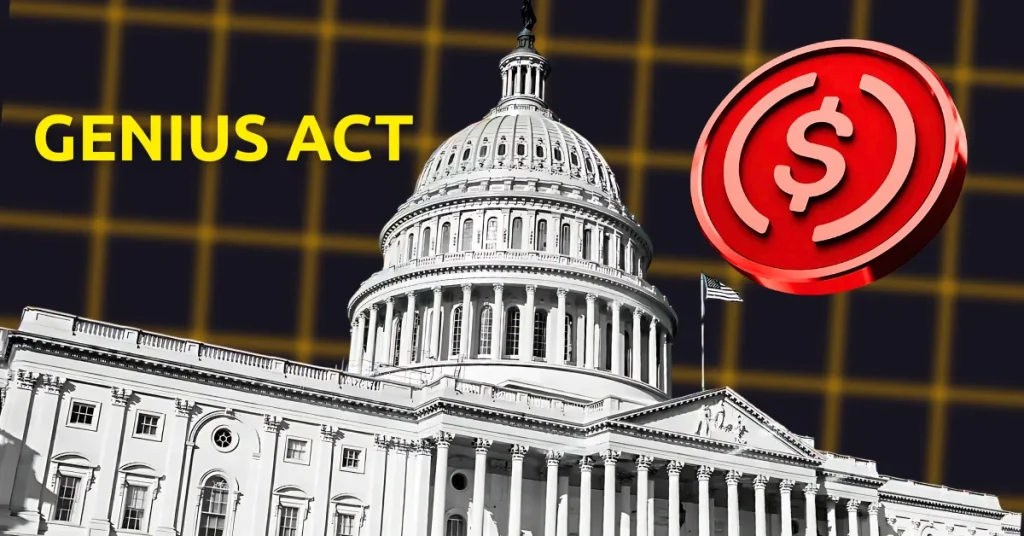
The post U.S. Treasury’s GENIUS Act Sets Stage for Privacy-First Crypto Regulation, Says a16z appeared first on Coinpedia Fintech News As the U.S. Treasury begins implementing the GENIUS Act, a landmark bill shaping the future of stablecoin and cryptocurrency regulation, Michele Korver, Head of Regulatory at a16z Crypto, has issued a powerful call for privacy-preserving innovation. In a detailed submission to the Treasury, Korver outlined how decentralized digital identity (DID) and zero-knowledge proofs (ZKPs) can …

Author: CoinPedia
Crow and wallet

Crow and wallet

From Gold to Code. Back in 2018, when I was working on Cryptocurrencies (Ramzarzha) Magazine, we came up with a painting I want to talk to you about today — Crow and Wallet. At that time, the term NFT was still a whisper, and very few people had thought about how art could live inside code. For me, it wasn’t just an experiment; it was a question that refused to fade: What happens when imagination meets cryptography? The crow keeps looking for brilliance in a world where value no longer rings in coins but pulses in chains of numbers. The painting Crow and Wallet tells the story of this eternal temptation: a black and cunning bird that has wanted gold for centuries now looks at a new shine — Bitcoin, ciphers that shine without weight. This piece was made in 2018, when the word “NFT” was still new and people were still getting used to the idea of separating art from walls and putting it in data chains. Back then, digital art didn’t have the nerve to go into the world of cryptography. This piece, which has a connection between imagination and philosophy, was one of the first attempts to connect painting and encryption. The Work’s Philosophy and Inspiration Wei Dai’s groundbreaking article from the 1990s, which first introduced the idea of b-money, is where the idea comes from. B-money is a plan for decentralized money that doesn’t rely on banks or governments. But for us, that article was more than just a technical paper; it was a poem in math, a declaration of the right to trust. So, we decided not only to read the article but also to include it in the main part of the work. We wrote it down by hand on small sheets that were ten by ten centimeters and stuck each one to the canvas. This canvas became the sacred ground of the piece: Wei Dai’s text in the layers below, with a picture of crows on top of it. The canvas shows more than just images; it shows a conversation between two worlds: the world of language and the world of code, the world of thought and the world of vision. The Process of Making and Designing In the background of the canvas, words from Wei Dai’s article look like living cells. Every piece is a part of the philosophical DNA of blockchain. Bitcoin letters and numbers are written on this surface, and crows fly around the central image like particles around a bright nucleus. The crows are not enemies or messengers; they are protectors of the code. This bird looks for shiny, metallic pieces in nature, as if it has been looking for gold since the beginning of time. But gold doesn’t have any substance right now. Bitcoin has taken its place, and the crow is still the same: it is still looking for brilliance, but this time in a world without metal, where code, not matter, gives off value. Publication and Reception of the Work Cryptocurrencies Magazine published the article, and it quickly caught the attention of people who are interested in cryptocurrencies. Crow and Wallet was one of the first art projects to explore digital ownership at a time when NFTs didn’t have a clear definition. It seemed like they were trying to write a new law of art before legal language could explain it. This newness and pioneering spirit made the work known not just as a painting but also as a statement of the merging of art and blockchain. Just as Wei Dai’s article started a time of exchange without intermediaries, Crow and Wallet represented art without intermediaries. Selling and Owning the Work Blockchain Master UK then bought the piece for a symbolic and grand price of 102 Bitcoin. At the time of the sale, maybe no one knew that this number would become an art object in its own right, a price that was both money and a symbol of a new era. This purchase moved the canvas from the world of galleries to the world of blockchain, where value is no longer limited to frames but is stored in blocks. NFT . NFA: Creation Continues in Code The painting Crow and Wallet is a pioneering example of NFA (Non-Fungible Art) This theory was first introduced by MoBitSo, who continues to expand and develop this concept, aiming to present and evolve the idea of NFA alongside NFT within the community of enthusiasts and experts in digital art and blockchain. The Crow in a Weightless World: A Final Thought Crow and Wallet shows birds and the Bitcoin symbol, but on a deeper level, it is a metaphor for how human instinct changes. People still look for “brilliance,” just like crows still look for shiny things. The only difference is how they look for it. Gold has turned into data, and data has turned into faith. In a world where people no longer trust banks or governments but instead trust algorithms, art has become cryptographic, just like money. The crow still flies, but now it’s flying through blockchain chains. It doesn’t steal coins anymore; it looks for the private key. Every flight reminds us that value is not in weight but in code. Crow and Wallet is a sign of how civilization has changed from owning things in the real world to owning things in the digital world. Wei Dai’s voice, the murmur of crows, and the steady pulse of blockchain all echo in its depths. This is a world where art and technology are no longer separate. Looking back, Crow and Wallet wasn’t just an artwork—it was a signal, a first spark in a larger conversation about how art transforms when it steps into code. That journey didn’t end in 2018; it continues today through NFA, through the evolving dialogue between creativity and cryptography. In the next stories, I’ll share more about those later discoveries—how digital art found its own form of trust and how new tools are reshaping what we mean by “creation.” For now, I’ll leave you with this: the crow still searches for brilliance—only now, its treasure is not gold, but code.  — MoBitSo Crow and wallet was originally published in Coinmonks on Medium, where people are continuing the conversation by highlighting and responding to this story

Author: Medium
Ethereum Built the Foundation — BlockDAG Is Building What Comes Next

Ethereum Built the Foundation — BlockDAG Is Building What Comes Next

Ethereum Built the Foundation — BlockDAG Is Building What Comes Next For nearly a decade, Ethereum has been the backbone of Web3. It introduced smart contracts,DeFi, NFT, DAOs, and the programmable internet of value.Ethereum didn’t just transform blockchain — it transformed computing itself. But Ethereum wasn’t designed for the massive scale it eventually reached. Its architecture is linear — one block follows another. That means every transaction must wait for the previous one to confirm. As user demand grew, Ethereum faced congestion, high gas fees, and slower transactions. To fix this, the community turned to Layer 2 networks — Arbitrum, Optimism, Polygon, Base — all brilliant innovations, but ultimately patches built on top of a limited base layer. This layered approach introduced new issues: Liquidity fragmentation across multiple chains -Complex bridging risks -Inconsistent user experiences -Security assumptions spread across layers Ethereum remains powerful — but it’s also heavy, complex, and increasingly dependent on external infrastructure. BlockDAG: Scaling by Design, Not by Layers Instead of building on top of existing limitations, BlockDAG rebuilt the foundation itself. BlockDAG’s architecture enables parallel block execution using a Directed Acyclic Graph (DAG) structure — allowing multiple blocks to be confirmed simultaneously rather than one by one. No waiting. No sequencing bottlenecks. No reliance on Layer 2s. And here’s the key breakthrough: BlockDAG is fully EVM-compatible. That means: -Developers don’t need to rewrite smart contracts -Users don’t need bridges or wrapped tokens -Liquidity remains unified across the network This is scalability at the base layer — not something added after the fact. Ethereum Scales Up. BlockDAG Scales Out. Think of Ethereum as a skyscraper. Every new floor adds height — and weight. Eventually, the structure strains under its own complexity. Layer 2s are like scaffolding: useful, but external and fragile. Now imagine BlockDAG as a vast network of interconnected pathways. It expands outward — not upward. There’s no height limit, no bottleneck, no external dependency. BlockDAG doesn’t just solve scalability — it starts scalable. The Breakthrough As BlockDAG CTO Jeremy Harkness explains: “We’re executing EVM transactions at DAG speed — directly on Layer 1. That’s the breakthrough.” This means:

  1. Phase 1: Bitcoin proved digital value.
  2. Phase2: Ethereum proved programmable value.
  3. Phase 3: BlockDAG enables scalable value. Ethereum built the foundation. BlockDAG is building the experience. The blockchain world is moving from stacked layers → to parallel networks. The Future of Blockchain Isn’t a Tower — It’s a Network. And BlockDAG is already building it.
Ethereum Built the Foundation — BlockDAG Is Building What Comes Next was originally published in Coinmonks on Medium, where people are continuing the conversation by highlighting and responding to this story

Author: Medium
Tokenized Loan Platform Aims to Modernize Small Bank Lending

Tokenized Loan Platform Aims to Modernize Small Bank Lending

The post Tokenized Loan Platform Aims to Modernize Small Bank Lending appeared on BitcoinEthereumNews.com. Financial tech provider FIS and structured finance platform Intain are rolling out a blockchain-based marketplace built on AVAX$17.36 that allows regional and community banks to securitize and sell loan portfolios directly to institutional investors, the firms told CoinDesk. Digital Liquidity Gateway, as it is dubbed, tokenizes loans as non-fungible tokens (NFTs), automates settlement including with stablecoins like USDC, and removes layers of intermediaries that often make asset-backed finance slow and costly. It’s integrated with FIS’s core banking systems that provide software and payment infrastructure to more than 20,000 clients worldwide. The platform is already onboarding banks and investors, with hundreds of millions of dollars in loan transactions expected by the end of the year starting with loan pools tied to commercial real estate and aviation finance, the companies said. The initiative fits into a broader shift as asset managers, banks and fintechs place assets onto blockchain rails in a process called tokenization of real-world assets (RWA). While many of those efforts focus on large institutions, Intain and FIS are aiming at the long tail of community and regional banks that fund much of local small business lending but rarely reach securitization markets. “These small banks are remote from most capital markets flows,” John Omahen, head of digital assets at FIS, said in an interview. “They originate loans and sit on them. They don’t have the expertise to structure deals or reach investors. What we’re doing is creating a place where those assets can meet demand, and capital can move more efficiently.” Loan tokenization to increase transparency Recent failures and controversies, including those at auto lender Tricolor and car parts manufacturer First Brands, have highlighted how weak data controls and opaque loan tracking can lead to double-pledging, mispricing and investor losses. Digital Liquidity Gateway’s key feature is loan tokenization, where each…

Author: BitcoinEthereumNews
Shiba Inu (SHIB) Partners With Unity Nodes to Unlock Real-World Crypto Utility

Shiba Inu (SHIB) Partners With Unity Nodes to Unlock Real-World Crypto Utility

TLDR: Unity Nodes integrates telecom testing with blockchain, rewarding SHIB holders. SHIB payments grant extra Unity Licenses and exclusive NFTs. Node operators can earn directly in SHIB or lease for passive income. Only 6,000 Unity Nodes available, emphasizing scarcity for early adopters. Shiba Inu (SHIB) is moving beyond its meme token origins with a new [...] The post Shiba Inu (SHIB) Partners With Unity Nodes to Unlock Real-World Crypto Utility appeared first on Blockonomi.

Author: Blockonomi