NFT

NFTs are unique digital identifiers recorded on a blockchain that certify ownership and authenticity of a specific asset. Moving past the "PFP" craze, 2026 NFTs emphasize utility, representing everything from IP rights and digital fashion to RWA titles and event ticketing. This tag explores the technical standards of digital ownership, the growth of NFT marketplaces, and the integration of non-fungible tech into the broader Creator Economy and enterprise solutions.

13053 Articles
Created: 2026/02/02 18:52
Updated: 2026/02/02 18:52
Memecoins Fall to July Lows While Bitcoin & Ether Drive Market Bounce Back

Memecoins Fall to July Lows While Bitcoin & Ether Drive Market Bounce Back

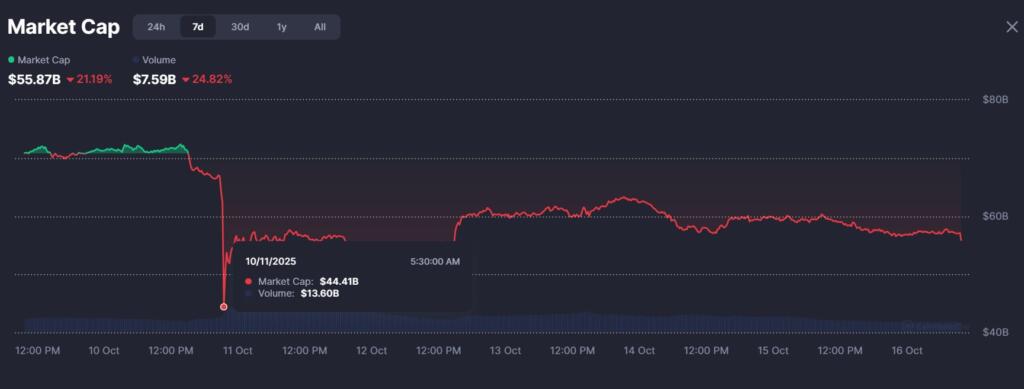
The recent cryptocurrency market turmoil has significantly impacted meme tokens, leading their collective valuation to plummet to levels unseen since July. After a sharp decline prompted by Friday’s broad crypto market correction, memecoin capitalization has experienced a notable dip, signaling a possible shift in retail investor enthusiasm. Meanwhile, other sectors such as NFTs and established [...]

Author: Crypto Breaking News
Ethereum's "Second Curve" of Growth: TradFi and AI Enter the Market Simultaneously, and a Trillion-Dollar Settlement Layer Surpassing the EVM Quietly Takes Shape

Ethereum's "Second Curve" of Growth: TradFi and AI Enter the Market Simultaneously, and a Trillion-Dollar Settlement Layer Surpassing the EVM Quietly Takes Shape

On September 3, Etherealize, which calls itself "the institutional-grade product, BD, and marketing department of the Ethereum ecosystem," disclosed a $40 million financing round. In addition to the lead investors from Electric Capital and Paradigm, more noteworthy is the direct participation of Ethereum co-founder Vitalik Buterin and the Ethereum Foundation. To some extent, this investment symbolizes the Ethereum community’s firm support for a professional and institutional development path. In fact, it also sends a clear signal that Ethereum’s growth logic is shifting from “capacity expansion” to the spillover and integration of the “application layer”. If we look back, we will find that from the DeFi wave in 2020-2021, to the subsequent CeDeFi practice, and then to the accelerated integration into TradFi today - Ethereum's innovation in traditional finance is constantly "survival of the fittest." The development of Ethereum is moving from the "infrastructure construction period" to the "application explosion and ecological reconstruction period", and the trillion-dollar "second curve" is taking shape. 01. After the expansion, the new growth engine is switching As we all know, the main theme of Ethereum's development has always been "scaling". With the maturity of L2 Rollup solutions such as Arbitrum and Optimism in recent years, and the gradual advancement or implementation of basic protocols such as Danksharding and EIP-4844, Ethereum's basic computing power and throughput have been significantly improved, especially the L2 ecosystem has built a solid "execution layer" foundation. It can be said that after years of exploration, Ethereum has initially solved the problem of "usability", but what is more difficult is to answer the next question - who will use it and how will it be used? After all, the challenges facing Ethereum have never been as severe as they are now: On the one hand, high-performance public chains such as Solana and Sui are eroding the on-chain market with their “faster and cheaper” positioning; On the other hand, traditional Web2 giants such as Visa, Stripe, Paypal, Robinhood and even Fidelity are also launching their own public chains or integrating decentralized clearing and settlement systems to improve their Crypto/TradFi layout; Looking back over the past five years, at the application level, Ethereum is undoubtedly a hotbed of innovation and almost the best "composable on-chain financial laboratory." From DeFi, NFT to DAO, GameFi, and SocialFi, it has supported the entire Web3 experimental wave. However, innovations at this stage are primarily targeted at Web3 native users and are essentially still limited to the "self-circulation of on-chain capital." In other words, while funds circulate and protocols are stacked on-chain, real-world assets, institutions, and users remain on the sidelines. Web3, while logically self-consistent, struggles to align with the demands of the real financial world. In this competitive landscape, Ethereum's technological leadership is no longer a defensive moat. To continue its growth, it must address a more ambitious question: how can it transcend the boundaries of Web3 itself and become a truly global asset settlement layer? The new growth comes from outside of Web3 – the computing power demand of AI and the settlement demand of traditional finance, which simultaneously push it into a new cycle: The most typical example is the wave of RWA (real-world assets) tokenization - traditional financial institutions such as banks, securities companies, and fund companies are actively trying to move assets such as bonds, stocks, and fund shares onto the blockchain to achieve on-chain clearing and real-time settlement (further reading "Ethereum Narrative Shift: From World Computer to World Ledger, Is an On-Chain Central Bank About to Emerge?"). At the same time, as the monopoly of AI models and data intensifies, the AI industry is eager for a neutral and trusted settlement layer to solve core pain points, including model and data ownership confirmation, decentralized computing verification, and protection against centralized risks. In short, AI needs a globally verifiable computing layer to price trust, and blockchain itself is naturally adapted to this demand of AI. Of course, to support demands like TradFi and AI, Ethereum must undergo comprehensive upgrades in terms of performance, privacy, and modularity. 02. New Roadmap: Multi-pronged Progress in zkVM, AI, and Privacy To address these new demands, the Ethereum community and the Foundation are already advancing several key strategies. The following are the routes that are currently more public and widely discussed in the industry. The first is zkVM (zero-knowledge virtual machine), which is not only a technical extension of L2 expansion, but also a disruptive reshaping of the Ethereum mainnet's functions. For example, the Ethereum Foundation is currently promoting the mainnet-level zkVM architecture, which will replace repeated execution of transaction verification with zero-knowledge proof (ZKP), thereby greatly improving throughput and security. The core logic of zkVM lies in transforming the trust model. Traditional Ethereum relies on all nodes to replay transactions to reach consensus. The biggest advantage of zkVM is that it will enable verification nodes to no longer replay all transactions, but only need to verify proofs, greatly reducing synchronization and execution costs. Under this new architecture, the Ethereum mainnet is expected to completely become a "computational settlement layer," focusing on verifying ZK proofs and anchoring the final state, while L2 becomes an efficient "execution layer," enabling Ethereum to completely evolve from a blockchain to a globally verifiable computing layer. Just last month, Vitalik Buterin retweeted and praised the minimal zkVM proposed by Ethereum developers for streamlining Ethereum: optimized for XMSS aggregation and recursion, compared to Cairo, leanVM minimizes commitment costs with its four-instruction ISA, multi-linear STARKs, and logup lookups. Another clear signal is that on September 15, the Ethereum Foundation established the artificial intelligence team "dAI", which is committed to building a decentralized AI ecosystem. This also means that Ethereum is no longer just passively "used by AI", but actively "combined with AI". The core mission of the dAI team is to invest resources in defining the standards, incentives, and governance structures for AI models on the blockchain. This includes model credibility: how to ensure the transparency of AI model training data, how to use ZK technology to prove the integrity of model reasoning, and the development of new standards. For example, to better serve the AI ecosystem, the community is promoting new standards such as ERC-8004 and x402: ERC-8004: aims to build a "composable and accessible" decentralized AI infrastructure layer, allowing developers to easily build and integrate AI model services; x402: Dedicated to defining a unified on-chain payment and settlement standard to ensure efficient, atomic micropayments when users access AI models, store data, or use decentralized computing services on-chain. Through these efforts, Ethereum is trying to define the underlying protocol and settlement mechanism of decentralized AI, positioning itself as the "value settlement and trust layer of decentralized AI." In addition, in order to accommodate the trillions of assets in TradFi, Ethereum must resolve the contradiction between privacy and compliance, and its privacy roadmap has begun to be layered to meet the needs of different groups. Among them, institutional privacy and compliance (TradFi's core demand) focuses on exploring compliant privacy solutions on L2/L3. This means that institutions can conduct encrypted transactions and clearing on the chain, and at the same time provide auditable and verifiable transaction records to specific regulators (such as auditors and regulatory agencies) through zero-knowledge proof or permission control mechanisms, thereby protecting business secrets while meeting regulatory requirements. Personal privacy (Web3 user protection) solves the problems of MEV (miner extractable value) attacks and leakage of personal transaction data at the protocol layer through account abstraction (AA) and privacy-enhancing technologies on L2 (such as private transactions), ensuring that users' on-chain behavior is protected. These three routes - universality (zkVM), application boundaries (dAI/new standards) and compliance (privacy) - together constitute Ethereum's core "second curve" strategy for AI and TradFi needs. 03. What if the “Second Curve” transition is successful? Just like the DeFi wave from 2020 to 2021, the subsequent CeDeFi practice, and the latest major strides into TradFi, Ethereum's approach to innovating global finance has always been "survival of the fittest." Therefore, Ethereum’s current “super evolution” is not easy, but once the leap is successful, its ecology and status will be completely reshaped. First, Ethereum will be upgraded from an "application platform" for Web3 native users to a "computing power and financial infrastructure platform" for the world's mainstream economies. Its position in the global financial system will be more solid, becoming the de facto "global value settlement layer." As a result, more and more high-value businesses (such as institutional-grade RWA, AI model verification, and decentralized data markets) will choose to be deployed directly on Ethereum or its zk-native structure, forming a huge liquidity pool and trust guarantee. Then the L2/Rollups ecosystem will evolve into a "collaborative network". They will no longer be "independent public chains" fighting each other, but will be more deeply connected with the main network zk layer, focusing on providing different execution environments (EVM, ZKVM, privacy customization, etc.). Ultimately, sub-ecosystems such as underlying stablecoins, privacy protocols, data oracles, and AI model markets are expected to rise and provide the necessary "middleware" for institutions and AI. Overall, the emerging “second curve” of Ethereum marks its leap from a “cryptocurrency computing layer” to a “global trust and settlement layer”—no longer just a paradise for speculators, but rapidly transforming into an indispensable financial primitive in the global economic infrastructure. After all, the AI industry needs its trusted neutrality, and traditional finance needs its efficient compliance. ZKVM, the AI team, and the privacy roadmap are Ethereum's combined punch to meet these two trillion-dollar needs. Please believe that the best times are yet to come.

Author: PANews
7 Viral Cryptos to Watch — BullZilla Leads the Top Coins to Buy and Hold for Long Term in October 2025

7 Viral Cryptos to Watch — BullZilla Leads the Top Coins to Buy and Hold for Long Term in October 2025

BullZilla, SUI, MoonBull, La Culex, AVAX, ADA, and LINK are emerging as the top coins to buy and hold for long term in October 2025. Each project combines innovation, community strength, and utility that could define the next crypto cycle. BullZilla’s ROI-driven presale model, SUI’s expanding developer network, MoonBull’s high-yield tokenomics, La Culex’s sustainable design, […] The post 7 Viral Cryptos to Watch — BullZilla Leads the Top Coins to Buy and Hold for Long Term in October 2025 appeared first on Live Bitcoin News.

Author: LiveBitcoinNews
From This AI Crypto Coin to Bitcoin’s $115K Rally — 12 Crypto Projects Defining the Next Big Blockchain Revolution

From This AI Crypto Coin to Bitcoin’s $115K Rally — 12 Crypto Projects Defining the Next Big Blockchain Revolution

The post From This AI Crypto Coin to Bitcoin’s $115K Rally — 12 Crypto Projects Defining the Next Big Blockchain Revolution appeared on BitcoinEthereumNews.com. The crypto landscape is entering a new chapter, one where artificial intelligence (AI) and blockchain converge to create smarter, automated systems. Investors are no longer satisfied with “just a token”; they want AI crypto coins with real utility, scalability, and long-term growth potential. In this ICO-comparative listicle, we spotlight 12 projects, from the nascent Blazpay ICO to established protocols like Ethereum, Solana, and Chainlink. We compare current vs ICO / early price, highlight core strengths, and show how each fits (or doesn’t) into the AI + blockchain future. Note: ICO or early-stage pricing data is approximate for many mature tokens and may vary based on source. 1. Blazpay (BLAZ) — The AI-First Presale Entry ICO / Presale Price: ~$0.006 in Phase 1 Current (Presale) Price: Still ~$0.006 until Phase advancement Why it matters: Blazpay is built around BlazAI, an intelligent engine automating swaps, portfolio rebalancing, cross-chain routing, and liquidity optimization — all in one interface. Its gamified rewards system (BlazPoints) rewards staking, challenges, leaderboards, quizzes, and unlocks NFT/bonus features. Blazpay blends AI utility with audience engagement, making it a leading AI crypto coin in the ICO class. It’s drawing comparisons to Solana’s early ICO run (Solana launched at ~ $0.22), and many consider it one of the best crypto coins to buy from presale stages. 2. Bitcoin (BTC) — The Anchor, Not the AI Player Early Price (circa 2009–2010): ~$0.0008–$0.01 (very rough early trades) Current Price: ~$115,000+ (fluctuating) Bitcoin lacks AI-driven protocols or automation layers. But as the foundational crypto asset, it anchors systemic trust, liquidity, and institutional flows. In an AI crypto portfolio, BTC is the safe base — not the growth engine. 3. Ethereum (ETH) — AI Execution Layer Potential ICO / Early Price: ~$0.30–$2 (depending on stage) Current Price: ~$4,500+ Ethereum is arguably the most relevant legacy…

Author: BitcoinEthereumNews
Building October 2025’s Best Crypto Portfolio: Large-Caps (BTC $123K, ETH $4,551) + High-Growth (Ozak AI $0.012)

Building October 2025’s Best Crypto Portfolio: Large-Caps (BTC $123K, ETH $4,551) + High-Growth (Ozak AI $0.012)

The post Building October 2025’s Best Crypto Portfolio: Large-Caps (BTC $123K, ETH $4,551) + High-Growth (Ozak AI $0.012) appeared on BitcoinEthereumNews.com. By October 2025, Bitcoin (BTC) and Ethereum (ETH) will still be the two most prominent representatives of large-cap cryptocurrencies, with a price of $123,000 and $4,551, respectively. Being labeled as digital gold, Bitcoin continues to be a store of value in a turbulent market, as it enjoys growing adoption and institutional demand, and its supply is limited. Instead, Ether has the benefit of a huge ecosystem that is used to facilitate decentralized finance (DeFi), non-fungible tokens (NFTs), and smart contracts that make it the most versatile blockchain platform. Investors would like to own these blue-chip assets because they would be stable, deep-market, and long-term growth owing to their liquidity, market, and previous performance. However, big caps are safer but might grow at a slower rate as compared to the new altcoins. Ozak AI: The High-Growth Opportunity That Is Set to Disrupt Ozak AI is a high-growth option that can attract the attention of investors interested in high upside. Being in the presale phase and having a token price of 0.012, Ozak AI is an innovation that integrates artificial intelligence and blockchain technology to develop the new platform. It relies on the opportunity to provide predictive signals to financial markets, which are based on machine learning, and offers traders advanced analytics and decision-making tools. This is facilitated by real-time data feeds with its key partner, the Pyth Network, which has reliable cross-chain financial data feeds that are vital towards effective AI forecasting.    The use of Dex3 to complement trading experiences through the platform allows liquidity solutions in decentralized exchanges, which allows seamless and smooth trading. Moreover, a new staking system, governance, and rewarding system called the Rewards Hub has recently been launched by Ozak AI; the system will encourage users to engage in the ecosystem and earn token stakes. This combination…

Author: BitcoinEthereumNews
Solana (SOL) vs Mutuum Finance (MUTM): Which is the Best Crypto to Buy Now as Market Eyes Recovery

Solana (SOL) vs Mutuum Finance (MUTM): Which is the Best Crypto to Buy Now as Market Eyes Recovery

With the crypto market set to see a recovery in 2025 that’s long overdue, investors are setting their sights on high-potential assets that can offer both innovation and durability. Solana (SOL) has long remained one of the most developer-friendly and efficient blockchains, which has seen it draw waves of activity across the board in DeFi […]

Author: Cryptopolitan
Building October 2025's Best Crypto Portfolio: Large-Caps (BTC $123K, ETH $4,551) + High-Growth (Ozak AI $0.012)

Building October 2025's Best Crypto Portfolio: Large-Caps (BTC $123K, ETH $4,551) + High-Growth (Ozak AI $0.012)

By October 2025, Bitcoin (BTC) and Ethereum (ETH) will still be the two most prominent representatives of large-cap cryptocurrencies, with a price of $123,000 and $4,551, respectively.

Author: Cryptodaily
What is the TUNDRA Token?

What is the TUNDRA Token?

The post What is the TUNDRA Token? appeared on BitcoinEthereumNews.com. XRP Tundra is a new cryptocurrency project that, according to its official whitepaper, is designed to provide more value to investors. It offers a dual-token approach, tapping into different chains to unify their use cases. For XRP holders, the project promises passive income through staking, and for Solana users, it introduces a new cryptocurrency that could offer immense upside potential. Available in presale, the TUNDRA token has generated significant market interest. But will this interest now translate into the XRP Tundra price surging once the presale concludes? What is XRP Tundra? According to the official website, XRP Tundra is a cryptocurrency project that represents an innovative dual-token design. There is a TUNDRA-X token, and there is a TUNDRA-S token. The TUNDRA-X token is said to be native to the XRP Ledger (XRPL) blockchain, designed for XRP holders seeking direct staking opportunities. With TUNDRA-S, users get a token built on the Solana blockchain, offering enhanced performance and additional yield options while maintaining a connection to the XRP ecosystem. TUNDRA-X The TUNDRA-X token operates natively on the XRP Ledger, facilitating seamless integration with XRP holdings. Users can stake their TUNDRA-X to earn rewards, and it is said to be ideal for XRP purists. TUNDRA-S With TUNDRA-S, users get access to high-performance perks provided by the Solana blockchain. That means investors benefit from faster transaction speeds and lower fees while also enjoying robust staking options. When users participate in the XRP Tundra presale, they gain access to the TUNDRA-S token, with an equivalent number of TUNDRA-X tokens automatically assigned to them. Staking Options on XRP Tundra The official website reveals that there are three staking modes available on the platform, each with its own set of perks. With liquid staking, users reportedly get maximum flexibility, as there is no lock-up period imposed and…

Author: BitcoinEthereumNews
Galxe Launches Solana Game Pass Season 1 With 30+ Games

Galxe Launches Solana Game Pass Season 1 With 30+ Games

The Solana gaming ecosystem is gearing up for a major milestone, as Galxe, the leading web3 community engagement platform, has announced a collaboration with Gaming on Solana to offer the highly anticipated Solana Game Pass Season-1. This collaboration combines Galxe’s established quest system with Solana’s vibrant gaming community. The project, which will be launched next week, will provide users with access to more than 30 titles, including weekly quests and exclusive rewards. Building on Season 0’s Success Season-1 will showcase the impressive performance of Season-0 which ended earlier this year with impressive figures. The first season had 40 games, minted 48,000 Game Passes and received over $25,000 from the Solana community. Such figures provide a significant contribution to the community and demonstrate the concept of combining quest-based gameplay and real rewards. Solana Game Pass is one of such instances of a free NFT granting players with special rewards in most games. Games are available to players early and they can achieve a wide range of tasks, creating a wholesome experience in the disjointed web3 gaming environment. The idea is aimed at one of the long-term challenges in the industry, enabling players to find a great game and developers receive a direct way to passionate fans. Galxe’s Quest Infrastructure And Solana’s Gaming Ecosystem Galxe has extensive experience in web3 user experience and community development that are utilized in the collaboration. Galxe has already proven itself as a trusted collaborator in working with large blockchain-based projects like Coinbase, Solana, Ripple, Arbitrum, and Avalanche, having established expertise in creating interesting quest systems.  The participants will take part in the GalxeQuest platform and play more than 30 games in Solana, participate in weekly assignments, and receive special prizes. This methodical technique turns passive gaming into an active exploration process, and players can be admired for discovering new titles inside the ecosystem. The Galxe and Solana systems are merged to create a seamless experience, and the capacity of Solana to support thousands of transactions per second at minimal cost makes this platform suitable for gaming. Expanding the Web3 Gaming Frontier The period of the release of Season-1 coincides with the success of the web3 game industry, particularly in terms of revenue. With the industry reversing the original buzz cycles, the focus of projects is shifted to long-term engagement models with the emphasis on the authentic gameplay experience. This shift is embodied in the Game Pass service being less about the speculative elements and more about the game discovery and community development. The alliance allows game creators on Solana to access and enter an active user base as never before. Instead of market participants creating titles separately, they can become a part of a comprehensive strategy of the ecosystem that is beneficial to all parties. The app is also a major issue that the world of blockchain gaming is concerned with, which is that it helps users to navigate through the vast array of new games being launched across multiple chains. Solana has marketed its Game Pass as a free NFT that will attract people to join it as an easy way to enter, whether they are crypto-native or traditional. Conclusion The collaboration between Galxe and Gaming on Solana for the Season-1 Game Pass launch marks a significant shift in blockchain gaming, prioritizing long-term participation above short-term excitement. This combination, which complements Galxe’s established quest infrastructure with Solana’s high-performance gaming ecology, provides a compelling strategy for player acquisition and community development. Season-1 begins next week, and the performance metrics from Season 0 provide a solid platform for what could be a model for blockchain gaming ecosystems approach player engagement and game discovery.

Author: Coinstats
US President Donald Trump and Family Build $1 Billion Crypto Empire

US President Donald Trump and Family Build $1 Billion Crypto Empire

U.S. President Donald Trump and his family have rapidly built a crypto empire generating over $1 billion in pre-tax profits in the past year, according to a Financial Times investigation. The publication notes that Trump’s administration policies helped attract massive capital into digital assets, fueling their wealth.Trump Family Crypto Boom Drives Billion-Dollar ProfitsJust a year ago, Trump claimed he lacked the cash to pay a $500 million court fine and feared he might be forced to sell his assets. Now, after returning to the White House, his wealth has grown, and family businesses are closing deals in the U.S. and abroad despite potential conflicts of interest.Beyond crypto, the family earns tens of millions from branded merchandise, including Bibles, perfumes, sneakers, and autographed guitars. First Lady Melania Trump also signed a $40 million deal with Amazon for a documentary.But the biggest source of wealth is the Trump family’s crypto business, which spans memecoins, stablecoins, NFTs, DeFi platforms, and tokens tied to the Trump name.Eric Trump told the Financial Times, “The actual revenue we've received is only a fraction of it. The actual figure is probably even higher.”Trump Media and Technology Group Leads the Crypto SurgeAccording to estimates, Trump’s stake in Trump Media & Technology Group (parent company of Truth Social) is valued at $1.9 billion. The company also holds $2 billion in Bitcoin in its treasury.Among the most profitable assets is World Liberty Financial, co-founded by Trump’s sons and businessman Steven Witkoff. The company earned $550 million from WLFI token sales and issued the USD1 stablecoin, with total sales surpassing $2.7 billion. By 2024, profits from this project alone reached $57 million.The Trump administration’s pro-crypto policies, including retirement investment options and regulatory leniency, have accelerated growth. Eric Trump emphasized, “The Bitcoin community has embraced my father in a way I've never seen before.”Ethical Questions and Political InfluenceFormer White House legal adviser Richard Painter described the merging of political power and family business as unprecedented. While assets are technically in a trust, Trump remains the sole beneficiary with full access after his term.

Author: Coinstats