NFT

NFTs are unique digital identifiers recorded on a blockchain that certify ownership and authenticity of a specific asset. Moving past the "PFP" craze, 2026 NFTs emphasize utility, representing everything from IP rights and digital fashion to RWA titles and event ticketing. This tag explores the technical standards of digital ownership, the growth of NFT marketplaces, and the integration of non-fungible tech into the broader Creator Economy and enterprise solutions.

12798 Articles
Created: 2026/02/02 18:52
Updated: 2026/02/02 18:52

dHealth Intelligence launches privacy-first medical AI agent

dHealth Intelligence launches privacy-first medical AI agent

dHealth has launched an AI agent that blends blockchain and AI to deliver private consultations and unified health data management. #partnercontent

Author: Crypto.news
UXLINK Confirms Multi-Signature Wallet Breach After $11.3M in Suspicious Transfers : $UXLINK Declines 50%

UXLINK Confirms Multi-Signature Wallet Breach After $11.3M in Suspicious Transfers : $UXLINK Declines 50%

The post UXLINK Confirms Multi-Signature Wallet Breach After $11.3M in Suspicious Transfers : $UXLINK Declines 50% appeared on BitcoinEthereumNews.com. Blockchain security platform Cyvers Alerts flagged a suspicious transaction involving UXLINK’s multi-signature wallet on September 22. 🚨ALERT🚨Our system has detected $11.3M in suspicious transactions involving @UXLINKofficial An ETH address executed a delegateCall, removed the admin role, and called “addOwnerWithThreshold” before transferring $4M $USDT, $500K $USDC, 3.7 $WBTC, and 25 $ETH. All USDC/USDT were… pic.twitter.com/fkHwygOHkD — 🚨 Cyvers Alerts 🚨 (@CyversAlerts) September 22, 2025 The alert reported that more than $11.3 million worth of assets had been moved under unusual conditions. According to the analysis, an Ethereum address executed a delegateCall, stripped the admin role, and initiated a new command: addOwnerWithThreshold. This was followed by transfers of:  $4M in Tether (USDT)  $500K in USD Coin (USDC)  3.7 Wrapped Bitcoin (WBTC), worth about $230K  25 Ether (ETH), valued at around $75K Funds Moved Across Chains On Ethereum, the attacker swapped all USDC and USDT into DAI. On Arbitrum, the stolen USDT was swapped into ETH and then bridged back to Ethereum. This tactic is consistent with previous on-chain laundering strategies that use decentralized exchanges to obscure transaction trails. Minutes later, another wallet received 10 million UXLINK tokens (~$3M). This address began selling but still retains ~$2.2M worth unswapped at press time, signaling the exploit remains partially active. As of writing, UXLINK (UXLINK) trades at $0.30, with a market cap of $92 million, according to CoinMarketCap. UXLINK Issues Official Response Shortly after the exploit, UXLINK confirmed the breach through an official statement. Urgent Security Notice We have identified a security breach involving our multi-signature wallet, resulting in a significant amount of cryptocurrency being illicitly transferred to both CEXs and DEXs. Our team is working around the clock with both internal and external security… — UXLINK (@UXLINKofficial) September 22, 2025 The team acknowledged that its multi-signature wallet had been compromised, leading to “a significant…

Author: BitcoinEthereumNews
Story Partners with Verse8 to Bring Moonbirds and Azuki IP to AI Game Creation Platform

Story Partners with Verse8 to Bring Moonbirds and Azuki IP to AI Game Creation Platform

PANews reported on September 23 that blockchain IP platform Story and AI-driven game creation tool Verse8 announced a partnership to introduce Moonbirds and Azuki IP into Verse8 user-generated games. Story will serve as the licensing infrastructure to manage IP usage on its Layer 1 network. Verse8 will allow users to create 2D and 3D multiplayer games through natural language prompts, without programming, and register their content on-chain for revenue sharing. This partnership integrates the Moonbirds and Azuki series into Verse8's AI-powered game builder, allowing users to customize the IP and monetize content through in-game purchases and brand extensions. Revenue distribution is recorded via smart contracts on the Story blockchain, ensuring benefits for IP holders, creators, and NFT holders. The partnership will debut at the Origin Summit in Seoul on September 23rd, and users will be able to publish community-made games featuring Moonbirds and Azuki characters in the coming months. Verse8 was founded by Nexon co-founder Jake Song and industry partners such as Planetarium Labs, using AI technology to lower the threshold for game development.

Author: PANews
Moonbirds and Azuki IP Coming to Verse8 as AI-Native Game Platform Integrates with Story

Moonbirds and Azuki IP Coming to Verse8 as AI-Native Game Platform Integrates with Story

The post Moonbirds and Azuki IP Coming to Verse8 as AI-Native Game Platform Integrates with Story appeared on BitcoinEthereumNews.com. Press Releases are sponsored content and not a part of Finbold’s editorial content. For a full disclaimer, please . Crypto assets/products can be highly risky. Never invest unless you’re prepared to lose all the money you invest. Seoul, South Korea, September 23rd, 2025, Chainwire Vibecoding Meets Gaming: Anyone Can Build Licensed Multiplayer Worlds With Iconic IP leveraging Verse8 AI game platform and Story’s programmable IP infrastructure Story, a blockchain platform for intellectual property, and Verse8, an AI-powered game creation tool, today announced a collaboration to bring Moonbirds and Azuki IP into user-generated games on the Verse8 platform. Story will serve as the licensing infrastructure, registering and managing IP usage on its Layer-1 network. Verse8 enables users to generate multiplayer 2D and 3D games through natural language prompts without requiring coding. The platform uses proprietary technology to produce 3D assets from a single image. Despite being in beta, Verse8 reports thousands of creators and more than 800,000 monthly active users. By integrating with Story’s programmable licensing system, content created in Verse8—such as characters, quests, and environments—can be registered on-chain with attribution and revenue-sharing mechanisms for IP holders and creators. As part of the collaboration, Moonbirds and Azuki collections will be available within Verse8’s AI-driven builder. Creators will be able to customize these IPs, incorporate them into new game environments, and monetize content through in-game purchases and branded expansions. Revenue distribution will be handled via programmable royalties recorded on Story’s blockchain. The partnership will debut at Origin Summit in Seoul on September 23, 2025. In the coming months, users will be able to launch community-made games featuring Moonbirds and Azuki characters through Verse8. Verse8 was co-created by Jake Song, co-founder of Nexon and developer of Lineage, a leading MMORPG IP. The platform is supported by Planetarium Labs and industry partners. The collaboration…

Author: BitcoinEthereumNews
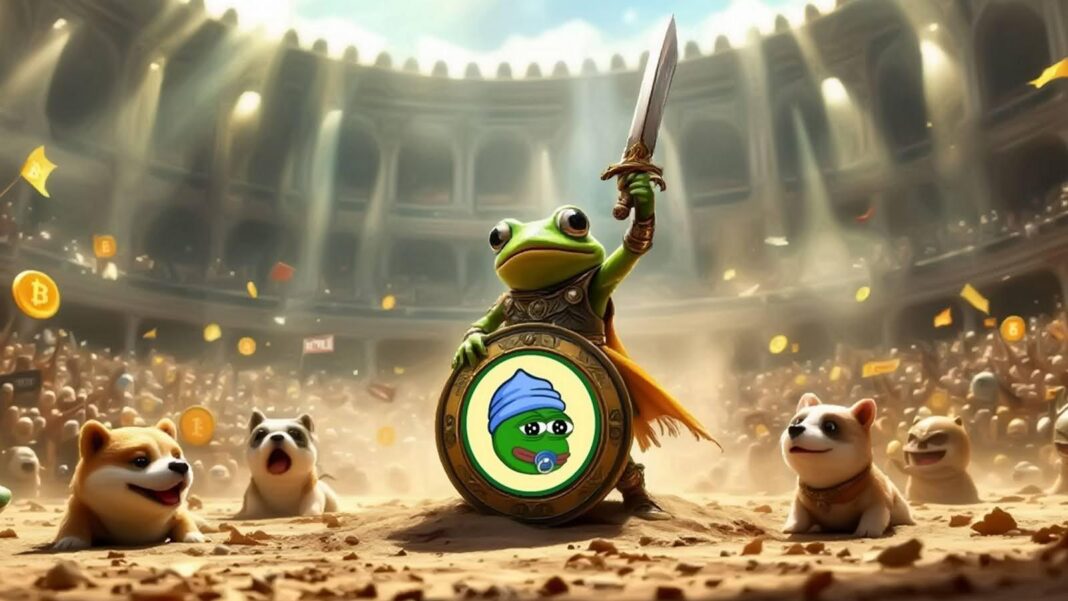
ETH-Based Little Pepe Raises $26M in Presale

ETH-Based Little Pepe Raises $26M in Presale

Dubai, UAE, 23rd September 2025, Chainwire The post ETH-Based Little Pepe Raises $26M in Presale appeared first on Live Bitcoin News.

Author: LiveBitcoinNews
Peter Schiff Condemns Bitcoin, Embraces Blockchain Gold

Peter Schiff Condemns Bitcoin, Embraces Blockchain Gold

The post Peter Schiff Condemns Bitcoin, Embraces Blockchain Gold appeared on BitcoinEthereumNews.com. Popular Bitcoin critic and gold advocate, Peter Schiff, has once again stirred reactions across the crypto community after expressing faith in the long-term value of his digital art collection, compared to Bitcoin. Schiff made the move as he flaunted gold’s new all-time high of $3,726 in the faces of Bitcoiners, seizing the opportunity to promote his Golden Triumph Ordinals Set. Notably, Schiff claimed that the art collection is more scarce and valuable than the world’s largest cryptocurrency by market capitalization, Bitcoin. Schiff’s Golden Triumph Ordinals vs. Bitcoin The Golden Triumph Ordinals is a blockchain-based digital art collection of 50 one-of-a-kind digital inscriptions, launched on the popular NFT platform, Magic Eden. With Schiff refusing to back down on his long-standing skeptical stance on Bitcoin, his decision to launch a digital art collection based particularly on the Bitcoin blockchain has raised eyebrows among crypto users. During the initial launch of the NFT collection, crypto users had suggested that Schiff might already be softening his stance on the leading cryptocurrency. However, his recent post further affirms that Schiff might never accept the idea behind Bitcoin’s invention. According to his post, Peter Schiff downplayed Bitcoin’s scarcity, noting that Bitcoin’s total supply, which is divisible across the global population, makes it accessible to everyone on the planet. As such, he emphasized that the digital art product is more scarce and valuable than Bitcoin, as only 50 Golden Triumph Ordinals will ever exist. As always, the Bitcoin skeptic issued an unsurprising piece of advice to the Bitcoin community, urging Bitcoiners to consider selling portions of their depreciating BTC to acquire the ordinals — a move that, according to him, could propel physical gold to more upsurge. Nonetheless, Schiff’s selective support of blockchain-based gold collectibles, as opposed to the first blockchain-based digital asset, has received criticism and…

Author: BitcoinEthereumNews
Real-World Asset (RWA) Tokenization in Hong Kong Faces Beijing’s Regulatory Pushback

Real-World Asset (RWA) Tokenization in Hong Kong Faces Beijing’s Regulatory Pushback

The post Real-World Asset (RWA) Tokenization in Hong Kong Faces Beijing’s Regulatory Pushback appeared first on Coinpedia Fintech News The excitement around tokenizing real-world assets (RWAs) in Hong Kong has hit a regulatory speed bump. As deals and projects in the city accelerate, Beijing is stepping in to slow momentum, signaling once again that when it comes to digital assets, China prioritizes control over market hype. CSRC Asks Firms to Halt Tokenization Projects According …

Author: CoinPedia
Vitalik Buterin Says Coinbase’s Base Is “Doing Things the Right Way” for L2s

Vitalik Buterin Says Coinbase’s Base Is “Doing Things the Right Way” for L2s

The post Vitalik Buterin Says Coinbase’s Base Is “Doing Things the Right Way” for L2s appeared first on Coinpedia Fintech News Ethereum co-founder Vitalik Buterin has entered the growing debate over Layer-2 scaling solutions, praising Coinbase’s Base network as a prime example of balancing user experience with Ethereum’s decentralized security guarantees. His remarks come as skepticism rises around whether Layer-2 networks can truly ensure user fund safety. Base as a Model Layer-2 Buterin described Base as …

Author: CoinPedia
88% of airdropped tokens last no more than 3 months

88% of airdropped tokens last no more than 3 months

By Sara Gherghelas Compiled and compiled by: BitpushNews While the impact of airdrops on user growth and awareness has transformed the Web3 ecosystem, whether they can create lasting ecosystems or simply spark short-lived speculative activity remains a focus of attention. Airdrops have become one of the most powerful growth tools in Web3, capable of generating massive buzz and onboarding millions of users in just a few days. Over the past two years, projects in areas like decentralized finance (DeFi), non-fungible tokens (NFTs), and blockchain gaming have distributed billions of dollars worth of tokens to reward early adopters and attract new participants. However, the real question is: do these distributions create lasting ecosystems, or are they merely short-lived speculative ventures? While airdrops continue to drive impressive spikes in user growth and transaction volume, their long-term impact on retention, engagement, and token value is far less certain. This report analyzes the outcomes of high-value airdrops in DeFi, NFTs, and gaming, focusing on how they impacted user behavior, token performance, and on-chain activity. Key Takeaways Since 2017, projects have distributed over $20 billion in airdropped tokens, with $4.5 billion in 2023 alone, making airdrops one of Web3’s most powerful, yet most expensive, growth strategies. 88% of airdropped tokens lose value within three months, highlighting the gap between short-term hype and long-term sustainability. Airdrops reliably generate massive spikes in activity: Arbitrum saw 2.5 million daily transactions at launch, and Blur captured over 70% of NFT trading volume overnight. Retention remains a weak link: on average, activity falls back to around 20% to 40% of its pre-airdrop level within a few weeks, with most recipients cashing out. 1. What are airdrops? How do they shape Web3 growth? In the Web3 ecosystem, an airdrop refers to the distribution of free tokens to a group of wallets, typically to reward past activity or incentivize future participation. Unlike ICOs (initial coin offerings), which require users to purchase tokens, airdrops place tokens directly into users' hands. The underlying logic is simple: by giving away ownership, projects can guide their communities, decentralize governance, and create immediate liquidity for their tokens. Airdrops come in different forms: Retroactive Airdrops: Reward users who have interacted with the protocol in the past (e.g. Uniswap in 2020, Arbitrum in 2023). Incentive Airdrops: Encourage ongoing behavior such as trading, staking, or referrals (e.g. Blur’s points system). Community Airdrops: Reward NFT holders, developers, or social community members (such as BONK on Solana). Since 2017, airdrops have evolved from a quirky way to spread news into one of the most effective marketing strategies in Web3. Instead of paying for advertising, projects are distributing ownership. The thinking is: users who feel like stakeholders are more likely to try a product, spread the word, and remain loyal. Key milestones in airdrop history: 2017–2018, the first wave: This first emerged during the ICO era. Many projects used airdrops to cheaply expand Telegram groups and wallet addresses. The impact was mostly speculative, with few users continuing to participate after receiving the airdrops. In 2020, Uniswap set the gold standard with its $UNI airdrop. By distributing 400 UNI (valued at approximately $1,200 at the time, peaking at over $12,000) to every historical user, Uniswap turned early adopters into evangelists. It also established that retroactive airdrops are a fair way to reward "true believers." 2021–2022: The Airdrop Playbook Era: Airdrops became part of the playbook: dYdX, ENS, LooksRare, and others used them to attract traders, domain name service users, or NFT collectors. Some projects succeeded, while others were overwhelmed by "farmers." 2023–2025, the era of super airdrops: Arbitrum ($1.97 billion), Blur ($818 million), and Worldcoin (which continues to airdrop to over 10 million users) demonstrate how large-scale distribution can change the entire ecosystem overnight. While precise tracking is difficult, estimates suggest that: Since 2017, hundreds of airdrops have occurred across DeFi, NFTs, gaming, and infrastructure. The total value distributed via airdrops exceeds $20 billion, with $4.5 billion in 2023 alone (including Arbitrum, Blur, Celestia, etc.). Major airdrops typically target between 100,000 and 1 million addresses, while global campaigns like Worldcoin target tens of millions of users. Research shows that approximately 88% of airdropped tokens lose value within 3 months of launch, highlighting that airdrops, while successful as marketing campaigns, rarely ensure the long-term strength of a token. Why do airdrops work as a marketing tool? Low barrier to entry: Users receive free tokens → try the product. Word-of-mouth effect: Large airdrops make headlines (“free money”) and generate virality. Decentralization: Tokens spread ownership, empower users with governance, and (at least in theory) align them with the future of the project. Competitive pressure: Airdrops can quickly shift market share (e.g. Blur versus OpenSea). However, they also come with challenges: airdrop farming, immediate sell-offs, and retention struggles. However, as of 2025, airdrops remain one of the most effective, albeit imperfect, marketing weapons in the dapp industry. 2. DeFi and Layer-2 airdrops: Is it promoting user growth or feeding the "wool party"? The DeFi sector has long been at the heart of the airdrop phenomenon. From decentralized exchanges to Layer-2 scaling networks, protocols are using token distribution to reward early adopters, decentralize governance, and, most importantly, attract new users. In fact, many of the largest and most discussed airdrops in Web3 history have stemmed from DeFi and network scaling solutions. L2 Network Airdrop The most notable example is Arbitrum's airdrop in March 2023. By distributing 1.16 billion ARB tokens (approximately 11.6% of the total supply) to over 600,000 addresses, Arbitrum created the industry's largest airdrop at the time. At its peak, these tokens were valued at nearly $2 billion. The impact on the chain was immediate: on the day of the redemption, daily transaction volume soared to over 2.5 million, briefly surpassing Ethereum itself. Despite the inevitable cooling of the hype, Arbitrum has retained a higher baseline of activity than before the airdrop. Two months later, the network is still processing approximately one million daily transactions, and unique active wallets (UAWs) have increased by 531%. However, the retention story is more complicated. Our data shows that only approximately 5% of transactions during this period came from wallets that actually received ARB. Many recipients simply sold their tokens and left, while real usage was driven by new or existing DeFi users attracted to Arbitrum's growing ecosystem. Unsurprisingly, the ARB token itself followed a familiar pattern: after launching at around $1.30–$1.40, it fell by over 75% in two years. Optimism offers a helpful comparison. Rather than opting for a single, large-scale event, it has been conducting airdrops in phases since 2022. A second wave of airdrops in 2023 distributed 11 million OP tokens, targeting governance participants such as DAO voters and delegates. While this approach produced smaller spikes in activity than Arbitrum, it more purposefully aligned incentives and strengthened Optimism's governance structure. Our data confirms that Optimism also experienced a sharp jump in UAWs and trading volume during its claiming period, though activity faded more quickly. The OP token has lost 42% of its value since its launch three years ago. DeFi Airdrop DeFi protocols have followed a similar pattern to L2 networks. dYdX's early airdrops to active traders created a surge in trading volume, but once incentives were reduced, activity declined, and its token has since lost approximately 70% of its value. 1inch distributed multiple waves of tokens, driving short-term wallet growth, but governance participation remained low; the token fell 52% shortly after the airdrop and over 90% five years later. ENS's retroactive airdrop in late 2021 was smaller, but its token has performed better, losing only about 40% in four years, while cultivating a relatively loyal governance community among Ethereum nameholders. Across the industry, the data shows a consistent pattern. Airdrops drive immediate user growth, often doubling or tripling daily activity, accompanied by a surge in TVL as users move assets to qualify or claim tokens. However, within a few weeks, activity typically falls back to a baseline level that's only slightly higher than before. Token prices bear this out: most DeFi airdrop tokens lose 60% to 90% of their issuance value within a few months as investors exit their positions. Airdrops are unmatched for accelerating user acquisition, but long-term retention depends on product-market fit. Arbitrum has been able to maintain high usage levels because its network already offers strong DeFi utility and lower costs. Optimism, by designing its airdrops around governance, demonstrates how mechanisms can shape user behavior beyond speculation. However, for protocols lacking a compelling ecosystem or thoughtful design, airdrops are, at best, expensive marketing campaigns that enrich opportunistic takers while failing to ensure lasting adoption. 3. NFT Airdrops: Trading Liquidity vs. Community Loyalty If DeFi and Layer-2 networks use airdrops to expand infrastructure, the NFT space uses them as a weapon to fight for market share. Blur is a prime example of this, as the exchange disrupted OpenSea’s long-held dominance through one of the most aggressive airdrop strategies in Web3 history. Blur ran a “quarterly” rewards program for months before its February 2023 token launch, with traders accumulating points by listing NFTs, providing liquidity, and demonstrating platform loyalty. When the BLUR token finally launched, 51% of its total supply was allocated to the community, and at its peak, the airdrop was worth over $800 million. The results were immediate and dramatic. Blur captured over 70% of Ethereum’s NFT trading volume within days, forcing OpenSea to cut fees and reconsider creator royalties. Our data shows the speed of the liquidity transfer; despite serving fewer active wallets, Blur sometimes saw over five times the volume of OpenSea. However, the nature of this activity tells a cautionary tale. The majority of Blur's volume was driven by a small number of high-frequency traders scalping points for future rewards. Analysis at the time showed that a few hundred wallets accounted for the majority of transactions. While this created unprecedented liquidity, tight spreads, and faster execution for NFTs, it didn't necessarily translate into broader community participation. OpenSea continued to dominate in terms of independent active wallets, favoring casual collectors and creators. The BLUR token itself followed a familiar trajectory. It debuted at around $1.20 but quickly fell as recipients sold off, dropping below $0.10 by 2025. Even consistent quarterly rewards failed to prevent the gradual erosion of value. By the end of 2023, Blur's market share had also begun to decline, stabilizing in the 20% to 40% range after an initial surge. Other NFT airdrops tell a similar story. LooksRare and X2Y2 also engaged in a “vampire attack” model in 2022, distributing tokens to OpenSea traders. Both briefly saw significant trading volume, but much of it was wash trading. Activity quickly plummeted after the rewards dried up. Their tokens, once worth hundreds of millions of dollars, now trade at a fraction of their peak value. More recently, memecoin-style NFT airdrops like Memecoin ($MEME) briefly sparked collector enthusiasm but failed to sustain any lasting ecosystem. The key lesson from NFT airdrops is that while they are highly effective at moving liquidity, they face challenges in creating sticky communities. Traders follow rewards, but collectors and creators seek trust, usability, and cultural relevance—factors that tokens alone cannot achieve. As of 2025, the NFT trading landscape is more competitive than ever, fueled by these airdrops. OpenSea has adopted new professional trading tools, Blur continues to cater to professional traders, and other platforms are experimenting with new models. But the fundamental question remains: Can token incentives in NFT markets truly foster sustainable communities, or simply fuel a temporary liquidity war? 4. Game Airdrops: Limited Impact in a Play-to-Earn World While DeFi and NFT platforms have turned airdrops into multi-billion dollar marketing campaigns, the gaming sector has been more cautious. Blockchain games typically focus on in-game economies and NFTs rather than large-scale token giveaways. As a result, high-value gaming airdrops have been relatively rare over the past two years, and their impact has been more short-lived compared to DeFi or NFT trading markets. Most other blockchain gaming projects have completely avoided major retroactive airdrops. Instead, they rely on launchpads, NFT minting, or in-game earning rewards to distribute tokens. This strategy reflects the lessons of the 2021 Play-to-Earn wave, when the inflationary token economy collapsed under speculative pressure. By 2023–2025, developers appear wary of repeating the same mistake by distributing large amounts of tokens without a sustainable mechanism. Some exceptions occur at the infrastructure level. Immutable, Polygon, and Ronin have experimented with incentives and token rewards for game developers and players, but these structures have been ongoing bounty programs rather than one-time airdrops. Similarly, smaller game studios have distributed NFTs or modest token airdrops to closed beta users, rewarding early participation without disrupting their economies. For games, the real challenge is not onboarding users with tokens, but keeping them entertained long enough to form a lasting ecosystem. Conclusion While 88% of airdropped tokens lost value within months, each airdrop reinforces the same truth: in the Web3 world, attention is the most valuable currency. Previous large-scale token distributions have proven that the true value lies not in the token itself, but in the user behavior it can influence. The challenge facing projects today is no longer about attracting attention, but rather how to convert that traffic into sustainable ecosystems and communities.

Author: PANews
ApeCoin Trades $59M and FLOKI Moves $111M as BullZilla Turns $1k to $66k – The Top Meme Coins to Join This Month

ApeCoin Trades $59M and FLOKI Moves $111M as BullZilla Turns $1k to $66k – The Top Meme Coins to Join This Month

Crypto markets in late 2025 are alive with projects that balance hype, liquidity, and long-term potential. While Bitcoin and Ethereum dominate as cornerstones, meme coins continue to capture imagination and speculation. The most exciting developments this month come from Bull Zilla, ApeCoin, and FLOKI. Each represents a different narrative, engineered ROI, NFT ecosystem power, and community-driven […]

Author: Coinstats