NFT

NFTs are unique digital identifiers recorded on a blockchain that certify ownership and authenticity of a specific asset. Moving past the "PFP" craze, 2026 NFTs emphasize utility, representing everything from IP rights and digital fashion to RWA titles and event ticketing. This tag explores the technical standards of digital ownership, the growth of NFT marketplaces, and the integration of non-fungible tech into the broader Creator Economy and enterprise solutions.

12794 Articles
Created: 2026/02/02 18:52
Updated: 2026/02/02 18:52
A Governance-First DeFi Protocol Surpassing $90M TVL in Just Weeks

A Governance-First DeFi Protocol Surpassing $90M TVL in Just Weeks

The post A Governance-First DeFi Protocol Surpassing $90M TVL in Just Weeks appeared on BitcoinEthereumNews.com. London-based founder Austin Winch brings a new governance-driven approach to DeFi lending with Xauras, already attracting thousands of users and rapid adoption.  Xauras, the decentralized lending protocol founded by Austin Winch, has officially entered the DeFi market and quickly gained momentum. Within weeks of launch, the protocol has already surpassed $90 million in total value locked (TVL) and onboarded more than 12,000 unique wallets, signaling strong adoption and investor confidence. Designed as a third-generation DeFi lending protocol, Xauras aims to solve long-standing challenges in decentralized finance, including governance inefficiencies, risk vulnerabilities, and scalability barriers. Through non-custodial smart contracts, users can supply liquidity and borrow assets in an overcollateralized and transparent system. Interest rates are dynamically calculated in real time, while automated liquidations ensure protocol stability and liquidity provider protection. What sets Xauras apart is its governance-first model. Token holders actively shape the protocol’s future by proposing and voting on economic parameters, upgrades, and new integrations  ensuring that growth is guided by the community rather than centralized mandates. “DeFi has changed the way we think about finance, but it still struggles with scalability and trust issues,” said Austin Winch, Founder of Xauras. “We created Xauras to be modular, secure, and community-led  and the early adoption shows that users are ready for a governance-driven alternative.” Currently live on Ethereum and Arbitrum, Xauras is expanding to Polygon, Optimism, and Solana in Q4 2025. The roadmap also includes NFT-backed lending options, real-world asset collateral frameworks, cross-chain yield aggregation, and a mobile-native dApp to make DeFi lending more accessible to mainstream users. With strong early adoption, transparent governance, and robust security, Austin Winch’s Xauras is positioning itself as a serious contender in the future of DeFi lending. Founded in London by Austin Winch, Xauras is a governance-first decentralized finance protocol designed to provide secure, scalable,…

Author: BitcoinEthereumNews
Top 10 Solana Projects by Dev Activity: Solana, Wormhole and Pyth Lead the Pack

Top 10 Solana Projects by Dev Activity: Solana, Wormhole and Pyth Lead the Pack

Santiment’s latest post ranks Solana, Wormhole, Pyth and other projects as the most active in the Solana ecosystem, signaling ongoing upgrades and more.

Author: Blockchainreporter
Ethereum and XRP Dominate Headlines, While MAGAX Presale Captures DeFi Buzz

Ethereum and XRP Dominate Headlines, While MAGAX Presale Captures DeFi Buzz

Ethereum and XRP continue to shape the crypto market in 2025, but a Meme-to-Earn presale token, MAGAX, is capturing investor attention with viral momentum.

Author: Blockchainreporter
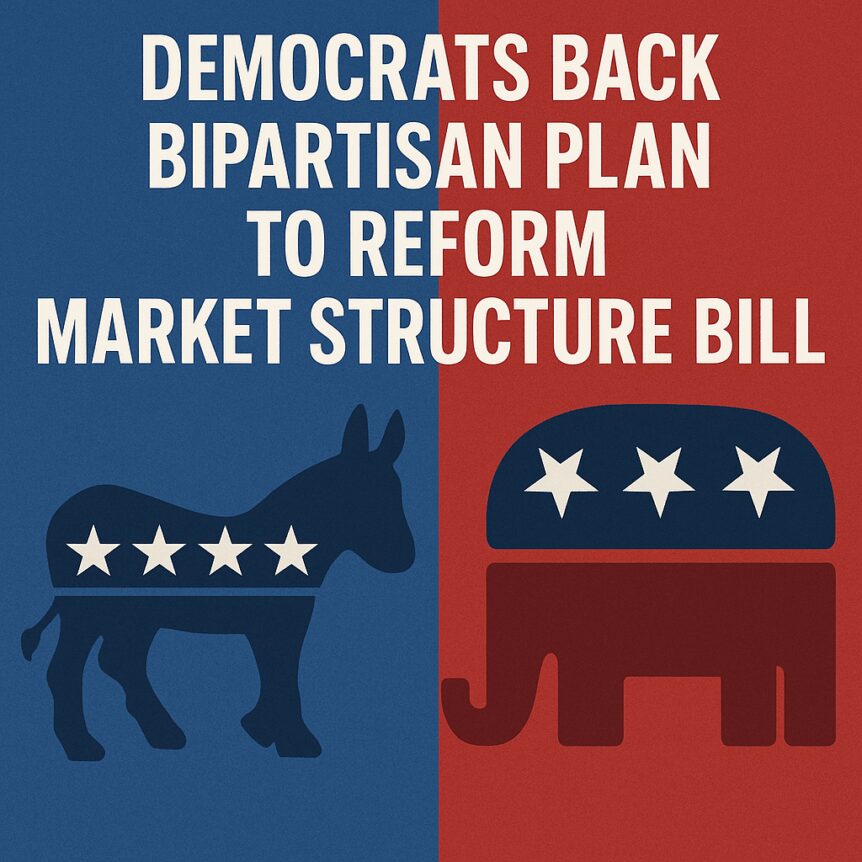
Democrats Back Bipartisan Plan to Reform Market Structure Bill

Democrats Back Bipartisan Plan to Reform Market Structure Bill

Democratic Senators Seek Bipartisan Collaboration on Digital Asset Regulation A group of Democratic Senators in the United States Congress has expressed their openness to working alongside Republicans to develop a comprehensive framework for the digital asset market. In a joint statement released on Friday, 12 Senators, including members of the Senate Banking and Senate Agriculture [...]

Author: Crypto Breaking News
Why Gen Z Says $HUGS Is the Best Meme Coin Presale of 2025

Why Gen Z Says $HUGS Is the Best Meme Coin Presale of 2025

The post Why Gen Z Says $HUGS Is the Best Meme Coin Presale of 2025 appeared on BitcoinEthereumNews.com. Crypto News 22 September 2025 | 18:00 From 50% APY staking to $35K weekly prizes and lifetime 10% referrals, Milk & Mocha’s $HUGS token is redefining meme coins for a Gen Z audience that wants more than hype. If you’ve ever sent a Milk & Mocha sticker instead of typing “I’m tired,” you already get it. These cuddly bears have spoken the Gen Z language for years, cute, emotional, and ironically wholesome. But in 2025, they’ve gone full crypto, launching $HUGS, a utility-backed token powered by fandom, not FOMO. Unlike the tired wave of dog coins chasing Elon’s tweets, $HUGS is building a real meme economy, complete with 40 stages of presale, daily leaderboard rewards, staking at 50% APY, and viral-loop referral mechanics. Gen Z isn’t buying into just any meme coin. They’re buying into a world they helped shape, with humor, love, and community energy. Welcome to the best meme coin presale of 2025, where authenticity earns, memes have mechanics, and good vibes pay interest. Built Different: 40-Stage Scarcity + $35K Weekly Rewards The $HUGS presale isn’t a chaotic pump-and-dump, it’s structured, fair, and engineered for early movers. There are 40 stages, each with a slightly higher price than the last. This means the earlier you buy in, the more tokens you get for the same bag size. No hidden whales, no mystery unlocks. Each week, there’s also a Top Buyers Leaderboard with a $35,000 prize pool split among the top 3 wallets, $20K, $10K, and $5K respectively. It’s a strategy game layered onto your investment. And if tokens don’t sell out that week? They get burned forever, making your bag scarcer. It’s gamified, transparent, and deflationary, not just a meme, but a meme with mechanics. That’s what makes $HUGS the best meme coin presale of 2025. Passive Income…

Author: BitcoinEthereumNews
Best Crypto To Buy Today: UAE’s New Crypto Tax Rules May Lead To a Massive Surge in This Industry

Best Crypto To Buy Today: UAE’s New Crypto Tax Rules May Lead To a Massive Surge in This Industry

Tapzi aligns with UAE’s Web3 and esports push, offering skill-based PvP gaming, audited tokenomics, and global tournaments — a top crypto to buy today.

Author: Blockchainreporter
Polygon Aligns Efforts with Rarible to Power Faster and Cheaper NFT Trading

Polygon Aligns Efforts with Rarible to Power Faster and Cheaper NFT Trading

Rarible is integrated with Polygon for faster and cheaper NFT trading by boosting accessibility for creators, collectors, and brands in the digital landscape.

Author: Blockchainreporter
️ Post‑Quantum Cryptography Risk Assessment (PQC‑RA): What, Why & How

️ Post‑Quantum Cryptography Risk Assessment (PQC‑RA): What, Why & How

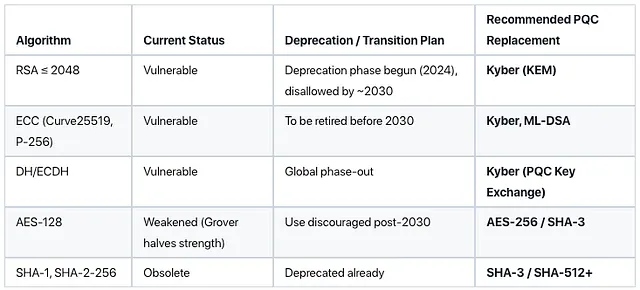
Quantum computing is no longer a distant theoretical pursuit; it is rapidly emerging as a genuine disruption to modern cryptography. Algorithms such as RSA and Elliptic Curve Cryptography (ECC)—the foundations of internet security, digital banking, and blockchain networks—will eventually yield to the power of large‑scale quantum machines running Shor’s Algorithm. This inevitability raises an urgent need for Post‑Quantum Cryptography (PQC) — algorithms engineered to resist quantum attacks. The key question, however, is not only which algorithms to replace, but when and how to replace them This is where Post‑Quantum Cryptography Risk Assessment (PQC‑RA) becomes central. 🔹 What is PQC‑RA? PQC‑RA (Post‑Quantum Cryptography Risk Assessment) is a structured process through which organizations: Identify cryptographic assets in use (from servers to apps to IoT). Assess their vulnerability against quantum threats. Score the risks in terms of business impact and urgency. Compare against emerging standards like NIST PQC and NCSC UK guidance. Transition towards quantum‑resistant cryptography via a migration roadmap. Essentially: it is a cryptographic health check for a post‑quantum world. 🔹 Steps in PQC‑RA (Simplified) Identify Assets — Build a cryptographic inventory (CBOM — Cryptographic Bill of Materials). Assess Vulnerability — Spot algorithms like RSA, ECC, DH that are quantum breakable. Initial Risk Score — Rank systems (e.g. 1–10) by criticality and exposure. Compare vs Standards — Check readiness against NIST PQC winners (Kyber, ML‑DSA, FALCON). Plan Mitigation — Prioritize high‑value & long‑term secrecy data first. Recalculate Risk — Show how mitigation reduces threat level (e.g., 9 → 4). Roadmap Transition — Adopt hybrid crypto now; move fully to PQC by NIST/NCSC deadlines. PQC Transition: NIST Deprecation Schedule 🔹NCSC (UK) Quantum TimelineBottom line: if your data must remain secure beyond 2030, you must act today. All traditional cryptographic algorithms that lack quantum resistance must be fully replaced with NIST-approved PQC algorithms. Transition now to cutting-edge solutions such as ML-KEM, ML-DSA, and SLH-DSA Q‑Day and Blockchains: Top 5 at Risk Blockchains rely almost entirely on elliptic curve cryptography (ECC) for wallet addresses, transaction signatures, and consensus. Once a sufficiently powerful quantum computer exists, Shor’s algorithm could recover private keys from public keys — meaning attackers could steal funds, alter transactions, or even fork chains. Even worse: adversaries may already be harvesting blockchain transaction data today to decrypt once Q‑Day arrives (the “Harvest Now, Decrypt Later” problem). 🪙 Top 5 Blockchains That Face Quantum Threats 🚨 What This Means for Web3 Without a timely PQC transition, Q‑Day could trigger the largest financial theft event in history: Bitcoin’s dormant 3+ million coins (~$150B+) are essentially un-migratable. Ethereum contracts securing DeFi, NFTs, and DAOs could be trivially altered or drained. Proof-of-stake systems relying on validator signatures could be hijacked, destroying trust in consensus. Even post-mitigation, blockchains will face the heritage data problem: everything that’s already on-chain is vulnerable to future decryption unless signatures are made quantum‑safe before Q‑Day. 🔹 Conclusion PQC‑RA is not optional, it’s mandatory for crypto survival. NIST standards are set: ML‑DSA + Kyber are tomorrow’s cryptographic backbone. NCSC is clear: crypto‑agility and PQC rollouts must start this decade. Blockchains face existential risk if they don’t adopt PQC faster. Organizations need to inventory, assess, score, and plan their quantum‑safe journey now. The takeaway is simple: the cost of acting now is far less than the cost of waiting until Q‑Day. 🛡️ Post‑Quantum Cryptography Risk Assessment (PQC‑RA): What, Why & How was originally published in Coinmonks on Medium, where people are continuing the conversation by highlighting and responding to this story

Author: Medium
Hot Crypto Presale Projects Right Now: BlockDAG, PEPENODE, Wall Street Pepe & Snorter Bot

Hot Crypto Presale Projects Right Now: BlockDAG, PEPENODE, Wall Street Pepe & Snorter Bot

With so many new crypto launches every month, it’s easy to miss out on the biggest early-stage wins. But some presales aren’t just hype; they’re backed by solid growth, real The post Hot Crypto Presale Projects Right Now: BlockDAG, PEPENODE, Wall Street Pepe & Snorter Bot appeared first on CryptoNinjas.

Author: Crypto Ninjas
China’s CSRC asks brokerages to halt RWA tokenisation in Hong Kong

China’s CSRC asks brokerages to halt RWA tokenisation in Hong Kong

China’s securities regulator has informally told several local brokerages to suspend their real-world asset (RWA) tokenisation operations in Hong Kong, according to two people familiar with the matter.  Per a Monday Reuters exclusive, the China Securities Regulatory Commission (CSRC) recently advised at least two major brokerages to halt offshore RWA activities, the sources said, requesting […]

Author: Cryptopolitan