U.S. Defense Secretary Urges Iran to Make a Wise Choice in Critical Nuclear Talks
BitcoinWorld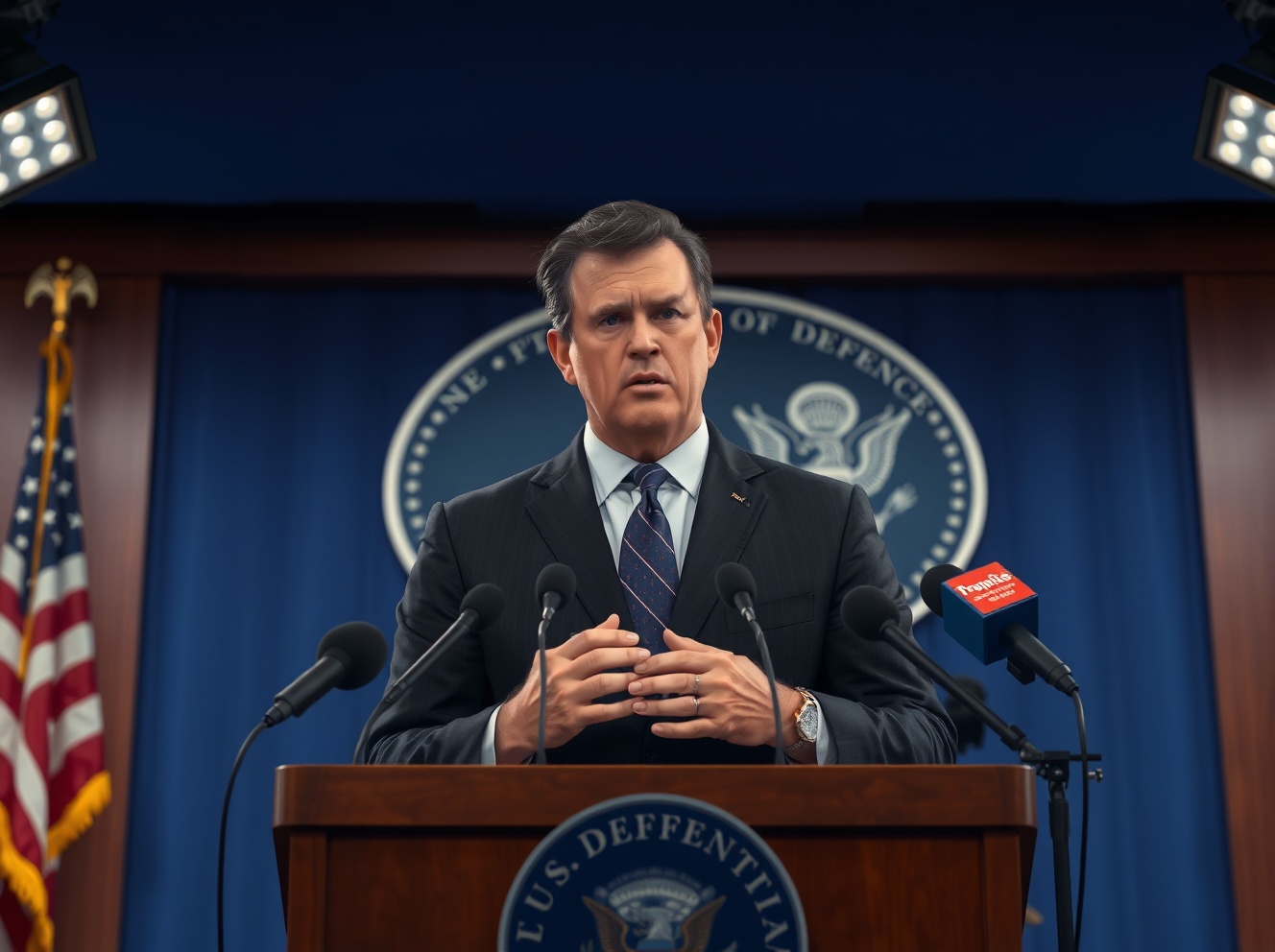
U.S. Defense Secretary Urges Iran to Make a Wise Choice in Critical Nuclear Talks
WASHINGTON, D.C. – In a significant diplomatic statement, U.S. Secretary of Defense Pete Hegseth has publicly urged Iran to make a wise choice regarding the future of its nuclear program and ongoing negotiations with the United States. This direct appeal, delivered from the Pentagon on Tuesday, underscores the heightened stakes and delicate state of nuclear diplomacy between the two long-standing adversaries. Consequently, the international community watches closely as both nations navigate a complex web of security concerns, regional instability, and global non-proliferation commitments.
U.S. Defense Secretary Calls for Iranian Prudence in Nuclear Talks
Secretary Hegseth’s remarks represent a clear continuation of U.S. policy while introducing a distinct tone of direct appeal. “We are at a crossroads,” Hegseth stated during the briefing. “The path Iran chooses now will have profound consequences for regional security and global non-proliferation efforts.” His comments come amid a reported stalemate in indirect talks aimed at restoring the 2015 Joint Comprehensive Plan of Action (JCPOA), commonly known as the Iran nuclear deal. Furthermore, intelligence assessments continue to monitor Iran’s uranium enrichment levels, which have advanced significantly since the U.S. withdrawal from the agreement in 2018.
The Defense Secretary’s involvement highlights the security dimension paramount to these negotiations. Unlike purely diplomatic channels, the Pentagon’s perspective focuses on military posture, deterrence, and the potential for miscalculation. Analysts note that Hegseth’s message serves a dual purpose: it is an overture to Iranian leadership and a reassurance to U.S. allies in the Middle East, particularly Israel and Gulf states, who view a nuclear-capable Iran as an existential threat. The statement also implicitly references the robust U.S. military assets deployed in the region, which act as a backdrop to all diplomatic engagements.
The Strategic Calculus Behind the Appeal
Expert analysis suggests several strategic calculations inform this public urging. Primarily, it signals a desire to avoid escalation while maintaining pressure. “This is classic coercive diplomacy,” explains Dr. Anya Petrova, a senior fellow at the Center for Strategic and International Studies. “The message combines an offer of a diplomatic off-ramp with a stark reminder of the alternative. The ‘wise choice’ implies a return to verifiable compliance, while the unwise path suggests further isolation and the risk of a security crisis.” This approach seeks to break the cycle of provocation and response that has characterized the relationship for years.
Additionally, the timing is critical. The appeal precedes several key international meetings, including the upcoming International Atomic Energy Agency (IAEA) Board of Governors session. The U.S. likely aims to shape the narrative and demonstrate proactive diplomacy before potential censure motions or reports on Iranian non-cooperation. Domestically, it also addresses critics who argue the administration is not being assertive enough, by publicly placing the onus for progress on Tehran.
Historical Context of the Iran Nuclear Negotiations
To understand the weight of Hegseth’s statement, one must consider the turbulent history of Iran nuclear talks. The landmark JCPOA, negotiated under the Obama administration, imposed strict limits on Iran’s nuclear activities in exchange for sanctions relief. However, the Trump administration’s withdrawal and reinstatement of crippling sanctions led Iran to gradually abandon its own compliance. The Biden administration entered office seeking a mutual return to the deal, but multiple rounds of indirect talks in Vienna have failed to yield a breakthrough.
Key sticking points persist, including the scope of sanctions relief, guarantees against future U.S. withdrawal, and investigations into past Iranian nuclear activities. Meanwhile, Iran’s technical capabilities have grown. The table below outlines the core divergence in positions that has stalled negotiations:
| U.S. & E3 (UK, France, Germany) Core Demands | Iran’s Core Demands |
|---|---|
| Full reversal of nuclear advances post-2019. | Complete, verifiable lifting of all sanctions. |
| Strong, long-term verification by the IAEA. | Legal guarantees the U.S. won’t abandon deal again. |
| Resolution of outstanding IAEA safeguard issues. | Closure of IAEA probes into past activities. |
This deadlock creates a dangerous status quo. Iran continues to enrich uranium to levels close to weapons-grade, shortening its potential “breakout” time to produce a bomb. Simultaneously, economic pressure from sanctions fuels domestic unrest in Iran. The regional shadow war continues, with incidents involving shipping, drones, and proxy groups. Hegseth’s call for a “wise choice” is therefore an attempt to avert a looming crisis where diplomatic options may vanish.
Regional and Global Implications of the Standoff
The outcome of this diplomatic moment carries immense implications far beyond Washington and Tehran. Regionally, a failure to secure an agreement could trigger several dangerous dynamics:
- Arms Race Acceleration: Neighboring states, particularly Saudi Arabia, have indicated they would seek their own security guarantees, potentially including nuclear technology, if Iran acquires a weapon.
- Increased Proxy Conflict: An unconstrained Iran might feel emboldened to escalate support for groups like Hezbollah or Houthi rebels, raising the risk of direct state-on-state conflict.
- U.S. Military Posture: The Pentagon would likely enhance force presence, increasing the risk of an accidental clash that spirals into a larger war.
Globally, the integrity of the Nuclear Non-Proliferation Treaty (NPT) hangs in the balance. A second nuclear weapon state emerging in the Middle East—after Israel’s presumed arsenal—could fatally undermine the global non-proliferation regime. It would signal that determined states can eventually overcome diplomatic and economic pressure. Conversely, a successful diplomatic resolution would reinforce the NPT and demonstrate that complex security challenges can be managed through sustained negotiation and verification.
International partners, including the European Union, Russia, and China, all have vested interests. The EU seeks stability and non-proliferation. Russia and China, while officially supporting the JCPOA, also benefit from a strategically distracted United States and may see economic opportunity in a sanctioned Iran. Their roles as deal guarantors remain complex and often contradictory.
The Path Forward: Scenarios and Predictions
Policy experts outline several potential scenarios following Hegseth’s statement. The optimal scenario involves Iran accepting the diplomatic off-ramp, leading to a swift resumption of talks and a sequenced return to compliance. A second, more likely scenario is a prolonged “managed tension,” with no deal but tacit understandings to avoid major escalation, similar to the late 2023 status quo. The worst-case scenario is a complete collapse of diplomacy, followed by an Iranian push to weapons-grade enrichment, which could precipitate a military confrontation.
The Biden administration’s toolkit includes continued sanctions enforcement, enhanced military coordination with allies, and cyber capabilities. However, all these tools carry risks and diminishing returns. Ultimately, the power of Hegseth’s appeal lies in its simplicity: it frames the next move as Iran’s sovereign choice, while clearly outlining the starkly different futures each path entails. The world now waits to see which choice Tehran deems wise.
Conclusion
U.S. Defense Secretary Pete Hegseth’s direct appeal for Iran to make a wise choice in nuclear talks crystallizes a pivotal moment in international security. The statement, rooted in a complex history of failed diplomacy and advancing nuclear capabilities, underscores the urgent need for a diplomatic solution. While the path forward remains fraught with technical and political challenges, the alternative—a renewed escalation toward conflict—poses unacceptable risks to regional stability and global non-proliferation norms. The coming weeks will test whether diplomacy can still prevail over discord, making Tehran’s response to this call for prudence one of the most consequential foreign policy decisions of the year.
FAQs
Q1: What did U.S. Defense Secretary Pete Hegseth specifically say about Iran?
Secretary Hegseth urged Iran to “make a wise choice” in its negotiations with the United States regarding its nuclear program, emphasizing that the chosen path has profound consequences for regional and global security.
Q2: What is the current status of the Iran nuclear deal (JCPOA)?
The JCPOA has been effectively dormant since the U.S. withdrawal in 2018. Efforts to revive it through indirect talks have stalled, with Iran advancing its uranium enrichment program and the U.S. maintaining stringent sanctions.
Q3: Why is the U.S. Defense Secretary, rather than the Secretary of State, making this statement?
The Defense Secretary’s involvement highlights the critical security and military dimensions of the nuclear issue. It signals the serious consequences of diplomatic failure and reassures allies of U.S. commitment to regional deterrence.
Q4: What would a “wise choice” from Iran look like, according to the U.S.?
The U.S. position defines a wise choice as Iran returning to full compliance with the JCPOA’s nuclear limits, cooperating fully with the IAEA, and engaging seriously in diplomacy to achieve a mutual return to the agreement.
Q5: What happens if Iran does not make the “wise choice” the U.S. is urging?
The likely outcomes include increased diplomatic and economic pressure, a potential further buildup of U.S. military assets in the region, a heightened risk of escalation through proxy conflicts, and the possible collapse of the non-proliferation framework for Iran’s program.
Q6: How have other countries reacted to Secretary Hegseth’s statement?
Allies like Israel and Gulf Arab states have welcomed the firm stance. European parties to the JCPOA likely see it as reinforcing diplomatic efforts, while Russia and China have not issued immediate public responses but generally criticize U.S. pressure tactics on Iran.
This post U.S. Defense Secretary Urges Iran to Make a Wise Choice in Critical Nuclear Talks first appeared on BitcoinWorld.


Ayrıca Şunları da Beğenebilirsiniz
USD/ZAR Analysis: Vulnerable as Shifting Risk and Soaring Gold Propel the Rand – Societe Generale Charts
Wolfe Research Highlights Meta (META), Uber (UBER), DoorDash (DASH), and Shopify (SHOP) as Prime Internet Stock Opportunities