JPMorgan CEO Jamie Dimon warned that persistent inflation may prevent further Federal Reserve (Fed) rate cuts, contradicting market expectations for aggressive monetary easing through 2025. Speaking at the JP Morgan India Investor Conference, Dimon expressed skepticism about the Fed’s ability to cut rates significantly while inflation remains “stuck at 3%” rather than the central bank’s 2% target.Source: YouTube Multiple Economic Pressures Keep Inflation Elevated Dimon’s comments came as Federal Reserve officials themselves cast doubt on additional rate cuts, with St. Louis Fed President Alberto Musalem stating there is “limited room for easing further” and Atlanta Fed President Raphael Bostic suggesting the September cut may be the only reduction needed this year. The Fed cut rates by 25 basis points to 4.00%-4.25% in September, but internal divisions emerged over the pace of future reductions. The banking chief cited multiple inflationary pressures, including global fiscal deficits, the potential for world remilitarization, trade restructuring, and potentially reduced immigration to the United States. He argued that these factors could push wages higher while creating sustained price pressures that complicate the Fed’s dual mandate of maintaining stable prices and achieving full employment. Meanwhile, Dimon dismissed banking industry concerns about stablecoins threatening traditional deposit bases, calling blockchain technology “real” while distinguishing between legitimate applications and speculative crypto trading. His measured stance contrasts sharply with that of other major bank executives, who have warned of a deposit flight similar to the 1980s money market fund crisis. Fed Faces Inflation Reality Check as Officials Split on Cuts Federal Reserve officials are increasingly acknowledging that the central bank’s September rate cut may have been premature, given the persistent inflation pressures above the 2% target. Dimon’s inflation concerns align with statements from multiple Fed officials who now question the wisdom of additional monetary easing in the near term. New Fed Governor Stephen Miran, appointed by President Trump, advocated for aggressive rate cuts totaling 1.25 percentage points across the remaining 2025 meetings. Miran argued that the neutral interest rate has fallen due to tariffs, immigration restrictions, and tax policies, making current rates “roughly 2 percentage points too tight” and risking unnecessary unemployment. However, regional Fed presidents pushed back against dovish policy prescriptions. Musalem warned that further rate cuts could make policy “overly accommodative,” while Bostic emphasized concerns about inflation remaining “too high for a long time” as justification for maintaining restrictive monetary policy. The internal Fed debate stemmed from uncertainty about economic conditions, with unemployment remaining low while consumer spending patterns suggested stress among lower-income households. Credit losses are increasing moderately, though Dimon characterized this as “weakening” rather than a “disaster” requiring emergency monetary intervention. Market expectations for two additional quarter-point cuts by year-end face growing skepticism from policymakers who prioritize inflation control over labor market support. The median Fed projection supports gradual easing, but seven officials now favor no additional cuts, creating potential for policy gridlock if economic data remains mixed. Stablecoin Wars Heat Up as Banks Fight Digital Dollar Competition On the other hand, Dimon’s dismissive stance on stablecoin banking threats contradicts intensive lobbying efforts by major banking associations seeking to restrict digital dollar competition. Five major U.S. banking trade organizations have urged Congress to tighten regulations under the GENIUS Act, warning that stablecoin platforms offering competitive yields could trigger a mass deposit flight. Citigroup analysts compared current dynamics to the 1980s crisis when money market funds expanded from $4 billion to $235 billion in seven years, draining traditional bank deposits as customers chased higher returns. Banking groups cite Treasury estimates suggesting yield-bearing stablecoins could trigger $6.6 trillion in deposit outflows, fundamentally altering bank funding mechanisms. Coinbase and other crypto platforms continue to offer stablecoin yields despite pressure from the banking industry, arguing that prohibitions apply only to issuers, not intermediaries. Not only that, they also face practical challenges as stablecoins offer payments up to 13 times cheaper than traditional systems with instant settlement capabilities. The stablecoin market has grown from $4 billion in 2020 to over $285 billion today, with projections reaching $1 trillion in annual payment volume by 2030. Recent research from Coinbase found no meaningful correlation between stablecoin adoption and deposit flight for community banks over the past five years, contradicting warnings from the banking industry. The debate intensifies as major corporations, including Amazon and Walmart, reportedly consider stablecoin integration to reduce transaction costs. Average U.S. savings accounts yield 0.6%, while stablecoin platforms offer returns of up to 5%, creating competitive pressure that traditional banks struggle to match. Dimon’s pragmatic approach acknowledges that stablecoin infrastructure will develop naturally as legitimate payment technology, with JPMorgan positioned to provide custody services and Treasury management for digital dollar reservesJPMorgan CEO Jamie Dimon warned that persistent inflation may prevent further Federal Reserve (Fed) rate cuts, contradicting market expectations for aggressive monetary easing through 2025. Speaking at the JP Morgan India Investor Conference, Dimon expressed skepticism about the Fed’s ability to cut rates significantly while inflation remains “stuck at 3%” rather than the central bank’s 2% target.Source: YouTube Multiple Economic Pressures Keep Inflation Elevated Dimon’s comments came as Federal Reserve officials themselves cast doubt on additional rate cuts, with St. Louis Fed President Alberto Musalem stating there is “limited room for easing further” and Atlanta Fed President Raphael Bostic suggesting the September cut may be the only reduction needed this year. The Fed cut rates by 25 basis points to 4.00%-4.25% in September, but internal divisions emerged over the pace of future reductions. The banking chief cited multiple inflationary pressures, including global fiscal deficits, the potential for world remilitarization, trade restructuring, and potentially reduced immigration to the United States. He argued that these factors could push wages higher while creating sustained price pressures that complicate the Fed’s dual mandate of maintaining stable prices and achieving full employment. Meanwhile, Dimon dismissed banking industry concerns about stablecoins threatening traditional deposit bases, calling blockchain technology “real” while distinguishing between legitimate applications and speculative crypto trading. His measured stance contrasts sharply with that of other major bank executives, who have warned of a deposit flight similar to the 1980s money market fund crisis. Fed Faces Inflation Reality Check as Officials Split on Cuts Federal Reserve officials are increasingly acknowledging that the central bank’s September rate cut may have been premature, given the persistent inflation pressures above the 2% target. Dimon’s inflation concerns align with statements from multiple Fed officials who now question the wisdom of additional monetary easing in the near term. New Fed Governor Stephen Miran, appointed by President Trump, advocated for aggressive rate cuts totaling 1.25 percentage points across the remaining 2025 meetings. Miran argued that the neutral interest rate has fallen due to tariffs, immigration restrictions, and tax policies, making current rates “roughly 2 percentage points too tight” and risking unnecessary unemployment. However, regional Fed presidents pushed back against dovish policy prescriptions. Musalem warned that further rate cuts could make policy “overly accommodative,” while Bostic emphasized concerns about inflation remaining “too high for a long time” as justification for maintaining restrictive monetary policy. The internal Fed debate stemmed from uncertainty about economic conditions, with unemployment remaining low while consumer spending patterns suggested stress among lower-income households. Credit losses are increasing moderately, though Dimon characterized this as “weakening” rather than a “disaster” requiring emergency monetary intervention. Market expectations for two additional quarter-point cuts by year-end face growing skepticism from policymakers who prioritize inflation control over labor market support. The median Fed projection supports gradual easing, but seven officials now favor no additional cuts, creating potential for policy gridlock if economic data remains mixed. Stablecoin Wars Heat Up as Banks Fight Digital Dollar Competition On the other hand, Dimon’s dismissive stance on stablecoin banking threats contradicts intensive lobbying efforts by major banking associations seeking to restrict digital dollar competition. Five major U.S. banking trade organizations have urged Congress to tighten regulations under the GENIUS Act, warning that stablecoin platforms offering competitive yields could trigger a mass deposit flight. Citigroup analysts compared current dynamics to the 1980s crisis when money market funds expanded from $4 billion to $235 billion in seven years, draining traditional bank deposits as customers chased higher returns. Banking groups cite Treasury estimates suggesting yield-bearing stablecoins could trigger $6.6 trillion in deposit outflows, fundamentally altering bank funding mechanisms. Coinbase and other crypto platforms continue to offer stablecoin yields despite pressure from the banking industry, arguing that prohibitions apply only to issuers, not intermediaries. Not only that, they also face practical challenges as stablecoins offer payments up to 13 times cheaper than traditional systems with instant settlement capabilities. The stablecoin market has grown from $4 billion in 2020 to over $285 billion today, with projections reaching $1 trillion in annual payment volume by 2030. Recent research from Coinbase found no meaningful correlation between stablecoin adoption and deposit flight for community banks over the past five years, contradicting warnings from the banking industry. The debate intensifies as major corporations, including Amazon and Walmart, reportedly consider stablecoin integration to reduce transaction costs. Average U.S. savings accounts yield 0.6%, while stablecoin platforms offer returns of up to 5%, creating competitive pressure that traditional banks struggle to match. Dimon’s pragmatic approach acknowledges that stablecoin infrastructure will develop naturally as legitimate payment technology, with JPMorgan positioned to provide custody services and Treasury management for digital dollar reserves

JPMorgan CEO Dimon Sees Inflation Blocking Fed Cuts, Says Stablecoins Pose No Bank Threat

2025/09/23 18:03
Okuma süresi: 4 dk
Bu içerikle ilgili geri bildirim veya endişeleriniz için lütfen [email protected] üzerinden bizimle iletişime geçin.

JPMorgan CEO Jamie Dimon warned that persistent inflation may prevent further Federal Reserve (Fed) rate cuts, contradicting market expectations for aggressive monetary easing through 2025.

Speaking at the JP Morgan India Investor Conference, Dimon expressed skepticism about the Fed’s ability to cut rates significantly while inflation remains “stuck at 3%” rather than the central bank’s 2% target.
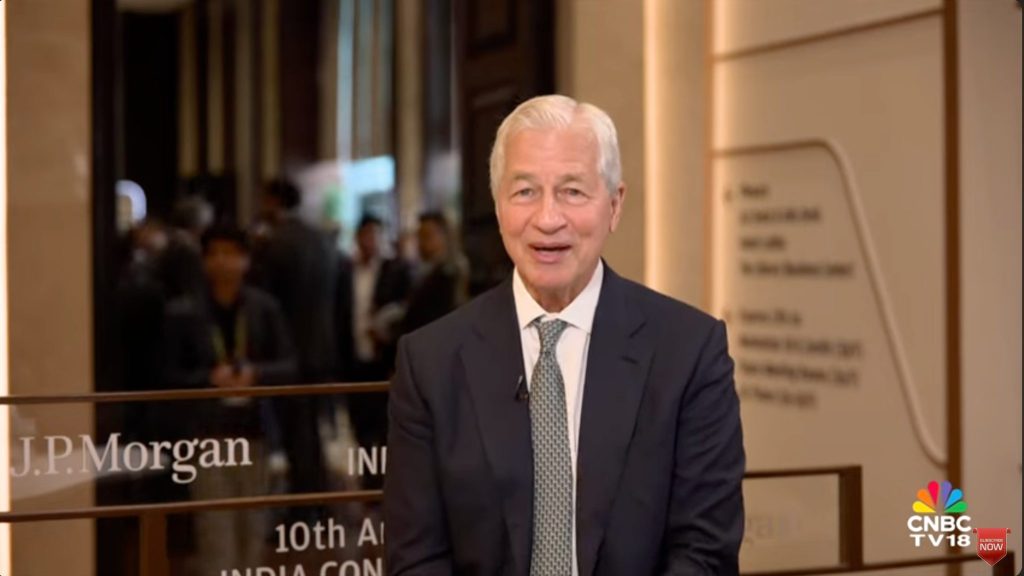
JPMorgan CEO Dimon Sees Inflation Blocking Fed Cuts, Says Stablecoins Pose No Bank ThreatSource: YouTube

Multiple Economic Pressures Keep Inflation Elevated

Dimon’s comments came as Federal Reserve officials themselves cast doubt on additional rate cuts, with St. Louis Fed President Alberto Musalem stating there is “limited room for easing further” and Atlanta Fed President Raphael Bostic suggesting the September cut may be the only reduction needed this year.

The Fed cut rates by 25 basis points to 4.00%-4.25% in September, but internal divisions emerged over the pace of future reductions.

The banking chief cited multiple inflationary pressures, including global fiscal deficits, the potential for world remilitarization, trade restructuring, and potentially reduced immigration to the United States.

He argued that these factors could push wages higher while creating sustained price pressures that complicate the Fed’s dual mandate of maintaining stable prices and achieving full employment.

Meanwhile, Dimon dismissed banking industry concerns about stablecoins threatening traditional deposit bases, calling blockchain technology “real” while distinguishing between legitimate applications and speculative crypto trading.

His measured stance contrasts sharply with that of other major bank executives, who have warned of a deposit flight similar to the 1980s money market fund crisis.

Fed Faces Inflation Reality Check as Officials Split on Cuts

Federal Reserve officials are increasingly acknowledging that the central bank’s September rate cut may have been premature, given the persistent inflation pressures above the 2% target.

Dimon’s inflation concerns align with statements from multiple Fed officials who now question the wisdom of additional monetary easing in the near term.

New Fed Governor Stephen Miran, appointed by President Trump, advocated for aggressive rate cuts totaling 1.25 percentage points across the remaining 2025 meetings.

Miran argued that the neutral interest rate has fallen due to tariffs, immigration restrictions, and tax policies, making current rates “roughly 2 percentage points too tight” and risking unnecessary unemployment.

However, regional Fed presidents pushed back against dovish policy prescriptions.

Musalem warned that further rate cuts could make policy “overly accommodative,” while Bostic emphasized concerns about inflation remaining “too high for a long time” as justification for maintaining restrictive monetary policy.

The internal Fed debate stemmed from uncertainty about economic conditions, with unemployment remaining low while consumer spending patterns suggested stress among lower-income households.

Credit losses are increasing moderately, though Dimon characterized this as “weakening” rather than a “disaster” requiring emergency monetary intervention.

Market expectations for two additional quarter-point cuts by year-end face growing skepticism from policymakers who prioritize inflation control over labor market support.

The median Fed projection supports gradual easing, but seven officials now favor no additional cuts, creating potential for policy gridlock if economic data remains mixed.

Stablecoin Wars Heat Up as Banks Fight Digital Dollar Competition

On the other hand, Dimon’s dismissive stance on stablecoin banking threats contradicts intensive lobbying efforts by major banking associations seeking to restrict digital dollar competition.

Five major U.S. banking trade organizations have urged Congress to tighten regulations under the GENIUS Act, warning that stablecoin platforms offering competitive yields could trigger a mass deposit flight.

Citigroup analysts compared current dynamics to the 1980s crisis when money market funds expanded from $4 billion to $235 billion in seven years, draining traditional bank deposits as customers chased higher returns.

Banking groups cite Treasury estimates suggesting yield-bearing stablecoins could trigger $6.6 trillion in deposit outflows, fundamentally altering bank funding mechanisms.

Coinbase and other crypto platforms continue to offer stablecoin yields despite pressure from the banking industry, arguing that prohibitions apply only to issuers, not intermediaries.

Not only that, they also face practical challenges as stablecoins offer payments up to 13 times cheaper than traditional systems with instant settlement capabilities.

The stablecoin market has grown from $4 billion in 2020 to over $285 billion today, with projections reaching $1 trillion in annual payment volume by 2030.

Recent research from Coinbase found no meaningful correlation between stablecoin adoption and deposit flight for community banks over the past five years, contradicting warnings from the banking industry.

The debate intensifies as major corporations, including Amazon and Walmart, reportedly consider stablecoin integration to reduce transaction costs.

Average U.S. savings accounts yield 0.6%, while stablecoin platforms offer returns of up to 5%, creating competitive pressure that traditional banks struggle to match.

Dimon’s pragmatic approach acknowledges that stablecoin infrastructure will develop naturally as legitimate payment technology, with JPMorgan positioned to provide custody services and Treasury management for digital dollar reserves.

Piyasa Fırsatı
Lorenzo Protocol Logosu
Lorenzo Protocol Fiyatı(BANK)
$0.03795
$0.03795$0.03795
+1.60%
USD
Lorenzo Protocol (BANK) Canlı Fiyat Grafiği
Sorumluluk Reddi: Bu sitede yeniden yayınlanan makaleler, halka açık platformlardan alınmıştır ve yalnızca bilgilendirme amaçlıdır. MEXC'nin görüşlerini yansıtmayabilir. Tüm hakları telif sahiplerine aittir. Herhangi bir içeriğin üçüncü taraf haklarını ihlal ettiğini düşünüyorsanız, kaldırılması için lütfen [email protected] ile iletişime geçin. MEXC, içeriğin doğruluğu, eksiksizliği veya güncelliği konusunda hiçbir garanti vermez ve sağlanan bilgilere dayalı olarak alınan herhangi bir eylemden sorumlu değildir. İçerik, finansal, yasal veya diğer profesyonel tavsiye niteliğinde değildir ve MEXC tarafından bir tavsiye veya onay olarak değerlendirilmemelidir.

Ayrıca Şunları da Beğenebilirsiniz

UK crypto holders brace for FCA’s expanded regulatory reach

UK crypto holders brace for FCA’s expanded regulatory reach

The post UK crypto holders brace for FCA’s expanded regulatory reach appeared on BitcoinEthereumNews.com. British crypto holders may soon face a very different landscape as the Financial Conduct Authority (FCA) moves to expand its regulatory reach in the industry. A new consultation paper outlines how the watchdog intends to apply its rulebook to crypto firms, shaping everything from asset safeguarding to trading platform operation. According to the financial regulator, these proposals would translate into clearer protections for retail investors and stricter oversight of crypto firms. UK FCA plans Until now, UK crypto users mostly encountered the FCA through rules on promotions and anti-money laundering checks. The consultation paper goes much further. It proposes direct oversight of stablecoin issuers, custodians, and crypto-asset trading platforms (CATPs). For investors, that means the wallets, exchanges, and coins they rely on could soon be subject to the same governance and resilience standards as traditional financial institutions. The regulator has also clarified that firms need official authorization before serving customers. This condition should, in theory, reduce the risk of sudden platform failures or unclear accountability. David Geale, the FCA’s executive director of payments and digital finance, said the proposals are designed to strike a balance between innovation and protection. He explained: “We want to develop a sustainable and competitive crypto sector – balancing innovation, market integrity and trust.” Geale noted that while the rules will not eliminate investment risks, they will create consistent standards, helping consumers understand what to expect from registered firms. Why does this matter for crypto holders? The UK regulatory framework shift would provide safer custody of assets, better disclosure of risks, and clearer recourse if something goes wrong. However, the regulator was also frank in its submission, arguing that no rulebook can eliminate the volatility or inherent risks of holding digital assets. Instead, the focus is on ensuring that when consumers choose to invest, they do…
Paylaş
BitcoinEthereumNews2025/09/17 23:52
Vistra (VST) Stock Drops 7% as Insider Sales Spook the Market

Vistra (VST) Stock Drops 7% as Insider Sales Spook the Market

TLDR Vistra (VST) stock fell as much as 7.16% as investors reacted to heavy insider selling by the CEO and top executives filed with the SEC. The stock also hit
Paylaş
Coincentral2026/03/21 01:25
BlockchainFX or Based Eggman $GGs Presale: Which 2025 Crypto Presale Is Traders’ Top Pick?

BlockchainFX or Based Eggman $GGs Presale: Which 2025 Crypto Presale Is Traders’ Top Pick?

Traders compare Blockchain FX and Based Eggman ($GGs) as token presales compete for attention. Explore which presale crypto stands out in the 2025 crypto presale list and attracts whale capital.
Paylaş
Blockchainreporter2025/09/18 00:30