TVL is just a vanity metric. What really matters is who controls the flow of liquidity, not who owns the protocol or even who hands out the most rewards.TVL is just a vanity metric. What really matters is who controls the flow of liquidity, not who owns the protocol or even who hands out the most rewards.

Liquidity Wars 3.0: Bribery Becomes a Market

2025/05/11 10:30

Author: arndxt , Crypto KOL

Compiled by: Felix, PANews

The yield war may be on again. If you’ve been in DeFi long enough, you’ll understand that the total locked value (TVL) is just a vanity metric. Because in the competitive modular world of AMMs, perpetual contracts, and lending protocols, what really matters is who controls the flow of liquidity, not who owns the protocol, or even who issues the most rewards. It’s who can convince liquidity providers (LPs) to deposit funds and ensure that TVL remains stable. This is the origin of the bribe economy.

What were once informal ticket buying activities (Curve Wars, Convex, etc.) have now professionalized into full-fledged liquidity coordination markets, complete with order books, dashboards, incentivized routing layers, and even gamified participation mechanisms in some cases.

This is now becoming the most strategic layer in the entire DeFi stack.

Change: From issuance to meta-incentives

During 2021-2022, the protocol channeled liquidity in the traditional way:

  • Deploy a funding pool
  • Issuing Tokens
  • Hoping that profit-seeking LPs will stay after yields drop

But this model is fundamentally flawed: it is reactive. Every new agreement competes with an invisible cost: the opportunity cost of existing capital flows.

1. The Origin of the Yield War: Curve and the Rise of the Voting Market

The concept of the yield war began with the Curve battle in 2021 and gradually became concrete.

Curve Finance’s unique design

Curve introduced the voting custody (ve) token economics, where users can lock up CRV (Curve’s native token) for up to 4 years in exchange for veCRV, which gives users the following advantages:

  • Increase the rewards of Curve pool

  • Governance with voting weight (which pools get rewards)

This creates a meta-game around benefits:

  • Protocol hopes to gain liquidity on Curve

  • And the only way to get liquidity is to attract votes to their pool

  • So they started bribing veCRV holders to vote for

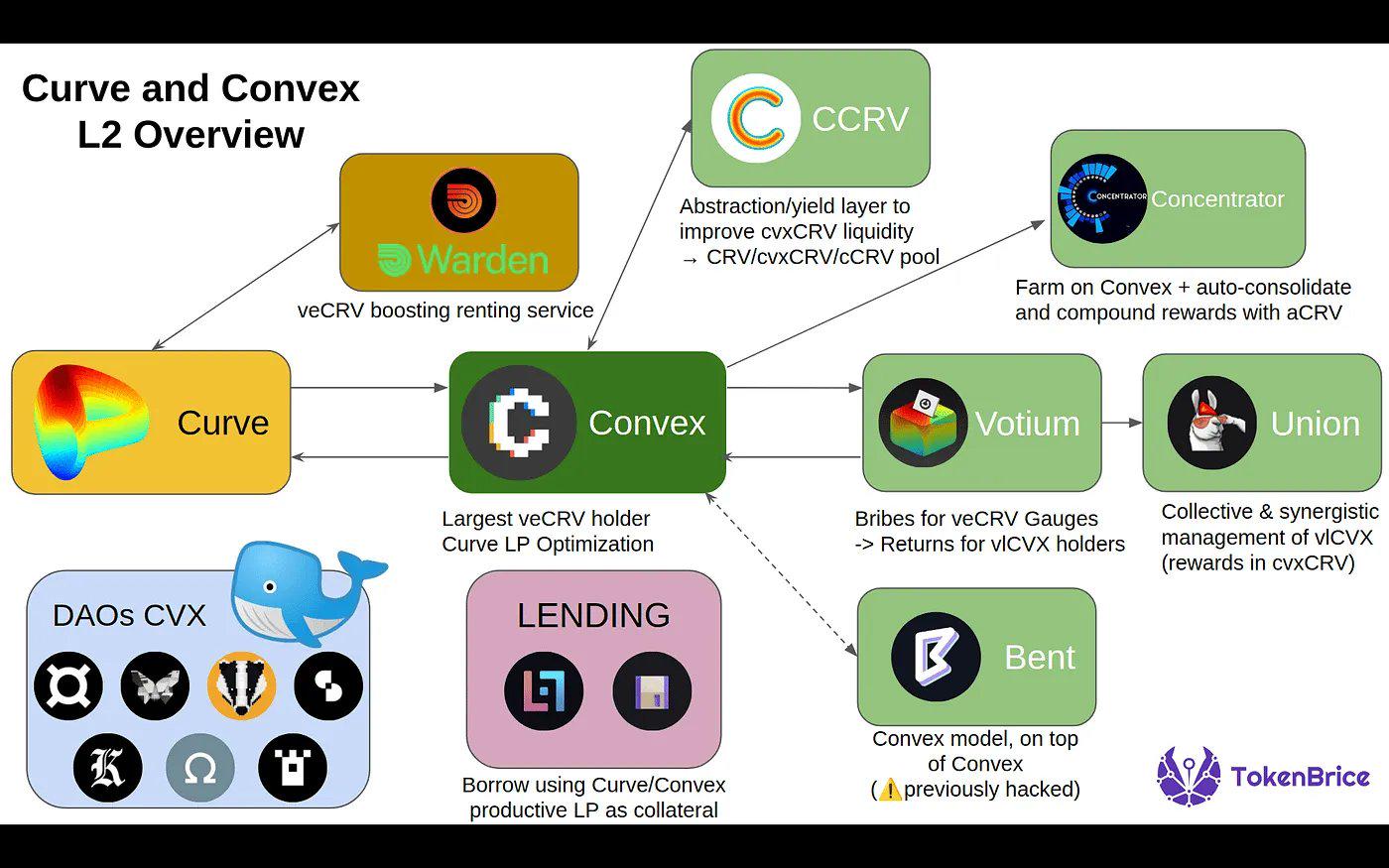
So Convex Finance came into being (a platform focused on increasing the returns of the Curve protocol):

  • Convex abstracts veCRV locking (simplifying the Curve usage process) and aggregates users’ voting power.

  • It has become the “King Maker of Curve” and has a huge influence on where CRV earnings go.

  • Projects began to bribe Convex/veCRV holders through platforms such as Votium.

Experience 1: Whoever controls the voting weight controls the liquidity.
Liquidity Wars 3.0: Bribery Becomes a Market

2. Meta-Incentives and Bribery Markets

The first bribe economy

What started as a manual process to influence issuance has evolved into a full-fledged marketplace where:

  • Votium becomes an OTC bribery platform for CRV issuance.
  • The emergence of Redacted Cartel, Warden, and Hidden Hand has expanded this model to other protocols such as Balancer and Frax.
  • Instead of simply paying issuance fees, protocols strategically allocate incentives to optimize capital efficiency.

Scaling Beyond Curve

  • Balancer adopts voting escrow mechanism through veBAL
  • Frax, Tokemak, and other protocols integrate similar systems
  • Incentivized routing platforms like Aura Finance and Llama Airforce add further complexity, turning issuance into a capital coordination game.

Lesson 2: Returns are no longer about annualized yield (APY), but about programmable meta-incentives.

3. How the revenue war unfolds

Here’s how protocols compete in this game:

  • Liquidity aggregation: Aggregate influence through wrappers like Convex (e.g. Aura Finance for Balancer)
  • Bribery campaign: Reserve a budget for ongoing vote-buying to attract issuance when needed
  • Game theory and token economics: locking tokens to establish long-term consistency (e.g. ve model)
  • Community incentives: gamify voting through NFTs, raffles, or reward airdrops

Today, protocols like Turtle Club and Royco are channeling this liquidity: instead of blindly issuing, incentives are auctioned to LPs based on demand signals.

Essentially: “You bring the liquidity, and we direct the incentives to where it’s needed most.”

This unlocks a second-order effect: protocols no longer need to forcibly acquire liquidity, but instead coordinate it.

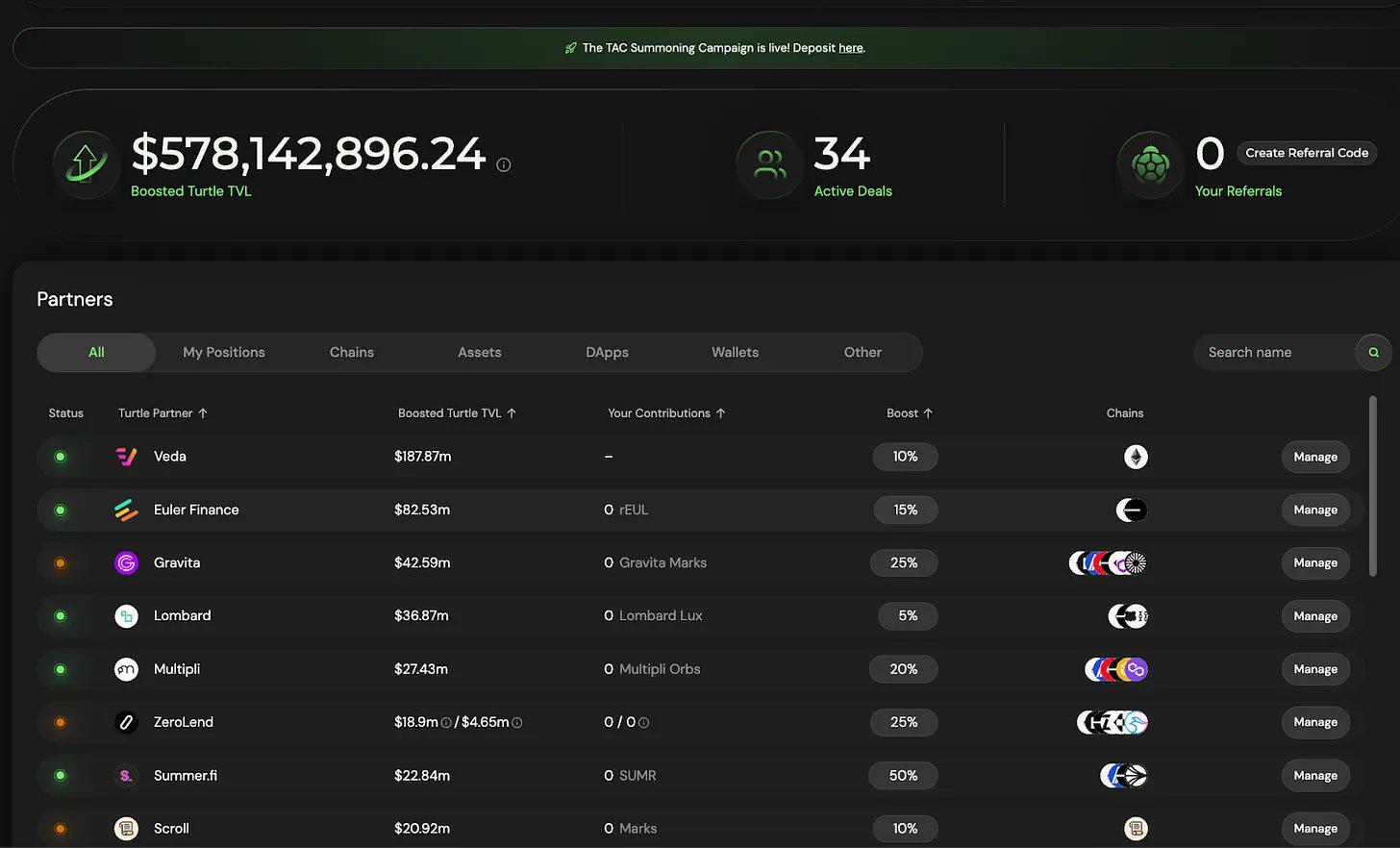
Turtle Club

Turtle Club has quietly become one of the most effective bribery markets with little mention. Their pools are often embedded in partnerships, with a total value locked (TVL) of over $580 million, dual token issuance, weighted bribery, and a surprisingly sticky LP base.
Liquidity Wars 3.0: Bribery Becomes a Market

Their model emphasizes fair value redistribution, which means that the distribution of earnings is determined by voting and real-time capital turnover.

This is a smarter flywheel: LPs are rewarded with a correlation to the efficiency of their capital, not just the size of it. This time, efficiency is incentivized.

Royco

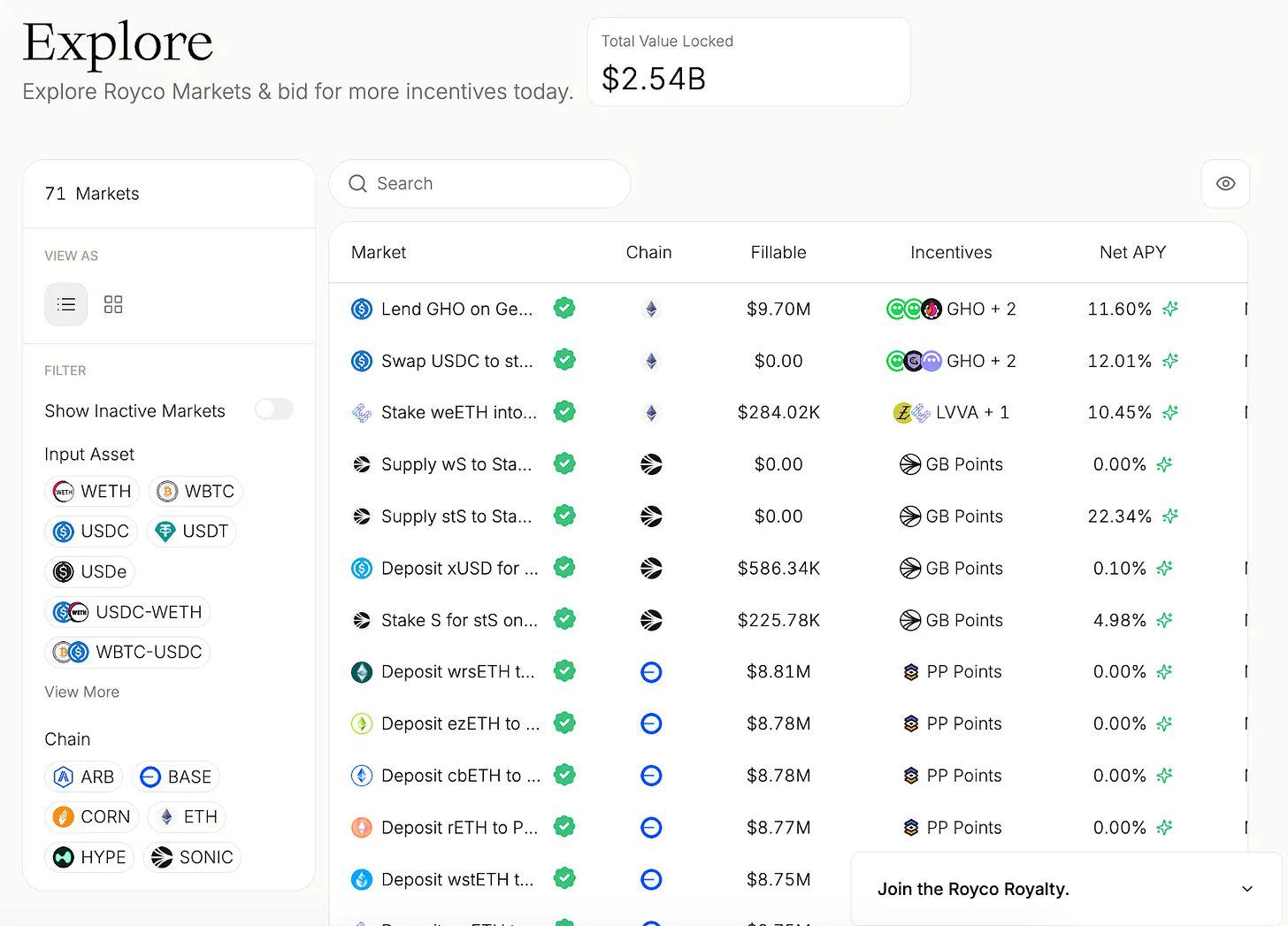
Royco’s total locked value (TVL) soared to over $2.6 billion in a single month, a 267,000% increase from the previous month.
Liquidity Wars 3.0: Bribery Becomes a Market

While some of this funding is “points driven”, what’s important is the infrastructure behind it:

  • Royco is a liquidity-preferred order book.
  • Protocols can’t just issue rewards and hope that capital comes in. They issue requests and LPs decide to invest, and this coordination forms a market.

Here’s what makes this narrative more than just a revenue play:

  • These markets are becoming the meta-governance layer for DeFi.
  • Hidden Hand has sent over $35 million in bribes between major protocols such as Velodrome and Balancer.
  • Royco and Turtle Club are shaping effective distribution solutions.

Liquidity coordination market mechanism

1. Bribery as a market signal

Programs like Turtle Club allow LPs to understand where incentives are flowing, make decisions based on real-time metrics, and be rewarded based on capital efficiency rather than just capital size.

2. Request for Liquidity (RfL) as an Order Book

Projects like Royco allow protocols to list liquidity needs, just like posting orders on the market, and LPs execute these orders based on expected returns.

This becomes a two-way coordination game rather than a one-sided bribe.

If you can decide where liquidity flows, you can influence who survives the next market cycle.

Related reading: Migration of on-chain liquidity: After 15 months of ups and downs, who remains standing after the hype subsides?

Piyasa Fırsatı
FLOW Logosu
FLOW Fiyatı(FLOW)
$0,174
$0,174$0,174
+0,69%
USD
FLOW (FLOW) Canlı Fiyat Grafiği
Sorumluluk Reddi: Bu sitede yeniden yayınlanan makaleler, halka açık platformlardan alınmıştır ve yalnızca bilgilendirme amaçlıdır. MEXC'nin görüşlerini yansıtmayabilir. Tüm hakları telif sahiplerine aittir. Herhangi bir içeriğin üçüncü taraf haklarını ihlal ettiğini düşünüyorsanız, kaldırılması için lütfen [email protected] ile iletişime geçin. MEXC, içeriğin doğruluğu, eksiksizliği veya güncelliği konusunda hiçbir garanti vermez ve sağlanan bilgilere dayalı olarak alınan herhangi bir eylemden sorumlu değildir. İçerik, finansal, yasal veya diğer profesyonel tavsiye niteliğinde değildir ve MEXC tarafından bir tavsiye veya onay olarak değerlendirilmemelidir.

Ayrıca Şunları da Beğenebilirsiniz

Bitcoin and Ethereum ETFs See $232M in Outflows as Traders De‑Risk Ahead of Christmas

Bitcoin and Ethereum ETFs See $232M in Outflows as Traders De‑Risk Ahead of Christmas

U.S. spot Bitcoin and Ethereum ETFs recorded combined net outflows of approximately $232 million on Wednesday, as traders trimmed exposure ahead of the Christmas holiday and year‑end liquidity slowdown.
Paylaş
MEXC NEWS2025/12/26 16:51
MICA Rules Come into Effect! Another European Country Issues a Very Strong Warning to Crypto Exchanges! Here Are the Details

MICA Rules Come into Effect! Another European Country Issues a Very Strong Warning to Crypto Exchanges! Here Are the Details

The post MICA Rules Come into Effect! Another European Country Issues a Very Strong Warning to Crypto Exchanges! Here Are the Details appeared on BitcoinEthereumNews
Paylaş
BitcoinEthereumNews2025/12/26 15:25
Ethereum Hits Losing Streak: How Massive Liquidations Impact ETH Price

Ethereum Hits Losing Streak: How Massive Liquidations Impact ETH Price

Ethereum has entered a sharp losing streak, with cascading liquidations and technical weakness fueling volatility across the market. A wave of $1.8 billion in long liquidations on September 23 wiped out more than 370,000 traders, leaving Ethereum (ETH) particularly exposed. This market update is powered by Outset PR, the first data-driven crypto PR agency that equips blockchain projects with precise, effective strategies to boost visibility.  $1.8B Liquidations Trigger ETH Sell-Off The crypto market’s heavy reliance on leverage has once again backfired. ETH futures accounted for over $500 million of the $1.8 billion long liquidation, underscoring Ethereum’s vulnerability to sudden drawdowns. Leverage risk: With the average funding rate at +0.0029%, traders were heavily overexposed. Domino effect: When ETH broke below $4,150, stop-losses and margin calls triggered a cascading sell-off. Open interest: ETH derivatives open interest surged 19% in 24h, showing volatility was amplified by excessive speculation. The high-leverage environment created a fragile setup where a single breakdown sparked a chain reaction of forced selling. Technical Weakness Adds Pressure ETH also faces mounting technical headwinds after failing to hold critical levels. Pivot breakdown: ETH slipped below its 24h pivot point at $4,250. Resistance: The 38.2% Fibonacci retracement at $4,624 now serves as resistance. Beyond that, MACD histogram at -33.17 signals clear bearish momentum, while the RSI at 40.46 is weak but not oversold, leaving room for further downside. Price targets: Short-term traders are eyeing $4,092 (September 23 low) as the next support.Long-term structure remains intact as long as ETH holds above the 200-day EMA ($3,403), suggesting investors aren’t panic-selling yet. PR with C-Level Clarity: Outset PR’s Proprietary Techniques Deliver Tangible Results  If PR has ever felt like trying to navigate a foggy road without headlights, Outset PR brings clarity with data. It builds strategies based on both retrospective and real-time metrics, which helps to obtain results with a long-lasting effect.  Outset PR replaces vague promises with concrete plans tied to perfect publication timing, narratives that emphasize the product-market fit, and performance-based media selection. Clients gain a forward-looking perspective: how their story will unfold, where it will land, and what impact it may create.  While most crypto PR agencies rely on standardized packages and mass-blast outreach, Outset PR takes a tailored approach. Each campaign is calibrated to match the client’s specific goals, budget, and growth stage. This is PR with a personal touch, where strategy feels handcrafted and every client gets a solution that fits. Outset PR’s secret weapon is its exclusive traffic acquisition tech and internal media analytics.  Proprietary Tech That Powers Performance One of Outset PR’s most impactful tools is its in-house user acquisition system. It fuses organic editorial placements with SEO and lead-generation tactics, enabling clients to appear in high-discovery surfaces and drive multiples more traffic than through conventional PR alone. Case in point: Crypto exchange ChangeNOW experienced a sustained 40% boost in reach after Outset PR amplified a well-polished organic coverage with a massive Google Discover campaign, powered by its proprietary content distribution engine.   Drive More Traffic with Outset PR’s In-house Tech Outset PR Notices Media Trends Ahead of the Crowd Outset PR obtains unique knowledge through its in-house analytical desk which gives it a competitive edge. The team regularly provides valuable insights into the performance of crypto media outlets based on the criteria like: domain activity month-on-month visibility shifts audience geography source of traffic By consistently publishing analytical reports, identifying performance trends, and raising the standards of media targeting across the industry, Outset PR unlocks a previously untapped niche in crypto PR, which poses it as a trendsetter in this field.  Case in point: The careful selection of media outlets has helped Outset PR increase user engagement for Step App in the US and UK markets. Outset PR Engineers Visibility That Fits the Market One of the biggest pain points in Web3 PR is the disconnect between effort and outcome: generic messaging, no product-market alignment, and media hits that generate visibility but leave business impact undefined. Outset PR addresses this by offering customized solutions. Every campaign begins with a thorough research and follows a clearly mapped path from spend to the result. It's data-backed and insight-driven with just the right level of boutique care. Outlook Ethereum’s latest slump highlights the double-edged sword of leverage. Excessive positioning fueled sharp liquidations, while technical weakness reinforced the bearish momentum. Yet, with the 200-day EMA still holding firm, long-term holders remain calm for now. This analysis was brought to you by Outset PR, the first data-driven crypto PR agency. Just as Ethereum’s market path hinges on reclaiming key levels, Outset PR helps projects reclaim visibility and momentum with strategies grounded in data and measurable results. You can find more information about Outset PR here: Website: outsetpr.io Telegram: t.me/outsetpr  X: x.com/OutsetPR    Disclaimer: This article is provided for informational purposes only. It is not offered or intended to be used as legal, tax, investment, financial, or other advice.
Paylaş
Coinstats2025/09/23 23:29