The National Bank of Kazakhstan today announced the launch of its tenge-backed stablecoin called Evo (KZTE). The stablecoin is launched in partnership with Mastercard and the leading smart contract platform, Solana (SOL). Kazakhstan Unveils Solana-Powered Evo Stablecoin In an announcement made earlier today, the Central Asian country of Kazakhstan unveiled a pilot project for its […]The National Bank of Kazakhstan today announced the launch of its tenge-backed stablecoin called Evo (KZTE). The stablecoin is launched in partnership with Mastercard and the leading smart contract platform, Solana (SOL). Kazakhstan Unveils Solana-Powered Evo Stablecoin In an announcement made earlier today, the Central Asian country of Kazakhstan unveiled a pilot project for its […]

Kazakhstan Launches Solana-Powered Stablecoin In Partnership With Mastercard

2025/09/24 17:00
Okuma süresi: 3 dk
Bu içerikle ilgili geri bildirim veya endişeleriniz için lütfen [email protected] üzerinden bizimle iletişime geçin.

The National Bank of Kazakhstan today announced the launch of its tenge-backed stablecoin called Evo (KZTE). The stablecoin is launched in partnership with Mastercard and the leading smart contract platform, Solana (SOL).

Kazakhstan Unveils Solana-Powered Evo Stablecoin

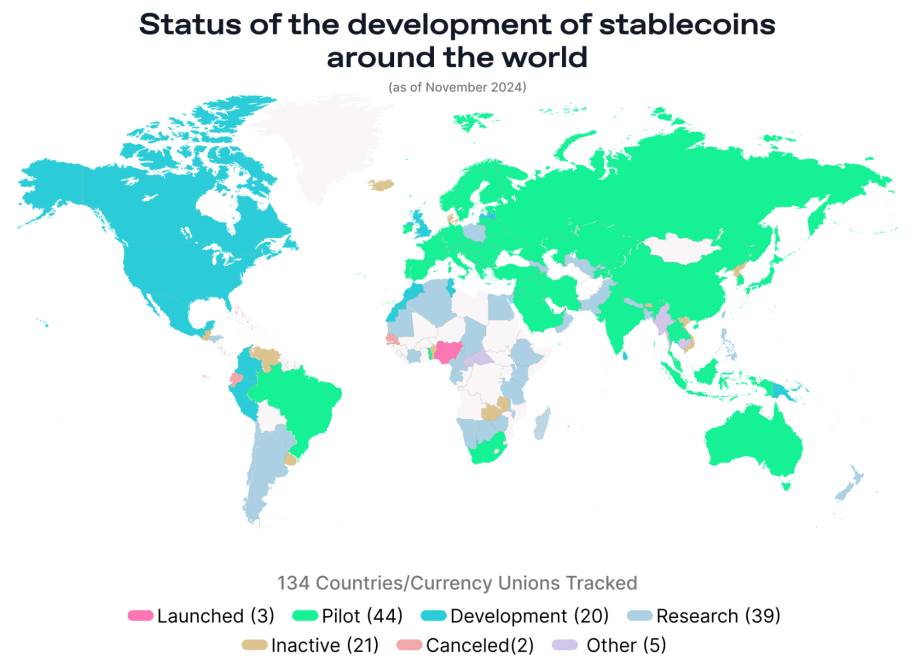
In an announcement made earlier today, the Central Asian country of Kazakhstan unveiled a pilot project for its tenge-baked stablecoin, dubbed Evo. For the uninitiated, the tenge is the national currency of Kazakhstan.

According to the announcement, Evo’s issuance will be managed by other participants of the country’s digital assets regulatory sandbox. Notably, the two entities that will be overseeing the Evo stablecoin are likely to be crypto exchange Intebix and Eurasian Bank.

The developers have dubbed Evo the “national stablecoin” and aim to leverage the technology to bridge the gap between blockchain innovation and traditional finance. The stablecoin will be used for a variety of purposes, including expanding crypto-fiat gateways, swapping digital assets, and aiding crypto card-based transactions.

Low-latency and high-throughput smart contract platform, Solana, will be used to power the Evo stablecoin. Solana’s rapidly growing infrastructure will be critical in ensuring a smooth payment experience and large-scale stablecoin adoption in Kazakhstan.

Besides powering the stablecoin, Solana has also signed a Memorandum of Understanding (MoU) with Kazakhstan’s Ministry of Digital Development to create a special blockchain economic zone in the country.
solana

In the same vein, Mastercard will leverage its expertise in payments to integrate KTZE with stablecoin issuers around the world. Such integrations could open the doors for cross-border payments and international utility.

It is worth noting that the National Bank of Kazakhstan will not issue the stablecoin directly. Rather, the regulator will provide a legal framework for the issuers to issue the stablecoin. The framework will also be used to test Evo and to develop the virtual currency market.

The Head of the National Bank of Kazakhstan, Timur Suleimenov, pointed toward the importance of the pilot project, saying that cryptocurrencies and blockchain technology could play a significant role in increasing financial accessibility.

Stablecoin Growth Is Taking Over

While leading cryptocurrencies like Bitcoin (BTC) and Ethereum (ETH) continue to witness rising adoption, an unlikely class of digital assets like stablecoins is experiencing just as much adoption, if not more.

For example, South Korean banks are reportedly in talks with leading stablecoin issuers such as Circle and Tether to develop a market for Korean won-backed stablecoins. Similarly, Standard Chartered is expected to apply for a Hong Kong stablecoin license.

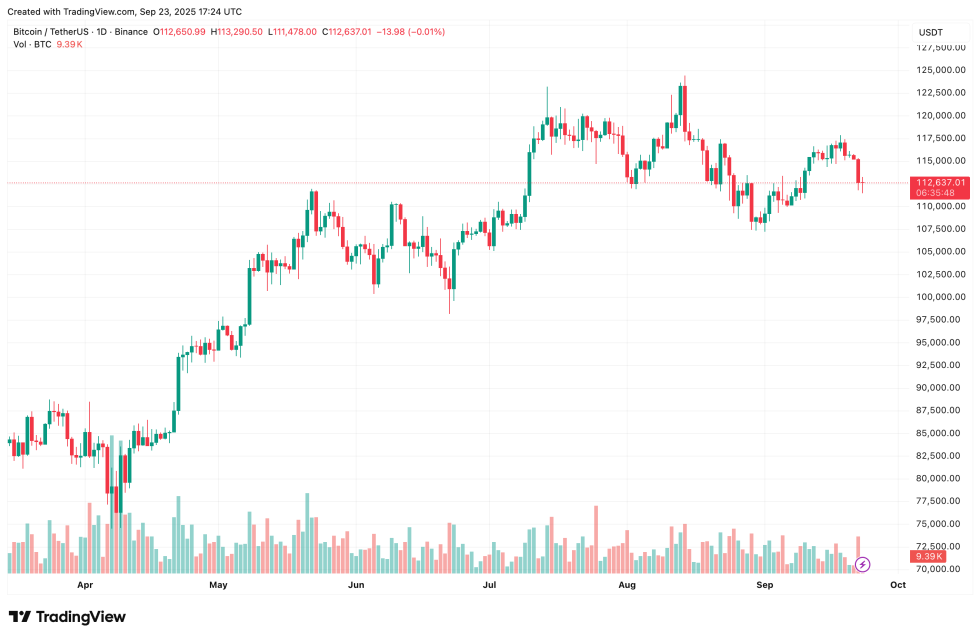
Earlier this year, Citigroup predicted that the stablecoin market is likely to grow by another $1.6 trillion by 2030. At press time, BTC trades at $112,637, up 0.1% in the past 24 hours.
bitcoin
Sorumluluk Reddi: Bu sitede yeniden yayınlanan makaleler, halka açık platformlardan alınmıştır ve yalnızca bilgilendirme amaçlıdır. MEXC'nin görüşlerini yansıtmayabilir. Tüm hakları telif sahiplerine aittir. Herhangi bir içeriğin üçüncü taraf haklarını ihlal ettiğini düşünüyorsanız, kaldırılması için lütfen [email protected] ile iletişime geçin. MEXC, içeriğin doğruluğu, eksiksizliği veya güncelliği konusunda hiçbir garanti vermez ve sağlanan bilgilere dayalı olarak alınan herhangi bir eylemden sorumlu değildir. İçerik, finansal, yasal veya diğer profesyonel tavsiye niteliğinde değildir ve MEXC tarafından bir tavsiye veya onay olarak değerlendirilmemelidir.

Ayrıca Şunları da Beğenebilirsiniz

The AI Price Collapse Is the Best Case for Bitcoin You’ve Never Heard
The AI Price Collapse Is the Best Case for Bitcoin You’ve Never Heard

Chain of Thoughts — Side Episode GPT-4 cost $30 per million tokens in 2023. Today it’s $0.25. That 120x price drop is the most underrated macro argument fo
Paylaş
Medium2026/03/16 12:59
The Hidden Layer of Digital Equity: Why Every Token Leads Back to ITL

The Hidden Layer of Digital Equity: Why Every Token Leads Back to ITL

How the InterLink Settlement Layer Functions as the Operating System of a New Digital Economy ‌ In our previous analysis, we established the fundamental
Paylaş
Medium2026/03/16 13:27
Wormhole Jumps 11% on Revised Tokenomics and Reserve Initiative

Wormhole Jumps 11% on Revised Tokenomics and Reserve Initiative

The post Wormhole Jumps 11% on Revised Tokenomics and Reserve Initiative appeared on BitcoinEthereumNews.com. Cross-chain bridge Wormhole plans to launch a reserve funded by both on-chain and off-chain revenues. Wormhole, a cross-chain bridge connecting over 40 blockchain networks, unveiled a tokenomics overhaul on Wednesday, hinting at updated staking incentives, a strategic reserve for the W token, and a smoother unlock schedule. The price of W jumped 11% on the news to $0.096, though the token is still down 92% since its debut in April 2024. W Chart In a blog post, Wormhole said it’s planning to set up a “Wormhole Reserve” that will accumulate on-chain and off-chain revenues “to support the growth of the Wormhole ecosystem.” The protocol also said it plans to target a 4% base yield for governance stakers, replacing the current variable APY system, noting that “yield will come from a combination of the existing token supply and protocol revenues.” It’s unclear whether Wormhole will draw from the reserve to fund this target. Wormhole did not immediately respond to The Defiant’s request for comment. Wormhole emphasized that the maximum supply of 10 billion W tokens will remain the same, while large annual token unlocks will be replaced by a bi-weekly distribution beginning Oct. 3 to eliminate “moments of concentrated market pressure.” Data from CoinGecko shows there are over 4.7 billion W tokens in circulation, meaning that more than half the supply is yet to be unlocked, with portions of that supply to be released over the next 4.5 years. Source: https://thedefiant.io/news/defi/wormhole-jumps-11-on-revised-tokenomics-and-reserve-initiative
Paylaş
BitcoinEthereumNews2025/09/18 01:31