Public companies raise funds to purchase Bitcoin by issuing new shares (ATM), bonds, preferred stocks, loans, etc., which is a destructive leverage.Public companies raise funds to purchase Bitcoin by issuing new shares (ATM), bonds, preferred stocks, loans, etc., which is a destructive leverage.

Opinion: Raising funds for listed companies to buy Bitcoin is a "toxic" leverage

2025/05/26 16:20
Okuma süresi: 7 dk
Bu içerikle ilgili geri bildirim veya endişeleriniz için lütfen [email protected] üzerinden bizimle iletişime geçin.

Author: lowstrife , Crypto KOL

Compiled by: Felix, PANews

Recently, Bitcoin reserve companies such as MSTR, Metaplanet, Twenty One and Nakamoto have become famous. But I personally think that their "reserves" are destructive leverage and the worst thing that has ever happened to Bitcoin and what it represents. The following is an analysis of how this model will collapse under certain conditions.

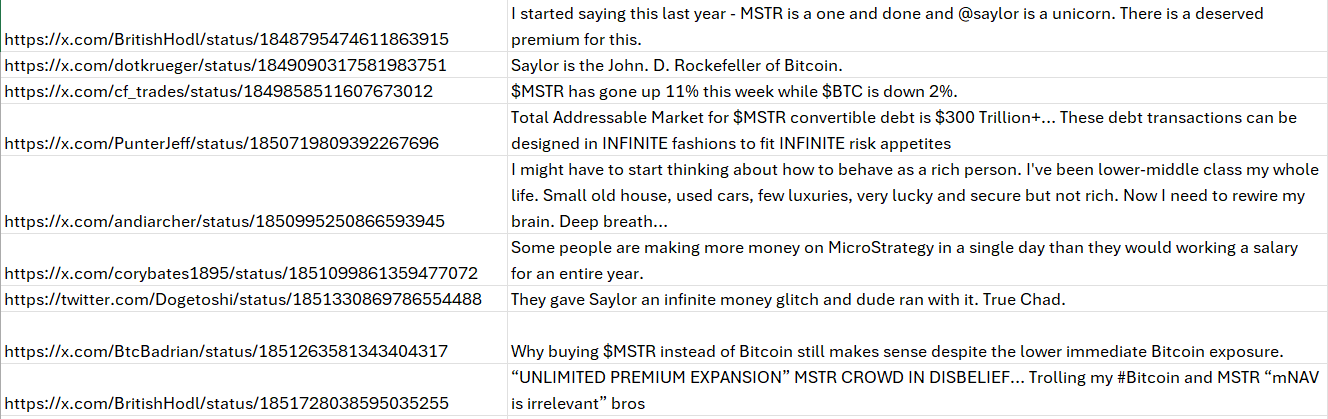
The feedback loop these companies use, where they buy Bitcoin with company funds, put it on their balance sheet, and then use various corporate mechanisms to raise more money against that balance sheet, is often talked about as the greatest invention ever.
Opinion: Raising funds for listed companies to buy Bitcoin is a "toxic" leverage

Funds raised through the issuance of new shares (ATM), bonds, preferred stocks, loans, etc. will be immediately used to purchase Bitcoin to drive this flywheel.

An important distinction here is the use of value-added leverage: companies like Tesla are simply depositing assets into Bitcoin (which I personally have no problem with).

Opinion: Raising funds for listed companies to buy Bitcoin is a "toxic" leverage

But the key to this flywheel is that common stockholders are the ultimate holders of these financial assets. All of these funding mechanisms ultimately result in common stock being diluted, and stock being sold into the market to fund this flywheel.

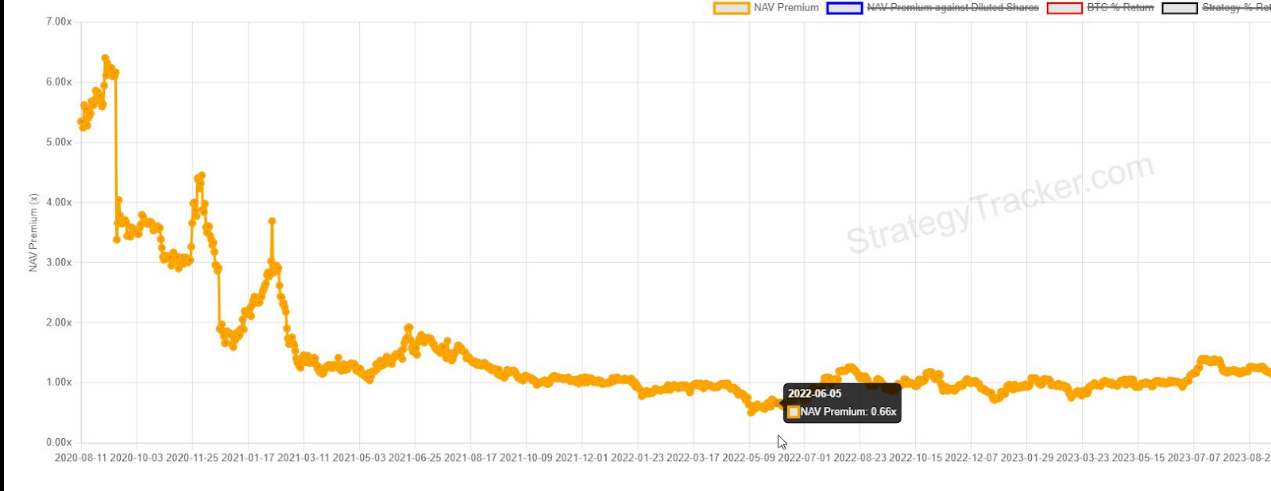
The main method used by MSTR is to issue new shares (ATM) to achieve value-added dilution. This method works well if mNAV ( PANews Note: represents the current share price and the value of its Bitcoin) is greater than 1.0. But the problem is that this leverage relies on issuing new shares to meet its cash flow. If MSTR's stock price is less than 1.0 times mNAV (as it will be in 2022), there will be problems.
Opinion: Raising funds for listed companies to buy Bitcoin is a "toxic" leverage

Another tool is to use leverage to increase the yield of its products, such as convertible bonds and perpetual preferred shares, because the expectation of future purchases accelerates the expected value of the equity and amplifies the stock premium in the first place.

Issuing more common stock and diluting existing shareholders will eventually pay off. But they are allowing that dilution to happen later, trading today's dollars for tomorrow's cash flow/dilution, deferring that payment and "cost" far into the future. How "smart."

The problem here is twofold:

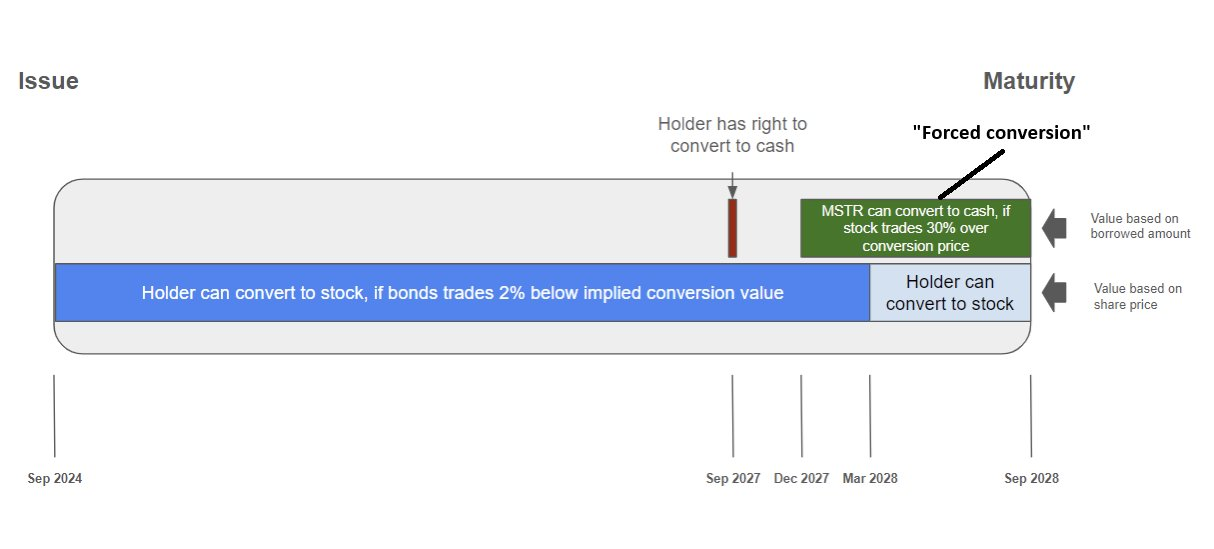
The first problem is that these products cannot be the fulcrum for all the leverage if the underlying stock fails to meet performance targets. For convertible bonds, MSTR must refinance or sell BTC to raise cash.
Opinion: Raising funds for listed companies to buy Bitcoin is a "toxic" leverage

The second problem is preferred stocks. They are required to pay perpetual, non-accretive dividends (i.e., interest) to the holders of this debt. MSTR plans to issue trillions of dollars of these securities, and these payments are funded by diluting MSTR equity holders.

In particular, Strategy's STRF ( PANews Note: A fixed-income product that is packaged as a preferred stock issuance so that it can easily and continuously raise funds to buy Bitcoin) has no maturity date and is a perpetual debt with an annual interest rate of 10%. MSTR will always rely on non-value-added ATMs, diluting shareholder equity, to finance every dollar issued. Today's purchases are at the expense of tomorrow's shareholder interests. What does this sound like?

The problem with using an ATM to provide the required cash flow is that it relies on mNAV, which is not derived from its own assets. It relies entirely on market sentiment: what people think its vault is worth.

This is simply an insult to the essence of Bitcoin.

There is a provision for suspending dividends, but this raises more questions. STRK must pay all outstanding dividends plus a penalty before it can convert (maturity). Not to mention that suspending dividends would significantly reduce product demand.

If the point of an income-generating asset is to strip away risk, the last thing you want is to destroy the reason for owning the security in the first place. These are the risks MSTR advocates don’t mention. Suspending a dividend would be a warning about solvency.

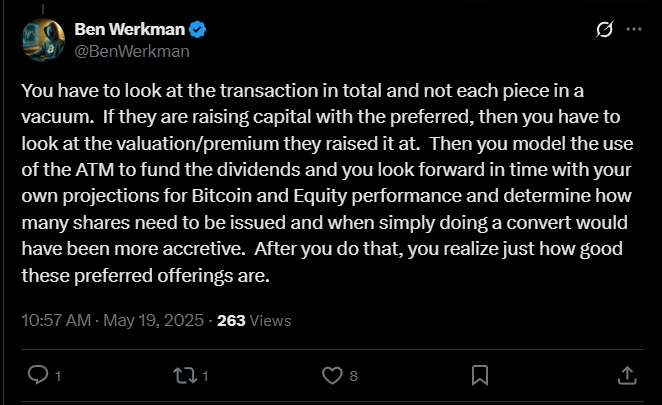
Supporters argue that these preferred shares are being issued to buy bitcoin now and that the dividend payments are worth it. They argue that if it has been “modeled,” then the capital raising is worth it.
Opinion: Raising funds for listed companies to buy Bitcoin is a "toxic" leverage

 You have to look at the deal as a whole, not each piece in isolation. If they are raising money with preferred stock, then you have to consider the valuation / premium at which they raised the money. You can then simulate using an ATM to pay dividends and look into the future based on your own predictions of how Bitcoin and stocks will perform and determine how many shares need to be issued and when it would be more accretive to make the conversion. Once you do that, you'll realize how good these preferred stock issuances are.

With about $1.8 billion of these securities outstanding today, it is possible to make these payments, but Saylor's proposal to issue $3 trillion of these securities, which would dilute shareholders by $300 billion per year, is clearly untenable.

So how does this all play out? It all starts with mNAV. mNAV is critical. It’s life. It’s the energy. If mNAV goes bad, the company’s ability to raise capital goes away, and debt conversions hurt mNAV, and the company loses its ability to pay its debt.

GBTC is another closed-end fund that became popular during the bull run of 2021. People used it to invest in BTC because their existing accounts at the time did not allow it.

Today, MSTR is being bought for much the same reasons. The problem is: Bitcoin is becoming more accessible.

GBTC is a closed-end fund that trades at a premium or discount to the underlying assets. Once demand for this investment avenue dries up, the fund’s need to buy new assets also decreases.

Once mNAV is knocked out, demand is gone.
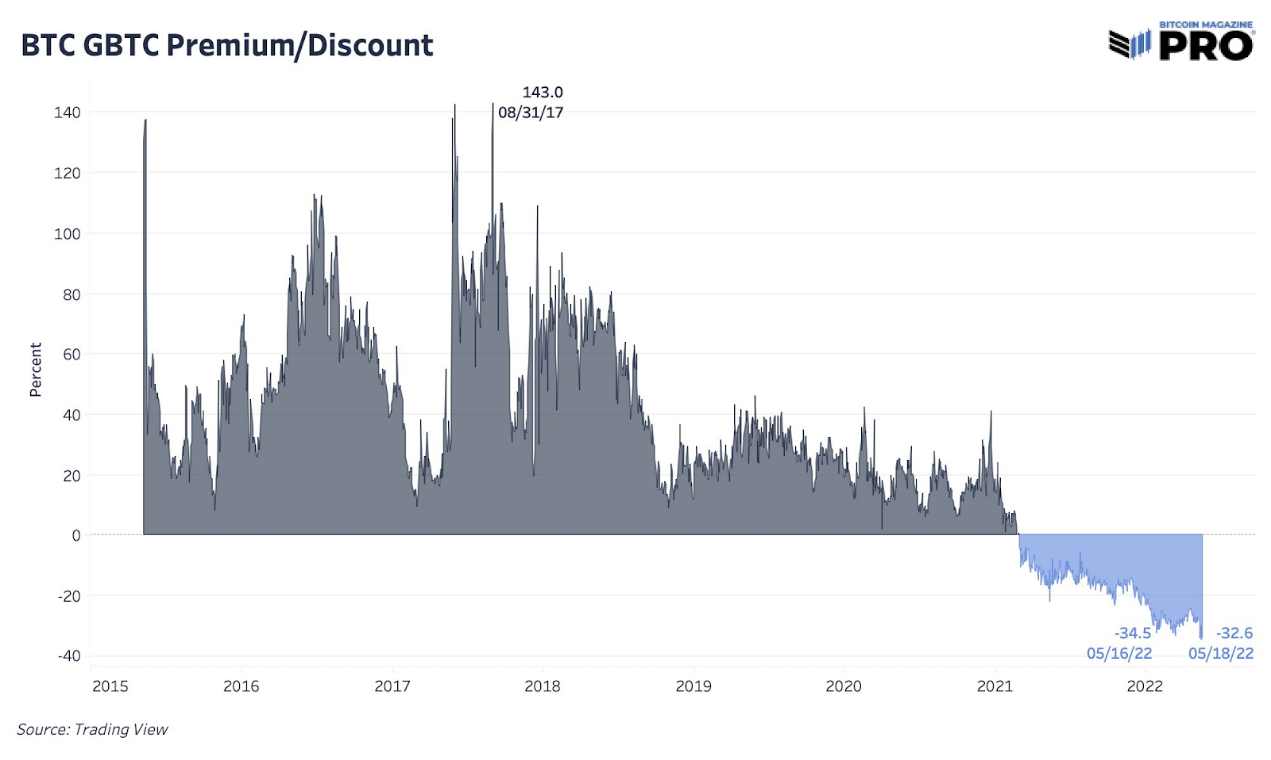
Opinion: Raising funds for listed companies to buy Bitcoin is a "toxic" leverage

Once mNAV falls below 1.0, MSTR's fundraising ability will be in trouble, which is quite similar to the loss of willingness and ability to purchase GBTC.

It is important to note that mNAV is based entirely on market sentiment. There is no mechanism or reason why it must trade at the value of an asset.
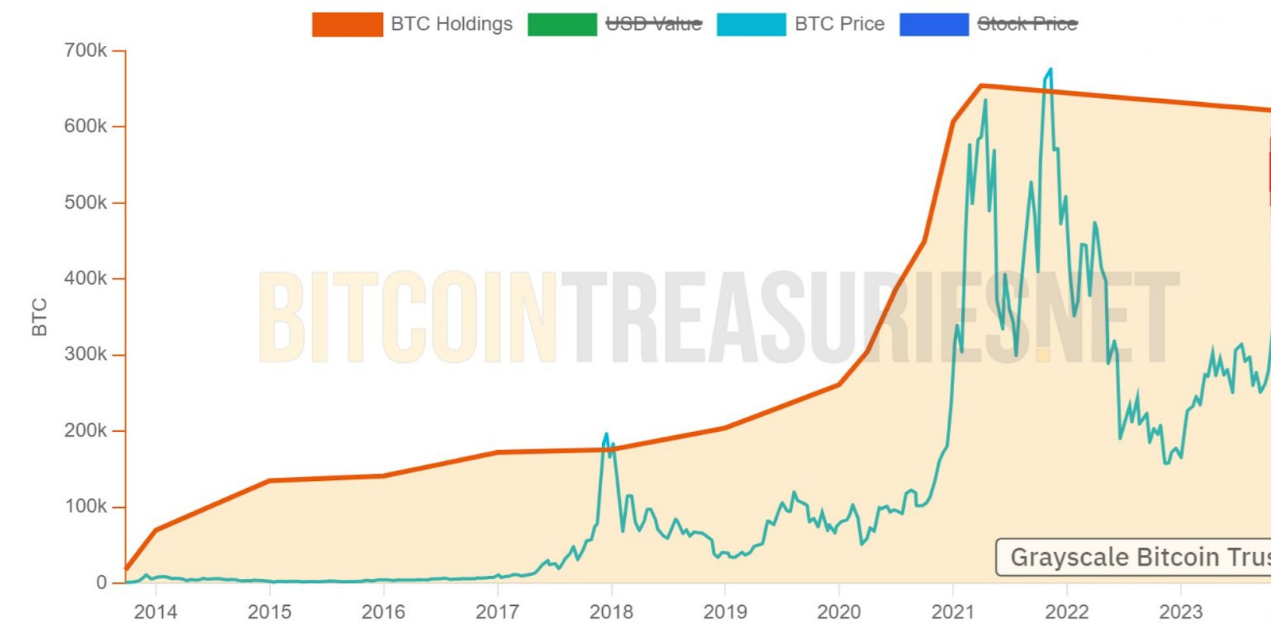
Opinion: Raising funds for listed companies to buy Bitcoin is a "toxic" leverage

When mNAV falls, the ability to continue to raise capital (and buy Bitcoin) in the future is reduced, and the expected value of the stock is reduced. This situation may in turn be exacerbated if debt dividends are forced to be paid under adverse conditions.

Convertible bonds complicate the situation further. Currently, MSTR has $8.2 billion in convertible bonds that will mature between 2028 and 2032. The risk of these bonds is not in the price. Whether the price of Bitcoin goes up or down (within reason), the bonds will not "pop" or require margin calls.

The problem with a convertible bond is in the name. It requires conversion. MSTR stock needs to appreciate to a pre-determined price level in order for the bond to convert into new stock issuance. Remember: this trigger is MSTR's stock price, which floats based on mNAV, which is based on market sentiment.

If, for some reason, the price fails to rise, then the question becomes one of timing, not price. The bonds will likely mature regardless of the underlying price of Bitcoin. MSTR will have to refinance or pay off the debt in cash by selling BTC.

Eventually, the flywheel mechanism will work in reverse, ultimately defeating the whole plan. Buy back shares below mNAV 1.0 and sell the underlying assets to raise capital. Some argue that this is a fiduciary responsibility, and Bailey has publicly stated that he would do the same.

Opinion: Raising funds for listed companies to buy Bitcoin is a "toxic" leverage

This is not a financial revolution. This is a Ponzi scheme fanatic chasing leverage. As a long-time Bitcoin owner, it is heartbreaking to see Bitcoin OGs cheering Saylor on while he uses Bitcoin to reenact the financial engineering of 2008 that led to the creation of Bitcoin.

Related reading: Dismantling Saylor’s Bitcoin Financial Magic: The stock price has tripled since its peak in October last year

Piyasa Fırsatı
Ethereum Classic Logosu
Ethereum Classic Fiyatı(ETC)
$8.09
$8.09$8.09
-4.26%
USD
Ethereum Classic (ETC) Canlı Fiyat Grafiği
Sorumluluk Reddi: Bu sitede yeniden yayınlanan makaleler, halka açık platformlardan alınmıştır ve yalnızca bilgilendirme amaçlıdır. MEXC'nin görüşlerini yansıtmayabilir. Tüm hakları telif sahiplerine aittir. Herhangi bir içeriğin üçüncü taraf haklarını ihlal ettiğini düşünüyorsanız, kaldırılması için lütfen [email protected] ile iletişime geçin. MEXC, içeriğin doğruluğu, eksiksizliği veya güncelliği konusunda hiçbir garanti vermez ve sağlanan bilgilere dayalı olarak alınan herhangi bir eylemden sorumlu değildir. İçerik, finansal, yasal veya diğer profesyonel tavsiye niteliğinde değildir ve MEXC tarafından bir tavsiye veya onay olarak değerlendirilmemelidir.

Ayrıca Şunları da Beğenebilirsiniz

Trump's new tariff 'shenanigans' are about to hit another brick wall: report

Trump's new tariff 'shenanigans' are about to hit another brick wall: report

Any hope that the Donald Trump administration might have about dragging its feet and not refunding the tariff money the Supreme Court said was illegally collected
Paylaş
Rawstory2026/03/22 20:44
Smart Money Accumulates While Everything Else Flashes Caution

Smart Money Accumulates While Everything Else Flashes Caution

The post Smart Money Accumulates While Everything Else Flashes Caution appeared on BitcoinEthereumNews.com. Bitcoin Bitcoin is trading around $68,300 as of March
Paylaş
BitcoinEthereumNews2026/03/22 20:03
Unprecedented Surge: Gold Price Hits Astounding New Record High

Unprecedented Surge: Gold Price Hits Astounding New Record High

BitcoinWorld Unprecedented Surge: Gold Price Hits Astounding New Record High While the world often buzzes with the latest movements in Bitcoin and altcoins, a traditional asset has quietly but powerfully commanded attention: gold. This week, the gold price has once again made headlines, touching an astounding new record high of $3,704 per ounce. This significant milestone reminds investors, both traditional and those deep in the crypto space, of gold’s enduring appeal as a store of value and a hedge against uncertainty. What’s Driving the Record Gold Price Surge? The recent ascent of the gold price to unprecedented levels is not a random event. Several powerful macroeconomic forces are converging, creating a perfect storm for the precious metal. Geopolitical Tensions: Escalating conflicts and global instability often drive investors towards safe-haven assets. Gold, with its long history of retaining value during crises, becomes a preferred choice. Inflation Concerns: Persistent inflation in major economies erodes the purchasing power of fiat currencies. Consequently, investors seek assets like gold that historically maintain their value against rising prices. Central Bank Policies: Many central banks globally are accumulating gold at a significant pace. This institutional demand provides a strong underlying support for the gold price. Furthermore, expectations around interest rate cuts in the future also make non-yielding assets like gold more attractive. These factors collectively paint a picture of a cautious market, where investors are looking for stability amidst a turbulent economic landscape. Understanding Gold’s Appeal in Today’s Market For centuries, gold has held a unique position in the financial world. Its latest record-breaking performance reinforces its status as a critical component of a diversified portfolio. Gold offers a tangible asset that is not subject to the same digital vulnerabilities or regulatory shifts that can impact cryptocurrencies. While digital assets offer exciting growth potential, gold provides a foundational stability that appeals to a broad spectrum of investors. Moreover, the finite supply of gold, much like Bitcoin’s capped supply, contributes to its perceived value. The current market environment, characterized by economic uncertainty and fluctuating currency values, only amplifies gold’s intrinsic benefits. It serves as a reliable hedge when other asset classes, including stocks and sometimes even crypto, face downward pressure. How Does This Record Gold Price Impact Investors? A soaring gold price naturally raises questions for investors. For those who already hold gold, this represents a significant validation of their investment strategy. For others, it might spark renewed interest in this ancient asset. Benefits for Investors: Portfolio Diversification: Gold often moves independently of other asset classes, offering crucial diversification benefits. Wealth Preservation: It acts as a robust store of value, protecting wealth against inflation and economic downturns. Liquidity: Gold markets are highly liquid, allowing for relatively easy buying and selling. Challenges and Considerations: Opportunity Cost: Investing in gold means capital is not allocated to potentially higher-growth assets like equities or certain cryptocurrencies. Volatility: While often seen as stable, gold prices can still experience significant fluctuations, as evidenced by its rapid ascent. Considering the current financial climate, understanding gold’s role can help refine your overall investment approach. Looking Ahead: The Future of the Gold Price What does the future hold for the gold price? While no one can predict market movements with absolute certainty, current trends and expert analyses offer some insights. Continued geopolitical instability and persistent inflationary pressures could sustain demand for gold. Furthermore, if global central banks continue their gold acquisition spree, this could provide a floor for prices. However, a significant easing of inflation or a de-escalation of global conflicts might reduce some of the immediate upward pressure. Investors should remain vigilant, observing global economic indicators and geopolitical developments closely. The ongoing dialogue between traditional finance and the emerging digital asset space also plays a role. As more investors become comfortable with both gold and cryptocurrencies, a nuanced understanding of how these assets complement each other will be crucial for navigating future market cycles. The recent surge in the gold price to a new record high of $3,704 per ounce underscores its enduring significance in the global financial landscape. It serves as a powerful reminder of gold’s role as a safe haven asset, a hedge against inflation, and a vital component for portfolio diversification. While digital assets continue to innovate and capture headlines, gold’s consistent performance during times of uncertainty highlights its timeless value. Whether you are a seasoned investor or new to the market, understanding the drivers behind gold’s ascent is crucial for making informed financial decisions in an ever-evolving world. Frequently Asked Questions (FAQs) Q1: What does a record-high gold price signify for the broader economy? A record-high gold price often indicates underlying economic uncertainty, inflation concerns, and geopolitical instability. Investors tend to flock to gold as a safe haven when they lose confidence in traditional currencies or other asset classes. Q2: How does gold compare to cryptocurrencies as a safe-haven asset? Both gold and some cryptocurrencies (like Bitcoin) are often considered safe havens. Gold has a centuries-long history of retaining value during crises, offering tangibility. Cryptocurrencies, while newer, offer decentralization and can be less susceptible to traditional financial system failures, but they also carry higher volatility and regulatory risks. Q3: Should I invest in gold now that its price is at a record high? Investing at a record high requires careful consideration. While the price might continue to climb due to ongoing market conditions, there’s also a risk of a correction. It’s crucial to assess your personal financial goals, risk tolerance, and consider diversifying your portfolio rather than putting all your capital into a single asset. Q4: What are the main factors that influence the gold price? The gold price is primarily influenced by global economic uncertainty, inflation rates, interest rate policies by central banks, the strength of the U.S. dollar, and geopolitical tensions. Demand from jewelers and industrial uses also play a role, but investment and central bank demand are often the biggest drivers. Q5: Is gold still a good hedge against inflation? Historically, gold has proven to be an effective hedge against inflation. When the purchasing power of fiat currencies declines, gold tends to hold its value or even increase, making it an attractive asset for preserving wealth during inflationary periods. To learn more about the latest crypto market trends, explore our article on key developments shaping Bitcoin’s price action. This post Unprecedented Surge: Gold Price Hits Astounding New Record High first appeared on BitcoinWorld.
Paylaş
Coinstats2025/09/18 02:30