Edscha Automotive’s Michigan plant now runs on metrics and movement that bear Abel Carrasco’s fingerprints. Production stabilized after he arrived in 2023, overallEdscha Automotive’s Michigan plant now runs on metrics and movement that bear Abel Carrasco’s fingerprints. Production stabilized after he arrived in 2023, overall

Systems That Think and People Who Matter

2026/01/05 20:00
Okuma süresi: 4 dk

Edscha Automotive’s Michigan plant now runs on metrics and movement that bear Abel Carrasco’s fingerprints. Production stabilized after he arrived in 2023, overall equipment effectiveness more than doubled, cycle times fell by roughly one third, and scrap dropped sharply on lines he redesigned. Operators moved from repetitive inspection tasks to roles that require judgment and data interpretation. Those shifts lowered incident rates and raised retention across shifts.

Carrasco framed every change as a technical solution with a human result. He installed vision systems to catch microscopic defects and shifted manual inspections to automated checks. He reworked workstations so reach distances and posture angles reduced strain. He added data logging that linked part traceability with operator input. The result proved measurable: fewer stoppages, steadier throughput, and a quieter shop floor that required fewer emergency repairs. “A line that runs cleaner and steadier gives workers confidence to do better work,” he says. “Fix the process, and people notice the difference.”

Transforming Process and People

Carrasco’s work began with methodical observation. He mapped material flow and timed cycles until he could isolate causes of delay and sources of fatigue. Small changes often returned large gains. Adjusting a tool angle cut a station’s cycle time. Rerouting parts eliminated a risky manual transfer. Adding simple guard rails reduced minor injuries that once cost hours in lost time. Each correction fed the next experiment.

He applied a coaching routine known across his teams as kata. Technicians learned to run brief tests, record results, and iterate daily. Operators proposed layout tweaks and tool swaps. Line supervisors gathered those suggestions into rapid pilots that proved concepts in hours rather than weeks. The approach created ownership. Workers who once resisted change began to lead small improvement teams and to teach newcomers the new standards. The plant’s culture shifted toward disciplined attention to small gains, an ethos Carrasco kept visible in morning reviews and on-line boards.

Inventing Stability, Not Replacing People

Before Michigan, Carrasco faced a battered Stabilus piston-rod plant where the NISLIDE coating process caused repeated warranty work. He reorganized the sequence, honed process parameters, and standardized thickness controls. Weekly output climbed from below half a million parts to above one million. Quality failures dropped and a global task force adopted the revised standards. He later redesigned a flocking line so coating applied cleanly, waste fell by 95 percent, and the workspace became quieter and safer.

Those technical wins carried a shared purpose. Automation handled tasks that demand repeatable precision, while trained staff took on diagnostic roles and preventive maintenance. Cameras and sensors handled alignment and torque checks, and technicians learned to read analytic feeds and intervene before a part failed. Senior leaders in Germany and Asia studied the Michigan setup and began copying its inspection protocols and ergonomic standards. The replication confirmed a broader payoff: improved cost control, stronger supplier confidence, and faster launch readiness for new programs.

Where Machines Learn and People Lead

Carrasco measures success in durable gains rather than spikes. He watches error trends fall, not momentary production highs. He watches a technician smile at a small, newly solved problem. He watches fewer overtime calls. Those indicators prove that processes can run with steady cadence while people retain agency over quality.

Edscha Michigan now presents a model where automation and skilled labor reinforce one another. Lines operate with calibrated cycles. Operators oversee dashboards, run targeted interventions, and own local continuous improvement. The plant’s steady performance offers a case that engineering discipline, applied openly and respectfully, can lift output while protecting the people who make it possible.

Comments
Piyasa Fırsatı
THINK Token Logosu
THINK Token Fiyatı(THINK)
$0,0005497
$0,0005497$0,0005497
+0,05%
USD
THINK Token (THINK) Canlı Fiyat Grafiği
Sorumluluk Reddi: Bu sitede yeniden yayınlanan makaleler, halka açık platformlardan alınmıştır ve yalnızca bilgilendirme amaçlıdır. MEXC'nin görüşlerini yansıtmayabilir. Tüm hakları telif sahiplerine aittir. Herhangi bir içeriğin üçüncü taraf haklarını ihlal ettiğini düşünüyorsanız, kaldırılması için lütfen [email protected] ile iletişime geçin. MEXC, içeriğin doğruluğu, eksiksizliği veya güncelliği konusunda hiçbir garanti vermez ve sağlanan bilgilere dayalı olarak alınan herhangi bir eylemden sorumlu değildir. İçerik, finansal, yasal veya diğer profesyonel tavsiye niteliğinde değildir ve MEXC tarafından bir tavsiye veya onay olarak değerlendirilmemelidir.

Ayrıca Şunları da Beğenebilirsiniz

Bitcoin Hyper Not Far from $20M, Whales Keep Buying: See What This $BTC Layer-2 Plans

Bitcoin Hyper Not Far from $20M, Whales Keep Buying: See What This $BTC Layer-2 Plans

To the uninitiated, Bitcoin and crypto are synonymous – and it’s only fair, given that the granddaddy of all crypto has been the face of the industry ever since it burst onto the scene a few years back. Since 2020, Bitcoin has generated over 1,500% in returns. Basically, crypto is so much about Bitcoin. All […]
Paylaş
Bitcoinist2025/09/22 16:37
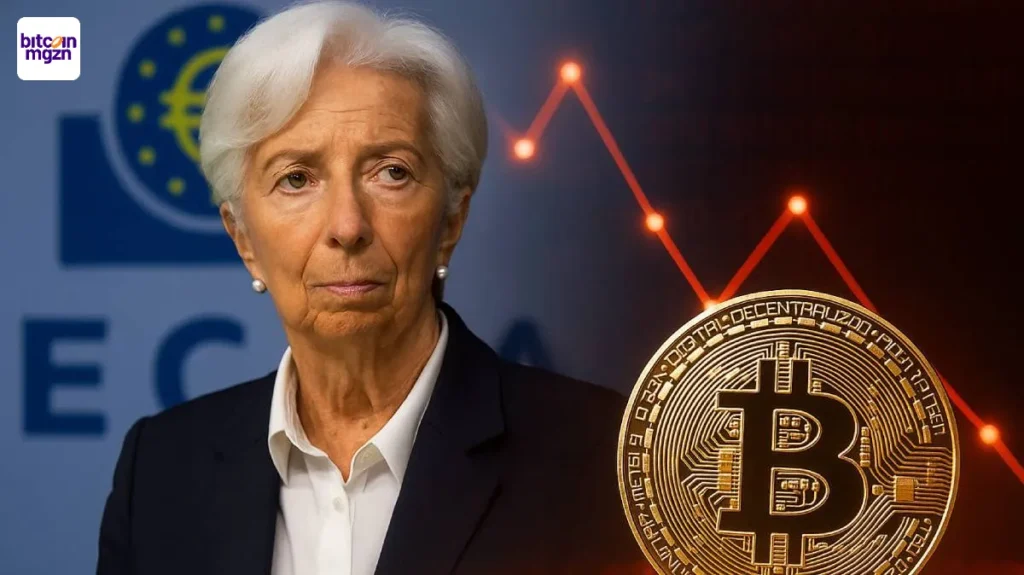
ECB-president hernieuwt aanval op Bitcoin terwijl euro daalt

ECB-president hernieuwt aanval op Bitcoin terwijl euro daalt

Snelle crypto updates? Connect op Instagram! Check onze Instagram   ECB-president Christine Lagarde noemt Bitcoin waardeloos en waarschuwt voor zijn speculatieve aard. Haar uitspraken komen op een moment dat DeFi groeit en de euro onder druk staat, wat de discussie over geld en controle opnieuw tot leven brengt. ECB houdt vast aan kritiek op Bitcoin en DeFi De Europese Centrale Bank (ECB) blijft vasthouden aan haar scherpe toon over Bitcoin. Volgens president Christine Lagarde ontbreekt de munt het fundament dat echt geld kenmerkt. Ze noemt het een speculatief middel zonder onderliggende waarde, en benadrukt dat de ECB het publieke vertrouwen in geld moet beschermen. Terwijl de digitale economie zich steeds meer richting decentralisatie beweegt, probeert de bank haar rol als stabiele pijler te behouden. ECB (European Central Bank) De European Central Bank (ECB) is de centrale bank van de eurozone en bepaalt samen met de nationale banken het monetaire beleid voor de euro. Ze houdt de inflatie in de gaten, bepaalt de rente en zorgt voor stabiliteit van het financiële systeem. In de cryptowereld speelt de ECB vooral een rol met het onderzoek en de voorbereidingen voor een digitale euro, een eigen centrale bank digitale munt (CBDC). Daarmee wil de bank inspelen op de groei van digitaal geld en alternatieven zoals stablecoins. Voor de crypto-industrie is dit belangrijk omdat een digitale euro de concurrentie en het speelveld voor private stablecoins kan veranderen. De waarschuwing van Lagarde past in een bredere strategie van de ECB. De opkomst van decentrale financiële systemen (DeFi) wordt gezien als een uitdaging voor de invloed van centrale banken. In die waarschuwing lijkt ook iets van zelfbescherming door te klinken: het behoud van macht over monetair beleid. Voorstanders van Bitcoin wijzen juist op de kracht van schaarste, transparantie en onafhankelijkheid; eigenschappen die fiatgeld in hun ogen steeds meer verliest. “How many bitcoin do you own?” That’s how it starts, a stupid question from the host. From there, it goes downhill fast. Christine Lagarde repeats every tired anti-bitcoin cliché the ECB has ever pushed. Let’s go… 1️⃣ “Bitcoin has no intrinsic value.” Neither does fiat.… pic.twitter.com/uMqtEHvkD0 — Eli Nagar (@EliNagarBrr) October 7, 2025 De euro verzwakt terwijl crypto aan invloed wint Ondertussen verliest de euro langzaam maar zeker aan koopkracht. Sinds de invoering in 2002 is de munt ruim veertig procent van haar reële waarde kwijtgeraakt. Dat voedt de twijfel over de houdbaarheid van het huidige fiatstelsel en vergroot de interesse in alternatieven zoals Bitcoin en andere cryptovaluta. Binnen de Europese cryptogemeenschap worden de woorden van de ECB dan ook met de nodige scepsis onthaald. Been 22 years, physical $Euro coins and banknotes entered circulation on January 1st 2002. Since then, this fiasco lost 40% of its buying power according to “official” stats. Won’t even mention real stats, or you’d be dumping ALL your Eurobolivars for #Bitcoin right now. pic.twitter.com/Rp3KinVfPm — Vandelay ₿TC Industries ⚡ (@VandelayBTC) January 3, 2024 DeFi-platforms en stablecoins winnen terrein in Europa, juist omdat ze nieuwe mogelijkheden bieden voor rendement en autonomie. Waar Lagarde waarschuwt voor volatiliteit, zien veel gebruikers vooral vrijheid in een systeem dat zich niets aantrekt van centrale banken. De groei van DeFi laat zien dat vertrouwen niet alleen via instituties ontstaat, maar ook via technologie. Monetaire controle en vertrouwen in het digitale tijdperk De standpunten van de ECB leggen een oud spanningsveld bloot: de strijd tussen stabiliteit en vrijheid. Aan de ene kant verdedigt de bank haar rol als bewaker van orde, aan de andere kant tonen cryptomarkten dat vertrouwen ook buiten traditionele kanalen kan bestaan. Terwijl de ECB pleit voor zekerheid en voorspelbaarheid, zoeken investeerders steeds vaker transparantie en zelfbeschikking. Lagarde’s uitspraken passen in een wereldwijde trend waarin centrale banken proberen hun gezag te behouden in een economie die snel verandert. Toch klinkt steeds luider de vraag of die vorm van controle nog houdbaar is. Nieuwe technologieën maken directe waardeoverdracht mogelijk,zonder tussenkomst van banken. Dat idee wringt natuurlijk met de kern van het bestaande financiële systeem. Exactly. It was narrative management. They feel threatened. That’s why real questions about monetary policy, inflation, and accountability never make it to the script. — Eli Nagar (@EliNagarBrr) October 8, 2025 De toekomst van waarde: centraal of gedecentraliseerd? De discussie tussen de ECB en de cryptowereld draait om meer dan geld. Het gaat om vertrouwen, transparantie en macht over waarde. Zolang de euro verder verzwakt en decentrale technologieën blijven groeien, lijkt de kloof tussen centrale banken en de cryptosector alleen maar groter te worden. Hoeveel invloed de ECB kan behouden, hangt af van haar vermogen zich aan te passen aan dit nieuwe tijdperk. De strijd om waarde is niet enkel economisch, maar ook ideologisch. In dat licht voelt de opkomst van Bitcoin minder als een bedreiging, en meer als een logisch gevolg van de zoektocht naar onafhankelijkheid in geld. Koop je Bitcoin via Best Wallet Best wallet is een topklasse crypto wallet waarmee je anoniem crypto kan kopen. Met meer dan 60 chains gesupport kan je al je main crypto coins aanschaffen via Best Wallet. Best wallet - betrouwbare en anonieme wallet Best wallet - betrouwbare en anonieme wallet Meer dan 60 chains beschikbaar voor alle crypto Vroege toegang tot nieuwe projecten Hoge staking belongingen Lage transactiekosten Best wallet review Koop nu via Best Wallet Let op: cryptocurrency is een zeer volatiele en ongereguleerde investering. Doe je eigen onderzoek. Het bericht ECB-president hernieuwt aanval op Bitcoin terwijl euro daalt is geschreven door Sebastiaan Krijnen en verscheen als eerst op Bitcoinmagazine.nl.
Paylaş
Coinstats2025/10/11 03:16
What SBI Really Owns in Ripple May Surprise XRP Investors

What SBI Really Owns in Ripple May Surprise XRP Investors

The post What SBI Really Owns in Ripple May Surprise XRP Investors appeared on BitcoinEthereumNews.com. SBI Holdings Chairman Yoshitaka Kitao has confirmed that
Paylaş
BitcoinEthereumNews2026/02/16 16:14