

Must Read
COLLISION. Video from the PCG shows a Chinese navy vessel (left, light gray) and a China Coast Guard ship (center, with blue and red stripes) colliding close toCOLLISION. Video from the PCG shows a Chinese navy vessel (left, light gray) and a China Coast Guard ship (center, with blue and red stripes) colliding close to
View from Manila: Mr. President, put order in your West Philippine Sea house
MANILA, Philippines — After over six weeks of statements, responses, and retorts exchanged between the Chinese embassy in the Philippines and various officials and agencies in the country, the Department of Foreign Affairs (DFA) issued what it probably hoped would signal the end of a war of words that has taken on a life of its own.
“[The] DFA urges that such responses be made in a calm and professional manner, conscious of the mutual respect that must prevail in all diplomatic interactions,” the DFA’s new spokesperson for maritime affairs, Deputy Assistant Secretary Rogelio Villanueva Jr., said in a February 11 statement.
In response, the Chinese embassy in Manila told its host country to “speak with a unified and constructive voice” and said the DFA should “[lead] efforts to manage differences and advance the overall bilateral relationship.”
So as it lectures, provokes, and agitates everyone — from Philippine Coast Guard (PCG) spokesperson for the West Philippine Sea Commodore Jay Tarriela to Senate President Tito Sotto — the embassy is also singling out who it prefers to engage with and who it wants to silence.
It’s about time for President Ferdinand Marcos Jr. to convene the National Maritime Council, through Executive Secretary Ralph Recto. After all, when it was established in 2024, it was envisioned to be the “central body-in-charge of formulating policies and strategies to ensure a unified, coordinated and effective governance framework for the country’s maritime security and domain awareness.”
A council meeting would at least send the strong message that this administration and government is more than able to cut above the noise and close ranks when external forces are trying — and succeeding — in sowing chaos within.
The disarray has been aplenty.
On February 13, the DFA through Villanueva issued another, longer statement — the spiciest lines reserved not for an embassy that’s been waging a disinformation and influence campaign through public statements but to “casual commentators, non-practitioners, and self-styled experts” whose jeers, it said, would not “sidetrack” its “firm and professional” engagement with counterparts.
“While performative rhetoric is a reality in modern public discourse, the DFA has long ago resolved to conduct our work with the national interest as the sole consideration not for fanfare, not for followers, and certainly not for likes, but solely for the national interest and welfare of the Filipino people,” said Villanueva, in what was only his third statement in the new role.
Play Video 
It was a quip directed at nobody in particular and at everyone it could possibly apply to.
It’s also been met with strong responses — both explicit and cryptic — from the Philippines’ lively community of analysts, academics, commentators and observers, both casual and, well, formal. After all, it’s language you seldom hear or expect from the DFA, an agency whose default is diplomacy.
It was certainly not what many, “casual commentators” included, expected and wanted to hear as the Chinese embassy continues to push forward its narrative on the West Philippine Sea while picking fights with Philippine spokespersons, government agencies, and elected legislators.
And it’s not what the Philippines needs at a time when China’s envoys are exploiting differences — both personal and political — within the executive and legislative branches. It’s not what the country needs when the Chinese embassy, its proxies, and its apparent army of online supporters (whether real or manufactured) are flooding an already toxic information space with China’s position — which undermines Manila’s, including the 2016 Arbitral Award.
The escalation of tensions within — long existing, but almost always sorted out or suppressed in the name of national interest — can only stand to benefit Beijing.
China’s “theory of victory,” retired Rear Admiral Rommel Ong pointed out most recently in an Op-Ed for PhilStar, is “sow discord among fellow Filipinos within its society” and “create division within our government and its political leaders.”
Disrupting ties between the Philippines and the United States, as well as with other like-minded partners, is also a key indicator of success — a scenario bureaucrats in the defense, security, and diplomatic spaces prevented despite the best efforts of former president Rodrigo Duterte and his China pivot dreams.
Debates on, about, and tangential to the West Philippine Sea have taken lives of their own, and many of them have proven to be less than fruitful.
One offshoot has been the oversimplification of Philippine strategy as a choice between transparency and opacity — as if transparency does not exist as a graduation of tools that diplomats, soldiers, civilian personnel, and politicians can choose from, depending on the situation.
The “transparency initiative” — the name-and-shame effort that’s long been derided by China (and even, at times, some sectors of Philippine government) — should be understood as part of a greater maritime strategy, if it does exist, that also involves diplomacy, the modernization of the military, and external defense relationships.
Did Commodore Tarriela overstep in using satirical images of Chinese President Xi Jinping in a lecture? Perhaps. But a course of action in its aftermath should be navigated by Philippines officials and agencies together — unified, as the Chinese embassy in Manila has so kindly suggested.
Has Beijing, time and time again, overstepped in its “defense” of its South China Sea claims? Certainly. But they speak in unity — as they always do — in defending their position, even if it sometimes defies most logic.
It is, admittedly, a difficult position to be in for the Philippines. As chair of the Association of Southeast Asian Nations (ASEAN), it must act as a unifier of a region united by geography and history and divided by varying interests. As chair in the same year ASEAN wants a Code of Conduct, the stakes are even higher — what could it do to end a decades-old negotiation between the bloc and its superpower neighbors that’s been harassing it in its own backyard?
This means that in 2026, Manila is expected to think beyond itself and consider ASEAN more than ever.
“Dapat pag-aralan mabuti at pag-ingatan din [na] hindi yan maging resulta ng pagkatalo naman natin… Kahit magkaroon ng compromise, dapat meron pa rin tayong minimum na dapat i-ensure na hindi natin ma-compromise rin,” said Jay Batongbacal, a maritime law expert who heads the the UP Law Institute for Maritime Affairs and Law of the Sea (IMLOS), in an interview with Rappler.
(The Philippines must study this thoroughly and exercise caution so this [ASEAN chairmanship and the COC] does not result in us losing. Even if the Philippines makes compromises, there should be minimums that we should not compromise.)
Play Video 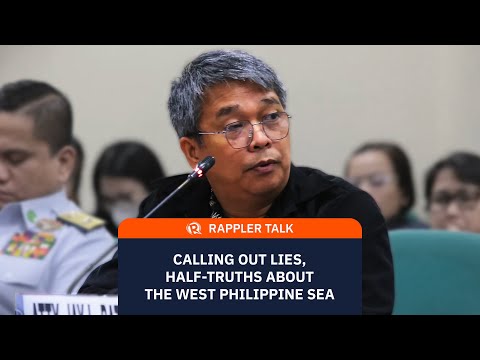
And then, of course, there are the things happening outside the Philippines and ASEAN — disarray in the long-upheld rules-based order both hastened by the superpower that set it up and by another superpower that has long wanted those norms changed.
The noise can be overwhelming.
To this, Batongbacal said: “Keep your eye on the ball regardless of what’s happening. Keep your core steady regardless of all these influences. Ang Pilipinas para sa Pilipino. Siguro, yun yung pinaka-gist nito (The Philippines is for the Filipino. That’s the gist of it).”
“Dapat pagdating sa mga issue katulad ng West Philippine Sea, ng ating maritime space, yung ating mga territories, pare-pareho tayo dapat ng posisyon, pare-pareho tayong tumitingin sa isang interest ng sambayan ng Pilipino – hindi yung mga individual interest ng mga ‘to. Mga iba dyan na nagka-grandstand, o kaya nagpapakitang gilas lamang, o kaya mismong kumakampi sa kabila, dapat [‘di] nila tanggapin yan. Dapat lagi, isaalang-alang kung ano ang para sa Pilipinas. ‘Yun dapat ang ating laging tinitingnan,” he added.
(When it comes to issues like the West Philippine Sea, our maritime space, our territories — we must have the same position, we must all look at the interest of the Filipino nation and not the interest of individuals. Some will grandstand and seek the spotlight, or will argue for the other side. Don’t just accept that. What you should always consider is what is for the Philippines. That’s what you should focus on.)
There can be virtue in staying in one’s lane — the ones on which commentators and analysts, whether casual, formal, or professional, have spent years developing knowledge and expertise through both study and field experience.
But one would think knowing what’s right or what’s wrong in defending the country’s sovereignty or sovereign rights is everyone’s business, especially in the face of a threat as large and resourced as China. – Rappler.com
Piyasa Fırsatı
Orderly Network Fiyatı(ORDER)
$0,0581
$0,0581$0,0581
USD
Orderly Network (ORDER) Canlı Fiyat Grafiği
Sorumluluk Reddi: Bu sitede yeniden yayınlanan makaleler, halka açık platformlardan alınmıştır ve yalnızca bilgilendirme amaçlıdır. MEXC'nin görüşlerini yansıtmayabilir. Tüm hakları telif sahiplerine aittir. Herhangi bir içeriğin üçüncü taraf haklarını ihlal ettiğini düşünüyorsanız, kaldırılması için lütfen [email protected] ile iletişime geçin. MEXC, içeriğin doğruluğu, eksiksizliği veya güncelliği konusunda hiçbir garanti vermez ve sağlanan bilgilere dayalı olarak alınan herhangi bir eylemden sorumlu değildir. İçerik, finansal, yasal veya diğer profesyonel tavsiye niteliğinde değildir ve MEXC tarafından bir tavsiye veya onay olarak değerlendirilmemelidir.
Ayrıca Şunları da Beğenebilirsiniz

Bitcoin Hyper Not Far from $20M, Whales Keep Buying: See What This $BTC Layer-2 Plans
To the uninitiated, Bitcoin and crypto are synonymous – and it’s only fair, given that the granddaddy of all crypto has been the face of the industry ever since it burst onto the scene a few years back. Since 2020, Bitcoin has generated over 1,500% in returns. Basically, crypto is so much about Bitcoin. All […]
Paylaş
Bitcoinist2025/09/22 16:37
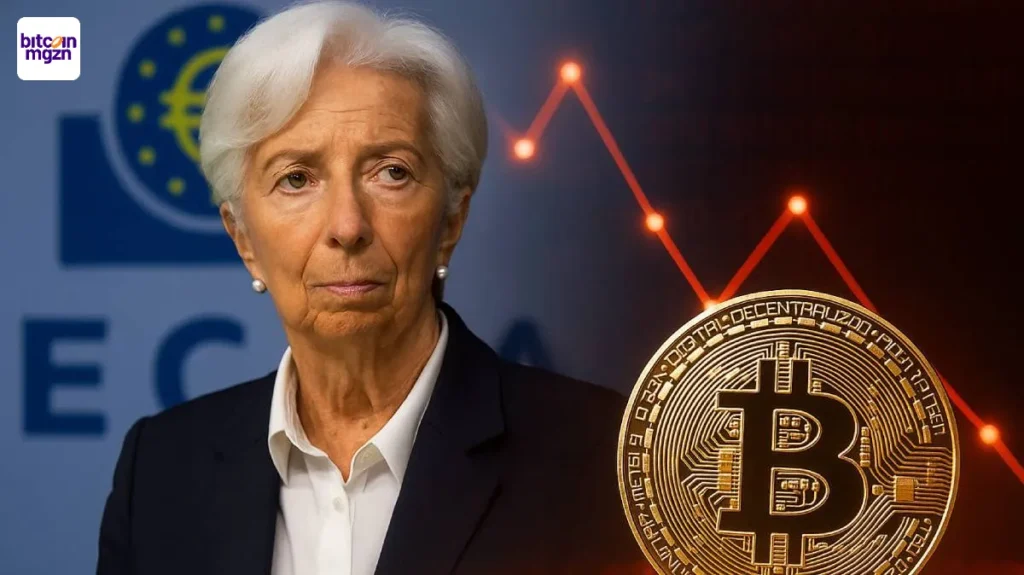
ECB-president hernieuwt aanval op Bitcoin terwijl euro daalt
Snelle crypto updates? Connect op Instagram! Check onze Instagram ECB-president Christine Lagarde noemt Bitcoin waardeloos en waarschuwt voor zijn speculatieve aard. Haar uitspraken komen op een moment dat DeFi groeit en de euro onder druk staat, wat de discussie over geld en controle opnieuw tot leven brengt. ECB houdt vast aan kritiek op Bitcoin en DeFi De Europese Centrale Bank (ECB) blijft vasthouden aan haar scherpe toon over Bitcoin. Volgens president Christine Lagarde ontbreekt de munt het fundament dat echt geld kenmerkt. Ze noemt het een speculatief middel zonder onderliggende waarde, en benadrukt dat de ECB het publieke vertrouwen in geld moet beschermen. Terwijl de digitale economie zich steeds meer richting decentralisatie beweegt, probeert de bank haar rol als stabiele pijler te behouden. ECB (European Central Bank) De European Central Bank (ECB) is de centrale bank van de eurozone en bepaalt samen met de nationale banken het monetaire beleid voor de euro. Ze houdt de inflatie in de gaten, bepaalt de rente en zorgt voor stabiliteit van het financiële systeem. In de cryptowereld speelt de ECB vooral een rol met het onderzoek en de voorbereidingen voor een digitale euro, een eigen centrale bank digitale munt (CBDC). Daarmee wil de bank inspelen op de groei van digitaal geld en alternatieven zoals stablecoins. Voor de crypto-industrie is dit belangrijk omdat een digitale euro de concurrentie en het speelveld voor private stablecoins kan veranderen. De waarschuwing van Lagarde past in een bredere strategie van de ECB. De opkomst van decentrale financiële systemen (DeFi) wordt gezien als een uitdaging voor de invloed van centrale banken. In die waarschuwing lijkt ook iets van zelfbescherming door te klinken: het behoud van macht over monetair beleid. Voorstanders van Bitcoin wijzen juist op de kracht van schaarste, transparantie en onafhankelijkheid; eigenschappen die fiatgeld in hun ogen steeds meer verliest. “How many bitcoin do you own?” That’s how it starts, a stupid question from the host. From there, it goes downhill fast. Christine Lagarde repeats every tired anti-bitcoin cliché the ECB has ever pushed. Let’s go… 1️⃣ “Bitcoin has no intrinsic value.” Neither does fiat.… pic.twitter.com/uMqtEHvkD0 — Eli Nagar (@EliNagarBrr) October 7, 2025 De euro verzwakt terwijl crypto aan invloed wint Ondertussen verliest de euro langzaam maar zeker aan koopkracht. Sinds de invoering in 2002 is de munt ruim veertig procent van haar reële waarde kwijtgeraakt. Dat voedt de twijfel over de houdbaarheid van het huidige fiatstelsel en vergroot de interesse in alternatieven zoals Bitcoin en andere cryptovaluta. Binnen de Europese cryptogemeenschap worden de woorden van de ECB dan ook met de nodige scepsis onthaald. Been 22 years, physical $Euro coins and banknotes entered circulation on January 1st 2002. Since then, this fiasco lost 40% of its buying power according to “official” stats. Won’t even mention real stats, or you’d be dumping ALL your Eurobolivars for #Bitcoin right now. pic.twitter.com/Rp3KinVfPm — Vandelay ₿TC Industries ⚡ (@VandelayBTC) January 3, 2024 DeFi-platforms en stablecoins winnen terrein in Europa, juist omdat ze nieuwe mogelijkheden bieden voor rendement en autonomie. Waar Lagarde waarschuwt voor volatiliteit, zien veel gebruikers vooral vrijheid in een systeem dat zich niets aantrekt van centrale banken. De groei van DeFi laat zien dat vertrouwen niet alleen via instituties ontstaat, maar ook via technologie. Monetaire controle en vertrouwen in het digitale tijdperk De standpunten van de ECB leggen een oud spanningsveld bloot: de strijd tussen stabiliteit en vrijheid. Aan de ene kant verdedigt de bank haar rol als bewaker van orde, aan de andere kant tonen cryptomarkten dat vertrouwen ook buiten traditionele kanalen kan bestaan. Terwijl de ECB pleit voor zekerheid en voorspelbaarheid, zoeken investeerders steeds vaker transparantie en zelfbeschikking. Lagarde’s uitspraken passen in een wereldwijde trend waarin centrale banken proberen hun gezag te behouden in een economie die snel verandert. Toch klinkt steeds luider de vraag of die vorm van controle nog houdbaar is. Nieuwe technologieën maken directe waardeoverdracht mogelijk,zonder tussenkomst van banken. Dat idee wringt natuurlijk met de kern van het bestaande financiële systeem. Exactly. It was narrative management. They feel threatened. That’s why real questions about monetary policy, inflation, and accountability never make it to the script. — Eli Nagar (@EliNagarBrr) October 8, 2025 De toekomst van waarde: centraal of gedecentraliseerd? De discussie tussen de ECB en de cryptowereld draait om meer dan geld. Het gaat om vertrouwen, transparantie en macht over waarde. Zolang de euro verder verzwakt en decentrale technologieën blijven groeien, lijkt de kloof tussen centrale banken en de cryptosector alleen maar groter te worden. Hoeveel invloed de ECB kan behouden, hangt af van haar vermogen zich aan te passen aan dit nieuwe tijdperk. De strijd om waarde is niet enkel economisch, maar ook ideologisch. In dat licht voelt de opkomst van Bitcoin minder als een bedreiging, en meer als een logisch gevolg van de zoektocht naar onafhankelijkheid in geld. Koop je Bitcoin via Best Wallet Best wallet is een topklasse crypto wallet waarmee je anoniem crypto kan kopen. Met meer dan 60 chains gesupport kan je al je main crypto coins aanschaffen via Best Wallet. Best wallet - betrouwbare en anonieme wallet Best wallet - betrouwbare en anonieme wallet Meer dan 60 chains beschikbaar voor alle crypto Vroege toegang tot nieuwe projecten Hoge staking belongingen Lage transactiekosten Best wallet review Koop nu via Best Wallet Let op: cryptocurrency is een zeer volatiele en ongereguleerde investering. Doe je eigen onderzoek. Het bericht ECB-president hernieuwt aanval op Bitcoin terwijl euro daalt is geschreven door Sebastiaan Krijnen en verscheen als eerst op Bitcoinmagazine.nl.
Paylaş
Coinstats2025/10/11 03:16

What SBI Really Owns in Ripple May Surprise XRP Investors
The post What SBI Really Owns in Ripple May Surprise XRP Investors appeared on BitcoinEthereumNews.com. SBI Holdings Chairman Yoshitaka Kitao has confirmed that
Paylaş
BitcoinEthereumNews2026/02/16 16:14