BitcoinWorld Cryptocurrency Opportunity: Ray Dalio’s Dire ‘World Order Collapse’ Warning Sparks Analysis NEW YORK, April 2025 – A stark warning from billionaireBitcoinWorld Cryptocurrency Opportunity: Ray Dalio’s Dire ‘World Order Collapse’ Warning Sparks Analysis NEW YORK, April 2025 – A stark warning from billionaire

Cryptocurrency Opportunity: Ray Dalio’s Dire ‘World Order Collapse’ Warning Sparks Analysis

2026/02/16 13:10
Okuma süresi: 6 dk

BitcoinWorld

Cryptocurrency Opportunity: Ray Dalio’s Dire ‘World Order Collapse’ Warning Sparks Analysis

NEW YORK, April 2025 – A stark warning from billionaire investor Ray Dalio about the potential collapse of the established world order is triggering intense analysis, with experts suggesting it could unlock a profound long-term opportunity for the cryptocurrency market. This analysis, emerging from detailed financial reports, examines how digital assets might function within a fragmenting global financial landscape. Consequently, investors and policymakers are now scrutinizing the resilience of traditional and decentralized systems alike.

Decoding Ray Dalio’s ‘World Order Collapse’ Warning

Ray Dalio, founder of Bridgewater Associates, articulated his concerns publicly on social media platform X. He posited that the international framework established after World War II is breaking down. Furthermore, Dalio suggested this framework is being replaced by a “logic of power.” This shift, he argues, will likely lead to more frequent and intense conflicts between major nations. Historically, Dalio noted, most significant disputes begin with economic warfare before escalating to military action. He drew a sobering parallel, stating current structural conditions resemble the turbulent 1930s period following the Great Depression.

This perspective is not isolated. Several geopolitical risk firms have published similar assessments throughout 2024. The underlying thesis points to deglobalization trends, trade decoupling, and the weaponization of financial networks like SWIFT. These factors collectively contribute to what analysts term “financial fragmentation.” In such an environment, the traditional pillars of global finance face unprecedented stress tests.

The Historical Context and Modern Parallels

Examining the 1930s provides crucial context. That era saw competitive currency devaluations, protectionist tariffs like the Smoot-Hawley Act, and the collapse of the gold standard. Today, parallels include central bank digital currency (CBDC) competition, cross-border payment sanctions, and debates over reserve currency dominance. A 2024 International Monetary Fund report highlighted a 15% increase in bilateral trade restrictions since 2021. This data underscores the move toward fractured economic blocs.

The Cryptocurrency Opportunity Amid Financial Fragmentation

Financial analysis suggests cryptocurrency’s core architectural principles could become highly relevant in Dalio’s predicted scenario. The primary beneficiary characteristics identified include:

  • Censorship Resistance: Permissionless blockchain networks operate without a central authority that can block transactions.
  • Asset Sovereignty: Self-custodied digital assets reside outside the traditional banking system, reducing freeze risk.
  • Borderless Settlement: Cryptocurrencies enable peer-to-peer value transfer across geopolitical boundaries.

In a world where nations may restrict capital flows or freeze foreign-held assets, these features offer a potential alternative. For instance, during the 2022 sanctions regime, cryptocurrency adoption saw measurable increases in affected regions, according to blockchain analytics firm Chainalysis. This demonstrated a real-world use case during geopolitical stress.

Asset Comparison in a High-Tension Scenario
Asset ClassPrimary Safe-Haven PerceptionKey Vulnerability in FragmentationKey Strength in Fragmentation
Gold (Physical)High – Historical Store of ValueStorage, Transport, VerificationNo Counterparty Risk
BitcoinGrowing – “Digital Gold”Price Volatility, Regulatory UncertaintyCensorship Resistance, Portability
Fiat Currency (USD, EUR)Moderate – Liquidity & StabilityCentralized Control, Inflation RiskDeep Liquidity, Legal Tender Status
Government BondsHigh (Domestic)Sovereign Default Risk, InflationPredictable Yield (in stable regimes)

Short-Term Volatility Versus Long-Term Thesis

Analysts caution that the path to this potential long-term opportunity will be fraught with volatility. In the near term, rising geopolitical tensions typically weaken overall investor sentiment. This sentiment shift reduces risk appetite across all speculative assets, including cryptocurrencies. Additionally, worsening global liquidity conditions, often a precursor to conflict, can drain capital from markets. The recent performance divergence between gold and Bitcoin illustrates this dynamic clearly.

Gold achieved a new nominal all-time high in early 2025, reinforcing its status as the primary traditional safe haven. Conversely, Bitcoin struggled to reclaim its previous peak during the same period. This indicates that during the initial phases of fear, capital still overwhelmingly flees to established havens. Market data from Q1 2025 shows a significant correlation spike between traditional volatility indices (VIX) and crypto market sell-offs.

The Complex Phase of Risk Appetite

The analysis concludes that the crypto market is entering a complex phase driven predominantly by risk appetite. This phase is characterized by high sensitivity to macroeconomic headlines and central bank policy. Factors like interest rate decisions and quantitative tightening measures will have an outsized impact. Therefore, investors must distinguish between short-term trading conditions and the long-term structural thesis. The latter depends not on quarterly earnings, but on fundamental shifts in how global value is stored and transferred.

Conclusion

Ray Dalio’s warning of a potential world order collapse presents a dual-edged scenario for digital assets. While it outlines a compelling long-term cryptocurrency opportunity rooted in censorship resistance and financial sovereignty, the immediate future promises significant turbulence. The market’s trajectory will hinge on the interplay between worsening geopolitical fractures, global liquidity, and the evolving perception of crypto as a legitimate safe haven. Ultimately, the coming years will test whether decentralized networks can provide stability when centralized systems face their greatest stress.

FAQs

Q1: What exactly did Ray Dalio predict?
Ray Dalio predicted the breakdown of the post-World War II world order, suggesting it is being replaced by a conflict-prone “logic of power” among major nations, starting with economic disputes.

Q2: Why is cryptocurrency seen as a potential beneficiary in this scenario?
Cryptocurrency’s decentralized, censorship-resistant nature could provide an alternative for storing and transferring value if traditional financial systems become fragmented or weaponized in geopolitical conflicts.

Q3: If it’s an opportunity, why is the crypto market volatile now?
In the short term, geopolitical tensions reduce overall investor risk appetite and can tighten global liquidity, causing sell-offs in speculative assets like crypto, despite the long-term structural thesis.

Q4: How does Bitcoin’s current performance compare to gold?
Recently, gold hit a new all-time high while Bitcoin has struggled to recover its peak, indicating investors still largely view gold as the primary safe-haven asset during initial periods of fear.

Q5: What does “financial fragmentation” mean?
Financial fragmentation refers to the splitting of the global financial system into competing blocs, potentially with different rules, payment systems, and sanctions, making cross-border finance more difficult.

This post Cryptocurrency Opportunity: Ray Dalio’s Dire ‘World Order Collapse’ Warning Sparks Analysis first appeared on BitcoinWorld.

Piyasa Fırsatı
Orderly Network Logosu
Orderly Network Fiyatı(ORDER)
$0.0581
$0.0581$0.0581
-0.17%
USD
Orderly Network (ORDER) Canlı Fiyat Grafiği
Sorumluluk Reddi: Bu sitede yeniden yayınlanan makaleler, halka açık platformlardan alınmıştır ve yalnızca bilgilendirme amaçlıdır. MEXC'nin görüşlerini yansıtmayabilir. Tüm hakları telif sahiplerine aittir. Herhangi bir içeriğin üçüncü taraf haklarını ihlal ettiğini düşünüyorsanız, kaldırılması için lütfen [email protected] ile iletişime geçin. MEXC, içeriğin doğruluğu, eksiksizliği veya güncelliği konusunda hiçbir garanti vermez ve sağlanan bilgilere dayalı olarak alınan herhangi bir eylemden sorumlu değildir. İçerik, finansal, yasal veya diğer profesyonel tavsiye niteliğinde değildir ve MEXC tarafından bir tavsiye veya onay olarak değerlendirilmemelidir.

Ayrıca Şunları da Beğenebilirsiniz

Bitcoin Hyper Not Far from $20M, Whales Keep Buying: See What This $BTC Layer-2 Plans
Bitcoin Hyper Not Far from $20M, Whales Keep Buying: See What This $BTC Layer-2 Plans

To the uninitiated, Bitcoin and crypto are synonymous – and it’s only fair, given that the granddaddy of all crypto has been the face of the industry ever since it burst onto the scene a few years back. Since 2020, Bitcoin has generated over 1,500% in returns. Basically, crypto is so much about Bitcoin. All […]
Paylaş
Bitcoinist2025/09/22 16:37
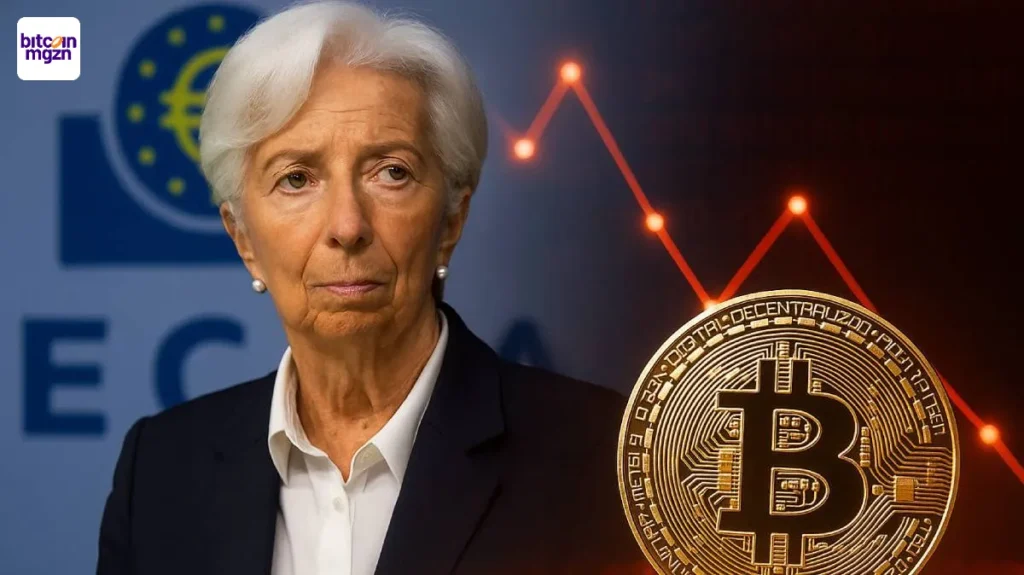
ECB-president hernieuwt aanval op Bitcoin terwijl euro daalt

ECB-president hernieuwt aanval op Bitcoin terwijl euro daalt

Snelle crypto updates? Connect op Instagram! Check onze Instagram   ECB-president Christine Lagarde noemt Bitcoin waardeloos en waarschuwt voor zijn speculatieve aard. Haar uitspraken komen op een moment dat DeFi groeit en de euro onder druk staat, wat de discussie over geld en controle opnieuw tot leven brengt. ECB houdt vast aan kritiek op Bitcoin en DeFi De Europese Centrale Bank (ECB) blijft vasthouden aan haar scherpe toon over Bitcoin. Volgens president Christine Lagarde ontbreekt de munt het fundament dat echt geld kenmerkt. Ze noemt het een speculatief middel zonder onderliggende waarde, en benadrukt dat de ECB het publieke vertrouwen in geld moet beschermen. Terwijl de digitale economie zich steeds meer richting decentralisatie beweegt, probeert de bank haar rol als stabiele pijler te behouden. ECB (European Central Bank) De European Central Bank (ECB) is de centrale bank van de eurozone en bepaalt samen met de nationale banken het monetaire beleid voor de euro. Ze houdt de inflatie in de gaten, bepaalt de rente en zorgt voor stabiliteit van het financiële systeem. In de cryptowereld speelt de ECB vooral een rol met het onderzoek en de voorbereidingen voor een digitale euro, een eigen centrale bank digitale munt (CBDC). Daarmee wil de bank inspelen op de groei van digitaal geld en alternatieven zoals stablecoins. Voor de crypto-industrie is dit belangrijk omdat een digitale euro de concurrentie en het speelveld voor private stablecoins kan veranderen. De waarschuwing van Lagarde past in een bredere strategie van de ECB. De opkomst van decentrale financiële systemen (DeFi) wordt gezien als een uitdaging voor de invloed van centrale banken. In die waarschuwing lijkt ook iets van zelfbescherming door te klinken: het behoud van macht over monetair beleid. Voorstanders van Bitcoin wijzen juist op de kracht van schaarste, transparantie en onafhankelijkheid; eigenschappen die fiatgeld in hun ogen steeds meer verliest. “How many bitcoin do you own?” That’s how it starts, a stupid question from the host. From there, it goes downhill fast. Christine Lagarde repeats every tired anti-bitcoin cliché the ECB has ever pushed. Let’s go… 1️⃣ “Bitcoin has no intrinsic value.” Neither does fiat.… pic.twitter.com/uMqtEHvkD0 — Eli Nagar (@EliNagarBrr) October 7, 2025 De euro verzwakt terwijl crypto aan invloed wint Ondertussen verliest de euro langzaam maar zeker aan koopkracht. Sinds de invoering in 2002 is de munt ruim veertig procent van haar reële waarde kwijtgeraakt. Dat voedt de twijfel over de houdbaarheid van het huidige fiatstelsel en vergroot de interesse in alternatieven zoals Bitcoin en andere cryptovaluta. Binnen de Europese cryptogemeenschap worden de woorden van de ECB dan ook met de nodige scepsis onthaald. Been 22 years, physical $Euro coins and banknotes entered circulation on January 1st 2002. Since then, this fiasco lost 40% of its buying power according to “official” stats. Won’t even mention real stats, or you’d be dumping ALL your Eurobolivars for #Bitcoin right now. pic.twitter.com/Rp3KinVfPm — Vandelay ₿TC Industries ⚡ (@VandelayBTC) January 3, 2024 DeFi-platforms en stablecoins winnen terrein in Europa, juist omdat ze nieuwe mogelijkheden bieden voor rendement en autonomie. Waar Lagarde waarschuwt voor volatiliteit, zien veel gebruikers vooral vrijheid in een systeem dat zich niets aantrekt van centrale banken. De groei van DeFi laat zien dat vertrouwen niet alleen via instituties ontstaat, maar ook via technologie. Monetaire controle en vertrouwen in het digitale tijdperk De standpunten van de ECB leggen een oud spanningsveld bloot: de strijd tussen stabiliteit en vrijheid. Aan de ene kant verdedigt de bank haar rol als bewaker van orde, aan de andere kant tonen cryptomarkten dat vertrouwen ook buiten traditionele kanalen kan bestaan. Terwijl de ECB pleit voor zekerheid en voorspelbaarheid, zoeken investeerders steeds vaker transparantie en zelfbeschikking. Lagarde’s uitspraken passen in een wereldwijde trend waarin centrale banken proberen hun gezag te behouden in een economie die snel verandert. Toch klinkt steeds luider de vraag of die vorm van controle nog houdbaar is. Nieuwe technologieën maken directe waardeoverdracht mogelijk,zonder tussenkomst van banken. Dat idee wringt natuurlijk met de kern van het bestaande financiële systeem. Exactly. It was narrative management. They feel threatened. That’s why real questions about monetary policy, inflation, and accountability never make it to the script. — Eli Nagar (@EliNagarBrr) October 8, 2025 De toekomst van waarde: centraal of gedecentraliseerd? De discussie tussen de ECB en de cryptowereld draait om meer dan geld. Het gaat om vertrouwen, transparantie en macht over waarde. Zolang de euro verder verzwakt en decentrale technologieën blijven groeien, lijkt de kloof tussen centrale banken en de cryptosector alleen maar groter te worden. Hoeveel invloed de ECB kan behouden, hangt af van haar vermogen zich aan te passen aan dit nieuwe tijdperk. De strijd om waarde is niet enkel economisch, maar ook ideologisch. In dat licht voelt de opkomst van Bitcoin minder als een bedreiging, en meer als een logisch gevolg van de zoektocht naar onafhankelijkheid in geld. Koop je Bitcoin via Best Wallet Best wallet is een topklasse crypto wallet waarmee je anoniem crypto kan kopen. Met meer dan 60 chains gesupport kan je al je main crypto coins aanschaffen via Best Wallet. Best wallet - betrouwbare en anonieme wallet Best wallet - betrouwbare en anonieme wallet Meer dan 60 chains beschikbaar voor alle crypto Vroege toegang tot nieuwe projecten Hoge staking belongingen Lage transactiekosten Best wallet review Koop nu via Best Wallet Let op: cryptocurrency is een zeer volatiele en ongereguleerde investering. Doe je eigen onderzoek. Het bericht ECB-president hernieuwt aanval op Bitcoin terwijl euro daalt is geschreven door Sebastiaan Krijnen en verscheen als eerst op Bitcoinmagazine.nl.
Paylaş
Coinstats2025/10/11 03:16
What SBI Really Owns in Ripple May Surprise XRP Investors

What SBI Really Owns in Ripple May Surprise XRP Investors

The post What SBI Really Owns in Ripple May Surprise XRP Investors appeared on BitcoinEthereumNews.com. SBI Holdings Chairman Yoshitaka Kitao has confirmed that
Paylaş
BitcoinEthereumNews2026/02/16 16:14