Uniswap founder Hayden Adams has warned users about fraudulent ads impersonating the decentralized exchange, recounting a case in which a victim reportedly lostUniswap founder Hayden Adams has warned users about fraudulent ads impersonating the decentralized exchange, recounting a case in which a victim reportedly lost

Uniswap Founder Slams Scam Crypto Ads After Victim Lost Everything

2026/02/22 02:00
Okuma süresi: 7 dk
Uniswap Founder Slams Scam Crypto Ads After Victim Lost Everything

Uniswap founder Hayden Adams has warned users about fraudulent ads impersonating the decentralized exchange, recounting a case in which a victim reportedly lost everything. The alert arrives as January posted the largest crypto-scam losses in 11 months, underscoring persistent brand-abuse and consumer risk in the space. Adams noted that scam Uniswap apps appeared while App Store approvals were pending, a pattern that has persisted even after years of reporting. In parallel, scammers have begun buying ads on major search engines to capture users who search for “Uniswap,” presenting paid results that resemble official links. When users click through and connect wallets, attackers can drain funds with alarming ease.

Key takeaways

  • Scam ads targeting Uniswap have resurfaced, leveraging paid search results to imitate the official site and misleading users who seek the platform.
  • A crypto holder reporting a mid-six-figure wallet loss illustrates the real-world cost of these impersonations and social-engineering tricks.
  • Uniswap previously flagged clone sites in October 2024, when scammers created lookalikes with altered UI elements to steer users toward unsafe actions.
  • January’s scam and exploit losses reached about $370.3 million, marking the period as the worst month in nearly a year for fraud in crypto, according to CertiK data.
  • A single social-engineering incident accounted for the majority of losses within January, underscoring how a single method can have outsized impact on users.

Sentiment: Neutral

Market context: The rise in scam-ad fraud comes as brand impersonation, social engineering, and search-ad manipulation continue to erode trust in crypto services. The broader market has seen steady attention on security hygiene, user education, and platform-level safeguards as regulators and industry groups seek better guardrails for digital-asset promotions and onboarding.

Why it matters

The incident underscores a systemic risk facing everyday users: the barrier between legitimate and counterfeit promotion is collapsing in the online search realm. When a top result for a trusted platform resembles the real site, even cautious participants can be led into granting permissions that unlock total access to their wallets. Hayden Adams’ warning highlights that fraud. Ads and clone sites are becoming more sophisticated, and the friction for fraudsters to mimic reputable brands has diminished as digital advertising costs remain accessible and search algorithms fail to fully discriminate intent in some cases.

Historically, Uniswap has faced persistent spoofing attempts. In October 2024, Cointelegraph reported on a fake Uniswap clone that exploited the platform’s branding, altering the navigation and promoting unsafe actions such as a misleading “connect” button instead of “get started,” and a “bridge” option in place of “read the docs.” That episode demonstrated the dual threat of brand impersonation and misdirection—where the user’s trust, not just their funds, is at stake. The ongoing risk reflects broader challenges in brand security for decentralized protocols that rely on open-source credibility rather than centralized verification channels.

From a security metrics perspective, January’s figures paint a stark picture. CertiK noted that crypto exploits and scams totaled $370.3 million for the month, the highest monthly tally in 11 months and roughly four times the level seen in January 2025. Of the 40 incidents recorded that month, the majority of losses stemmed from a single social-engineering attack that drained about $284 million from a solitary victim. The concentration of losses in one event amplifies the message: attackers continue to refine social-engineering playbooks, aiming for high-value targets while exploiting trust in familiar brands.

For users and builders, the implication is straightforward: brand risk in crypto remains a material threat, and defensive measures—such as stricter validation of landing pages, better authentication signals, and more robust user education—are essential. The crypto community and platform operators must balance rapid access and openness with verifiable assurances that the user is engaging with legitimate interfaces. While regulators debate standards for disclosures and promotion, practical risk-reduction steps—such as explicit warnings on search results, quick-path checks for domain legitimacy, and safer wallet-approval flows—could help reduce the odds of a successful impersonation.

As scams evolve, so too must user vigilance. The Uniswap case adds to the growing chorus of incidents that illustrate how a combination of deceptive search results, cloned UI, and social-engineering can inflict meaningful losses even on users who attempt to act prudently. The path forward is not only about better enforcement but also about empowering users with clearer signals, safer defaults, and rapid corrective action when fraud is detected.

What to watch next

  • Actions by search engines and app stores to curb crypto-brand impersonation and remove counterfeit Uniswap pages promptly.
  • Uniswap and other DeFi projects enhancing in-product warnings and safer onboarding flows to prevent wallet approvals on dubious sites.
  • CertiK and other security firms continuing to publish monthly incident tallies and spotlightting high-impact social-engineering scams.
  • Regulatory developments around crypto advertising, brand protection, and platform accountability that could shape how promotions are vetted online.
  • Public awareness campaigns and educational initiatives aimed at strengthening user discernment when interacting with crypto interfaces online.

Sources & verification

  • Hayden Adams’ X post warning about scam ads impersonating Uniswap and noting prior delays for App Store approvals.
  • X user “Ika” describing a six-figure wallet drain and a statement: “I believe that getting drained isn’t bad luck. It’s the final consequence of a long chain of bad decisions.”
  • Cointelegraph’s October 2024 report on a fake Uniswap site designed to look authentic, with altered navigation prompts.
  • CertiK’s reporting on January’s $370.3 million in crypto theft and the detail that 40 incidents occurred that month, led by a single $284 million social-engineering loss.

Uniswap scam ads and the battle for trust

Hayden Adams’ warning crystallizes a broader truth about crypto security: brand integrity is a line of defense as much as cryptographic safeguards. The attacker’s toolbox increasingly blends paid search manipulation with convincing UI masquerades, creating a high-risk surface for users who may not spot the differences between legitimate pages and lookalikes. The historical episodes—from the October 2024 clone to the current wave of deceptive search results—highlight a recurring vulnerability: when a project’s name is associated with a trusted platform, the first impression can determine whether a user stays safe or exposes themselves to irrecoverable losses.

For participants building in this space, the takeaway is practical and actionable. Clear brand verification signals, domain controls, and user education should be integral to product design and incident response. The goal is to make legitimate interactions opt-in by default, with explicit confirmations before sensitive actions—especially wallet approvals—are executed. While the market contends with liquidity and macro headwinds, the quality of user onboarding and the reliability of promotional channels will increasingly influence the pace of adoption and trust in DeFi platforms.

As regulators, platform operators, and security researchers map the path forward, the industry will likely rely on a combination of technical safeguards, stronger verification ecosystems, and more transparent communication about known fraud campaigns. The losses in January serve as a reminder that even established brands in crypto must continuously adapt to a threat landscape that is evolving in real time. The resilience of the ecosystem depends on proactive risk management, rapid remediation when breaches occur, and ongoing education that helps users distinguish genuine opportunities from well-crafted scams.

This article was originally published as Uniswap Founder Slams Scam Crypto Ads After Victim Lost Everything on Crypto Breaking News – your trusted source for crypto news, Bitcoin news, and blockchain updates.

Piyasa Fırsatı
Spacecoin Logosu
Spacecoin Fiyatı(SPACE)
$0.01027
$0.01027$0.01027
+2.61%
USD
Spacecoin (SPACE) Canlı Fiyat Grafiği
Sorumluluk Reddi: Bu sitede yeniden yayınlanan makaleler, halka açık platformlardan alınmıştır ve yalnızca bilgilendirme amaçlıdır. MEXC'nin görüşlerini yansıtmayabilir. Tüm hakları telif sahiplerine aittir. Herhangi bir içeriğin üçüncü taraf haklarını ihlal ettiğini düşünüyorsanız, kaldırılması için lütfen [email protected] ile iletişime geçin. MEXC, içeriğin doğruluğu, eksiksizliği veya güncelliği konusunda hiçbir garanti vermez ve sağlanan bilgilere dayalı olarak alınan herhangi bir eylemden sorumlu değildir. İçerik, finansal, yasal veya diğer profesyonel tavsiye niteliğinde değildir ve MEXC tarafından bir tavsiye veya onay olarak değerlendirilmemelidir.

Ayrıca Şunları da Beğenebilirsiniz

Why Smart Whales Abandon Cardano And Solana, Choosing Pepeto Presale For 100x Potential
Why Smart Whales Abandon Cardano And Solana, Choosing Pepeto Presale For 100x Potential

But a new player is emerging quickly: Pepeto (PEPETO), still in presale at just $0.000000153, already garnering over $6.7 million. […] The post Why Smart Whales Abandon Cardano And Solana, Choosing Pepeto Presale For 100x Potential appeared first on Coindoo.
Paylaş
Coindoo2025/09/20 01:35
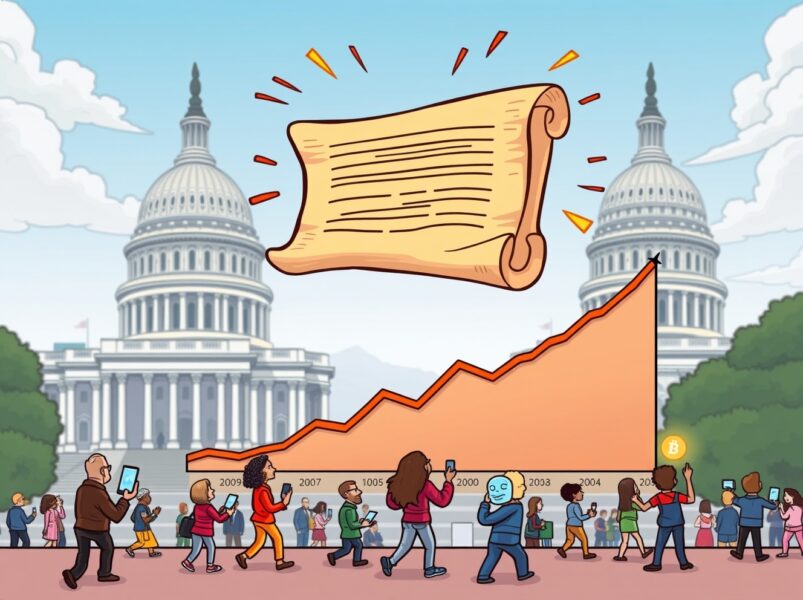
US Crypto Legislation: Unlocking a New Era for the Market Cycle

US Crypto Legislation: Unlocking a New Era for the Market Cycle

BitcoinWorld US Crypto Legislation: Unlocking a New Era for the Market Cycle Get ready for a potentially monumental shift in the crypto world! Galaxy Digital CEO Mike Novogratz has shared a fascinating prediction: significant US crypto legislation could fundamentally reshape the market’s traditional four-year cycle. This isn’t just speculation; it points to a future where crypto’s trajectory might look very different from what we’ve seen before. How is US Crypto Legislation Changing the Game? In a recent interview with Bloomberg, Novogratz highlighted two key pieces of legislation: the Genius Act and the CLARITY Act. These aren’t just bureaucratic terms; they represent a concerted effort to bring clarity and regulation to the cryptocurrency space. The Genius Act, enacted in July, focuses on stablecoin regulation. This is crucial because stablecoins, which are cryptocurrencies pegged to a stable asset like the US dollar, are becoming central to many digital transactions. The CLARITY Act aims to provide a clearer market structure. This means establishing defined rules for how cryptocurrencies are traded and regulated, making the market more transparent and accessible. Novogratz believes these legislative developments will act as a powerful magnet, drawing a massive influx of new investors into the market. Imagine millions of new participants feeling confident enough to engage with digital assets thanks to clear guidelines. Will We See a Different Crypto Market Cycle This Time? One of Novogratz’s most intriguing predictions challenges the historical pattern of crypto. He suggests that this current cycle might not conclude with the kind of large-scale sell-off that characterized previous Bitcoin (BTC) peaks. Historically, after major bull runs, investors often sold off their holdings, leading to significant market corrections. Consider the cycles of 2017 and 2021. Both saw incredible highs followed by substantial downturns as investors took profits. However, Novogratz argues that the investment environment has undergone a significant transformation. The presence of robust US crypto legislation is a key factor here, fostering a more mature market. The Power of Legitimized Stablecoins and Wider Adoption What exactly is different now? A major part of Novogratz’s argument centers on legalized stablecoins. These digital assets are poised to become seamlessly integrated into our daily lives. Think about using them directly within apps on your iPhone or across various social media platforms. This widespread usability has profound implications: Reduced Volatility Concerns: For everyday transactions, stablecoins offer the speed and efficiency of crypto without the wild price swings often associated with assets like Bitcoin or Ethereum. Easier Onboarding for New Users: When stablecoins are integrated into familiar platforms, the barrier to entry for new users dramatically decreases. People can engage with digital assets without needing to navigate complex exchanges immediately. Mainstream Acceptance: This level of integration pushes cryptocurrency further into the mainstream, moving it beyond niche trading circles and into everyday commerce. The clarity provided by US crypto legislation around these assets builds trust and encourages broader adoption. Navigating the Future: Opportunities and Potential Hurdles While the outlook is overwhelmingly positive, it’s also wise to consider the evolving landscape. The introduction of comprehensive US crypto legislation presents both immense opportunities and potential hurdles. Opportunities: A clearer regulatory framework can attract institutional investors, foster innovation within the blockchain space, and provide consumer protection, all contributing to a more robust and sustainable market. Potential Hurdles: Crafting effective legislation is complex. There might be ongoing debates, adjustments, and unforeseen impacts that could influence market dynamics. The industry will need to adapt to new compliance requirements. Ultimately, a regulated environment aims to create a more predictable and secure space for growth, benefiting both seasoned investors and newcomers alike. A New Dawn for Crypto Market Cycles Mike Novogratz’s vision paints an exciting picture for the future of cryptocurrency. The advent of clear US crypto legislation, particularly the Genius and CLARITY Acts, appears set to usher in a new era. This could mean a departure from the dramatic boom-and-bust cycles of the past, paving the way for more sustained growth and widespread adoption. As stablecoins become integral to our digital interactions, the crypto market is evolving into a more mature, integrated, and accessible financial ecosystem. The potential for a less volatile, more inclusive market is truly transformative. Frequently Asked Questions About Crypto Legislation Q1: What is the significance of the Genius Act and CLARITY Act? A1: The Genius Act focuses on regulating stablecoins, providing a clear framework for their issuance and use. The CLARITY Act aims to establish a clear market structure for cryptocurrencies, defining how they are traded and regulated. Together, they bring much-needed legal certainty to the crypto space. Q2: How could new US crypto legislation prevent large-scale sell-offs? A2: Novogratz suggests that with increased regulatory clarity and the widespread integration of stablecoins into daily apps, the market will attract a broader base of long-term investors. This could lead to more stable growth and reduce the likelihood of the rapid, panic-driven sell-offs seen after previous market peaks. Q3: How will legalized stablecoins change everyday use? A3: Legitimized stablecoins are expected to be integrated into common applications on devices like iPhones and social media platforms. This will make them easier to use for everyday transactions, payments, and remittances, much like traditional digital currency, but with the benefits of blockchain technology. Q4: What are the main benefits of clearer US crypto legislation for investors? A4: Clear legislation provides several benefits: it reduces regulatory uncertainty, which can attract more institutional and retail investors; it offers better consumer protection; and it fosters a more predictable and stable environment for innovation and growth within the crypto market. Q5: Are there any potential challenges with new crypto legislation? A5: While largely positive, challenges could include the complexity of implementing and enforcing new regulations, the need for continuous adaptation as technology evolves, and potential disagreements within the industry or among regulators on specific rules. However, these are part of any maturing market. If you found this article insightful, consider sharing it with your network! Help us spread the word about the exciting future of cryptocurrency and how US crypto legislation is shaping it. Your shares help inform and educate others about these pivotal market changes. To learn more about the latest crypto market trends, explore our article on key developments shaping Bitcoin and Ethereum institutional adoption. This post US Crypto Legislation: Unlocking a New Era for the Market Cycle first appeared on BitcoinWorld.
Paylaş
Coinstats2025/09/24 12:25
XRP Price Prediction February 2026: Senator Warren Warns Fed as Pepeto’s 100x Presale Steals the Spotlight From Ripple

XRP Price Prediction February 2026: Senator Warren Warns Fed as Pepeto’s 100x Presale Steals the Spotlight From Ripple

Senator Elizabeth Warren reportedly sent a letter to Fed Chair Jerome Powell and Treasury Secretary Scott Bessent demanding they not […] The post XRP Price Prediction
Paylaş
Coindoo2026/02/22 05:55