

Before the storm, beyond the quake
Let’s not unite only when lives are lost. Let’s stand together before any disaster strikes, so our solidarity is not born of tragedy, but rooted in compassion, hope, peace, and humanity.
We gather not merely to mark a date on the calendar but to awaken a deeper consciousness… one that transcends policy, transcends protocol, and reaches into the very soul of our shared humanity. In the Philippines, where the earth trembles with unsettling frequency, the skies roar with cyclonic rage, and the seas rise with a quiet unrelenting menace, disaster is not a distant abstraction. It is a visceral truth etched into the memory of every community, every family, every child who has clung to hope amid the deluge.
We are a nation cradled by beauty and besieged by peril. Our archipelago, a tapestry of islands kissed by sun and sea, is also a crucible of vulnerability. We are visited by no fewer than 20 tropical cyclones each year, many of which leave behind trails of devastation that defy comprehension. Our rivers swell, our mountains weep, our coastlines erode. And beneath our feet, the earth itself stirs, reminding us that tectonic fury is never far from reach.
In recent days, we have witnessed a disturbing uptick in seismic activity. A series of earthquakes, some subtle, others shattering, have rippled across our islands, fracturing homes, toppling schools, and shaking the very foundations of our communities. From Mindanao to Luzon, the tremors have not only cracked concrete but exposed the fragility of our preparedness. These are not isolated incidents. They are warnings. They are wake-up calls. And they demand a response rooted not in fear but in foresight.
Yet in the face of such relentless adversity, the Filipino spirit does not falter. It rises.
But let us not romanticize resilience. Let us not glorify survival as though it were a badge of honor earned through suffering. The truth is more sobering: we endure because we must, not because we should have to. And therein lies the moral imperative. We must not wait for lives to be lost, for homes to be shattered, for futures to be buried beneath rubble and ruin. We must act before the tempest, before the tremor, before the tide. We must invest not in reaction but in readiness, not in response but in resilience.
It is a grave injustice that the most vulnerable among us are often the least prepared, not by choice but by circumstance. In remote provinces, evacuation centers are few and far between. In urban enclaves, informal settlers cling to precarious dwellings that offer no protection from wind, water, or seismic shock. In schools, children rehearse drills that may never be enough. And in the corridors of power, budgets are debated while time slips away. This is not a logistical oversight, it is a profound failure of empathy.
To reduce disaster risk is to affirm the sanctity of life. It is to declare, unequivocally, that no child should drown in floodwaters, no elder should perish in landslides, no family should be crushed beneath collapsing walls. It is to recognize that preparedness is not a privilege; it is a right. And it is to understand that resilience is not built in the aftermath. It is cultivated in the quiet moments before the storm, before the quake, before the flood.
In the Philippines, we have seen both the agony of neglect and the triumph of foresight. We have witnessed communities transformed by early warning systems, by climate-smart agriculture, by community-led mapping of hazards and vulnerabilities. We have seen youth rise as champions of preparedness, armed not with fear but with knowledge. We have seen mothers organize neighborhood brigades, fathers retrofit homes with salvaged materials, teachers turn classrooms into sanctuaries. These are not isolated acts. They are testaments to what is possible when solidarity precedes tragedy.
And yet, these stories remain too few, too fragile, too reliant on the will of the few rather than the collective commitment of the many. We must not allow resilience to be the exception. We must institutionalize what works. We must scale up what saves. We must fund what protects. The call to “Fund Resilience, Not Disasters” championed by the United Nations Office for Disaster Risk Reduction (UNDRR) is not a slogan. It is a summons, a moral imperative. It urges us to reorient our priorities, to reimagine our budgets, and to redefine what it truly means to care.
Let us not be seduced by the spectacle of response… the helicopters, the relief packs, the photo ops. Let us instead be moved by the quiet dignity of prevention, the reinforced school, the elevated home, the trained volunteer. Let us celebrate not the heroism of rescue but the wisdom of readiness. For every life saved before the storm or the quake is a triumph that no headline can capture.
In this moment of reflection, let us also confront the deeper truths that disasters reveal. They expose inequality. They magnify neglect. They lay bare the fault lines not just of geology but of governance. And they remind us that resilience is not solely technical, it is profoundly human. It is about relationships, about trust, about the invisible threads that bind us to one another.
We must build those threads with intention. We must weave a fabric of foresight that stretches across sectors, across regions, across generations. We must empower local governments not just with mandates but with means. We must equip schools not just with drills but with dignity. We must engage communities not just as beneficiaries but as co-creators of their own safety.
And we must do so with urgency. The climate crisis is no longer a distant threat, it is a present danger. Rising seas, intensifying storms, shifting rainfall patterns, and a surge in seismic activity all conspire to make our vulnerabilities more acute. The Philippines, with its unique geography and socioeconomic realities, stands at the frontline of this existential challenge. We cannot afford complacency. We cannot afford delay.
But we can afford hope. We can afford compassion. We can afford the audacity to believe that a different future is possible… one where disaster risk reduction is not an afterthought but a cornerstone of development… one where resilience is not reactive but proactive… one where solidarity is not born of tragedy but is rooted in peace, foresight, and shared humanity.
Let this be the moment we choose to act not because we were forced to but because we were called to. Let it be the moment we honor the memory of those we have lost by protecting those we still have. Let it be the moment we declare, with conviction and clarity, that the Filipino people deserve more than survival, they deserve safety, dignity, and peace.
And let us carry this message not just in our speeches but in our budgets, our classrooms, our communities, our hearts. Let us be the architects of a nation where resilience is not the exception but the norm, where every family, regardless of income or location, can face the future not with fear but with faith.
For in the end, disaster risk reduction is not about statistics. It is about stories. It is about lives. It is about love. And it begins now.
Glenn S. Banaguas is a member of the Education and the Environment Committees of the Management Association of the Philippines. A UN Laureate and world-renowned science diplomat, he is widely known as the Father of Asian Science Diplomacy and the Guru of Resiliency and Sustainability, with expertise in environmental stewardship, climate change adaptation and mitigation, and disaster risk management.
Ayrıca Şunları da Beğenebilirsiniz
Trump crypto company says ‘coordinated attack‘ on stablecoin failed
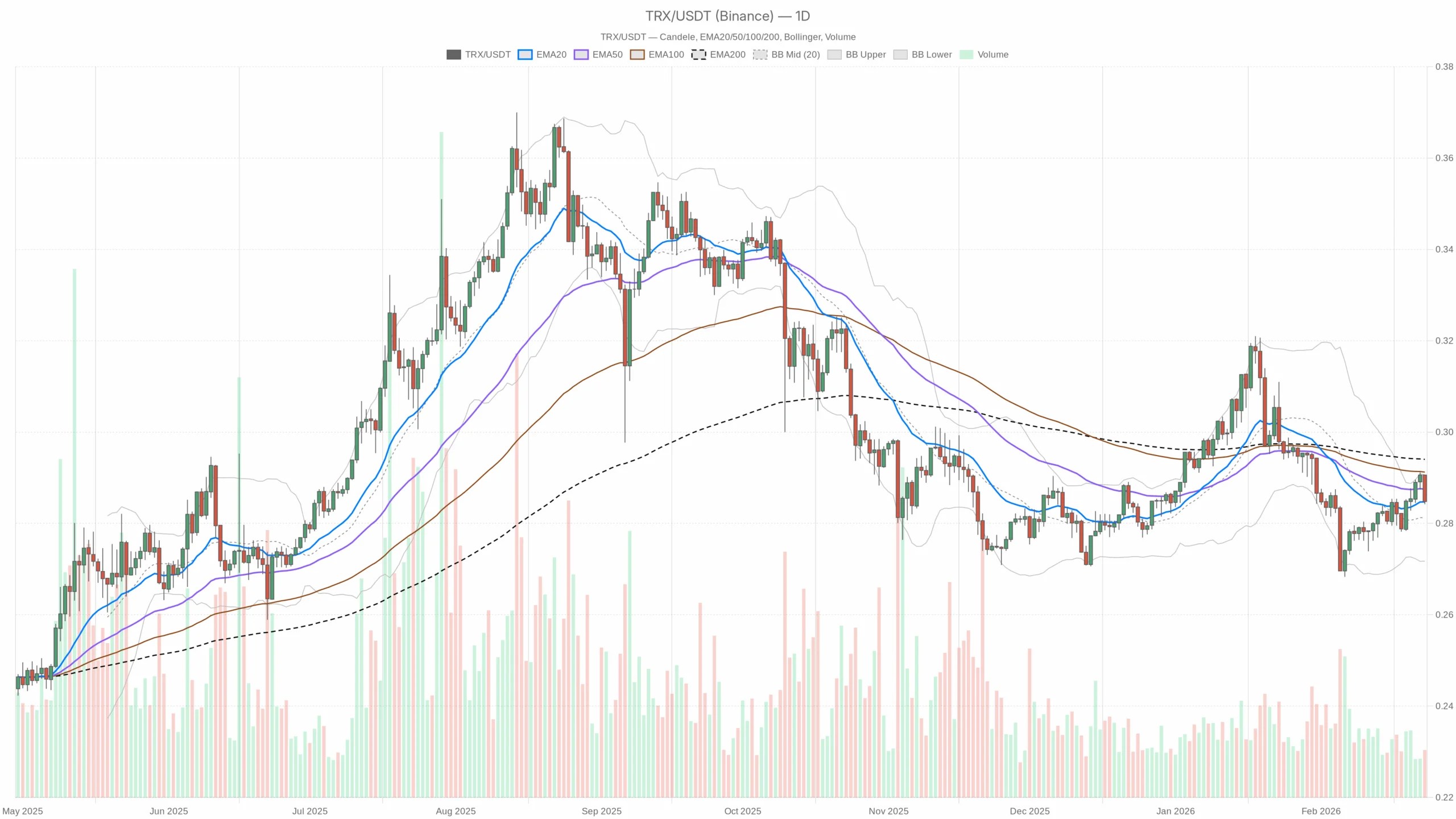
Tron crypto Analysis: 3 Scenarios for TRXUSDT
