

Space Computers Revolution: Sophia Space’s $10M Breakthrough Solves Critical Passive Cooling Challenge
BitcoinWorld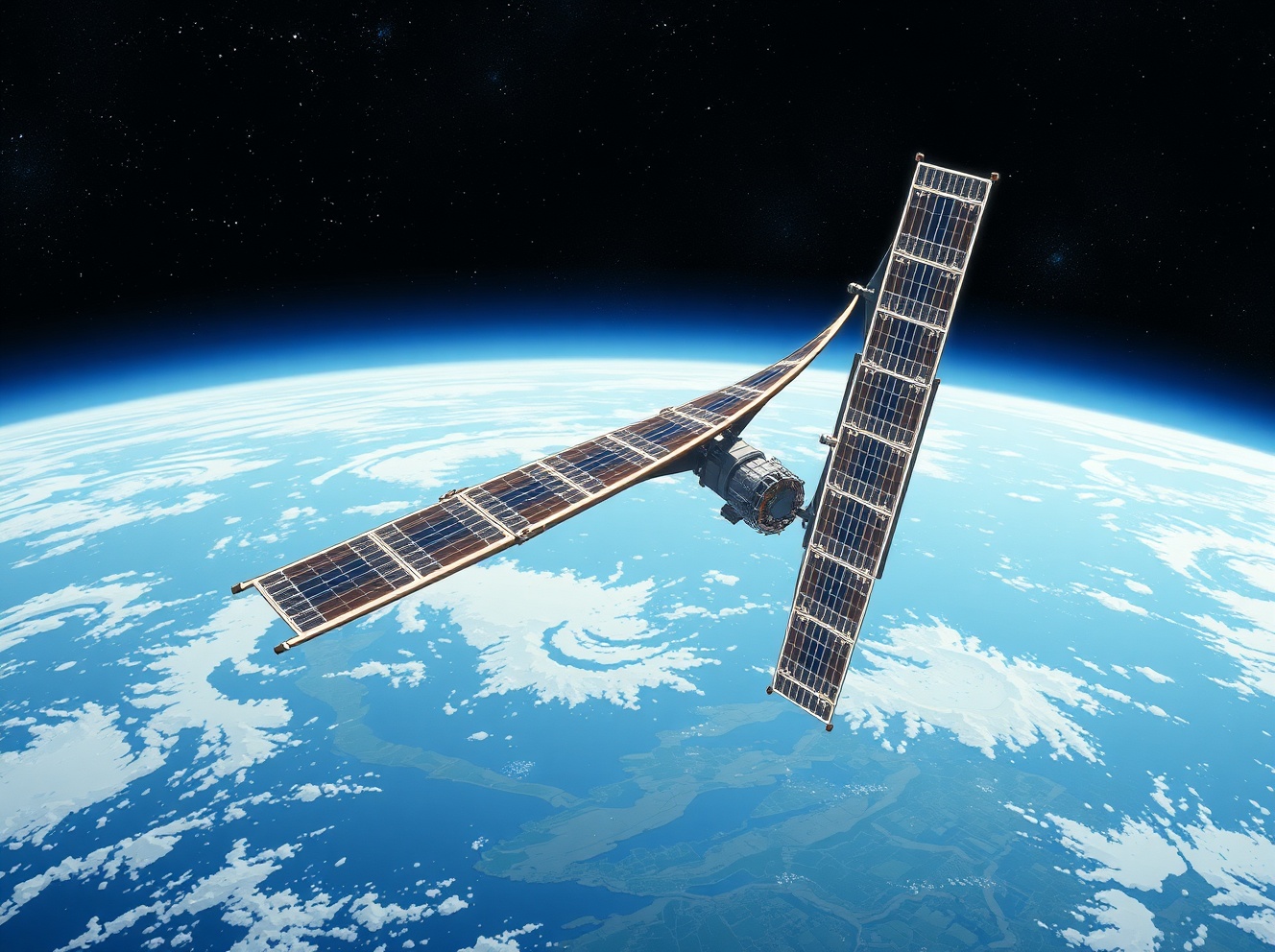
Space Computers Revolution: Sophia Space’s $10M Breakthrough Solves Critical Passive Cooling Challenge
In a significant leap for orbital infrastructure, Sophia Space has secured a $10 million seed investment to demonstrate a novel approach to one of space computing’s most persistent challenges: thermal management. The funding, announced this week, will propel the company toward a crucial ground demonstration of its passive cooling technology, with an orbital test slated for late 2027. This development arrives as industry giants like SpaceX and Google explore constellations for space-based data centers, highlighting the urgent need for efficient thermal solutions in the vacuum of space where traditional cooling fails.
The Fundamental Challenge of Cooling in Space
As companies push advanced, high-powered processors into orbit, managing waste heat becomes a paramount engineering hurdle. Nvidia CEO Jensen Huang recently highlighted this paradox during an earnings call, noting, “It’s cold in space…[but] there’s no airflow, and so the only way to dissipate is through conduction.” Traditional terrestrial data centers rely on massive air conditioning and liquid cooling systems, which are impossible to replicate in the vacuum of space. Consequently, proposed space data center designs from major players often depend on large, heavy radiators to reject heat, adding mass, complexity, and cost to missions.
Sophia Space’s founders identified this bottleneck as a critical limitation for the future of in-orbit computing. The company’s leadership team brings substantial expertise to the problem. CTO Leon Alkalai is a fellow at the NASA-managed Jet Propulsion Laboratory (JPL), while CEO Rob Demillo and Chief Growth Officer Brian Monin possess deep experience in aerospace systems. Their collective insight drives a fundamentally different architectural philosophy.
Sophia Space’s Innovative Thin-Form Solution
The company’s technology originates from an unexpected source: a $100-million-endowed program at Caltech focused on developing orbital solar power plants. Researchers there pioneered a sail-like structure—thin, flexible, and radically different from traditional boxy satellites. While beaming solar power to Earth faces regulatory and technical hurdles, Alkalai recognized the structure’s potential for a different application: hosting and cooling computing hardware in space.
Sophia Space has developed this concept into modular server racks called TILES. Each TILE measures one meter by one meter and is only a few centimeters deep. These units integrate solar panels directly into their structure. The key innovation lies in the thermal design. By adopting this ultra-thin form factor, processors can be placed directly against a passive heat spreader. This design leverages the structure’s large surface area to radiate heat directly into space, eliminating the need for pumps, fluids, or other active cooling components that can fail.
- Passive Thermal Management: Relies on radiation, not conduction or active systems.
- Integrated Power Generation: Solar panels are part of the structural skin.
- High Efficiency: CEO Demillo claims 92% of generated power can go directly to processing.
- Modular Scalability: TILES can be assembled into larger arrays.
The Software Imperative for Thermal Balance
This passive approach necessitates a sophisticated software layer. A smart management system must dynamically balance computational workloads across the processors to prevent localized hot spots that the passive system cannot handle. This involves intelligently distributing tasks and potentially throttling performance to maintain a safe thermal envelope, a complex challenge in distributed computing environments.
Market Traction and the Path to Orbit
Sophia Space’s strategy involves a phased market entry. Before constructing full-scale data centers, the company plans to offer individual TILE units to existing satellite operators who need advanced on-orbit computing. This addresses an immediate and pressing market need. Demillo explained to industry press, “The dirty little secret of the satellite industry is we’ve got all these amazing sensors up there that produce terabytes, or even petabytes, of data every few minutes, and they throw most of it out.” The limitation stems from an inability to process data onboard and insufficient bandwidth to send raw data to Earth.
Potential early adopters include:
- Earth Observation Satellites: For real-time image analysis and disaster monitoring.
- National Security Systems: Such as missile warning and tracking constellations.
- Next-Gen Communications Networks: Requiring low-latency data routing in space.
The $10 million seed round, led by investors including Alpha Funds, KDDI Green Partners Fund, and Unlock Venture Partners, will fund the initial ground-based prototype. Following successful validation, Sophia has arranged to purchase a satellite bus from Apex Space to host its technology for an in-orbit demonstration by the 2027-2028 timeframe.
The Long-Term Vision: Megawatt-Scale Orbital Data Centers
Looking beyond initial applications, Sophia Space envisions a future where its technology enables large-scale orbital data centers. The company’s roadmap points toward the 2030s, with concepts for structures measuring 50 by 50 meters built from thousands of interconnected TILES. Such an array could deliver approximately 1 megawatt of computing power. Demillo argues that a single, large structure is more economical and technically executable than a distributed network of smaller satellites linked by lasers, a concept other firms are pursuing.
This vision aligns with broader industry trends. The demand for low-latency computing, global data coverage, and reduced terrestrial energy consumption is driving serious investment in space-based digital infrastructure. However, economic viability hinges on extreme efficiency. Sophia Space’s thesis is that systems relying on less efficient thermal management will struggle to achieve positive economics, making their passive approach not just innovative but potentially essential.
Conclusion
Sophia Space’s $10 million seed funding marks a pivotal step in solving the critical challenge of thermal management for space computers. By adapting thin-film solar satellite technology for passive cooling, the company offers a potentially revolutionary path toward efficient, scalable orbital computing. Its phased approach—from serving existing satellite operators to building megawatt-scale data centers—demonstrates a clear and pragmatic roadmap. As the race to establish computing infrastructure in space accelerates, innovations in fundamental areas like thermal control will separate viable concepts from speculative ones. The success of Sophia Space’s demonstrations in the coming years could redefine the architecture of humanity’s next computing frontier.
FAQs
Q1: What is the main problem with cooling computers in space?
The vacuum of space eliminates air, making convection impossible. Heat can only dissipate through radiation or conduction to a radiating surface, making traditional cooling methods like fans and liquid loops ineffective without massive, heavy radiators.
Q2: How does Sophia Space’s TILE technology cool processors passively?
It uses a thin, large-area form factor where processors sit against a passive heat spreader. The large surface area allows heat to radiate directly into the cold of space, eliminating the need for pumps, fluids, or other moving parts found in active cooling systems.
Q3: Who are the potential customers for this technology?
Initial customers include satellite operators for earth observation, national defense/missile tracking, and communications. These entities need to process vast amounts of sensor data in orbit but are currently limited by onboard computing power and downlink bandwidth.
Q4: What is the timeline for seeing this technology in orbit?
Sophia Space plans a ground demonstration followed by an orbital test on a satellite bus from Apex Space, targeting late 2027 or early 2028 for the space-based proof-of-concept.
Q5: How does this approach differ from what companies like SpaceX or Google are proposing?
Many existing proposals for space data centers rely on traditional satellite forms with large, attached radiators for thermal control. Sophia’s approach integrates the cooling and power generation into the primary, thin structure itself, aiming for higher system-level efficiency and a different mechanical architecture.
This post Space Computers Revolution: Sophia Space’s $10M Breakthrough Solves Critical Passive Cooling Challenge first appeared on BitcoinWorld.
Ayrıca Şunları da Beğenebilirsiniz

“We Cannot in Good Conscience Agree”: Anthropic Defies Pentagon Over AI Weapons

Wormhole Unleashes W 2.0 Tokenomics for a Connected Blockchain Future
