BitcoinWorld Runway AI’s Breakthrough: Unlocking Future Revenue in Robotics with Advanced World Models The world of artificial intelligence is rapidly evolving, pushing boundaries and creating unforeseen opportunities across diverse sectors. For those invested in the dynamic intersection of technology and finance, particularly within the cryptocurrency space, understanding these pivotal shifts is crucial. Runway AI, a company long celebrated for its groundbreaking generative tools in the creative industry, is now making a significant and strategic pivot. This move isn’t just an expansion; it’s a bold leap into the robotics industry, signaling a new frontier for its sophisticated AI world models and a potential goldmine for future revenue growth. From Creative Visions to Robotic Realities: Runway AI’s Astounding Evolution For the past seven years, Runway has been at the forefront of visual content creation, empowering artists, filmmakers, and designers with cutting-edge tools. Their expertise lies in developing advanced AI world models – essentially sophisticated neural networks trained on vast datasets to create highly realistic, simulated versions of the real world. These models don’t just generate images or videos; they learn the underlying physics, dynamics, and interactions of objects within environments, enabling them to predict and create consistent, believable simulations. Innovations like Gen-4, their acclaimed video-generating model released in March, and Runway Aleph, their powerful video editing model from July, have solidified their reputation in the creative domain. These models have not only enhanced artistic expression but have also laid the foundational technology for their ambitious new venture. The journey from generating stunning visuals for films and digital art to training autonomous machines might seem vast, but for Runway, it’s a natural progression of their core competency in simulation, demonstrating the incredible versatility of their generative AI capabilities. The Unforeseen Opportunity: How AI World Models Caught the Eye of Robotics and Self-Driving Cars As Runway’s AI world models matured, becoming increasingly realistic, robust, and capable of handling complex environmental dynamics, an unexpected wave of interest emerged. Anastasis Germanidis, Runway co-founder and CTO, shared in an exclusive interview with Bitcoin World that companies in the robotics and self-driving cars sectors began reaching out, eager to leverage Runway’s technology. This wasn’t an initial target market for Runway when it launched in 2018; their focus was firmly on the creative industries. “We think that this ability to simulate the world is broadly useful beyond entertainment, even though entertainment is an ever increasing and big area for us,” Germanidis explained. This unsolicited interest illuminated a much broader utility for their models than originally conceived, proving that powerful foundational technology often finds its most impactful applications in unexpected places. The sheer realism and fidelity of Runway’s simulations offered a compelling solution to some of the most pressing challenges faced by developers in autonomous systems. Why the Robotics Industry is Embracing Generative AI for Training The traditional methods of training robots and self-driving cars in real-world scenarios are notoriously expensive, time-consuming, and exceptionally difficult to scale. Consider the immense logistical nightmare and financial burden: fleets of specialized vehicles, expensive sensors, fuel costs, dedicated testing facilities, and a large team of engineers and safety drivers. Each iteration of software or hardware requires repeated, controlled, and often dangerous real-world tests. This is where Runway’s generative AI technology offers a truly transformative solution. Robotics companies are now utilizing Runway’s models for highly detailed training simulations, drastically cutting down on costs, accelerating development cycles, and improving safety. Germanidis highlighted the key advantages: Unprecedented Scalability: Simulations allow for an infinite number of training scenarios to be run concurrently and continuously, something physically impossible in the real world. This means thousands of variations of a specific driving condition or robotic task can be tested simultaneously. Dramatic Cost-Effectiveness: Eliminates the need for expensive physical prototypes, test tracks, specialized equipment, and extensive personnel for every single training iteration. The marginal cost of running an additional simulation is significantly lower than a physical test. Precision and Specificity for Edge Cases: Unlike real-world testing, these models enable engineers to isolate and test specific variables and rare, critical situations without extraneous factors. Want to know how a robot reacts to a specific type of floor texture under low light, or how an autonomous vehicle handles a sudden, complex multi-car pile-up in dense fog? Runway’s models can create that exact scenario, repeatedly, with unparalleled consistency, allowing for deep analysis and rapid improvement. Safety and Risk Reduction: Complex or dangerous scenarios that would be unsafe or impractical to test in the real world can be simulated safely, allowing for the training of robust policies without putting lives or property at risk. “You can take a step back and then simulate the effect of different actions,” Germanidis elaborated. “If the car took this turn over this, or perform this action, what will be the outcome of that? Creating those rollouts from the same context, is a really difficult thing to do in the physical world, to basically keep all the other aspects of the environment the same and only test the effect of the specific action you want to take.” This capability is a game-changer for developing more intelligent, safer, and more reliable autonomous systems. Real-World vs. AI Simulation: A Comparison for Robotic Training Feature Real-World Training AI Simulation (Runway AI) Cost Very High (vehicles, sensors, personnel, infrastructure) Significantly Lower (computational resources) Scalability Limited (physical constraints, time) Near Infinite (parallel processing, rapid iteration) Scenario Control Difficult to replicate specific conditions precisely Highly Precise (isolate variables, create edge cases) Safety Potential for accidents, risk to property/life Zero physical risk Speed of Iteration Slow (physical setup, testing, analysis) Fast (instantaneous scenario generation, data collection) Data Collection Limited by physical environment and sensors Comprehensive, granular data from every simulated element Navigating the Competitive Landscape and Future Directions for Runway AI in Robotics Runway isn’t alone in recognizing the immense potential of AI-powered simulation for the robotics and self-driving car sectors. Industry giants like Nvidia have also made significant strides, with the recent release of their Cosmos world models and other robot training infrastructure. Nvidia’s robust GPU ecosystem and long-standing presence in industrial AI make them a formidable competitor. However, Runway’s unique strength lies in its deep roots in visual generation and world modeling, cultivated through years of catering to the demanding creative industry. This background likely gives them an edge in generating hyper-realistic and visually consistent simulations, which are crucial for effective training of vision-based AI systems. Runway’s strategy is not to create an entirely separate line of models for these new clients. Instead, they plan to fine-tune their existing, powerful AI world models to cater specifically to the nuanced requirements of the robotics industry and autonomous vehicles. This approach leverages their established technological foundation while allowing for specialized applications without fragmenting their core development efforts. To support this strategic expansion, Runway is actively building a dedicated robotics team, signaling a long-term commitment to this burgeoning market and an understanding of the specialized expertise required. The Philosophy Driving Runway’s Pioneering Expansion into Self-Driving Cars and Beyond At its core, Runway’s journey into the self-driving cars and robotics market is driven by a fundamental principle rather than just chasing a market trend. “The way we think of the company, is really built on a principle, rather than being on the market,” Germanidis stated. “That principle is this idea of simulation, of being able to build a better and better representation of the world. Once you have those really powerful models, then you can use them for a wide variety of different markets, a variety of different industries.” This philosophy positions Runway not just as a tool provider, but as a foundational technology company, creating models that can adapt and evolve to meet the demands of an ever-changing technological landscape. This broad applicability is what excites investors. Despite this pivot not being part of their initial investor pitches, Germanidis confirmed that investors are fully on board. With over $500 million raised from prominent backers like Nvidia, Google, and General Atlantic, valuing the company at $3 billion, Runway has significant capital and strategic partnerships to fuel this ambitious growth. This investor confidence underscores the profound belief in the universal applicability and long-term potential of Runway’s simulation principle and their generative AI technology. The Transformative Impact of Generative AI on Future Industries: A Wider Lens The move by Runway AI into robotics and self-driving cars is a powerful indicator of the broader trajectory of generative AI. What began as a tool for creative expression is rapidly becoming an indispensable asset for engineering, research, and development in critical industries. The ability to simulate complex real-world interactions with high fidelity and at scale will accelerate innovation, reduce risks, and democratize access to advanced training methodologies. Beyond robotics and autonomous vehicles, the “principle of simulation” could find applications in: Industrial Design and Manufacturing: Simulating new product designs, assembly lines, and material properties before physical prototyping. Logistics and Supply Chain Optimization: Modeling complex global supply networks to identify bottlenecks and improve efficiency. Urban Planning and Infrastructure: Simulating the impact of new construction, traffic flows, and environmental changes. Healthcare and Drug Discovery: Modeling molecular interactions or surgical procedures in a virtual environment. Environmental Science: Simulating climate patterns, natural disasters, and ecosystem changes. While the benefits are immense, it’s also important to acknowledge the inherent challenges. The “sim-to-real” gap, where models trained in simulation don’t perfectly translate to the complexities of the physical world, remains a hurdle. Continuous real-world validation and iterative refinement are still crucial. However, the dramatic reduction in initial training costs and time afforded by advanced AI world models like Runway’s makes this gap increasingly manageable and the overall development process far more efficient. As these AI world models continue to improve, their applications will only expand, impacting everything from logistics and manufacturing to healthcare and space exploration. Runway’s strategic pivot not only secures a new revenue stream but also positions it as a pivotal player in shaping the future of autonomous systems and intelligent machines, a future that is increasingly intertwined with the advancements in AI. Summary: Runway AI’s Astounding Vision for the Future Runway AI, a pioneer in visual generative tools, is embarking on an exciting new chapter, strategically expanding its advanced AI world models into the burgeoning robotics industry and the dynamic field of self-driving cars. This groundbreaking move, initially spurred by inbound interest from these sectors, leverages their core strength in creating hyper-realistic simulations to offer scalable, cost-effective, and highly specific training solutions. By dramatically reducing the need for expensive and time-consuming real-world testing, Runway is poised to accelerate innovation in autonomous systems. With strong investor backing and a clear vision rooted in the universal principle of simulation, Runway AI is set to revolutionize how robots and autonomous vehicles are developed and deployed. This expansion is not merely a diversification of revenue but a testament to the transformative power of generative AI in shaping a more intelligent and automated future across various industries, offering fascinating insights for anyone tracking the evolution of technology and its impact on the global economy. To learn more about the latest AI market trends, explore our article on key developments shaping AI Models features. This post Runway AI’s Breakthrough: Unlocking Future Revenue in Robotics with Advanced World Models first appeared on BitcoinWorld and is written by Editorial TeamBitcoinWorld Runway AI’s Breakthrough: Unlocking Future Revenue in Robotics with Advanced World Models The world of artificial intelligence is rapidly evolving, pushing boundaries and creating unforeseen opportunities across diverse sectors. For those invested in the dynamic intersection of technology and finance, particularly within the cryptocurrency space, understanding these pivotal shifts is crucial. Runway AI, a company long celebrated for its groundbreaking generative tools in the creative industry, is now making a significant and strategic pivot. This move isn’t just an expansion; it’s a bold leap into the robotics industry, signaling a new frontier for its sophisticated AI world models and a potential goldmine for future revenue growth. From Creative Visions to Robotic Realities: Runway AI’s Astounding Evolution For the past seven years, Runway has been at the forefront of visual content creation, empowering artists, filmmakers, and designers with cutting-edge tools. Their expertise lies in developing advanced AI world models – essentially sophisticated neural networks trained on vast datasets to create highly realistic, simulated versions of the real world. These models don’t just generate images or videos; they learn the underlying physics, dynamics, and interactions of objects within environments, enabling them to predict and create consistent, believable simulations. Innovations like Gen-4, their acclaimed video-generating model released in March, and Runway Aleph, their powerful video editing model from July, have solidified their reputation in the creative domain. These models have not only enhanced artistic expression but have also laid the foundational technology for their ambitious new venture. The journey from generating stunning visuals for films and digital art to training autonomous machines might seem vast, but for Runway, it’s a natural progression of their core competency in simulation, demonstrating the incredible versatility of their generative AI capabilities. The Unforeseen Opportunity: How AI World Models Caught the Eye of Robotics and Self-Driving Cars As Runway’s AI world models matured, becoming increasingly realistic, robust, and capable of handling complex environmental dynamics, an unexpected wave of interest emerged. Anastasis Germanidis, Runway co-founder and CTO, shared in an exclusive interview with Bitcoin World that companies in the robotics and self-driving cars sectors began reaching out, eager to leverage Runway’s technology. This wasn’t an initial target market for Runway when it launched in 2018; their focus was firmly on the creative industries. “We think that this ability to simulate the world is broadly useful beyond entertainment, even though entertainment is an ever increasing and big area for us,” Germanidis explained. This unsolicited interest illuminated a much broader utility for their models than originally conceived, proving that powerful foundational technology often finds its most impactful applications in unexpected places. The sheer realism and fidelity of Runway’s simulations offered a compelling solution to some of the most pressing challenges faced by developers in autonomous systems. Why the Robotics Industry is Embracing Generative AI for Training The traditional methods of training robots and self-driving cars in real-world scenarios are notoriously expensive, time-consuming, and exceptionally difficult to scale. Consider the immense logistical nightmare and financial burden: fleets of specialized vehicles, expensive sensors, fuel costs, dedicated testing facilities, and a large team of engineers and safety drivers. Each iteration of software or hardware requires repeated, controlled, and often dangerous real-world tests. This is where Runway’s generative AI technology offers a truly transformative solution. Robotics companies are now utilizing Runway’s models for highly detailed training simulations, drastically cutting down on costs, accelerating development cycles, and improving safety. Germanidis highlighted the key advantages: Unprecedented Scalability: Simulations allow for an infinite number of training scenarios to be run concurrently and continuously, something physically impossible in the real world. This means thousands of variations of a specific driving condition or robotic task can be tested simultaneously. Dramatic Cost-Effectiveness: Eliminates the need for expensive physical prototypes, test tracks, specialized equipment, and extensive personnel for every single training iteration. The marginal cost of running an additional simulation is significantly lower than a physical test. Precision and Specificity for Edge Cases: Unlike real-world testing, these models enable engineers to isolate and test specific variables and rare, critical situations without extraneous factors. Want to know how a robot reacts to a specific type of floor texture under low light, or how an autonomous vehicle handles a sudden, complex multi-car pile-up in dense fog? Runway’s models can create that exact scenario, repeatedly, with unparalleled consistency, allowing for deep analysis and rapid improvement. Safety and Risk Reduction: Complex or dangerous scenarios that would be unsafe or impractical to test in the real world can be simulated safely, allowing for the training of robust policies without putting lives or property at risk. “You can take a step back and then simulate the effect of different actions,” Germanidis elaborated. “If the car took this turn over this, or perform this action, what will be the outcome of that? Creating those rollouts from the same context, is a really difficult thing to do in the physical world, to basically keep all the other aspects of the environment the same and only test the effect of the specific action you want to take.” This capability is a game-changer for developing more intelligent, safer, and more reliable autonomous systems. Real-World vs. AI Simulation: A Comparison for Robotic Training Feature Real-World Training AI Simulation (Runway AI) Cost Very High (vehicles, sensors, personnel, infrastructure) Significantly Lower (computational resources) Scalability Limited (physical constraints, time) Near Infinite (parallel processing, rapid iteration) Scenario Control Difficult to replicate specific conditions precisely Highly Precise (isolate variables, create edge cases) Safety Potential for accidents, risk to property/life Zero physical risk Speed of Iteration Slow (physical setup, testing, analysis) Fast (instantaneous scenario generation, data collection) Data Collection Limited by physical environment and sensors Comprehensive, granular data from every simulated element Navigating the Competitive Landscape and Future Directions for Runway AI in Robotics Runway isn’t alone in recognizing the immense potential of AI-powered simulation for the robotics and self-driving car sectors. Industry giants like Nvidia have also made significant strides, with the recent release of their Cosmos world models and other robot training infrastructure. Nvidia’s robust GPU ecosystem and long-standing presence in industrial AI make them a formidable competitor. However, Runway’s unique strength lies in its deep roots in visual generation and world modeling, cultivated through years of catering to the demanding creative industry. This background likely gives them an edge in generating hyper-realistic and visually consistent simulations, which are crucial for effective training of vision-based AI systems. Runway’s strategy is not to create an entirely separate line of models for these new clients. Instead, they plan to fine-tune their existing, powerful AI world models to cater specifically to the nuanced requirements of the robotics industry and autonomous vehicles. This approach leverages their established technological foundation while allowing for specialized applications without fragmenting their core development efforts. To support this strategic expansion, Runway is actively building a dedicated robotics team, signaling a long-term commitment to this burgeoning market and an understanding of the specialized expertise required. The Philosophy Driving Runway’s Pioneering Expansion into Self-Driving Cars and Beyond At its core, Runway’s journey into the self-driving cars and robotics market is driven by a fundamental principle rather than just chasing a market trend. “The way we think of the company, is really built on a principle, rather than being on the market,” Germanidis stated. “That principle is this idea of simulation, of being able to build a better and better representation of the world. Once you have those really powerful models, then you can use them for a wide variety of different markets, a variety of different industries.” This philosophy positions Runway not just as a tool provider, but as a foundational technology company, creating models that can adapt and evolve to meet the demands of an ever-changing technological landscape. This broad applicability is what excites investors. Despite this pivot not being part of their initial investor pitches, Germanidis confirmed that investors are fully on board. With over $500 million raised from prominent backers like Nvidia, Google, and General Atlantic, valuing the company at $3 billion, Runway has significant capital and strategic partnerships to fuel this ambitious growth. This investor confidence underscores the profound belief in the universal applicability and long-term potential of Runway’s simulation principle and their generative AI technology. The Transformative Impact of Generative AI on Future Industries: A Wider Lens The move by Runway AI into robotics and self-driving cars is a powerful indicator of the broader trajectory of generative AI. What began as a tool for creative expression is rapidly becoming an indispensable asset for engineering, research, and development in critical industries. The ability to simulate complex real-world interactions with high fidelity and at scale will accelerate innovation, reduce risks, and democratize access to advanced training methodologies. Beyond robotics and autonomous vehicles, the “principle of simulation” could find applications in: Industrial Design and Manufacturing: Simulating new product designs, assembly lines, and material properties before physical prototyping. Logistics and Supply Chain Optimization: Modeling complex global supply networks to identify bottlenecks and improve efficiency. Urban Planning and Infrastructure: Simulating the impact of new construction, traffic flows, and environmental changes. Healthcare and Drug Discovery: Modeling molecular interactions or surgical procedures in a virtual environment. Environmental Science: Simulating climate patterns, natural disasters, and ecosystem changes. While the benefits are immense, it’s also important to acknowledge the inherent challenges. The “sim-to-real” gap, where models trained in simulation don’t perfectly translate to the complexities of the physical world, remains a hurdle. Continuous real-world validation and iterative refinement are still crucial. However, the dramatic reduction in initial training costs and time afforded by advanced AI world models like Runway’s makes this gap increasingly manageable and the overall development process far more efficient. As these AI world models continue to improve, their applications will only expand, impacting everything from logistics and manufacturing to healthcare and space exploration. Runway’s strategic pivot not only secures a new revenue stream but also positions it as a pivotal player in shaping the future of autonomous systems and intelligent machines, a future that is increasingly intertwined with the advancements in AI. Summary: Runway AI’s Astounding Vision for the Future Runway AI, a pioneer in visual generative tools, is embarking on an exciting new chapter, strategically expanding its advanced AI world models into the burgeoning robotics industry and the dynamic field of self-driving cars. This groundbreaking move, initially spurred by inbound interest from these sectors, leverages their core strength in creating hyper-realistic simulations to offer scalable, cost-effective, and highly specific training solutions. By dramatically reducing the need for expensive and time-consuming real-world testing, Runway is poised to accelerate innovation in autonomous systems. With strong investor backing and a clear vision rooted in the universal principle of simulation, Runway AI is set to revolutionize how robots and autonomous vehicles are developed and deployed. This expansion is not merely a diversification of revenue but a testament to the transformative power of generative AI in shaping a more intelligent and automated future across various industries, offering fascinating insights for anyone tracking the evolution of technology and its impact on the global economy. To learn more about the latest AI market trends, explore our article on key developments shaping AI Models features. This post Runway AI’s Breakthrough: Unlocking Future Revenue in Robotics with Advanced World Models first appeared on BitcoinWorld and is written by Editorial Team
BitcoinWorld
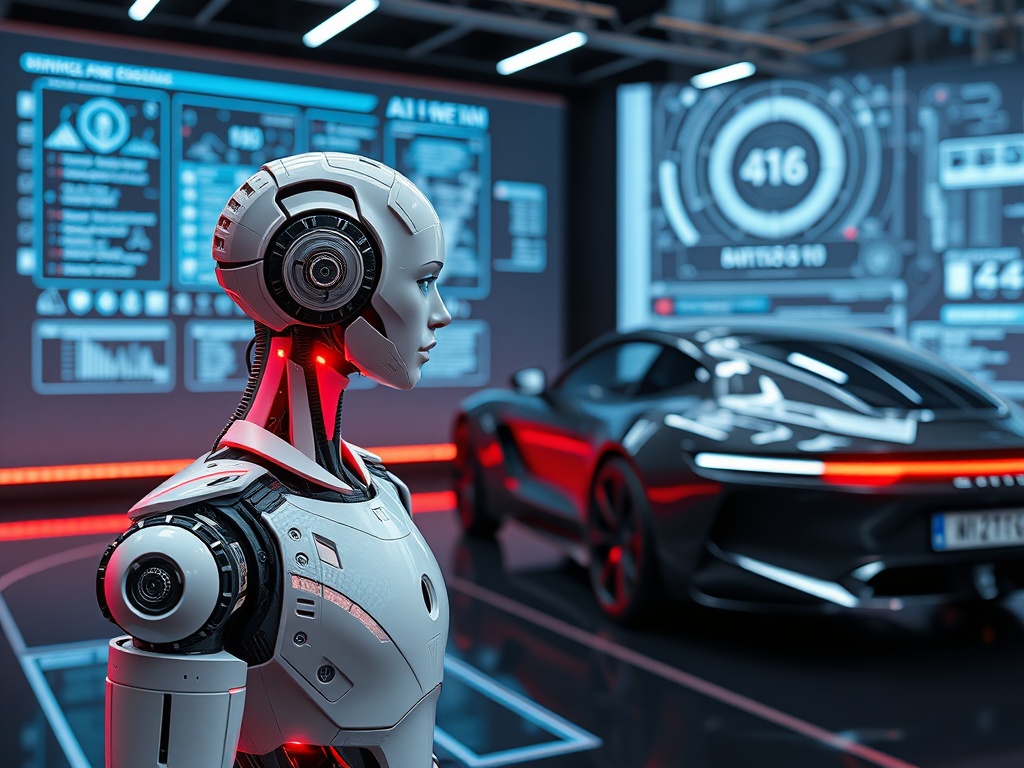
Runway AI’s Breakthrough: Unlocking Future Revenue in Robotics with Advanced World Models
The world of artificial intelligence is rapidly evolving, pushing boundaries and creating unforeseen opportunities across diverse sectors. For those invested in the dynamic intersection of technology and finance, particularly within the cryptocurrency space, understanding these pivotal shifts is crucial. Runway AI, a company long celebrated for its groundbreaking generative tools in the creative industry, is now making a significant and strategic pivot. This move isn’t just an expansion; it’s a bold leap into the robotics industry, signaling a new frontier for its sophisticated AI world models and a potential goldmine for future revenue growth.
From Creative Visions to Robotic Realities: Runway AI’s Astounding Evolution
For the past seven years, Runway has been at the forefront of visual content creation, empowering artists, filmmakers, and designers with cutting-edge tools. Their expertise lies in developing advanced AI world models – essentially sophisticated neural networks trained on vast datasets to create highly realistic, simulated versions of the real world. These models don’t just generate images or videos; they learn the underlying physics, dynamics, and interactions of objects within environments, enabling them to predict and create consistent, believable simulations. Innovations like Gen-4, their acclaimed video-generating model released in March, and Runway Aleph, their powerful video editing model from July, have solidified their reputation in the creative domain. These models have not only enhanced artistic expression but have also laid the foundational technology for their ambitious new venture. The journey from generating stunning visuals for films and digital art to training autonomous machines might seem vast, but for Runway, it’s a natural progression of their core competency in simulation, demonstrating the incredible versatility of their generative AI capabilities.
The Unforeseen Opportunity: How AI World Models Caught the Eye of Robotics and Self-Driving Cars
As Runway’s AI world models matured, becoming increasingly realistic, robust, and capable of handling complex environmental dynamics, an unexpected wave of interest emerged. Anastasis Germanidis, Runway co-founder and CTO, shared in an exclusive interview with Bitcoin World that companies in the robotics and self-driving cars sectors began reaching out, eager to leverage Runway’s technology. This wasn’t an initial target market for Runway when it launched in 2018; their focus was firmly on the creative industries. “We think that this ability to simulate the world is broadly useful beyond entertainment, even though entertainment is an ever increasing and big area for us,” Germanidis explained. This unsolicited interest illuminated a much broader utility for their models than originally conceived, proving that powerful foundational technology often finds its most impactful applications in unexpected places. The sheer realism and fidelity of Runway’s simulations offered a compelling solution to some of the most pressing challenges faced by developers in autonomous systems.
Why the Robotics Industry is Embracing Generative AI for Training
The traditional methods of training robots and self-driving cars in real-world scenarios are notoriously expensive, time-consuming, and exceptionally difficult to scale. Consider the immense logistical nightmare and financial burden: fleets of specialized vehicles, expensive sensors, fuel costs, dedicated testing facilities, and a large team of engineers and safety drivers. Each iteration of software or hardware requires repeated, controlled, and often dangerous real-world tests. This is where Runway’s generative AI technology offers a truly transformative solution. Robotics companies are now utilizing Runway’s models for highly detailed training simulations, drastically cutting down on costs, accelerating development cycles, and improving safety. Germanidis highlighted the key advantages:
- Unprecedented Scalability: Simulations allow for an infinite number of training scenarios to be run concurrently and continuously, something physically impossible in the real world. This means thousands of variations of a specific driving condition or robotic task can be tested simultaneously.
- Dramatic Cost-Effectiveness: Eliminates the need for expensive physical prototypes, test tracks, specialized equipment, and extensive personnel for every single training iteration. The marginal cost of running an additional simulation is significantly lower than a physical test.
- Precision and Specificity for Edge Cases: Unlike real-world testing, these models enable engineers to isolate and test specific variables and rare, critical situations without extraneous factors. Want to know how a robot reacts to a specific type of floor texture under low light, or how an autonomous vehicle handles a sudden, complex multi-car pile-up in dense fog? Runway’s models can create that exact scenario, repeatedly, with unparalleled consistency, allowing for deep analysis and rapid improvement.
- Safety and Risk Reduction: Complex or dangerous scenarios that would be unsafe or impractical to test in the real world can be simulated safely, allowing for the training of robust policies without putting lives or property at risk.
“You can take a step back and then simulate the effect of different actions,” Germanidis elaborated. “If the car took this turn over this, or perform this action, what will be the outcome of that? Creating those rollouts from the same context, is a really difficult thing to do in the physical world, to basically keep all the other aspects of the environment the same and only test the effect of the specific action you want to take.” This capability is a game-changer for developing more intelligent, safer, and more reliable autonomous systems.
Real-World vs. AI Simulation: A Comparison for Robotic Training
| Feature | Real-World Training | AI Simulation (Runway AI) |
|---|
| Cost | Very High (vehicles, sensors, personnel, infrastructure) | Significantly Lower (computational resources) |
| Scalability | Limited (physical constraints, time) | Near Infinite (parallel processing, rapid iteration) |
| Scenario Control | Difficult to replicate specific conditions precisely | Highly Precise (isolate variables, create edge cases) |
| Safety | Potential for accidents, risk to property/life | Zero physical risk |
| Speed of Iteration | Slow (physical setup, testing, analysis) | Fast (instantaneous scenario generation, data collection) |
| Data Collection | Limited by physical environment and sensors | Comprehensive, granular data from every simulated element |
Navigating the Competitive Landscape and Future Directions for Runway AI in Robotics
Runway isn’t alone in recognizing the immense potential of AI-powered simulation for the robotics and self-driving car sectors. Industry giants like Nvidia have also made significant strides, with the recent release of their Cosmos world models and other robot training infrastructure. Nvidia’s robust GPU ecosystem and long-standing presence in industrial AI make them a formidable competitor. However, Runway’s unique strength lies in its deep roots in visual generation and world modeling, cultivated through years of catering to the demanding creative industry. This background likely gives them an edge in generating hyper-realistic and visually consistent simulations, which are crucial for effective training of vision-based AI systems.
Runway’s strategy is not to create an entirely separate line of models for these new clients. Instead, they plan to fine-tune their existing, powerful AI world models to cater specifically to the nuanced requirements of the robotics industry and autonomous vehicles. This approach leverages their established technological foundation while allowing for specialized applications without fragmenting their core development efforts. To support this strategic expansion, Runway is actively building a dedicated robotics team, signaling a long-term commitment to this burgeoning market and an understanding of the specialized expertise required.
The Philosophy Driving Runway’s Pioneering Expansion into Self-Driving Cars and Beyond
At its core, Runway’s journey into the self-driving cars and robotics market is driven by a fundamental principle rather than just chasing a market trend. “The way we think of the company, is really built on a principle, rather than being on the market,” Germanidis stated. “That principle is this idea of simulation, of being able to build a better and better representation of the world. Once you have those really powerful models, then you can use them for a wide variety of different markets, a variety of different industries.” This philosophy positions Runway not just as a tool provider, but as a foundational technology company, creating models that can adapt and evolve to meet the demands of an ever-changing technological landscape. This broad applicability is what excites investors. Despite this pivot not being part of their initial investor pitches, Germanidis confirmed that investors are fully on board. With over $500 million raised from prominent backers like Nvidia, Google, and General Atlantic, valuing the company at $3 billion, Runway has significant capital and strategic partnerships to fuel this ambitious growth. This investor confidence underscores the profound belief in the universal applicability and long-term potential of Runway’s simulation principle and their generative AI technology.
The move by Runway AI into robotics and self-driving cars is a powerful indicator of the broader trajectory of generative AI. What began as a tool for creative expression is rapidly becoming an indispensable asset for engineering, research, and development in critical industries. The ability to simulate complex real-world interactions with high fidelity and at scale will accelerate innovation, reduce risks, and democratize access to advanced training methodologies. Beyond robotics and autonomous vehicles, the “principle of simulation” could find applications in:
- Industrial Design and Manufacturing: Simulating new product designs, assembly lines, and material properties before physical prototyping.
- Logistics and Supply Chain Optimization: Modeling complex global supply networks to identify bottlenecks and improve efficiency.
- Urban Planning and Infrastructure: Simulating the impact of new construction, traffic flows, and environmental changes.
- Healthcare and Drug Discovery: Modeling molecular interactions or surgical procedures in a virtual environment.
- Environmental Science: Simulating climate patterns, natural disasters, and ecosystem changes.
While the benefits are immense, it’s also important to acknowledge the inherent challenges. The “sim-to-real” gap, where models trained in simulation don’t perfectly translate to the complexities of the physical world, remains a hurdle. Continuous real-world validation and iterative refinement are still crucial. However, the dramatic reduction in initial training costs and time afforded by advanced AI world models like Runway’s makes this gap increasingly manageable and the overall development process far more efficient. As these AI world models continue to improve, their applications will only expand, impacting everything from logistics and manufacturing to healthcare and space exploration. Runway’s strategic pivot not only secures a new revenue stream but also positions it as a pivotal player in shaping the future of autonomous systems and intelligent machines, a future that is increasingly intertwined with the advancements in AI.
Summary: Runway AI’s Astounding Vision for the Future
Runway AI, a pioneer in visual generative tools, is embarking on an exciting new chapter, strategically expanding its advanced AI world models into the burgeoning robotics industry and the dynamic field of self-driving cars. This groundbreaking move, initially spurred by inbound interest from these sectors, leverages their core strength in creating hyper-realistic simulations to offer scalable, cost-effective, and highly specific training solutions. By dramatically reducing the need for expensive and time-consuming real-world testing, Runway is poised to accelerate innovation in autonomous systems. With strong investor backing and a clear vision rooted in the universal principle of simulation, Runway AI is set to revolutionize how robots and autonomous vehicles are developed and deployed. This expansion is not merely a diversification of revenue but a testament to the transformative power of generative AI in shaping a more intelligent and automated future across various industries, offering fascinating insights for anyone tracking the evolution of technology and its impact on the global economy.
To learn more about the latest AI market trends, explore our article on key developments shaping AI Models features.
This post Runway AI’s Breakthrough: Unlocking Future Revenue in Robotics with Advanced World Models first appeared on BitcoinWorld and is written by Editorial Team
Sorumluluk Reddi: Bu sitede yeniden yayınlanan makaleler, halka açık platformlardan alınmıştır ve yalnızca bilgilendirme amaçlıdır. MEXC'nin görüşlerini yansıtmayabilir. Tüm hakları telif sahiplerine aittir. Herhangi bir içeriğin üçüncü taraf haklarını ihlal ettiğini düşünüyorsanız, kaldırılması için lütfen
[email protected] ile iletişime geçin. MEXC, içeriğin doğruluğu, eksiksizliği veya güncelliği konusunda hiçbir garanti vermez ve sağlanan bilgilere dayalı olarak alınan herhangi bir eylemden sorumlu değildir. İçerik, finansal, yasal veya diğer profesyonel tavsiye niteliğinde değildir ve MEXC tarafından bir tavsiye veya onay olarak değerlendirilmemelidir.
Ayrıca Şunları da Beğenebilirsiniz

The Channel Factories We’ve Been Waiting For
The post The Channel Factories We’ve Been Waiting For appeared on BitcoinEthereumNews.com. Visions of future technology are often prescient about the broad strokes while flubbing the details. The tablets in “2001: A Space Odyssey” do indeed look like iPads, but you never see the astronauts paying for subscriptions or wasting hours on Candy Crush. Channel factories are one vision that arose early in the history of the Lightning Network to address some challenges that Lightning has faced from the beginning. Despite having grown to become Bitcoin’s most successful layer-2 scaling solution, with instant and low-fee payments, Lightning’s scale is limited by its reliance on payment channels. Although Lightning shifts most transactions off-chain, each payment channel still requires an on-chain transaction to open and (usually) another to close. As adoption grows, pressure on the blockchain grows with it. The need for a more scalable approach to managing channels is clear. Channel factories were supposed to meet this need, but where are they? In 2025, subnetworks are emerging that revive the impetus of channel factories with some new details that vastly increase their potential. They are natively interoperable with Lightning and achieve greater scale by allowing a group of participants to open a shared multisig UTXO and create multiple bilateral channels, which reduces the number of on-chain transactions and improves capital efficiency. Achieving greater scale by reducing complexity, Ark and Spark perform the same function as traditional channel factories with new designs and additional capabilities based on shared UTXOs. Channel Factories 101 Channel factories have been around since the inception of Lightning. A factory is a multiparty contract where multiple users (not just two, as in a Dryja-Poon channel) cooperatively lock funds in a single multisig UTXO. They can open, close and update channels off-chain without updating the blockchain for each operation. Only when participants leave or the factory dissolves is an on-chain transaction…
BitcoinEthereumNews2025/09/18 00:09 SOLANA NETWORK Withstands 6 Tbps DDoS Without Downtime
The post SOLANA NETWORK Withstands 6 Tbps DDoS Without Downtime appeared on BitcoinEthereumNews.com. In a pivotal week for crypto infrastructure, the Solana network
BitcoinEthereumNews2025/12/16 20:44 
Why The Green Bay Packers Must Take The Cleveland Browns Seriously — As Hard As That Might Be
The post Why The Green Bay Packers Must Take The Cleveland Browns Seriously — As Hard As That Might Be appeared on BitcoinEthereumNews.com. Jordan Love and the Green Bay Packers are off to a 2-0 start. Getty Images The Green Bay Packers are, once again, one of the NFL’s better teams. The Cleveland Browns are, once again, one of the league’s doormats. It’s why unbeaten Green Bay (2-0) is a 8-point favorite at winless Cleveland (0-2) Sunday according to betmgm.com. The money line is also Green Bay -500. Most expect this to be a Packers’ rout, and it very well could be. But Green Bay knows taking anyone in this league for granted can prove costly. “I think if you look at their roster, the paper, who they have on that team, what they can do, they got a lot of talent and things can turn around quickly for them,” Packers safety Xavier McKinney said. “We just got to kind of keep that in mind and know we not just walking into something and they just going to lay down. That’s not what they going to do.” The Browns certainly haven’t laid down on defense. Far from. Cleveland is allowing an NFL-best 191.5 yards per game. The Browns gave up 141 yards to Cincinnati in Week 1, including just seven in the second half, but still lost, 17-16. Cleveland has given up an NFL-best 45.5 rushing yards per game and just 2.1 rushing yards per attempt. “The biggest thing is our defensive line is much, much improved over last year and I think we’ve got back to our personality,” defensive coordinator Jim Schwartz said recently. “When we play our best, our D-line leads us there as our engine.” The Browns rank third in the league in passing defense, allowing just 146.0 yards per game. Cleveland has also gone 30 straight games without allowing a 300-yard passer, the longest active streak in the NFL.…
BitcoinEthereumNews2025/09/18 00:41