Finance Hiring Back to 2012 Levels as US Lost 92k Jobs Last Month
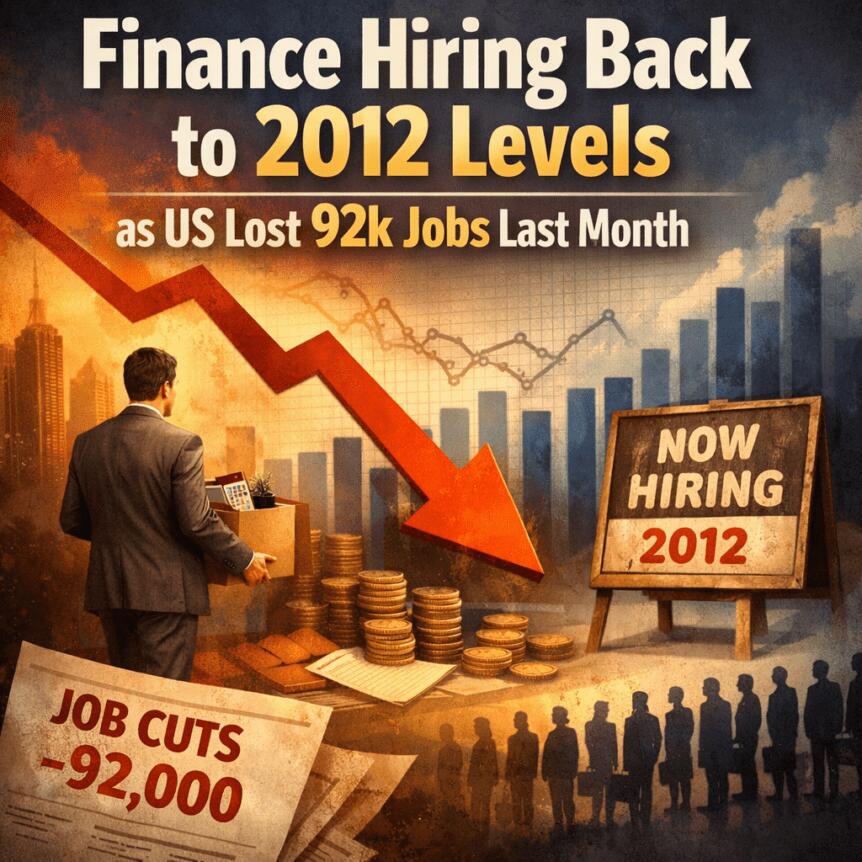
Finance and insurance job openings in the United States edged toward 13-year lows by the end of 2025, according to February data from the Federal Reserve Bank of St. Louis. A well-circulated analysis by The Kobeissi Letter on X warned that the industry may be bracing for more layoffs as the labor market recalibrates. The data show openings for the sector declining by 117,000 since December to 134,000 in February, with total finance and insurance listings approaching recession-era levels. The contraction is notable because it marks a swing from a peak reached in 2022 and raises questions about how the broader labor market will fare in 2026. (CRYPTO: BTC)
In a broader payroll snapshot, the February release from the US Bureau of Labor Statistics depicted a mixed picture. While the headline figure captured a net loss of 92,000 jobs for the month, the finance‑related segment posted a small gain of 10,000 positions. The healthcare sector, however, dragged on the numbers, shedding 28,000 roles in February — a consequence attributed in part to the Kaiser Permanente strike that spanned several weeks and ended late last month. The overall picture remains nuanced: a softening in certain segments coexists with pockets of resilience in others, underscoring a labor market that is anything but uniform. A CNN summary of the February report highlighted that weather conditions may have influenced the data, though the bureau noted that quantifying weather’s impact is challenging. (CNN: https://edition.cnn.com/2026/03/06/economy/us-jobs-report-february)
Breakdown of jobs market data in February. Source: CNNThe discussions around these figures have fed a broader debate about the trajectory of monetary policy. A weaker payroll backdrop can tilt the balance toward rate cuts, which some market observers argue would be supportive for risk-on assets, including digital currencies. Yet the same fragility in the labor market can also push investors toward risk-off strategies as uncertainty persists, complicating the outlook for liquidity and appetite across high‑beta assets. While The Kobeissi Letter framed the sector as vulnerable to further layoffs, other data points suggest that some corners of the economy remained buoyant, creating a tug-of-war between softer hiring in finance and pockets of recovery elsewhere.
Bitcoin (CRYPTO: BTC) has traded with sensitivity to macro cues, absorbing both the caution from a softer jobs backdrop and the potential for policy shifts. The narrative around rate expectations—whether policymakers will cut sooner or hold a higher-for-longer stance—continues to shape how traders price risk, liquidity, and inflation expectations. In this context, the February numbers do not present a single storyline but rather a mosaic of forces that could influence crypto and broader markets in the weeks ahead.
The February report also touched on several sectors outside finance. The information sector, transportation and warehousing, and the federal government each lost around 11,000 jobs, contributing to the month’s mixed performance. The healthcare sector’s decline, tied to the electricity of ongoing labor actions in that space, underscored how sector-specific dynamics can travel across the broader payroll landscape. Weather, while cited as a possible contributing factor, was described by the bureau as difficult to quantify in terms of its net effect on the numbers.
Against this backdrop, market participants watched for how financial conditions might evolve as the year unfolds. The Labor Department data, coupled with independent assessments, continues to shape expectations around how aggressively the Federal Reserve might shift policy. If the data tilt toward weakness, the case for rate reductions could strengthen, potentially offering a more favorable environment for risk assets, including major crypto assets. Yet the overarching uncertainty surrounding the pace of growth and inflation means that investors remain vigilant for surprises in the coming releases.
As policymakers weigh the next steps, the market’s current mood reflects a balance between caution and opportunity. The possibility of rate relief remains a central theme for asset pricing, even as volatility persists in sectors affected by labor dynamics and sector-specific disruptions. The conversation surrounding how macro policy translates into crypto market performance is ongoing, and observers continue to parse the implications for liquidity, leverage, and investor sentiment.
Looking ahead, central bank commentary and upcoming data releases will be critical in shaping how the narrative evolves. While the February payrolls lay out a mixed landscape, the bigger question remains: will labor market softness materialize into a sustained shift in policy that catalyzes a broader risk-on rotation, or will persistent fragility push investors toward defensive positioning? The answer will likely influence the trajectory of crypto markets as traders seek clarity on the macro backdrop and the timing of potential policy pivots.
Why it matters
The February payroll data underscore a core tension in the current economic cycle: pockets of resilience exist alongside sectors that are contracting. For the crypto ecosystem, this matters because policy expectations and liquidity conditions are among the most influential drivers of price dynamics. If a softer labor market nudges the Federal Reserve toward rate cuts, it could lower the opportunity cost of holding non-yielding assets like Bitcoin and other digital currencies, potentially encouraging a broader risk-on stance among investors. Conversely, persistent hiring weakness and the possibility of renewed volatility can keep risk tolerance in check, reinforcing caution in both traditional markets and crypto trading desks.
From an investor perspective, the juxtaposition of gains in finance employment with losses in healthcare and government segments highlights the uneven nature of the recovery. The crypto market thrives on clarity—whether through clearer policy signals, stabilization in macro data, or the sustained entrance of institutional capital. The current data landscape suggests that traders should prepare for a range of outcomes, with the potential for both upside surprises and renewed downside pressure as new statistics arrive. The dynamic also reflects that macro conditions continue tooutweigh any one-harvest dataset, reinforcing the importance of a diversified approach to assessing risk and opportunity in the space.
For builders and strategists, the payroll trajectory matters in shaping how venture capital and corporate treasuries allocate liquidity in the short to mid term. The health of the labor market influences consumer demand, financial stability, and the speed at which digital asset ecosystems can scale. While the February numbers do not deliver a single roadmap, they contribute to a broader narrative in which policy direction, market liquidity, and sector-specific developments—especially in finance and healthcare—will interact with crypto-related funding, investments, and product launches as 2026 unfolds.
What to watch next
- Upcoming U.S. labor data releases (next month) to assess whether February’s softness or resilience persists across sectors.
- Federal Reserve communications and the timing of potential rate moves, including any shifts in language around inflation and growth.
- Macro liquidity trends and ETF flows that could influence risk appetite for crypto assets.
- Updates on major healthcare and labor actions that could alter sector hiring momentum in the near term.
- Monitor Bitcoin price action and volatility in response to macro news and policy signals as a gauge of risk sentiment.
Sources & verification
- Federal Reserve Bank of St. Louis data on finance and insurance job openings for February (13-year low, 134,000 openings; down 117,000 since December).
- The Kobeissi Letter posting on X summarizing the declines and comparing them to historical recession bottoms.
- US Bureau of Labor Statistics February jobs report (overall -92,000; finance activities +10,000; healthcare -28,000).
- CNN coverage of the February employment report, including discussion of weather impacts and sector contributions.
This article was originally published as Finance Hiring Back to 2012 Levels as US Lost 92k Jobs Last Month on Crypto Breaking News – your trusted source for crypto news, Bitcoin news, and blockchain updates.
Ayrıca Şunları da Beğenebilirsiniz
Solana (SOL) Price Analysis: Can $80 Support Hold Against Mounting Pressure?

DOGE ETF Hype Fades as Whales Sell and Traders Await Decline