The post Senate Passes Bipartisan Housing Bill With CBDC Ban appeared on BitcoinEthereumNews.com. Senate passes major housing bill tying affordability reforms toThe post Senate Passes Bipartisan Housing Bill With CBDC Ban appeared on BitcoinEthereumNews.com. Senate passes major housing bill tying affordability reforms to

Senate Passes Bipartisan Housing Bill With CBDC Ban

2026/03/13 16:13
Okuma süresi: 3 dk
Bu içerikle ilgili geri bildirim veya endişeleriniz için lütfen [email protected] üzerinden bizimle iletişime geçin.
  • Senate passes major housing bill tying affordability reforms to a temporary CBDC ban.
  • An overwhelming 89-10 Senate vote signals rare bipartisan alignment on housing policy.
  • House resistance and the CBDC debate threaten the path forward for the housing overhaul bill.

The U.S. Senate passed a major bipartisan housing bill, combining housing incentives with a temporary ban on a Federal Reserve digital currency. The 21st Century ROAD to Housing Act aims to lower housing costs, encourage new construction, and redevelop abandoned buildings, marking the first major housing legislation in roughly thirty years. Passed 89-10, the bill now faces uncertainty in the House, where lawmakers express frustration over being excluded from key negotiations.

Bipartisan Effort to Address Housing Challenges

The legislation brings together proposals from both parties, spearheaded by Sen. Tim Scott (R-S.C.) and Sen. Elizabeth Warren (D-Mass.). It offers grants to improve existing homes, promotes affordable development, and incentivizes new construction. Proponents argue it addresses one of the most pressing issues affecting Americans, bridging partisan divides on a historically contentious topic.

Significantly, the bill combines a preexisting Senate measure with parts of a House-passed package, creating a comprehensive framework for national housing reform. Its wide Senate support suggests a rare moment of bipartisan cooperation. However, some lawmakers caution that passage in the House could be more difficult, particularly given ongoing debates over federal oversight and spending priorities.

House Concerns and Conservative Pushback

House Republicans have voiced concerns about the process and content of the Senate package. Many criticize provisions they view as favoring temporary measures, such as the limited ban on a central bank digital currency, arguing it should be made permanent. Others object to rent control initiatives, claiming they reflect undue government intervention in housing markets.

Moreover, House members contend that the Senate’s expedited approach overlooked the lower chamber’s priorities, despite the inclusion of several elements from the House’s Housing for the 21st Century Act passed earlier this year. The political tension comes amid other legislative battles, including debates over the SAVE America Act and foreign policy focus on Iran, which have diverted attention from domestic housing issues.

Path Forward Uncertain

Senate leaders remain hopeful the bill can pass the House without a full conference, emphasizing administrative support from the White House. Senate Majority Leader John Thune (R-S.D.) suggested swift executive involvement could smooth the process. Nonetheless, without strong House cooperation, the legislation faces hurdles.

If enacted, the 21st Century ROAD to Housing Act could reshape U.S. housing policy, addressing affordability and redevelopment, while setting precedent for digital currency regulation. Its progress in the House will determine whether the Senate’s bipartisan efforts translate into actionable law.

Related: U.S. Senate Housing Bill Includes Temporary CBDC Prohibition

Disclaimer: The information presented in this article is for informational and educational purposes only. The article does not constitute financial advice or advice of any kind. Coin Edition is not responsible for any losses incurred as a result of the utilization of content, products, or services mentioned. Readers are advised to exercise caution before taking any action related to the company.

Source: https://coinedition.com/senate-passes-bipartisan-housing-bill-including-temporary-ban-on-fed-digital-currency/


Piyasa Fırsatı
Housecoin Logosu
Housecoin Fiyatı(HOUSE)
$0.0014613
$0.0014613$0.0014613
+6.66%
USD
Housecoin (HOUSE) Canlı Fiyat Grafiği
Sorumluluk Reddi: Bu sitede yeniden yayınlanan makaleler, halka açık platformlardan alınmıştır ve yalnızca bilgilendirme amaçlıdır. MEXC'nin görüşlerini yansıtmayabilir. Tüm hakları telif sahiplerine aittir. Herhangi bir içeriğin üçüncü taraf haklarını ihlal ettiğini düşünüyorsanız, kaldırılması için lütfen [email protected] ile iletişime geçin. MEXC, içeriğin doğruluğu, eksiksizliği veya güncelliği konusunda hiçbir garanti vermez ve sağlanan bilgilere dayalı olarak alınan herhangi bir eylemden sorumlu değildir. İçerik, finansal, yasal veya diğer profesyonel tavsiye niteliğinde değildir ve MEXC tarafından bir tavsiye veya onay olarak değerlendirilmemelidir.

Ayrıca Şunları da Beğenebilirsiniz

Why Ethereum Price Could Drop to $1,500 Despite Record Activity

Why Ethereum Price Could Drop to $1,500 Despite Record Activity

The post Why Ethereum Price Could Drop to $1,500 Despite Record Activity appeared on BitcoinEthereumNews.com. Ethereum network activity has reached record levels
Paylaş
BitcoinEthereumNews2026/03/13 19:40
Why More Teams Are Replacing Pure Agile with PRINCE2 Agile

Why More Teams Are Replacing Pure Agile with PRINCE2 Agile

  Agile once felt like the answer to everything. Simple sprints. Constant feedback. Working software over process. It sounded great and for many, it still is. But
Paylaş
Techbullion2026/03/13 19:41
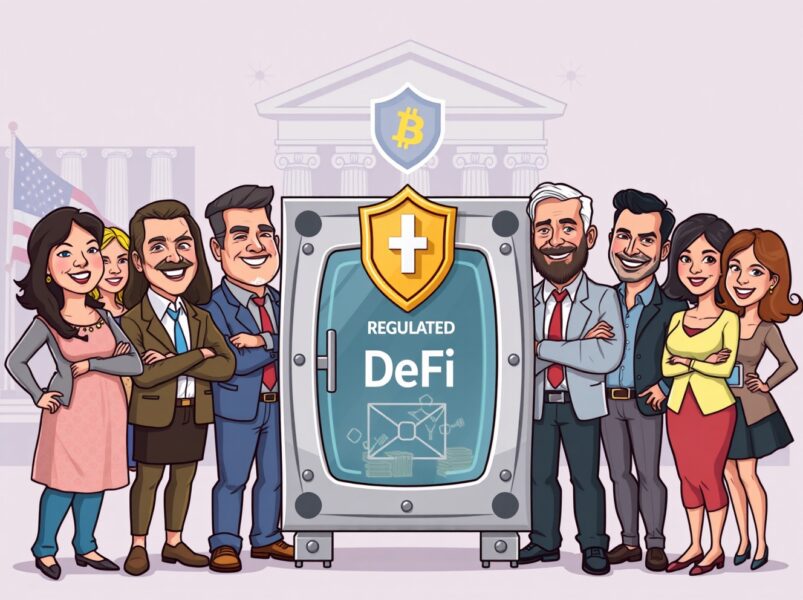
4 in 10 Americans Ready for Regulated DeFi: A Pivotal Survey on DeFi Regulation

4 in 10 Americans Ready for Regulated DeFi: A Pivotal Survey on DeFi Regulation

BitcoinWorld 4 in 10 Americans Ready for Regulated DeFi: A Pivotal Survey on DeFi Regulation The world of decentralized finance, or DeFi, is often seen as a frontier, exciting but perhaps a little wild. However, a groundbreaking survey from the DeFi Education Fund reveals a surprising truth: a significant portion of Americans are ready to embrace DeFi regulation. This isn’t just a niche interest; it’s a clear signal that mainstream adoption hinges on establishing clear, thoughtful rules for this innovative financial ecosystem. What’s the Buzz Around DeFi Regulation? Imagine a financial system that’s open, transparent, and accessible to everyone, everywhere. That’s the promise of DeFi. Yet, for many, the lack of established guidelines has been a major hurdle. The recent survey sheds light on this hesitation, indicating that nearly half of all Americans are willing to dive into DeFi, but only if it operates within a regulated framework. Key Finding: 42% of respondents would use DeFi under a regulated framework. This figure highlights a strong desire for security and clarity. Payment Services Potential: Among those willing, a remarkable 84% expressed readiness to try DeFi-based payment services. This suggests a massive untapped market for innovative payment solutions. This data points to a crucial intersection where innovation meets consumer protection. It suggests that appropriate DeFi regulation could unlock a new era of financial services for millions. Why Are Americans Eyeing Regulated DeFi? It’s not just about curiosity; there’s a deeper reason behind this willingness to engage with regulated DeFi. The survey also uncovered a significant lack of trust in existing financial systems. Only 29% of respondents believe the current U.S. financial system is truly safe. This sentiment is powerful. It indicates that people are actively seeking alternatives that offer greater transparency, security, and fairness. DeFi regulation, when done right, can provide the assurance needed for individuals to confidently explore these new avenues. It’s about building bridges of trust between cutting-edge technology and everyday users. Consider the benefits: enhanced consumer protection, reduced fraud risks, and a level playing field for all participants. These are the pillars upon which a trusted financial system, traditional or decentralized, must stand. The Promise of Regulated DeFi Payments The enthusiasm for DeFi isn’t limited to just financial products like lending or borrowing. A significant portion of the surveyed group expressed a strong interest in using DeFi for everyday transactions. The idea of regulated DeFi-based payment services is particularly appealing. Faster Transactions: Imagine sending money globally in minutes, not days. Lower Fees: Bypassing traditional intermediaries can significantly reduce costs. Greater Control: Users maintain more direct control over their funds. These advantages, combined with the security provided by clear DeFi regulation, could revolutionize how we think about and use money daily. It’s about creating more efficient, inclusive, and user-centric payment experiences. Navigating the Path to Mainstream DeFi Regulation While the demand for regulated DeFi is evident, the path to achieving it is complex. Regulators face the challenge of understanding a rapidly evolving technology while simultaneously protecting consumers and fostering innovation. This isn’t a simple task, but the survey provides a clear mandate for action. Key Considerations for Effective DeFi Regulation: Clarity: Establishing clear definitions and legal frameworks for DeFi protocols and assets. Consumer Protection: Implementing safeguards against scams, hacks, and financial exploitation. Innovation: Crafting rules that don’t stifle technological advancement and growth. Global Coordination: Harmonizing regulations across different jurisdictions to prevent arbitrage and ensure market stability. The future of finance could very well be decentralized, but its widespread adoption depends heavily on thoughtful and effective DeFi regulation. It’s a collaborative effort between innovators, users, and policymakers to build a financial system that serves everyone. Summary: A Clear Call for Action The survey from the DeFi Education Fund delivers a compelling message: Americans are ready for DeFi, but they want it to be safe and sound. The willingness of 4 in 10 respondents to engage with regulated DeFi, coupled with the strong interest in payment services, underscores the immense potential of this technology. It also highlights a critical opportunity for regulators to step up and provide the clarity and oversight necessary to unlock DeFi’s full promise. The future of finance is evolving, and DeFi regulation will be a cornerstone of its mainstream success. Frequently Asked Questions About Regulated DeFi Q1: What is DeFi? A1: DeFi, or decentralized finance, refers to financial services built on blockchain technology. These services, like lending, borrowing, and trading, operate without traditional intermediaries such as banks, using smart contracts instead. Q2: Why do Americans want DeFi to be regulated? A2: Americans desire regulation for DeFi primarily for security and trust. Many are wary of unregulated financial systems due to potential risks like fraud, hacks, and lack of consumer protection. Regulation can provide a framework of safety and legitimacy. Q3: What benefits could regulated DeFi offer? A3: Regulated DeFi could offer several benefits, including enhanced consumer protection, reduced risks of scams, greater transparency, potentially faster and cheaper financial services (especially payments), and increased trust, leading to broader adoption. Q4: How does DeFi regulation compare to traditional finance regulation? A4: Traditional finance operates under well-established, comprehensive regulatory frameworks. DeFi regulation is still evolving and aims to apply similar principles of consumer protection and market integrity to a decentralized, blockchain-based environment, often requiring new approaches due to its unique technological characteristics. Q5: What are the challenges in implementing DeFi regulation? A5: Challenges include the decentralized and global nature of DeFi, which makes enforcement difficult; the rapid pace of technological innovation; defining which entities are responsible for compliance; and ensuring regulations foster innovation rather than stifling it. Found this article insightful? Share it with your friends, colleagues, and anyone interested in the future of finance and the exciting potential of regulated DeFi! Your shares help spread awareness and foster important conversations. To learn more about the latest crypto market trends, explore our article on key developments shaping DeFi institutional adoption. This post 4 in 10 Americans Ready for Regulated DeFi: A Pivotal Survey on DeFi Regulation first appeared on BitcoinWorld.
Paylaş
Coinstats2025/09/18 17:30