In the landscape of 2026, the boundary between software code and legal code has almost entirely vanished. As decentralized technologies, autonomous AI agents, andIn the landscape of 2026, the boundary between software code and legal code has almost entirely vanished. As decentralized technologies, autonomous AI agents, and

The Digital Frontier: How Constitutional “Reserved Powers” Are Shaping Tech Governance in 2026

2026/03/17 23:54
Okuma süresi: 3 dk
Bu içerikle ilgili geri bildirim veya endişeleriniz için lütfen [email protected] üzerinden bizimle iletişime geçin.

In the landscape of 2026, the boundary between software code and legal code has almost entirely vanished. As decentralized technologies, autonomous AI agents, and cross-border data flows redefine our global economy, we are facing a fundamental question of authority: In a digital world, who truly holds the power to regulate?

To answer this, legal experts and tech innovators are returning to a foundational principle of governance: Reserved Powers.

The Digital Frontier: How Constitutional “Reserved Powers” Are Shaping Tech Governance in 2026

1. The Decentralization of Authority

For decades, the tech industry operated under a “move fast and break things” mantra. However, as technologies like blockchain and decentralized finance (DeFi) matured, they ran head-first into traditional legal structures. The concept of reserved powers—the legal principle that authority not explicitly granted to a central government remains with the states or the people—is now the primary battleground for digital sovereignty.

In the United States, this is rooted in the Tenth Amendment. As we see more states passing their own unique data privacy laws and AI ethics boards, the tension between federal mandates and state-level innovation is at an all-time high. Platforms that specialize in these nuances, such as Reserved Powers, provide the necessary clarity for navigating this “patchwork” of regulations.

2. AI and the New Jurisdictional Challenges

2026 has been the year of “Agentic AI”—AI that can make financial and legal decisions independently. When an AI bot registered in one state performs a transaction that violates a law in another, whose jurisdiction applies?

  • State vs. Federal: We are seeing a resurgence of state-level legal frameworks attempting to define AI liability.
  • Expressed vs. Implied: Just as the constitution defines expressed powers, digital platforms are now struggling to define the “expressed” permissions of AI within legal boundaries.

3. Case Studies: Technology Meets State Law

The practical application of these legal theories can be seen in everyday tech-legal intersections. For instance:

  • Digital Identity: States are now exercising their reserved authority to issue blockchain-based digital IDs, bypassing traditional federal systems.
  • Infrastructure & Liability: From construction tech to smart city sensors, local regulations often override broad tech “disruptions.” For example, understanding Texas Built Construction Lawsuit or local liability standards is crucial for tech firms deploying physical hardware.

4. Why Tech Entrepreneurs Must Become “Legal-First”

Gone are the days when legal was just a department you consulted before an IPO. In 2026, “Legal-by-Design” will be the standard. Tech founders must understand whether their platform falls under federal oversight or if they are operating within the realm of state-reserved authority.

Ignoring these legal foundations leads to “Regulatory Debt”—a burden that can sink even the most innovative startup. By integrating legal foresight—such as staying updated on BAC laws and state-specific penalties or property distribution rights—companies can build more resilient products.

5. Conclusion: Building a Sovereign Digital Future

The future of technology isn’t just about faster chips or smarter algorithms; it’s about building systems that respect the constitutional architecture of the society they serve. By understanding the distribution of power—both digital and legal—we can create a more stable andcan create a more stable and trustworthy ecosystem.

Comments
Piyasa Fırsatı
CROSS Logosu
CROSS Fiyatı(CROSS)
$0.06765
$0.06765$0.06765
-1.35%
USD
CROSS (CROSS) Canlı Fiyat Grafiği
Sorumluluk Reddi: Bu sitede yeniden yayınlanan makaleler, halka açık platformlardan alınmıştır ve yalnızca bilgilendirme amaçlıdır. MEXC'nin görüşlerini yansıtmayabilir. Tüm hakları telif sahiplerine aittir. Herhangi bir içeriğin üçüncü taraf haklarını ihlal ettiğini düşünüyorsanız, kaldırılması için lütfen [email protected] ile iletişime geçin. MEXC, içeriğin doğruluğu, eksiksizliği veya güncelliği konusunda hiçbir garanti vermez ve sağlanan bilgilere dayalı olarak alınan herhangi bir eylemden sorumlu değildir. İçerik, finansal, yasal veya diğer profesyonel tavsiye niteliğinde değildir ve MEXC tarafından bir tavsiye veya onay olarak değerlendirilmemelidir.

Ayrıca Şunları da Beğenebilirsiniz

Shiba Inu Shibariumscan Hits 45% Indexing Progress

Shiba Inu Shibariumscan Hits 45% Indexing Progress

The post Shiba Inu Shibariumscan Hits 45% Indexing Progress appeared on BitcoinEthereumNews.com. Shiba Inu’s ecosystem is showing steady technical progress as infrastructure
Paylaş
BitcoinEthereumNews2026/03/18 04:30
VanEck Targets Stablecoins & Next-Gen ICOs

VanEck Targets Stablecoins & Next-Gen ICOs

The post VanEck Targets Stablecoins & Next-Gen ICOs appeared on BitcoinEthereumNews.com. Welcome to the US Crypto News Morning Briefing—your essential rundown of the most important developments in crypto for the day ahead. Grab a coffee because the firms shaping crypto’s future are not just building products, but also trying to reshape how capital flows. Crypto News of the Day: VanEck Maps Next Frontier of Crypto Venture Investing VanEck, a Wall Street player known for financial “firsts,” is pushing that legacy into Web3. The firsts include pioneering US gold funds and launching one of the earliest spot Bitcoin ETFs. Sponsored Sponsored “Financial instruments have always been a kind of tokenization. From seashells to traveler’s checks, from relational databases to today’s on-chain assets. You could even joke that VanEck’s first gold mutual funds were the original ‘tokenized gold,’” Juan C. Lopez, General Partner at VanEck Ventures, told BeInCrypto. That same instinct drives the firm’s venture bets. Lopez said VanEck goes beyond writing checks and brings the full weight of the firm. This extends from regulatory proximity to product experiments to founders building the next phase of crypto infrastructure. Asked about key investment priorities, Lopez highlighted stablecoins. “We care deeply about three questions: How do we accelerate stablecoin ubiquity? What will users want to do with them once highly distributed? And what net new assets can we construct now that we have sophisticated market infrastructure?” Lopez added. However, VanEck is not limiting itself to the hottest narrative, acknowledging that decentralized finance (DeFi) is having a renaissance. The VanEck executive also noted that success will depend on new approaches to identity and programmable compliance layered on public blockchains. Backing Legion With A New Model for ICOs Sponsored Sponsored That compliance-first angle explains VanEck Ventures’ recent co-lead of Legion’s $5 million seed round alongside Brevan Howard. Legion aims to reinvent token fundraising by making early-stage access…
Paylaş
BitcoinEthereumNews2025/09/18 03:52
The Role of Reference Points in Achieving Equilibrium Efficiency in Fair and Socially Just Economies

The Role of Reference Points in Achieving Equilibrium Efficiency in Fair and Socially Just Economies

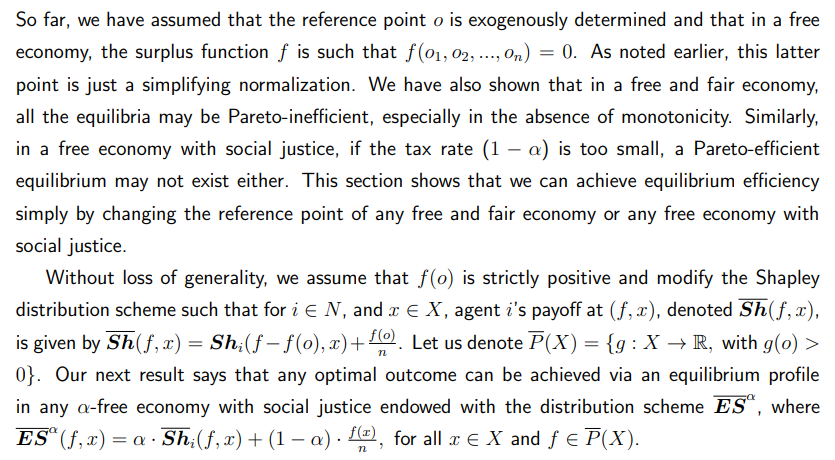
This article explores how a simple change in the reference point can achieve a Pareto-efficient equilibrium in both free and fair economies and those with social justice.
Paylaş
Hackernoon2025/09/17 22:30