Bitrefill Links Lazarus Group to Employee Laptop Hack, Stolen Funds
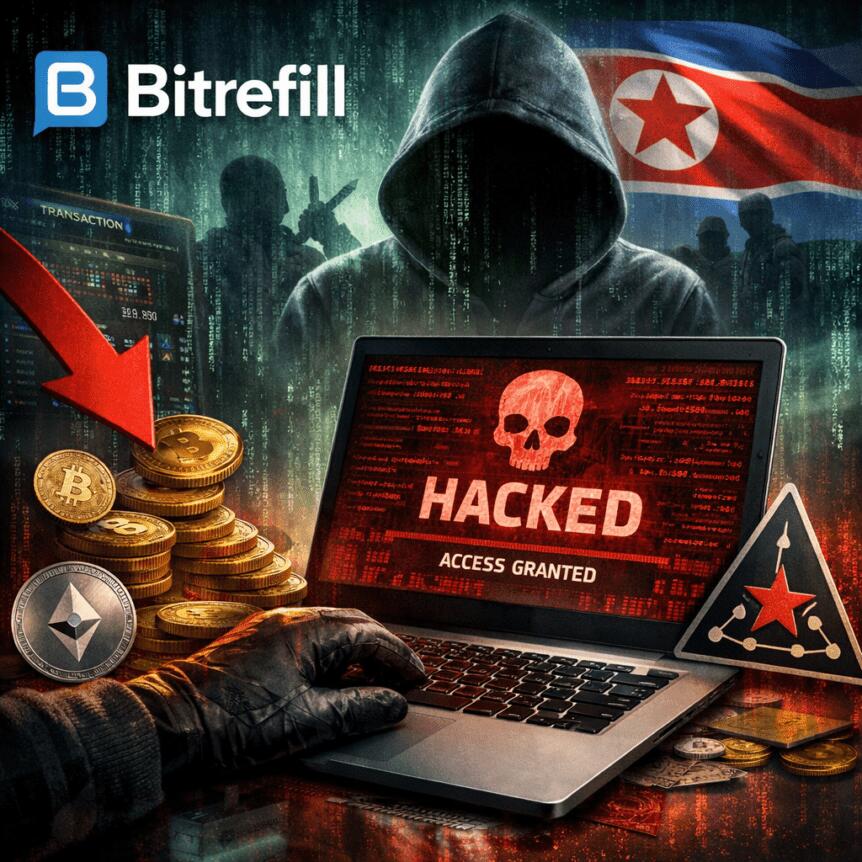
Bitrefill, a crypto-enabled e-commerce platform that lets customers spend digital assets on real-world products and gift cards, disclosed a cybersecurity incident that occurred on March 1. The breach enabled attackers to compromise an employee’s laptop by deploying malware and reusing existing IP and email infrastructure, which in turn granted access to hot wallets and the ability to drain funds. In addition to financial losses, Bitrefill confirmed that information tied to about 18,500 purchases was exposed, potentially revealing limited customer data. Crucially, the company said there is no evidence that the attackers extracted the entire database, suggesting the objective was financial rather than data exfiltration on a wholesale scale. Investigators have pointed to BlueNoroff Group, a North Korean hacking outfit with close ties to the Lazarus Group, as a possible participant or sole attacker in the incident.
Key takeaways
- The breach occurred on March 1 and targeted an employee’s laptop via malware, with attackers leveraging reused IP and email infrastructure to gain a foothold.
- Attackers deployed on-chain tracing techniques and accessed Bitrefill’s hot wallets to drain funds, while attempting to map accessible assets.
- Data exposure affected roughly 18,500 purchase records, but Bitrefill asserts that the full customer database was not accessed and that only limited customer information may have been disclosed.
- There is attribution to North Korea-linked groups, notably BlueNoroff Group with ties to Lazarus Group, as potential participants or sole operators behind the attack.
- Bitrefill halted systems to contain the breach, engaged law enforcement, and collaborated with multiple security firms to strengthen defenses and detection capabilities.
- Operations have largely returned to normal, with Bitrefill reporting that payments, inventory, and customer services are functioning, accompanied by ongoing security enhancements.
Tickers mentioned:
Sentiment: Neutral
Market context: The incident sits within a broader pattern of persistent cybersecurity threats facing crypto platforms, underscored by well-funded actors like Lazarus Group and its affiliated outfits. Lazarus remains associated with some of the most high-profile intrusions in the sector, including a noted $1.4 billion breach on a major exchange in February 2025, which has shaped industry risk perceptions and driven heightened security investments across the ecosystem.
Why it matters
The Bitrefill incident underscores how even firms built around rapid, on-demand crypto services must maintain rigorous operational security and incident response protocols. The attack vector—malware, credential reuse, and compromised hardware—highlights the need for layered defenses that extend beyond perimeter protections to include robust endpoint monitoring, strict access controls, and rapid containment measures. In the wake of the breach, Bitrefill not only contained the immediate risk by taking systems offline but also engaged external security partners to conduct comprehensive reviews and implement enhancements. This approach aligns with a broader industry trend: attackers are increasingly adept at blending traditional cyber techniques with on-chain reconnaissance to maximize impact, even on businesses that otherwise operate with strong security postures.
The incident also illustrates the tension between preserving customer trust and absorbing losses when underwrite costs fall to operational budgets. Bitrefill indicated that it would absorb the losses from its working capital, a decision that could reverberate through risk management discussions in the sector. For users, the event reinforces the importance of monitoring transaction activity, staying alert for unusual account behavior, and understanding that security incidents can surface even when providers are actively investing in defense. For operators and builders, it emphasizes the value of proactive third-party security audits, ongoing staff training, and the adoption of least-privilege access models to limit the blast radius of any future breach.
From a regulatory and policy standpoint, the disclosure and coordinated response with law enforcement signal ongoing collaboration between private firms and public authorities in addressing cross-border cyber threats. The Lazarus-linked threat landscape has long compelled exchanges and wallets to prioritize threat intel sharing, user notification protocols, and rapid incident communications to minimize damage and preserve market integrity. While Bitrefill’s experience is not unique, it contributes to a growing corpus of case studies that underscore the need for transparent post-incident reporting and verifiable security hardening measures in real time.
What to watch next
- Bitrefill’s ongoing security reviews and any published audit findings from the partnering firms (Security Alliance, FearsOff Security, Recoveris.io, and zeroShadow).
- Updates on how the company enhances internal access controls and monitoring capabilities to reduce the likelihood of a recurrence.
- Law enforcement disclosures or official statements that could shed further light on the attribution and motive behind the attack.
- Any public posts or supplementary communications from Bitrefill clarifying the status of customer data exposure and steps available to users who may have concerns.
- Industry-wide responses to similar intrusions, including changes in security practices, incident response playbooks, and cross-organization threat intelligence sharing.
Sources & verification
- Bitrefill’s official post on X detailing the breach, its scope, and immediate response
- Statements naming BlueNoroff Group and Lazarus Group as potential actors and their relation to the Lazarus ecosystem
- Public references to the security firms engaged in mitigating the incident: Security Alliance, FearsOff Security, Recoveris.io, zeroShadow
- Bitrefill’s note that the breach did not appear to access the entire customer database and that the losses will be absorbed from operational capital
Bitrefill breach highlights security lessons for the crypto retail ecosystem
Bitrefill’s experience is a stark reminder that cyber threats targeting crypto-enabled businesses are multifaceted, blending classic malware and credential theft with blockchain-focused reconnaissance. The company’s rapid containment, coupled with its collaboration with multiple security specialists, demonstrates a practical model for incident response that others in the space can emulate. While the attackers’ apparent objective seems financial, the exposure of tens of thousands of purchase records—under a platform that bridges crypto wallets with everyday purchases—serves as a cautionary note about data leakage, privacy considerations, and the ongoing need for rigorous access governance.
In the broader crypto market, the incident dovetails with a continuing pattern where high-profile breaches test the limits of security controls and force operators to balance customer trust with practical risk management. The Bybit event cited in industry chatter underscores a particularly aggressive threat landscape, where attackers leverage sophisticated techniques and persistent campaigns. As platforms expand services, including gift cards and fiat-onramps, the imperative to secure the end-to-end user journey—from authentication to transaction settlement—becomes more pronounced. Bitrefill’s commitment to a thorough security upgrade, including external audits and tightened internal processes, aligns with a prudent standard for the sector in 2026 and beyond.
This article was originally published as Bitrefill Links Lazarus Group to Employee Laptop Hack, Stolen Funds on Crypto Breaking News – your trusted source for crypto news, Bitcoin news, and blockchain updates.
Ayrıca Şunları da Beğenebilirsiniz

Neom terminates $1bn tunnel contract at heart of The Line

Gold continues to hit new highs. How to invest in gold in the crypto market?