"Bloomberg Crypto" covers the people, transactions, and technology shaping the world of decentralized finance. Today's guests: Katie Haun, Founder and CEO of..."Bloomberg Crypto" covers the people, transactions, and technology shaping the world of decentralized finance. Today's guests: Katie Haun, Founder and CEO of...

Ethereum Landed Its Biggest Partner Yet — SWIFT, Confirms Joe Lubin

Ethereum co-founder and ConsenSys chief Joseph Lubin appeared on Bloomberg Crypto on October 7 and confirmed that ConsenSys is building the prototype for SWIFT’s new blockchain-based shared ledger—an initiative that, according to SWIFT’s own announcement last week at Sibos in Frankfurt, will bolt a permissioned, always-on ledger into the global messaging cooperative’s infrastructure and natively integrate ISO 20022 financial messaging.

SWIFT Builds On Ethereum

Lubin said the first build “will most definitely implement messaging, financial messaging using ISO 20022,” adding that while SWIFT itself is “careful to stay in their lane and focus on the messaging part,” some participating banks are “interested in potentially diving down into settlement layers.”

“I have to be careful about what I say. It is a project that we’re building out. There will be technologists on their side and lots on our side. And I’m glad that you called it a prototype, because that’s what it is,” the ConsenSys founder added.

He declined to give a deployment timeline. “I do have an idea of what sort of timeline, and I can’t say too much about it. We’re defining what we believe will be the end state, and we’re backing that out, so I don’t know if SWIFT will be comfortable releasing the timeline at this point,” Lubin said.

SWIFT’s move—framed explicitly as a shared ledger that records, sequences and validates transactions—was unveiled on September 29, with the cooperative stressing that the project aims to deliver instant, 24/7 cross-border transactions at global scale and to accelerate “the transition to digital finance” while remaining asset-agnostic and interoperable with public and private networks. The formal materials did not name a base chain, but they did name ConsenSys as a core technology partner and emphasized ISO 20022 compliance and smart-contract-enforced business rules.

In his Bloomberg interview, Lubin underscored a broader strategic shift: the long-standing separation between “TradFi” and “DeFi” is breaking down. “Since the start of Ethereum, we had to stay on our own rail… the vibe in Frankfurt was very different,” he said, describing overwhelmingly positive bank feedback and calling it “about time for TradFi to merge or make use of DeFi.” He also characterized the current build as a true prototype with technologists “on their side and lots on our side,” reiterating that SWIFT would control the messaging scope while banks explore deeper layers like atomic settlement.

What “Using Ethereum” Means In Practice

While SWIFT has not officially specified the underlying chain in its press releases, multiple industry reports following Sibos and subsequent public remarks by Lubin say the prototype will run on Ethereum infrastructure—specifically ConsenSys’ Linea, an Ethereum layer-2 network that uses zero-knowledge proofs—positioning the build within the Ethereum ecosystem while maintaining a permissioned perimeter consistent with bank compliance requirements. That reporting aligns with ConsenSys’ own statement that it is “supporting Swift with early-stage prototyping” for the shared ledger.

The institutional context matters. SWIFT’s ledger initiative comes amid rapid growth in the $300 billion stablecoin market and a wave of bank tokenization pilots; its stated design goal is to extend existing rails rather than replace them, allowing banks to opt into tokenized processes where it improves speed, transparency, and finality.

Beyond SWIFT: Lubin’s Treasury Thesis

Lubin also used the Bloomberg segment to discuss the rise of “digital-asset-backed treasuries” (DATs) such as the Ethereum-focused vehicle he chairs at SharpLink. He argued that corporate ether accumulation is a “dampener on volatility,” describing ether as a “productive, yielding asset unlike bitcoin” when staked, and outlining a Berkshire-style flywheel in which a growing ETH base is deployed across Ethereum-aligned protocols for non-dilutive growth.

The strategic through-line is clear: if financial incumbents standardize on Ethereum-based rails for messaging and, increasingly, settlement, balance-sheet ETH becomes a strategic asset for institutions seeking exposure to the network’s activity and yield.

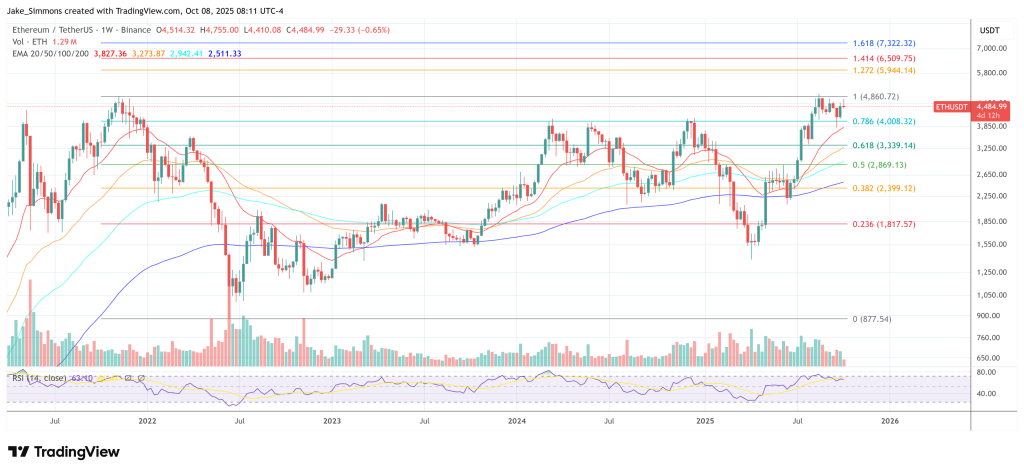
At press time, ETH traded at $4,484.
Ethereum price
Piyasa Fırsatı
JOE Logosu
JOE Fiyatı(JOE)
$0.05732
$0.05732$0.05732
-0.29%
USD
JOE (JOE) Canlı Fiyat Grafiği
Sorumluluk Reddi: Bu sitede yeniden yayınlanan makaleler, halka açık platformlardan alınmıştır ve yalnızca bilgilendirme amaçlıdır. MEXC'nin görüşlerini yansıtmayabilir. Tüm hakları telif sahiplerine aittir. Herhangi bir içeriğin üçüncü taraf haklarını ihlal ettiğini düşünüyorsanız, kaldırılması için lütfen [email protected] ile iletişime geçin. MEXC, içeriğin doğruluğu, eksiksizliği veya güncelliği konusunda hiçbir garanti vermez ve sağlanan bilgilere dayalı olarak alınan herhangi bir eylemden sorumlu değildir. İçerik, finansal, yasal veya diğer profesyonel tavsiye niteliğinde değildir ve MEXC tarafından bir tavsiye veya onay olarak değerlendirilmemelidir.

Ayrıca Şunları da Beğenebilirsiniz

Momentous Grayscale ETF: GDLC Fund’s Historic Conversion Set to Trade Tomorrow

Momentous Grayscale ETF: GDLC Fund’s Historic Conversion Set to Trade Tomorrow

BitcoinWorld Momentous Grayscale ETF: GDLC Fund’s Historic Conversion Set to Trade Tomorrow Get ready for a significant shift in the world of digital asset investing! A truly momentous event is unfolding as Grayscale’s Digital Large Cap Fund (GDLC) makes its highly anticipated transition into a spot crypto exchange-traded fund. This isn’t just a name change; it’s a pivotal moment for the broader cryptocurrency market, bringing a new era of accessibility and institutional participation through the Grayscale ETF. What’s Happening with the Grayscale ETF Conversion? Tomorrow marks a historic day for Grayscale’s Digital Large Cap Fund (GDLC). This existing spot crypto basket is officially scheduled to begin trading under its new identity: the Grayscale CoinDesk Crypto5 ETF. This exciting development comes directly after the U.S. Securities and Exchange Commission (SEC) gave its stamp of approval to Grayscale’s application for this conversion. As Bloomberg ETF analyst Eric Balchunas highlighted, this move has been keenly watched. The approval and subsequent launch underscore a growing acceptance of crypto-backed financial products within traditional markets. For investors, this conversion of the Grayscale ETF represents a more streamlined and regulated way to gain exposure to a diversified basket of large-cap digital assets. Why is the Grayscale ETF a Game-Changer for Investors? The conversion of GDLC into a Grayscale ETF offers several compelling benefits, fundamentally changing how investors can access the crypto market. Firstly, ETFs are known for their ease of trading. They can be bought and sold on traditional stock exchanges, just like company shares, making them incredibly accessible to a wider range of investors who might be hesitant to directly hold cryptocurrencies. Consider these key advantages: Enhanced Accessibility: Investors can gain exposure to a diversified crypto portfolio without needing to set up crypto wallets or manage private keys. Increased Liquidity: Trading on major exchanges typically means higher liquidity, allowing for easier entry and exit points. Regulatory Oversight: As an SEC-approved product, the Grayscale ETF operates under a regulated framework, potentially offering greater investor protection and confidence. Diversification: The Grayscale CoinDesk Crypto5 ETF tracks a basket of large-cap cryptocurrencies, offering immediate diversification rather than exposure to a single asset. This development is a strong indicator of the maturation of the digital asset space. It signals a bridge between the innovative world of crypto and the established financial system. Navigating the New Grayscale ETF Landscape While the launch of the Grayscale CoinDesk Crypto5 ETF brings exciting opportunities, it’s also important for investors to understand its implications. The shift from a closed-end fund structure (GDLC) to an open-ended ETF means that the fund’s shares can now be created and redeemed daily. This mechanism helps keep the ETF’s market price closely aligned with the net asset value (NAV) of its underlying holdings. Historically, closed-end funds like GDLC could trade at significant premiums or discounts to their NAV. The ETF structure is designed to mitigate these discrepancies, providing a more efficient pricing mechanism. This change offers a more transparent and potentially less volatile investment experience for those looking to invest in a Grayscale ETF. What’s Next for Crypto ETFs and Grayscale? The successful conversion and launch of the Grayscale CoinDesk Crypto5 ETF could pave the way for similar transformations of other Grayscale products. It also sets a precedent for how existing crypto investment vehicles might evolve to meet market demand for regulated, accessible products. The increasing number of spot crypto ETFs, including this new Grayscale ETF, reflects a growing institutional appetite for digital assets. This trend suggests a future where cryptocurrency investing becomes an even more integrated part of mainstream financial portfolios. As regulatory clarity continues to improve, we can anticipate further innovation and expansion in the crypto ETF landscape, offering investors diverse options to participate in the digital economy. The launch of the Grayscale CoinDesk Crypto5 ETF is more than just a new product; it’s a testament to the persistent efforts to bring digital assets into the mainstream financial fold. By offering a regulated, accessible, and diversified investment vehicle, Grayscale is not only expanding opportunities for investors but also reinforcing the legitimacy and staying power of the crypto market. This momentous step truly reshapes the investment landscape, making it easier for a broader audience to engage with the exciting potential of cryptocurrencies through a trusted Grayscale ETF. Frequently Asked Questions (FAQs) What is the Grayscale CoinDesk Crypto5 ETF? The Grayscale CoinDesk Crypto5 ETF is the new name and structure for Grayscale’s former Digital Large Cap Fund (GDLC). It’s a spot crypto basket that holds a diversified portfolio of large-cap digital assets, now trading as an exchange-traded fund. When will the Grayscale ETF begin trading? The Grayscale CoinDesk Crypto5 ETF is scheduled to begin trading tomorrow, following its approval by the U.S. Securities and Exchange Commission (SEC). How does an ETF differ from the previous GDLC fund? As an ETF, the fund’s shares can be created and redeemed daily, which helps keep its market price closely aligned with the value of its underlying assets. The previous GDLC fund was a closed-end fund that could trade at significant premiums or discounts to its net asset value. What are the benefits of investing in the Grayscale ETF? Benefits include enhanced accessibility (trading on traditional exchanges), increased liquidity, regulatory oversight by the SEC, and immediate diversification into a basket of large-cap cryptocurrencies. Is the Grayscale ETF suitable for all investors? While the Grayscale ETF offers a regulated and accessible way to invest in crypto, all investments carry risks. Investors should conduct their own research and consider their financial goals and risk tolerance before investing in any ETF, including this Grayscale ETF. Did you find this article informative? Share this exciting news about the Grayscale ETF conversion with your friends, family, and fellow investors on social media to keep them informed about the latest developments in the crypto world! To learn more about the latest crypto market trends, explore our article on key developments shaping Bitcoin and Ethereum price action. This post Momentous Grayscale ETF: GDLC Fund’s Historic Conversion Set to Trade Tomorrow first appeared on BitcoinWorld.
Paylaş
Coinstats2025/09/19 17:45
Trump Crypto Adviser Urges Bipartisan Support After Senate Committee Unveils Partisan Crypto Bill

Trump Crypto Adviser Urges Bipartisan Support After Senate Committee Unveils Partisan Crypto Bill

The post Trump Crypto Adviser Urges Bipartisan Support After Senate Committee Unveils Partisan Crypto Bill appeared on BitcoinEthereumNews.com. White House crypto
Paylaş
BitcoinEthereumNews2026/01/23 04:26
Headwind Helps Best Wallet Token

Headwind Helps Best Wallet Token

The post Headwind Helps Best Wallet Token appeared on BitcoinEthereumNews.com. Google has announced the launch of a new open-source protocol called Agent Payments Protocol (AP2) in partnership with Coinbase, the Ethereum Foundation, and 60 other organizations. This allows AI agents to make payments on behalf of users using various methods such as real-time bank transfers, credit and debit cards, and, most importantly, stablecoins. Let’s explore in detail what this could mean for the broader cryptocurrency markets, and also highlight a presale crypto (Best Wallet Token) that could explode as a result of this development. Google’s Push for Stablecoins Agent Payments Protocol (AP2) uses digital contracts known as ‘Intent Mandates’ and ‘Verifiable Credentials’ to ensure that AI agents undertake only those payments authorized by the user. Mandates, by the way, are cryptographically signed, tamper-proof digital contracts that act as verifiable proof of a user’s instruction. For example, let’s say you instruct an AI agent to never spend more than $200 in a single transaction. This instruction is written into an Intent Mandate, which serves as a digital contract. Now, whenever the AI agent tries to make a payment, it must present this mandate as proof of authorization, which will then be verified via the AP2 protocol. Alongside this, Google has also launched the A2A x402 extension to accelerate support for the Web3 ecosystem. This production-ready solution enables agent-based crypto payments and will help reshape the growth of cryptocurrency integration within the AP2 protocol. Google’s inclusion of stablecoins in AP2 is a massive vote of confidence in dollar-pegged cryptocurrencies and a huge step toward making them a mainstream payment option. This widens stablecoin usage beyond trading and speculation, positioning them at the center of the consumption economy. The recent enactment of the GENIUS Act in the U.S. gives stablecoins more structure and legal support. Imagine paying for things like data crawls, per-task…
Paylaş
BitcoinEthereumNews2025/09/18 01:27