The post Ethereum Trader Who Made $69 Million From Shiba Inu Buys $450,000 Into This Presale At $0.015 appeared first on Coinpedia Fintech News Crypto circles are buzzing again after news broke that an Ethereum trader—famous for turning early Shiba Inu bets into a staggering $69 million windfall—has just bought $450,000 worth of PDP in the Paydax Protocol presale at $0.015. This isn’t just another whale headline. It’s a strong signal that the same instinct that made fortunes on …The post Ethereum Trader Who Made $69 Million From Shiba Inu Buys $450,000 Into This Presale At $0.015 appeared first on Coinpedia Fintech News Crypto circles are buzzing again after news broke that an Ethereum trader—famous for turning early Shiba Inu bets into a staggering $69 million windfall—has just bought $450,000 worth of PDP in the Paydax Protocol presale at $0.015. This isn’t just another whale headline. It’s a strong signal that the same instinct that made fortunes on …

Ethereum Trader Who Made $69 Million From Shiba Inu Buys $450,000 Into This Presale At $0.015
2025/10/05 21:42
eth-shib

The post Ethereum Trader Who Made $69 Million From Shiba Inu Buys $450,000 Into This Presale At $0.015 appeared first on Coinpedia Fintech News

Crypto circles are buzzing again after news broke that an Ethereum trader—famous for turning early Shiba Inu bets into a staggering $69 million windfall—has just bought $450,000 worth of PDP in the Paydax Protocol presale at $0.015.

This isn’t just another whale headline. It’s a strong signal that the same instinct that made fortunes on Shiba Inu is now zeroing in on a presale project with serious fundamentals.

Why This Move By The Ethereum Trader Matters

The Ethereum trader in question isn’t known for chasing hype. His entire legend comes from spotting overlooked tokens before they became household names. In 2020, Shiba Inu was a meme no one cared about. Today, that same play is remembered as one of the most legendary trades in crypto history.
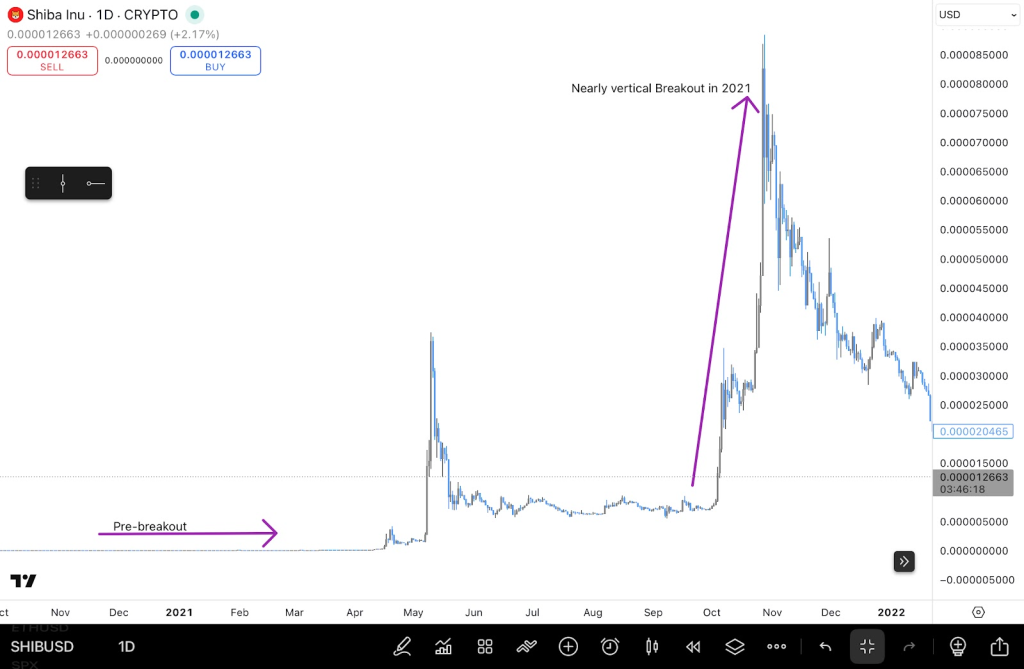
shib-usd-chart

Source: TradingView

Now, his $450,000 allocation into PDP suggests he sees the same asymmetric upside—only this time, anchored by the Paydax Protocol, a project solving one of DeFi’s biggest headaches: unlocking liquidity.

The Paydax Protocol: Liquidity Without Sacrifice

The Paydax Protocol (PDP) was built to address a fundamental problem: most traders can’t access the value of their tokens without selling them. Whether it’s staking, vesting, or presale allocations, assets often sit dormant when they could be redeployed for more yield.

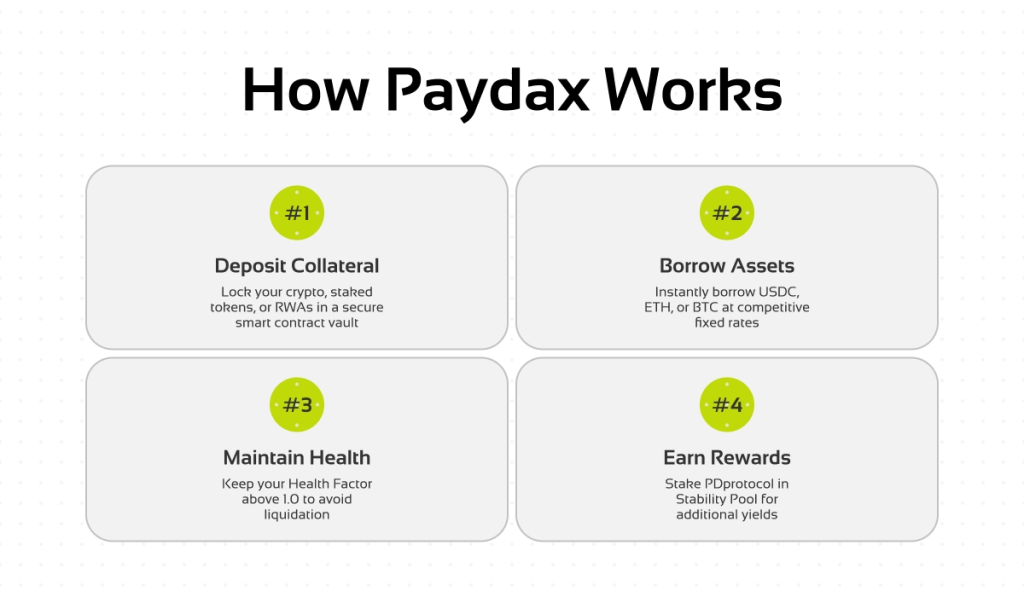
Paydax Protocol fixes that by creating a liquid escrow layer on a secure DeFi backbone. Here’s how it works:

  • Collateralization → Users deposit tokens like PDP or other assets.
  • Liquidity Access → Stablecoins or liquid tokens are unlocked immediately.
  • Ownership Preserved → When vesting ends, you still keep your full allocation.
paydax

Source: Paydax Protocol

For an Ethereum trader used to rotating capital aggressively, this is a game-changer. Instead of being forced to choose between holding and trading, the Paydax Protocol enables both options simultaneously.

A Use Case That Resonates

Picture an investor, such as the Ethereum trader, who holds a large bag of Shiba Inu (SHIB) and Ethereum (ETH). Instead of selling tokens to access liquidity and losing their exposure to further yield from either altcoin, they could collateralize those tokens in the Paydax Protocol, unlock stablecoins, and farm yield while their PDP continues to appreciate.

This dual exposure—both upside and liquidity—is exactly what was missing during the Shiba Inu days. Back then, early buyers had to sit tight or sell too early. With Paydax Protocol, the game has changed.

From Shiba Inu to PDP: A Pattern of Early Entry

When the Ethereum trader first backed Shiba Inu, it was trading at fractions of a cent, dismissed by most of the market. By the time the rally hit, those early allocations had multiplied into generational wealth.

The parallel today is striking: PDP is still priced at just $0.015 in presale. Unlike Shiba Inu, however, the token isn’t relying on memes or hype alone. Rather, it’s powered by the Paydax Protocol’s lending, yield farming, and collateralization system.
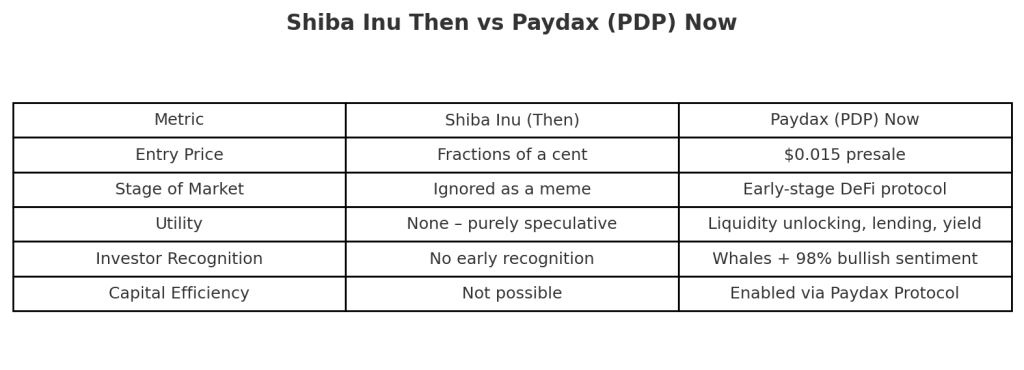
shiba-then-now

Source: Paydax Protocol 

The Numbers Behind the Move

The crypto community loves to get into math. So, here are some numbers for you:

  • Presale Price: $0.015 per PDP, next stage lined up at $0.017.
  • Trader Allocation: $450,000 → nearly 30 million PDP tokens.
  • Potential Upside: Analysts model scenarios where PDP could follow a Shiba Inu-like curve. Even modest adoption could turn a $0.015 entry into $1+ over time.

It’s this asymmetric math—the same math that made Shiba Inu millionaires—that explains why a disciplined Ethereum trader would commit nearly half a million dollars to a presale.
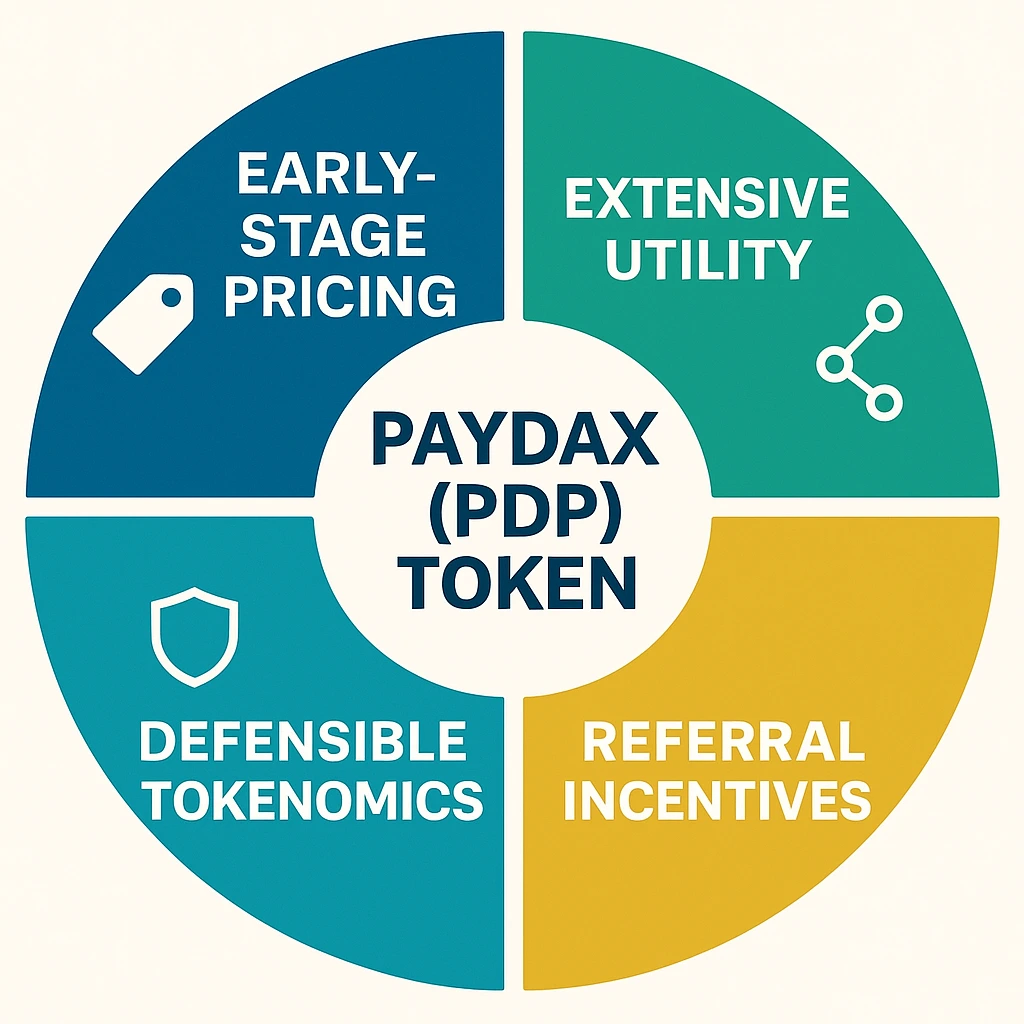
paydax-token

Source: Paydax Protocol 

History Rhymes Again

The Ethereum trader who made $69 million from Shiba Inu isn’t betting lightly. His $450,000 into PDP suggests conviction that this transcends meme coin potential; it’s a DeFi cornerstone in the making. If Shiba Inu were about viral timing, Paydax Protocol is about solving real problems while still offering the kind of entry price that can rewrite futures. 

For everyday traders, that $0.015 entry could be today’s equivalent of Shiba Inu before its explosive breakout. With the ongoing promo, interested investors can access an 80% bonus on token purchases for a limited time when they use the code PD80BONUS at checkout. Now is no time to wait; now is no time at all. Make like the Ethereum trader and position yourself for Shiba Inu-esque gains with PDP.

Join The Paydax Protocol (PDP) presale and community:

  • Website: https://pdprotocol.com/
  • Telegram: https://t.me/PaydaxCommunity
  • X (Twitter): https://x.com/Paydaxofficial
  • Whitepaper: https://paydax.gitbook.io/paydax-whitepaper
Piyasa Fırsatı
BitShiba Logosu
BitShiba Fiyatı(SHIBA)
$0,0000000004498
$0,0000000004498$0,0000000004498
-0,50%
USD
BitShiba (SHIBA) Canlı Fiyat Grafiği
Sorumluluk Reddi: Bu sitede yeniden yayınlanan makaleler, halka açık platformlardan alınmıştır ve yalnızca bilgilendirme amaçlıdır. MEXC'nin görüşlerini yansıtmayabilir. Tüm hakları telif sahiplerine aittir. Herhangi bir içeriğin üçüncü taraf haklarını ihlal ettiğini düşünüyorsanız, kaldırılması için lütfen [email protected] ile iletişime geçin. MEXC, içeriğin doğruluğu, eksiksizliği veya güncelliği konusunda hiçbir garanti vermez ve sağlanan bilgilere dayalı olarak alınan herhangi bir eylemden sorumlu değildir. İçerik, finansal, yasal veya diğer profesyonel tavsiye niteliğinde değildir ve MEXC tarafından bir tavsiye veya onay olarak değerlendirilmemelidir.

Ayrıca Şunları da Beğenebilirsiniz

The Channel Factories We’ve Been Waiting For

The Channel Factories We’ve Been Waiting For

The post The Channel Factories We’ve Been Waiting For appeared on BitcoinEthereumNews.com. Visions of future technology are often prescient about the broad strokes while flubbing the details. The tablets in “2001: A Space Odyssey” do indeed look like iPads, but you never see the astronauts paying for subscriptions or wasting hours on Candy Crush.  Channel factories are one vision that arose early in the history of the Lightning Network to address some challenges that Lightning has faced from the beginning. Despite having grown to become Bitcoin’s most successful layer-2 scaling solution, with instant and low-fee payments, Lightning’s scale is limited by its reliance on payment channels. Although Lightning shifts most transactions off-chain, each payment channel still requires an on-chain transaction to open and (usually) another to close. As adoption grows, pressure on the blockchain grows with it. The need for a more scalable approach to managing channels is clear. Channel factories were supposed to meet this need, but where are they? In 2025, subnetworks are emerging that revive the impetus of channel factories with some new details that vastly increase their potential. They are natively interoperable with Lightning and achieve greater scale by allowing a group of participants to open a shared multisig UTXO and create multiple bilateral channels, which reduces the number of on-chain transactions and improves capital efficiency. Achieving greater scale by reducing complexity, Ark and Spark perform the same function as traditional channel factories with new designs and additional capabilities based on shared UTXOs.  Channel Factories 101 Channel factories have been around since the inception of Lightning. A factory is a multiparty contract where multiple users (not just two, as in a Dryja-Poon channel) cooperatively lock funds in a single multisig UTXO. They can open, close and update channels off-chain without updating the blockchain for each operation. Only when participants leave or the factory dissolves is an on-chain transaction…
Paylaş
BitcoinEthereumNews2025/09/18 00:09
Onyxcoin Price Breakout Coming — Is a 38% Move Next?

Onyxcoin Price Breakout Coming — Is a 38% Move Next?

The post Onyxcoin Price Breakout Coming — Is a 38% Move Next? appeared on BitcoinEthereumNews.com. Onyxcoin price action has entered a tense standoff between bulls
Paylaş
BitcoinEthereumNews2026/01/14 00:33
CEO Sandeep Nailwal Shared Highlights About RWA on Polygon

CEO Sandeep Nailwal Shared Highlights About RWA on Polygon

The post CEO Sandeep Nailwal Shared Highlights About RWA on Polygon appeared on BitcoinEthereumNews.com. Polygon CEO Sandeep Nailwal highlighted Polygon’s lead in global bonds, Spiko US T-Bill, and Spiko Euro T-Bill. Polygon published an X post to share that its roadmap to GigaGas was still scaling. Sentiments around POL price were last seen to be bearish. Polygon CEO Sandeep Nailwal shared key pointers from the Dune and RWA.xyz report. These pertain to highlights about RWA on Polygon. Simultaneously, Polygon underlined its roadmap towards GigaGas. Sentiments around POL price were last seen fumbling under bearish emotions. Polygon CEO Sandeep Nailwal on Polygon RWA CEO Sandeep Nailwal highlighted three key points from the Dune and RWA.xyz report. The Chief Executive of Polygon maintained that Polygon PoS was hosting RWA TVL worth $1.13 billion across 269 assets plus 2,900 holders. Nailwal confirmed from the report that RWA was happening on Polygon. The Dune and https://t.co/W6WSFlHoQF report on RWA is out and it shows that RWA is happening on Polygon. Here are a few highlights: – Leading in Global Bonds: Polygon holds 62% share of tokenized global bonds (driven by Spiko’s euro MMF and Cashlink euro issues) – Spiko U.S.… — Sandeep | CEO, Polygon Foundation (※,※) (@sandeepnailwal) September 17, 2025 The X post published by Polygon CEO Sandeep Nailwal underlined that the ecosystem was leading in global bonds by holding a 62% share of tokenized global bonds. He further highlighted that Polygon was leading with Spiko US T-Bill at approximately 29% share of TVL along with Ethereum, adding that the ecosystem had more than 50% share in the number of holders. Finally, Sandeep highlighted from the report that there was a strong adoption for Spiko Euro T-Bill with 38% share of TVL. He added that 68% of returns were on Polygon across all the chains. Polygon Roadmap to GigaGas In a different update from Polygon, the community…
Paylaş
BitcoinEthereumNews2025/09/18 01:10