By Dylan Bane Compiled by: TechFlow The application of prediction markets has expanded beyond elections, demonstrating proof-of-market fit (PMF). Betting volumes are surging, investors are flocking in, and new approaches, from information perps to Telegram bots, are entering the market. So, what methods actually work and maximize the growth of trading volume? The 2024 election caused Polymarket’s trading volume to surge from $62 million in May to $2.1 billion in October, a 3,268% increase. Mainstream media outlets like CNN and Bloomberg cited Polymarket's odds in their live broadcasts, presenting them alongside traditional polling data. In fact, prediction markets ultimately beat opinion polls in predicting election outcomes. After the election, prediction market trading volume declined but remained stable at over $1 billion per month. Combined with Kalshi’s recent surge in trading volume, investors believe that the prediction market has validated demand and is primed for further growth. About 90% of the funds are concentrated in two platforms, Polymarket and Kalshi, with valuations approaching tens of digits (i.e. billions of US dollars). These industry leaders have already built liquidity and are now focused on expanding trading volumes and strengthening market defensibility as larger exchanges like Hyperliquid and Coinbase are eyeing this space. However, with over 100 prediction market projects and growing, there are a lot of opportunities. The question is, how should investors identify the best opportunities in this increasingly complex and noisy landscape? We believe that the best way to solve liquidity issues and increase trading volume is to attract retail speculators. Prediction markets can attract this segment by focusing on accessibility, fun, user experience, and high potential financial gains. Continuous flow of information perpetual contracts Because perpetual contracts fluctuate continuously, they overcome the slow settlement times that often deter speculators in binary outcome markets. Such perpetual contracts can also track interesting and well-understood topics for which there are currently no existing markets. Front-end platform Rather than building native liquidity, startups can source supply from existing industry leaders and provide users with a higher-quality trading experience. For example, Flipr offers a trading terminal, trading bots on the X platform, and up to 10x leverage using existing liquidity. Social Apps Gamified apps or social experiences can make forecasting more fun. Just as sports betting is an inherently social experience, prediction markets can foster a similarly interactive experience. In the early stages of prediction market adoption, the design space is very broad. Basket trading, managed indices, celebrity copy trading, parlays, and more are all worth exploring.By Dylan Bane Compiled by: TechFlow The application of prediction markets has expanded beyond elections, demonstrating proof-of-market fit (PMF). Betting volumes are surging, investors are flocking in, and new approaches, from information perps to Telegram bots, are entering the market. So, what methods actually work and maximize the growth of trading volume? The 2024 election caused Polymarket’s trading volume to surge from $62 million in May to $2.1 billion in October, a 3,268% increase. Mainstream media outlets like CNN and Bloomberg cited Polymarket's odds in their live broadcasts, presenting them alongside traditional polling data. In fact, prediction markets ultimately beat opinion polls in predicting election outcomes. After the election, prediction market trading volume declined but remained stable at over $1 billion per month. Combined with Kalshi’s recent surge in trading volume, investors believe that the prediction market has validated demand and is primed for further growth. About 90% of the funds are concentrated in two platforms, Polymarket and Kalshi, with valuations approaching tens of digits (i.e. billions of US dollars). These industry leaders have already built liquidity and are now focused on expanding trading volumes and strengthening market defensibility as larger exchanges like Hyperliquid and Coinbase are eyeing this space. However, with over 100 prediction market projects and growing, there are a lot of opportunities. The question is, how should investors identify the best opportunities in this increasingly complex and noisy landscape? We believe that the best way to solve liquidity issues and increase trading volume is to attract retail speculators. Prediction markets can attract this segment by focusing on accessibility, fun, user experience, and high potential financial gains. Continuous flow of information perpetual contracts Because perpetual contracts fluctuate continuously, they overcome the slow settlement times that often deter speculators in binary outcome markets. Such perpetual contracts can also track interesting and well-understood topics for which there are currently no existing markets. Front-end platform Rather than building native liquidity, startups can source supply from existing industry leaders and provide users with a higher-quality trading experience. For example, Flipr offers a trading terminal, trading bots on the X platform, and up to 10x leverage using existing liquidity. Social Apps Gamified apps or social experiences can make forecasting more fun. Just as sports betting is an inherently social experience, prediction markets can foster a similarly interactive experience. In the early stages of prediction market adoption, the design space is very broad. Basket trading, managed indices, celebrity copy trading, parlays, and more are all worth exploring.
Messari Research Report: What’s missing for the prediction market to truly explode?

2025/09/22 19:00

By Dylan Bane

Compiled by: TechFlow

The application of prediction markets has expanded beyond elections, demonstrating proof-of-market fit (PMF).

Betting volumes are surging, investors are flocking in, and new approaches, from information perps to Telegram bots, are entering the market.

So, what methods actually work and maximize the growth of trading volume?

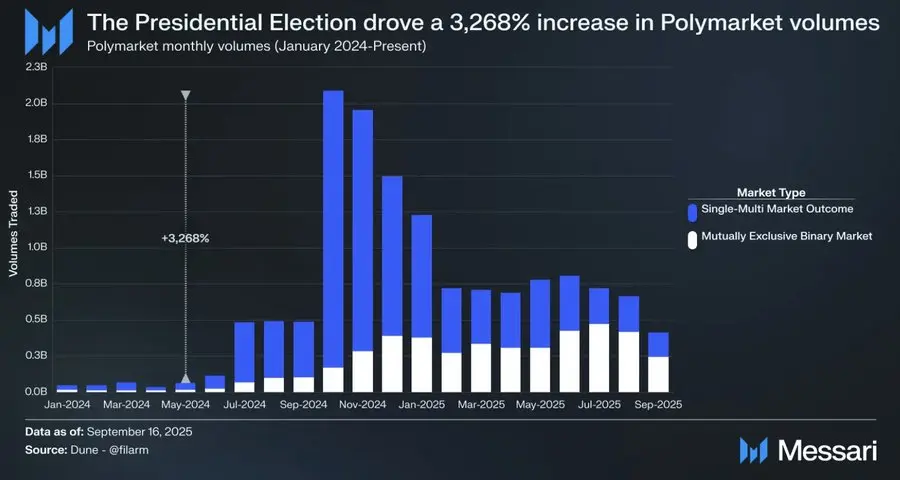
The 2024 election caused Polymarket’s trading volume to surge from $62 million in May to $2.1 billion in October, a 3,268% increase.

Mainstream media outlets like CNN and Bloomberg cited Polymarket's odds in their live broadcasts, presenting them alongside traditional polling data.

In fact, prediction markets ultimately beat opinion polls in predicting election outcomes.

After the election, prediction market trading volume declined but remained stable at over $1 billion per month.

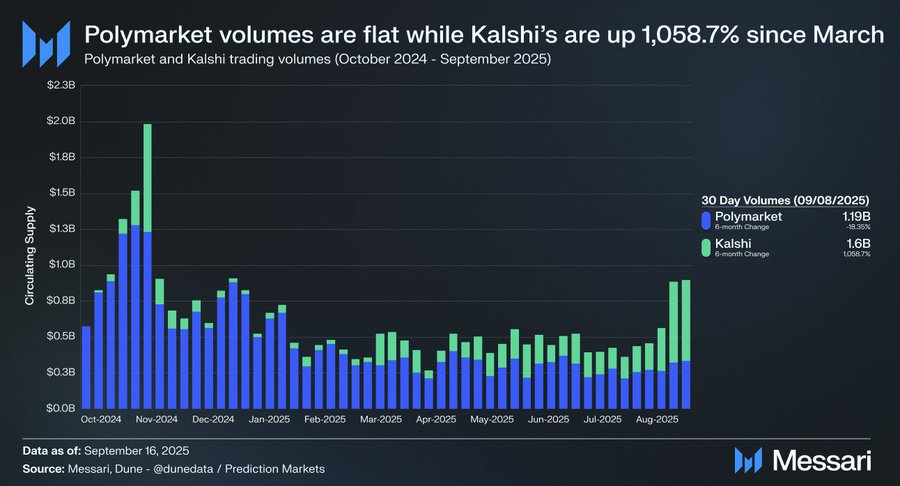
Combined with Kalshi’s recent surge in trading volume, investors believe that the prediction market has validated demand and is primed for further growth.
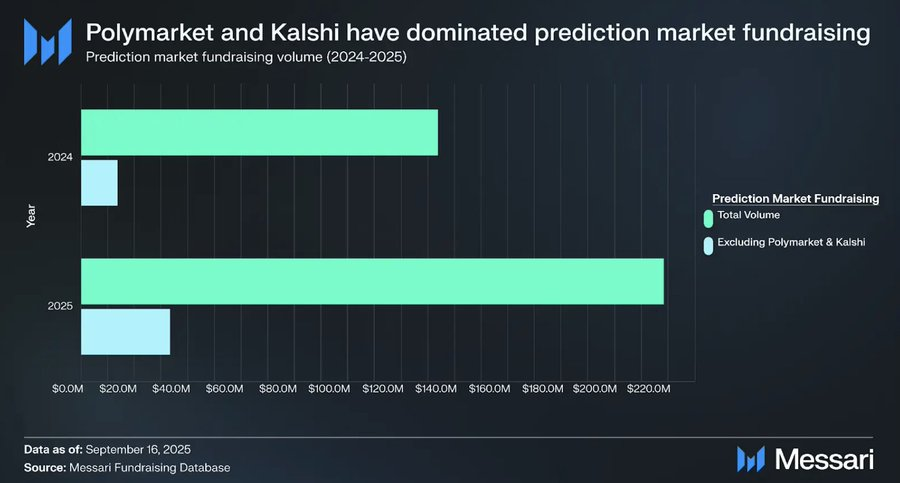
About 90% of the funds are concentrated in two platforms, Polymarket and Kalshi, with valuations approaching tens of digits (i.e. billions of US dollars).

These industry leaders have already built liquidity and are now focused on expanding trading volumes and strengthening market defensibility as larger exchanges like Hyperliquid and Coinbase are eyeing this space.
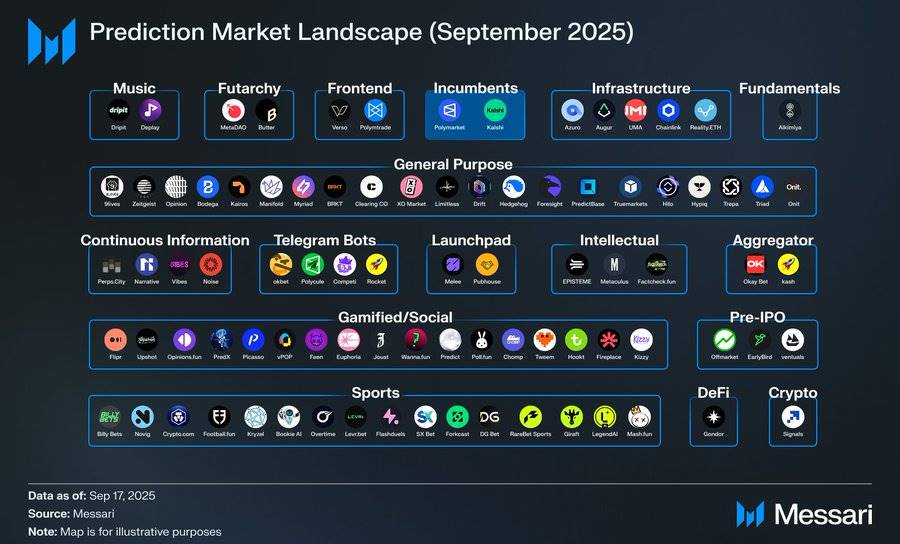
However, with over 100 prediction market projects and growing, there are a lot of opportunities.

The question is, how should investors identify the best opportunities in this increasingly complex and noisy landscape?
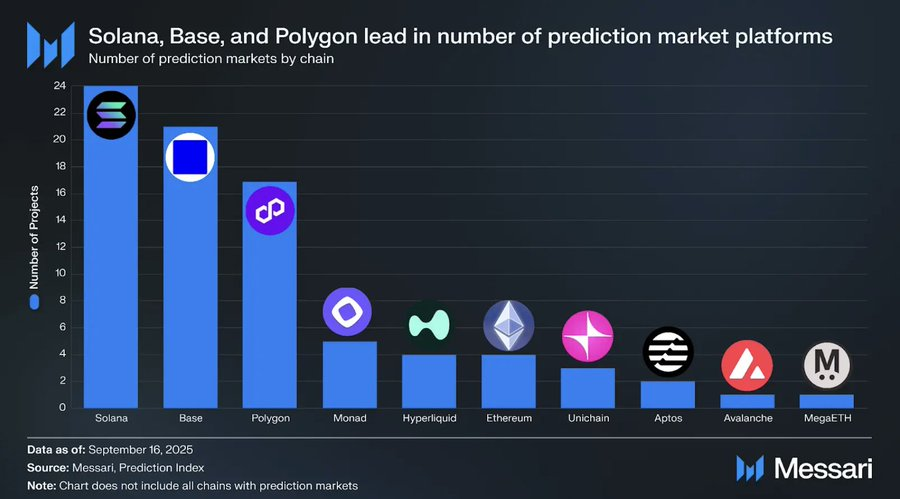
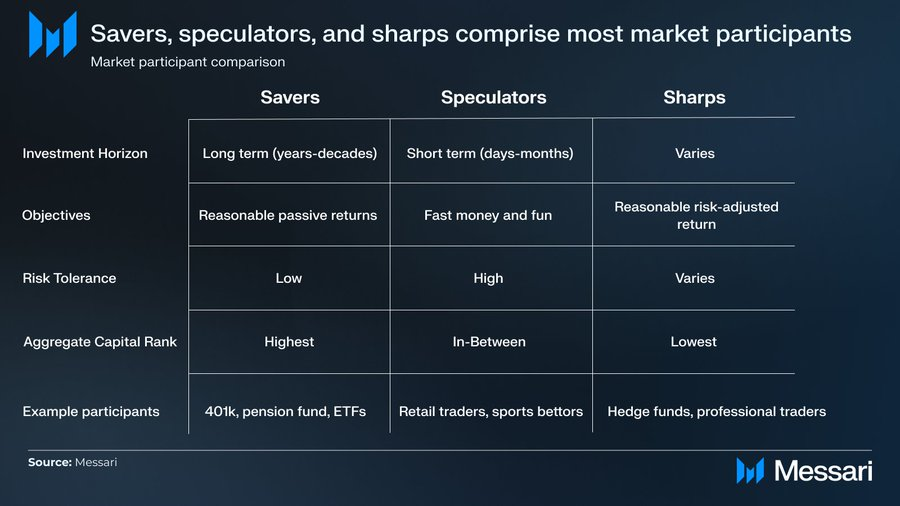
We believe that the best way to solve liquidity issues and increase trading volume is to attract retail speculators.

Prediction markets can attract this segment by focusing on accessibility, fun, user experience, and high potential financial gains.
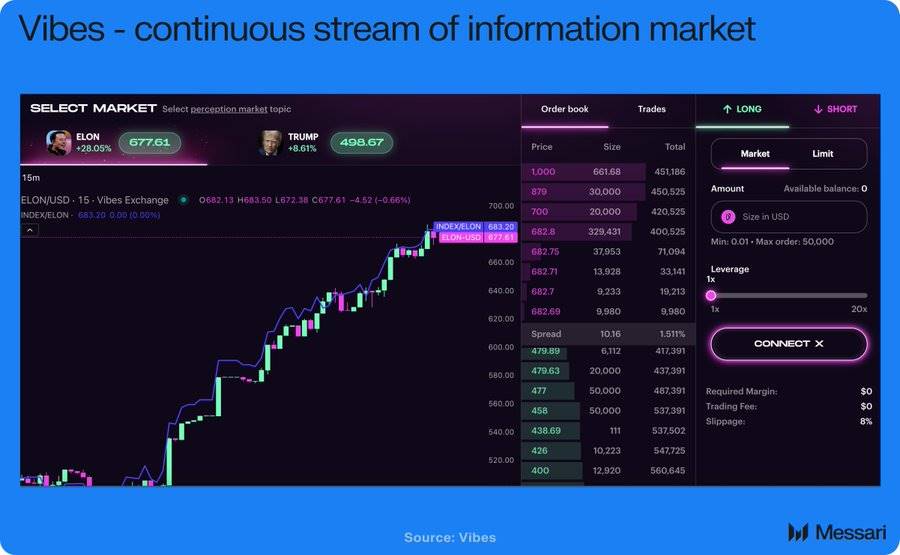
Continuous flow of information perpetual contracts

Because perpetual contracts fluctuate continuously, they overcome the slow settlement times that often deter speculators in binary outcome markets.

Such perpetual contracts can also track interesting and well-understood topics for which there are currently no existing markets.
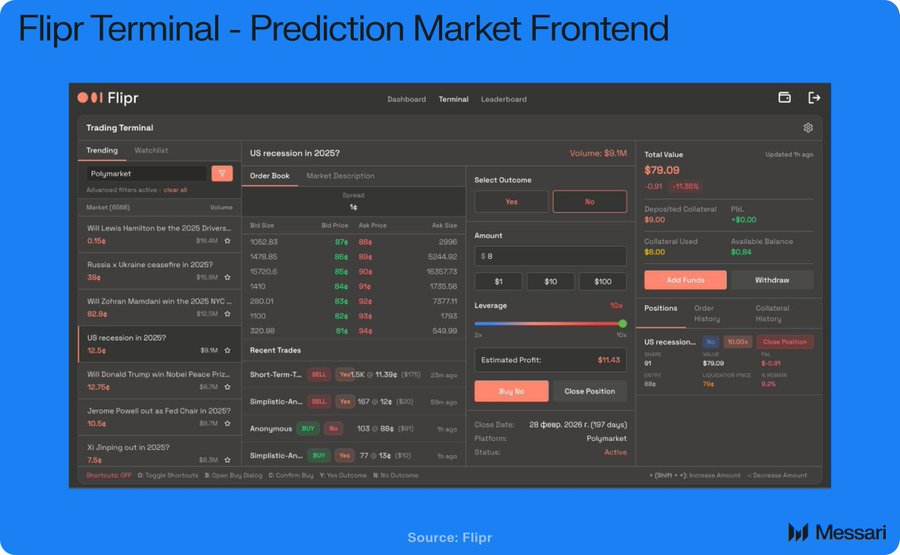
Front-end platform

Rather than building native liquidity, startups can source supply from existing industry leaders and provide users with a higher-quality trading experience.

For example, Flipr offers a trading terminal, trading bots on the X platform, and up to 10x leverage using existing liquidity.
Social Apps

Gamified apps or social experiences can make forecasting more fun.

Just as sports betting is an inherently social experience, prediction markets can foster a similarly interactive experience.

In the early stages of prediction market adoption, the design space is very broad.

Basket trading, managed indices, celebrity copy trading, parlays, and more are all worth exploring.

Piyasa Fırsatı
1 Logosu
1 Fiyatı(1)
$0.005701
$0.005701$0.005701
-0.45%
USD
1 (1) Canlı Fiyat Grafiği
Sorumluluk Reddi: Bu sitede yeniden yayınlanan makaleler, halka açık platformlardan alınmıştır ve yalnızca bilgilendirme amaçlıdır. MEXC'nin görüşlerini yansıtmayabilir. Tüm hakları telif sahiplerine aittir. Herhangi bir içeriğin üçüncü taraf haklarını ihlal ettiğini düşünüyorsanız, kaldırılması için lütfen [email protected] ile iletişime geçin. MEXC, içeriğin doğruluğu, eksiksizliği veya güncelliği konusunda hiçbir garanti vermez ve sağlanan bilgilere dayalı olarak alınan herhangi bir eylemden sorumlu değildir. İçerik, finansal, yasal veya diğer profesyonel tavsiye niteliğinde değildir ve MEXC tarafından bir tavsiye veya onay olarak değerlendirilmemelidir.

Ayrıca Şunları da Beğenebilirsiniz

Shocking OpenVPP Partnership Claim Draws Urgent Scrutiny

Shocking OpenVPP Partnership Claim Draws Urgent Scrutiny

The post Shocking OpenVPP Partnership Claim Draws Urgent Scrutiny appeared on BitcoinEthereumNews.com. The cryptocurrency world is buzzing with a recent controversy surrounding a bold OpenVPP partnership claim. This week, OpenVPP (OVPP) announced what it presented as a significant collaboration with the U.S. government in the innovative field of energy tokenization. However, this claim quickly drew the sharp eye of on-chain analyst ZachXBT, who highlighted a swift and official rebuttal that has sent ripples through the digital asset community. What Sparked the OpenVPP Partnership Claim Controversy? The core of the issue revolves around OpenVPP’s assertion of a U.S. government partnership. This kind of collaboration would typically be a monumental endorsement for any private cryptocurrency project, especially given the current regulatory climate. Such a partnership could signify a new era of mainstream adoption and legitimacy for energy tokenization initiatives. OpenVPP initially claimed cooperation with the U.S. government. This alleged partnership was said to be in the domain of energy tokenization. The announcement generated considerable interest and discussion online. ZachXBT, known for his diligent on-chain investigations, was quick to flag the development. He brought attention to the fact that U.S. Securities and Exchange Commission (SEC) Commissioner Hester Peirce had directly addressed the OpenVPP partnership claim. Her response, delivered within hours, was unequivocal and starkly contradicted OpenVPP’s narrative. How Did Regulatory Authorities Respond to the OpenVPP Partnership Claim? Commissioner Hester Peirce’s statement was a crucial turning point in this unfolding story. She clearly stated that the SEC, as an agency, does not engage in partnerships with private cryptocurrency projects. This response effectively dismantled the credibility of OpenVPP’s initial announcement regarding their supposed government collaboration. Peirce’s swift clarification underscores a fundamental principle of regulatory bodies: maintaining impartiality and avoiding endorsements of private entities. Her statement serves as a vital reminder to the crypto community about the official stance of government agencies concerning private ventures. Moreover, ZachXBT’s analysis…
Paylaş
BitcoinEthereumNews2025/09/18 02:13
Forward Industries Bets Big on Solana With $4B Capital Plan

Forward Industries Bets Big on Solana With $4B Capital Plan

The firm has filed with the U.S. Securities and Exchange Commission to launch a $4 billion at-the-market (ATM) equity program, […] The post Forward Industries Bets Big on Solana With $4B Capital Plan appeared first on Coindoo.
Paylaş
Coindoo2025/09/18 04:15
Coinbase Joins Ethereum Foundation to Back Open Intents Framework

Coinbase Joins Ethereum Foundation to Back Open Intents Framework

Coinbase Payments has joined the Open Intents Framework as a core contributor, working alongside Ethereum Foundation and other major players. The initiative aims to simplify complex multi-chain interactions through automated solver technology. The post Coinbase Joins Ethereum Foundation to Back Open Intents Framework appeared first on Coinspeaker.
Paylaş
Coinspeaker2025/09/18 02:43
