Two MIT-educated brothers accused of orchestrating the largest MEV bot exploitation in cryptocurrency history will face trial after a federal judge rejected their attempts to dismiss fraud and money laundering charges. Anton Peraire-Bueno, 24, and James Peraire-Bueno, 28, allegedly stole $25 million in cryptocurrency within 12 seconds by manipulating Ethereum’s MEV-Boost protocol in April 2023. Technical Error or Deliberate Exploit? The brothers meticulously planned their operation over several months, studying trading patterns of Ethereum bots and establishing shell companies. They created 16 Ethereum validators using approximately $880,000 in cryptocurrency, then executed what prosecutors called a “bait, block, search, and propagation” scheme targeting three victim traders operating MEV bots. Their exploit involved proposing “lure transactions” to induce victim traders’ bots to purchase illiquid cryptocurrencies worth $25 million. The brothers then sent a false signature to the relay system, gaining premature access to private transaction data. They replaced the lure transactions with their own trades, selling the illiquid tokens and rendering the victims’ holdings worthless. Following the theft, the brothers laundered the stolen funds through complex transactions across multiple addresses and foreign exchanges with limited KYC requirements. They converted the cryptocurrency to DAI stablecoin, then to USDC , before transferring $20 million to U.S. dollar accounts. Foreign law enforcement froze $3 million of the stolen funds. The case comes amid rising concerns about MEV exploitation across blockchain networks. Recent incidents include a $2 million insider attack on Bedrock’s UniBTC protocol by a former Fuzzland employee and a notorious Solana MEV bot named “arsc” that accumulated $30 million in two months through sandwich attacks. Brothers’ Legal Battle Reaches Critical Juncture Federal prosecutors arrested the Peraire-Bueno brothers on May 15, 2024, with Anton taken into custody in Boston and James in New York. U.S. Attorney Damian Williams described the scheme as meticulously planned, noting how the brothers “ used their specialized skills and education to tamper with and manipulate the protocols relied upon by millions of Ethereum users. “ Two Brothers Arrested for Attacking Ethereum Blockchain and Stealing $25M in Cryptocurrency 🔗: https://t.co/rY4No6YUrm pic.twitter.com/2Mlb3zIdpo — U.S. Department of Justice (@TheJusticeDept) May 15, 2024 The brothers face charges of conspiracy to commit wire fraud, wire fraud, and conspiracy to commit money laundering. Each charge carries a potential 20-year prison sentence. A federal judge scheduled their trial for October 14, 2025 , after denying their motions to dismiss the indictment. The court found the wire fraud charges legally sufficient, determining that the brothers’ lure transactions and false signatures constituted material misrepresentations. The judge ruled that the $25 million in stolen cryptocurrency represented a traditionally recognized property interest, not merely contingent profits. IRS Criminal Investigation’s New York Cyber Unit traced the stolen funds back to the brothers despite their sophisticated laundering efforts. Special Agent Thomas Fattorusso noted that investigators “simply followed the money” using cutting-edge technology and traditional investigative methods. Growing MEV Threat Challenges Blockchain Scalability MEV exploitation has emerged as a dominant threat to blockchain scalability, according to recent research from Flashbots. According to a report covered by Cryptonews in June, MEV bots now consume 40% of all blockspace on Solana and over half of the gas usage on Ethereum rollups, such as Base and OP Mainnet. 🔍 MEV bot spam is now the main barrier to blockchain scalability, consuming most new throughput on Ethereum rollups and Solana. #MEV #BlockchainScalability https://t.co/kNRiwwORsU — Cryptonews.com (@cryptonews) June 17, 2025 The Peraire-Bueno case represents the first criminal prosecution of MEV manipulation; however, similar exploits continue to occur across various networks. A Ronin Network breach in August 2024 initially appeared malicious but was later revealed to be a white-hat operation, with the hacker returning $9.8 million after discovering a vulnerability in the bridge. Recent data from EigenPhi shows more than 81,000 users fell victim to sandwich attacks in the last 30 days alone. Source: EigenPhi These attacks now account for nearly $1 billion in weekly trading volume on Ethereum-based decentralized exchanges. Flashbots has proposed new frameworks to address MEV abuse, including explicit MEV auctions and programmable privacy using Trusted Execution Environments. The organization argues that current spam from MEV bots creates artificial fee floors, undermining the promise of near-zero transaction costs on scaled networks. The brothers’ trial, scheduled for October, is likely to set precedents for future MEV-related prosecutions, as it isn’t technically precise whether it can be attributed to an exploit of a technical oversight.Two MIT-educated brothers accused of orchestrating the largest MEV bot exploitation in cryptocurrency history will face trial after a federal judge rejected their attempts to dismiss fraud and money laundering charges. Anton Peraire-Bueno, 24, and James Peraire-Bueno, 28, allegedly stole $25 million in cryptocurrency within 12 seconds by manipulating Ethereum’s MEV-Boost protocol in April 2023. Technical Error or Deliberate Exploit? The brothers meticulously planned their operation over several months, studying trading patterns of Ethereum bots and establishing shell companies. They created 16 Ethereum validators using approximately $880,000 in cryptocurrency, then executed what prosecutors called a “bait, block, search, and propagation” scheme targeting three victim traders operating MEV bots. Their exploit involved proposing “lure transactions” to induce victim traders’ bots to purchase illiquid cryptocurrencies worth $25 million. The brothers then sent a false signature to the relay system, gaining premature access to private transaction data. They replaced the lure transactions with their own trades, selling the illiquid tokens and rendering the victims’ holdings worthless. Following the theft, the brothers laundered the stolen funds through complex transactions across multiple addresses and foreign exchanges with limited KYC requirements. They converted the cryptocurrency to DAI stablecoin, then to USDC , before transferring $20 million to U.S. dollar accounts. Foreign law enforcement froze $3 million of the stolen funds. The case comes amid rising concerns about MEV exploitation across blockchain networks. Recent incidents include a $2 million insider attack on Bedrock’s UniBTC protocol by a former Fuzzland employee and a notorious Solana MEV bot named “arsc” that accumulated $30 million in two months through sandwich attacks. Brothers’ Legal Battle Reaches Critical Juncture Federal prosecutors arrested the Peraire-Bueno brothers on May 15, 2024, with Anton taken into custody in Boston and James in New York. U.S. Attorney Damian Williams described the scheme as meticulously planned, noting how the brothers “ used their specialized skills and education to tamper with and manipulate the protocols relied upon by millions of Ethereum users. “ Two Brothers Arrested for Attacking Ethereum Blockchain and Stealing $25M in Cryptocurrency 🔗: https://t.co/rY4No6YUrm pic.twitter.com/2Mlb3zIdpo — U.S. Department of Justice (@TheJusticeDept) May 15, 2024 The brothers face charges of conspiracy to commit wire fraud, wire fraud, and conspiracy to commit money laundering. Each charge carries a potential 20-year prison sentence. A federal judge scheduled their trial for October 14, 2025 , after denying their motions to dismiss the indictment. The court found the wire fraud charges legally sufficient, determining that the brothers’ lure transactions and false signatures constituted material misrepresentations. The judge ruled that the $25 million in stolen cryptocurrency represented a traditionally recognized property interest, not merely contingent profits. IRS Criminal Investigation’s New York Cyber Unit traced the stolen funds back to the brothers despite their sophisticated laundering efforts. Special Agent Thomas Fattorusso noted that investigators “simply followed the money” using cutting-edge technology and traditional investigative methods. Growing MEV Threat Challenges Blockchain Scalability MEV exploitation has emerged as a dominant threat to blockchain scalability, according to recent research from Flashbots. According to a report covered by Cryptonews in June, MEV bots now consume 40% of all blockspace on Solana and over half of the gas usage on Ethereum rollups, such as Base and OP Mainnet. 🔍 MEV bot spam is now the main barrier to blockchain scalability, consuming most new throughput on Ethereum rollups and Solana. #MEV #BlockchainScalability https://t.co/kNRiwwORsU — Cryptonews.com (@cryptonews) June 17, 2025 The Peraire-Bueno case represents the first criminal prosecution of MEV manipulation; however, similar exploits continue to occur across various networks. A Ronin Network breach in August 2024 initially appeared malicious but was later revealed to be a white-hat operation, with the hacker returning $9.8 million after discovering a vulnerability in the bridge. Recent data from EigenPhi shows more than 81,000 users fell victim to sandwich attacks in the last 30 days alone. Source: EigenPhi These attacks now account for nearly $1 billion in weekly trading volume on Ethereum-based decentralized exchanges. Flashbots has proposed new frameworks to address MEV abuse, including explicit MEV auctions and programmable privacy using Trusted Execution Environments. The organization argues that current spam from MEV bots creates artificial fee floors, undermining the promise of near-zero transaction costs on scaled networks. The brothers’ trial, scheduled for October, is likely to set precedents for future MEV-related prosecutions, as it isn’t technically precise whether it can be attributed to an exploit of a technical oversight.

MIT Brothers Who Exploited MEV Bots for $25M Must Face Trial, Judge Rules

Two MIT-educated brothers accused of orchestrating the largest MEV bot exploitation in cryptocurrency history will face trial after a federal judge rejected their attempts to dismiss fraud and money laundering charges.

Anton Peraire-Bueno, 24, and James Peraire-Bueno, 28, allegedly stole $25 million in cryptocurrency within 12 seconds by manipulating Ethereum’s MEV-Boost protocol in April 2023.

Technical Error or Deliberate Exploit?

The brothers meticulously planned their operation over several months, studying trading patterns of Ethereum bots and establishing shell companies.

They created 16 Ethereum validators using approximately $880,000 in cryptocurrency, then executed what prosecutors called a “bait, block, search, and propagation” scheme targeting three victim traders operating MEV bots.

Their exploit involved proposing “lure transactions” to induce victim traders’ bots to purchase illiquid cryptocurrencies worth $25 million.

The brothers then sent a false signature to the relay system, gaining premature access to private transaction data.

They replaced the lure transactions with their own trades, selling the illiquid tokens and rendering the victims’ holdings worthless.

Following the theft, the brothers laundered the stolen funds through complex transactions across multiple addresses and foreign exchanges with limited KYC requirements.

They converted the cryptocurrency to DAI stablecoin, then to USDC, before transferring $20 million to U.S. dollar accounts. Foreign law enforcement froze $3 million of the stolen funds.

The case comes amid rising concerns about MEV exploitation across blockchain networks.

Recent incidents include a $2 million insider attack on Bedrock’s UniBTC protocol by a former Fuzzland employee and a notorious Solana MEV bot named “arsc” that accumulated $30 million in two months through sandwich attacks.

Federal prosecutors arrested the Peraire-Bueno brothers on May 15, 2024, with Anton taken into custody in Boston and James in New York.

U.S. Attorney Damian Williams described the scheme as meticulously planned, noting how the brothers “used their specialized skills and education to tamper with and manipulate the protocols relied upon by millions of Ethereum users.

The brothers face charges of conspiracy to commit wire fraud, wire fraud, and conspiracy to commit money laundering.

Each charge carries a potential 20-year prison sentence. A federal judge scheduled their trial for October 14, 2025, after denying their motions to dismiss the indictment.

The court found the wire fraud charges legally sufficient, determining that the brothers’ lure transactions and false signatures constituted material misrepresentations.

The judge ruled that the $25 million in stolen cryptocurrency represented a traditionally recognized property interest, not merely contingent profits.

IRS Criminal Investigation’s New York Cyber Unit traced the stolen funds back to the brothers despite their sophisticated laundering efforts.

Special Agent Thomas Fattorusso noted that investigators “simply followed the money” using cutting-edge technology and traditional investigative methods.

Growing MEV Threat Challenges Blockchain Scalability

MEV exploitation has emerged as a dominant threat to blockchain scalability, according to recent research from Flashbots.

According to a report covered by Cryptonews in June, MEV bots now consume 40% of all blockspace on Solana and over half of the gas usage on Ethereum rollups, such as Base and OP Mainnet.

The Peraire-Bueno case represents the first criminal prosecution of MEV manipulation; however, similar exploits continue to occur across various networks.

A Ronin Network breach in August 2024 initially appeared malicious but was later revealed to be a white-hat operation, with the hacker returning $9.8 million after discovering a vulnerability in the bridge.

Recent data from EigenPhi shows more than 81,000 users fell victim to sandwich attacks in the last 30 days alone.
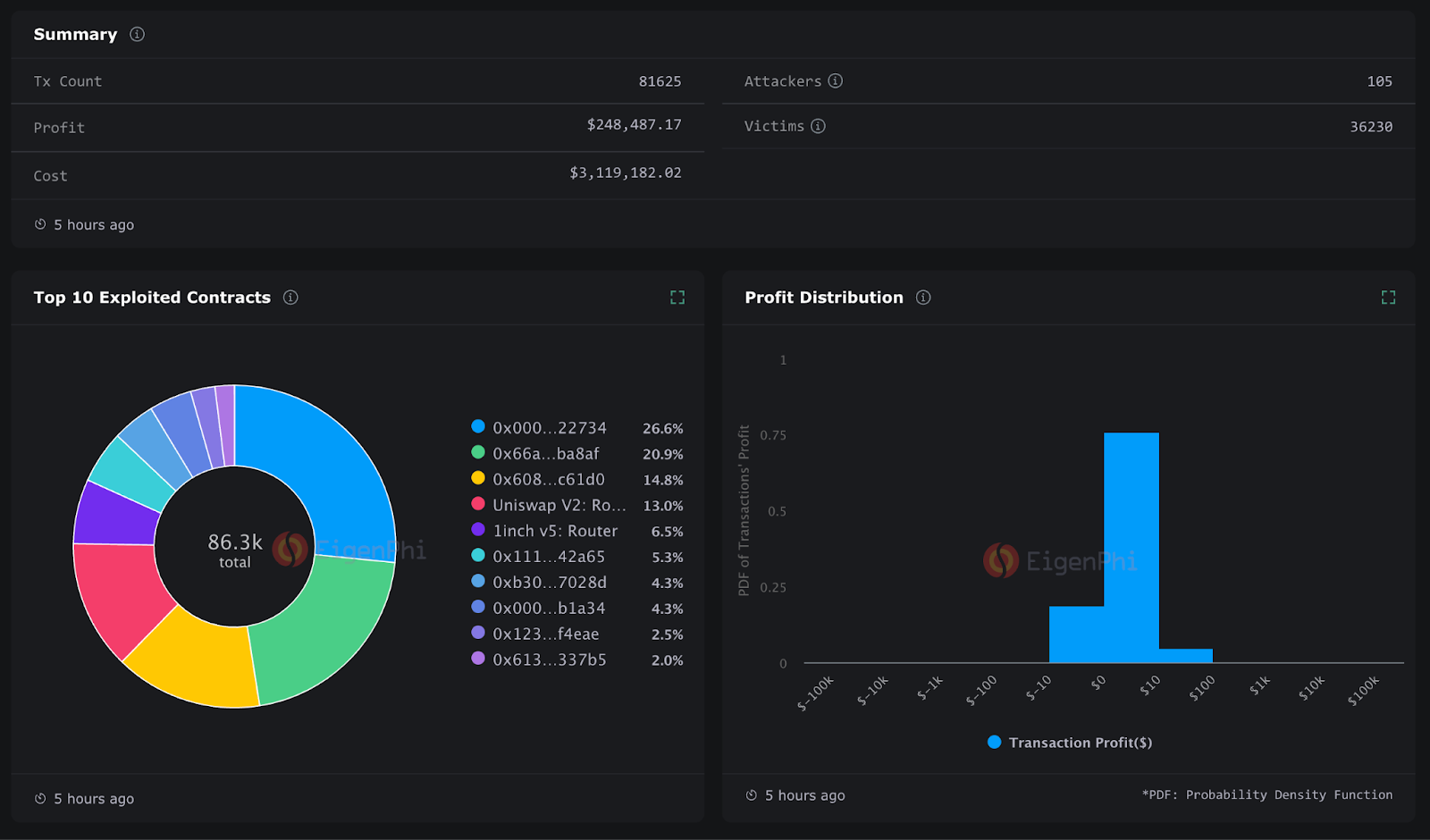
MIT Brothers Who Exploited MEV Bots for $25M Must Face Trial, Judge RulesSource: EigenPhi

These attacks now account for nearly $1 billion in weekly trading volume on Ethereum-based decentralized exchanges.

Flashbots has proposed new frameworks to address MEV abuse, including explicit MEV auctions and programmable privacy using Trusted Execution Environments.

The organization argues that current spam from MEV bots creates artificial fee floors, undermining the promise of near-zero transaction costs on scaled networks.

The brothers’ trial, scheduled for October, is likely to set precedents for future MEV-related prosecutions, as it isn’t technically precise whether it can be attributed to an exploit of a technical oversight.

Piyasa Fırsatı
NEAR Logosu
NEAR Fiyatı(NEAR)
$1.464
$1.464$1.464
-4.87%
USD
NEAR (NEAR) Canlı Fiyat Grafiği
Sorumluluk Reddi: Bu sitede yeniden yayınlanan makaleler, halka açık platformlardan alınmıştır ve yalnızca bilgilendirme amaçlıdır. MEXC'nin görüşlerini yansıtmayabilir. Tüm hakları telif sahiplerine aittir. Herhangi bir içeriğin üçüncü taraf haklarını ihlal ettiğini düşünüyorsanız, kaldırılması için lütfen [email protected] ile iletişime geçin. MEXC, içeriğin doğruluğu, eksiksizliği veya güncelliği konusunda hiçbir garanti vermez ve sağlanan bilgilere dayalı olarak alınan herhangi bir eylemden sorumlu değildir. İçerik, finansal, yasal veya diğer profesyonel tavsiye niteliğinde değildir ve MEXC tarafından bir tavsiye veya onay olarak değerlendirilmemelidir.

Ayrıca Şunları da Beğenebilirsiniz

Ethereum unveils roadmap focusing on scaling, interoperability, and security at Japan Dev Conference

Ethereum unveils roadmap focusing on scaling, interoperability, and security at Japan Dev Conference

The post Ethereum unveils roadmap focusing on scaling, interoperability, and security at Japan Dev Conference appeared on BitcoinEthereumNews.com. Key Takeaways Ethereum’s new roadmap was presented by Vitalik Buterin at the Japan Dev Conference. Short-term priorities include Layer 1 scaling and raising gas limits to enhance transaction throughput. Vitalik Buterin presented Ethereum’s development roadmap at the Japan Dev Conference today, outlining the blockchain platform’s priorities across multiple timeframes. The short-term goals focus on scaling solutions and increasing Layer 1 gas limits to improve transaction capacity. Mid-term objectives target enhanced cross-Layer 2 interoperability and faster network responsiveness to create a more seamless user experience across different scaling solutions. The long-term vision emphasizes building a secure, simple, quantum-resistant, and formally verified minimalist Ethereum network. This approach aims to future-proof the platform against emerging technological threats while maintaining its core functionality. The roadmap presentation comes as Ethereum continues to compete with other blockchain platforms for market share in the smart contract and decentralized application space. Source: https://cryptobriefing.com/ethereum-roadmap-scaling-interoperability-security-japan/
Paylaş
BitcoinEthereumNews2025/09/18 00:25
USD/INR opens flat on hopes of RBI’s follow-through intervention

USD/INR opens flat on hopes of RBI’s follow-through intervention

The post USD/INR opens flat on hopes of RBI’s follow-through intervention appeared on BitcoinEthereumNews.com. The Indian Rupee (INR) opens on a flat note against
Paylaş
BitcoinEthereumNews2025/12/18 13:33
A Netflix ‘KPop Demon Hunters’ Short Film Has Been Rated For Release

A Netflix ‘KPop Demon Hunters’ Short Film Has Been Rated For Release

The post A Netflix ‘KPop Demon Hunters’ Short Film Has Been Rated For Release appeared on BitcoinEthereumNews.com. KPop Demon Hunters Netflix Everyone has wondered what may be the next step for KPop Demon Hunters as an IP, given its record-breaking success on Netflix. Now, the answer may be something exactly no one predicted. According to a new filing with the MPA, something called Debut: A KPop Demon Hunters Story has been rated PG by the ratings body. It’s listed alongside some other films, and this is obviously something that has not been publicly announced. A short film could be well, very short, a few minutes, and likely no more than ten. Even that might be pushing it. Using say, Pixar shorts as a reference, most are between 4 and 8 minutes. The original movie is an hour and 36 minutes. The “Debut” in the title indicates some sort of flashback, perhaps to when HUNTR/X first arrived on the scene before they blew up. Previously, director Maggie Kang has commented about how there were more backstory components that were supposed to be in the film that were cut, but hinted those could be explored in a sequel. But perhaps some may be put into a short here. I very much doubt those scenes were fully produced and simply cut, but perhaps they were finished up for this short film here. When would Debut: KPop Demon Hunters theoretically arrive? I’m not sure the other films on the list are much help. Dead of Winter is out in less than two weeks. Mother Mary does not have a release date. Ne Zha 2 came out earlier this year. I’ve only seen news stories saying The Perfect Gamble was supposed to come out in Q1 2025, but I’ve seen no evidence that it actually has. KPop Demon Hunters Netflix It could be sooner rather than later as Netflix looks to capitalize…
Paylaş
BitcoinEthereumNews2025/09/18 02:23