Banks warn stablecoins could drain $6 trillion in deposits. Reuters analysis shows the math doesn’t work that way. Money stays in the system regardless. Banks areBanks warn stablecoins could drain $6 trillion in deposits. Reuters analysis shows the math doesn’t work that way. Money stays in the system regardless. Banks are

Stablecoins Won’t Cause $6 Trillion Bank Crisis

2026/02/16 01:45
Okuma süresi: 4 dk

Banks warn stablecoins could drain $6 trillion in deposits. Reuters analysis shows the math doesn’t work that way. Money stays in the system regardless.

Banks are sounding alarms. Brian Moynihan at Bank of America claims stablecoins could pull $6 trillion from traditional lenders. The threat is real, the CEO insists. But Reuters Breakingviews dug into the numbers and found something different.

The deposit flight argument has a hole. Cash moving to stablecoins doesn’t vanish from banking. It transforms instead.

The Loophole Banks Fear

Stablecoins like Circle’s $70 billion USDC found a workaround. Direct interest payments are banned under 2025’s Genius Act. Third parties changed everything, though. Coinbase pays holders about 3.5% yearly. Users just need balances on the platform.

Circle doesn’t pay holders directly. The company pays Coinbase fees for custody work. That subsidizes the interest effectively.

You might also like: Big Banks Slam Brakes on Crypto Charters

Banks call this a loophole. They say it breaks the Genius Act’s spirit. Aaron Klein wrote in September that interest-paying stablecoins could “cause massive problems resulting in losses by retail crypto holders.” A bill to close it died in January. Coinbase CEO Brian Armstrong opposed the legislation.

Math That Doesn’t Add Up

Paul Grewal, Chief Legal Officer at Coinbase, challenged the $6 trillion claim on X. He called the Treasury study “a bank industry push piece” and compared it to an “ESPN report” saying the Browns would make the Super Bowl.

The study came out in April. The Treasury Department funded it. Other estimates went lower fast. Fed economist Jessie Wang used $1 trillion as a high-end figure in December. Standard Chartered predicted $500 billion by the end of 2028. Circle’s stock dropped 64% over six months.

Where Money Actually Goes

Here’s the trick banks missed. Deposits can’t leave the system on aggregate. A customer pulls cash from Bank A to buy tokens. The stablecoin issuer buys Treasury bills with that money. Whoever sold those bills now has extra cash at Bank B.

Must read: Coinbase CEO Confident a Crypto Market Framework Can Benefit Everyone

Money shifts from retail deposits at Bank A to wholesale deposits at Bank B. It stays in banking, though.

Individual banks might pay more to keep customers. That’s different from system collapse. Breakingviews studied call reports from 4,088 profitable U.S. banks last year. Only 174 would lose money if consumer deposit costs rose 1 percentage point.

Small Banks Face Pressure

Those 174 banks hold $79 billion in deposits combined. That’s under 0.5% of America’s $19 trillion deposit base, according to KBRA Financial Intelligence. About 2,600 banks currently earn 10% return on equity. That number drops to 1,600 with higher deposit costs.

One thousand smaller lenders would need new models or buyers. The U.S. would still have more banks than most developed countries. Total deposits wouldn’t change on aggregate.

Related: Danske Bank Reverses Crypto Policy, Cites Regulation Progress

History Repeats With New Tech

Money market funds changed everything in the 1970s. Before them, consumers had two options for cash savings. Banks or mattresses basically. MMFs parked money in low-risk government debt. They paid decent yields while offering access.

Banks survived that shift. Many smaller regional lenders didn’t make it. Savers benefited massively, though. Stablecoins could follow the same path, according to Reuters analysis.

Banks passed on just 40% of rate increases to retail depositors during March 2022 to March 2024. Business customers got 60% to 80%, depending on deposit type, per Fed figures. Competition from yield-bearing tokens would change that math.

What Comes Next

The White House gave banks and crypto firms until the end of February to find common ground. Both sides want tight restrictions, but for different reasons. Safety concerns are separate from the interest payment debate, though.

Also trending: Hong Kong SFC Approves Crypto Margin Financing and Perpetuals

If tokens are unsafe and prone to runs, better prudential regulation makes sense. Rules designed to make them less appealing arbitrarily don’t. Retailers like Walmart or Amazon could enter the space. They’d save on card fees if stablecoin payments grow. That creates an incentive to pay good yields.

Public market investors grew weary of giant forecasts. Circle’s stock performance shows that. The deposit flight argument relies on flawed math about where money actually goes. Banks faced new competition before and adapted. The system held together even as individual lenders failed.

The post Stablecoins Won’t Cause $6 Trillion Bank Crisis appeared first on Live Bitcoin News.

Piyasa Fırsatı
Lorenzo Protocol Logosu
Lorenzo Protocol Fiyatı(BANK)
$0.04072
$0.04072$0.04072
+0.91%
USD
Lorenzo Protocol (BANK) Canlı Fiyat Grafiği
Sorumluluk Reddi: Bu sitede yeniden yayınlanan makaleler, halka açık platformlardan alınmıştır ve yalnızca bilgilendirme amaçlıdır. MEXC'nin görüşlerini yansıtmayabilir. Tüm hakları telif sahiplerine aittir. Herhangi bir içeriğin üçüncü taraf haklarını ihlal ettiğini düşünüyorsanız, kaldırılması için lütfen [email protected] ile iletişime geçin. MEXC, içeriğin doğruluğu, eksiksizliği veya güncelliği konusunda hiçbir garanti vermez ve sağlanan bilgilere dayalı olarak alınan herhangi bir eylemden sorumlu değildir. İçerik, finansal, yasal veya diğer profesyonel tavsiye niteliğinde değildir ve MEXC tarafından bir tavsiye veya onay olarak değerlendirilmemelidir.

Ayrıca Şunları da Beğenebilirsiniz

Bitcoin Hyper Not Far from $20M, Whales Keep Buying: See What This $BTC Layer-2 Plans
Bitcoin Hyper Not Far from $20M, Whales Keep Buying: See What This $BTC Layer-2 Plans

To the uninitiated, Bitcoin and crypto are synonymous – and it’s only fair, given that the granddaddy of all crypto has been the face of the industry ever since it burst onto the scene a few years back. Since 2020, Bitcoin has generated over 1,500% in returns. Basically, crypto is so much about Bitcoin. All […]
Paylaş
Bitcoinist2025/09/22 16:37
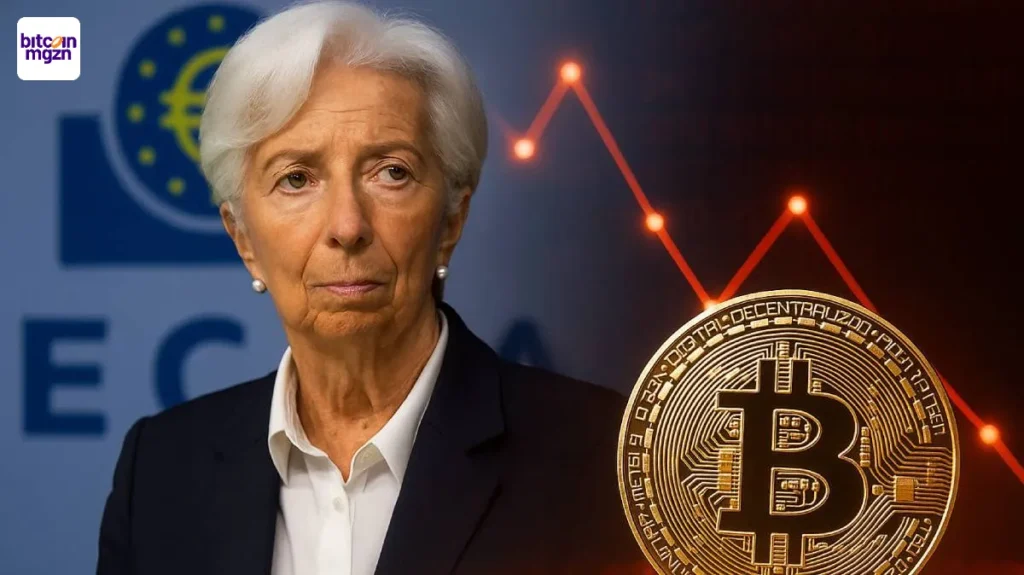
ECB-president hernieuwt aanval op Bitcoin terwijl euro daalt

ECB-president hernieuwt aanval op Bitcoin terwijl euro daalt

Snelle crypto updates? Connect op Instagram! Check onze Instagram   ECB-president Christine Lagarde noemt Bitcoin waardeloos en waarschuwt voor zijn speculatieve aard. Haar uitspraken komen op een moment dat DeFi groeit en de euro onder druk staat, wat de discussie over geld en controle opnieuw tot leven brengt. ECB houdt vast aan kritiek op Bitcoin en DeFi De Europese Centrale Bank (ECB) blijft vasthouden aan haar scherpe toon over Bitcoin. Volgens president Christine Lagarde ontbreekt de munt het fundament dat echt geld kenmerkt. Ze noemt het een speculatief middel zonder onderliggende waarde, en benadrukt dat de ECB het publieke vertrouwen in geld moet beschermen. Terwijl de digitale economie zich steeds meer richting decentralisatie beweegt, probeert de bank haar rol als stabiele pijler te behouden. ECB (European Central Bank) De European Central Bank (ECB) is de centrale bank van de eurozone en bepaalt samen met de nationale banken het monetaire beleid voor de euro. Ze houdt de inflatie in de gaten, bepaalt de rente en zorgt voor stabiliteit van het financiële systeem. In de cryptowereld speelt de ECB vooral een rol met het onderzoek en de voorbereidingen voor een digitale euro, een eigen centrale bank digitale munt (CBDC). Daarmee wil de bank inspelen op de groei van digitaal geld en alternatieven zoals stablecoins. Voor de crypto-industrie is dit belangrijk omdat een digitale euro de concurrentie en het speelveld voor private stablecoins kan veranderen. De waarschuwing van Lagarde past in een bredere strategie van de ECB. De opkomst van decentrale financiële systemen (DeFi) wordt gezien als een uitdaging voor de invloed van centrale banken. In die waarschuwing lijkt ook iets van zelfbescherming door te klinken: het behoud van macht over monetair beleid. Voorstanders van Bitcoin wijzen juist op de kracht van schaarste, transparantie en onafhankelijkheid; eigenschappen die fiatgeld in hun ogen steeds meer verliest. “How many bitcoin do you own?” That’s how it starts, a stupid question from the host. From there, it goes downhill fast. Christine Lagarde repeats every tired anti-bitcoin cliché the ECB has ever pushed. Let’s go… 1️⃣ “Bitcoin has no intrinsic value.” Neither does fiat.… pic.twitter.com/uMqtEHvkD0 — Eli Nagar (@EliNagarBrr) October 7, 2025 De euro verzwakt terwijl crypto aan invloed wint Ondertussen verliest de euro langzaam maar zeker aan koopkracht. Sinds de invoering in 2002 is de munt ruim veertig procent van haar reële waarde kwijtgeraakt. Dat voedt de twijfel over de houdbaarheid van het huidige fiatstelsel en vergroot de interesse in alternatieven zoals Bitcoin en andere cryptovaluta. Binnen de Europese cryptogemeenschap worden de woorden van de ECB dan ook met de nodige scepsis onthaald. Been 22 years, physical $Euro coins and banknotes entered circulation on January 1st 2002. Since then, this fiasco lost 40% of its buying power according to “official” stats. Won’t even mention real stats, or you’d be dumping ALL your Eurobolivars for #Bitcoin right now. pic.twitter.com/Rp3KinVfPm — Vandelay ₿TC Industries ⚡ (@VandelayBTC) January 3, 2024 DeFi-platforms en stablecoins winnen terrein in Europa, juist omdat ze nieuwe mogelijkheden bieden voor rendement en autonomie. Waar Lagarde waarschuwt voor volatiliteit, zien veel gebruikers vooral vrijheid in een systeem dat zich niets aantrekt van centrale banken. De groei van DeFi laat zien dat vertrouwen niet alleen via instituties ontstaat, maar ook via technologie. Monetaire controle en vertrouwen in het digitale tijdperk De standpunten van de ECB leggen een oud spanningsveld bloot: de strijd tussen stabiliteit en vrijheid. Aan de ene kant verdedigt de bank haar rol als bewaker van orde, aan de andere kant tonen cryptomarkten dat vertrouwen ook buiten traditionele kanalen kan bestaan. Terwijl de ECB pleit voor zekerheid en voorspelbaarheid, zoeken investeerders steeds vaker transparantie en zelfbeschikking. Lagarde’s uitspraken passen in een wereldwijde trend waarin centrale banken proberen hun gezag te behouden in een economie die snel verandert. Toch klinkt steeds luider de vraag of die vorm van controle nog houdbaar is. Nieuwe technologieën maken directe waardeoverdracht mogelijk,zonder tussenkomst van banken. Dat idee wringt natuurlijk met de kern van het bestaande financiële systeem. Exactly. It was narrative management. They feel threatened. That’s why real questions about monetary policy, inflation, and accountability never make it to the script. — Eli Nagar (@EliNagarBrr) October 8, 2025 De toekomst van waarde: centraal of gedecentraliseerd? De discussie tussen de ECB en de cryptowereld draait om meer dan geld. Het gaat om vertrouwen, transparantie en macht over waarde. Zolang de euro verder verzwakt en decentrale technologieën blijven groeien, lijkt de kloof tussen centrale banken en de cryptosector alleen maar groter te worden. Hoeveel invloed de ECB kan behouden, hangt af van haar vermogen zich aan te passen aan dit nieuwe tijdperk. De strijd om waarde is niet enkel economisch, maar ook ideologisch. In dat licht voelt de opkomst van Bitcoin minder als een bedreiging, en meer als een logisch gevolg van de zoektocht naar onafhankelijkheid in geld. Koop je Bitcoin via Best Wallet Best wallet is een topklasse crypto wallet waarmee je anoniem crypto kan kopen. Met meer dan 60 chains gesupport kan je al je main crypto coins aanschaffen via Best Wallet. Best wallet - betrouwbare en anonieme wallet Best wallet - betrouwbare en anonieme wallet Meer dan 60 chains beschikbaar voor alle crypto Vroege toegang tot nieuwe projecten Hoge staking belongingen Lage transactiekosten Best wallet review Koop nu via Best Wallet Let op: cryptocurrency is een zeer volatiele en ongereguleerde investering. Doe je eigen onderzoek. Het bericht ECB-president hernieuwt aanval op Bitcoin terwijl euro daalt is geschreven door Sebastiaan Krijnen en verscheen als eerst op Bitcoinmagazine.nl.
Paylaş
Coinstats2025/10/11 03:16
What SBI Really Owns in Ripple May Surprise XRP Investors

What SBI Really Owns in Ripple May Surprise XRP Investors

The post What SBI Really Owns in Ripple May Surprise XRP Investors appeared on BitcoinEthereumNews.com. SBI Holdings Chairman Yoshitaka Kitao has confirmed that
Paylaş
BitcoinEthereumNews2026/02/16 16:14