The post NVIDIA Blackwell Delivers 4x Inference Boost for India’s Sarvam AI Models appeared on BitcoinEthereumNews.com. Jessie A Ellis Feb 18, 2026 16:35 NVIDIAThe post NVIDIA Blackwell Delivers 4x Inference Boost for India’s Sarvam AI Models appeared on BitcoinEthereumNews.com. Jessie A Ellis Feb 18, 2026 16:35 NVIDIA

NVIDIA Blackwell Delivers 4x Inference Boost for India’s Sarvam AI Models

2026/02/19 14:10
Okuma süresi: 3 dk


Jessie A Ellis
Feb 18, 2026 16:35

NVIDIA’s hardware-software co-design achieves 4x inference speedup for Sarvam AI’s 30B parameter sovereign models, showcasing Blackwell’s NVFP4 capabilities.

NVIDIA’s collaboration with Indian AI startup Sarvam AI has produced a 4x inference performance improvement for sovereign large language models, demonstrating the chipmaker’s full-stack optimization capabilities as it pushes deeper into enterprise AI deployment.

The joint engineering effort, detailed in an NVIDIA developer blog published February 18, 2026, targeted Sarvam AI’s flagship 30B parameter model—a multilingual system supporting 22 Indian languages built for voice-based AI agents with strict latency requirements.

Breaking Down the 4x Speedup

The performance gains came from two distinct optimization phases. First, kernel and scheduling improvements on H100 GPUs delivered a 2x speedup through targeted fixes to bottlenecks in the mixture-of-experts (MoE) routing logic. Engineers achieved a 4.1x improvement in MoE routing alone by fusing operations into single CUDA kernels.

The second 2x gain came from deploying on Blackwell architecture with NVFP4 weight quantization. At higher concurrency points, Blackwell showed even stronger results—2.8x throughput improvement at 100 tokens per second per user compared to optimized H100 performance.

What’s notable: a single Blackwell GPU handled the 30B model more efficiently than multiple H100s running in parallel. The disaggregated serving approach—dedicating separate GPUs to prefill and decode phases—proved optimal for this workload pattern.

The Technical Details That Matter

Sarvam’s models use a heterogeneous MoE architecture with 128 experts and top-6 routing for the 30B variant. The 100B model scales to 32 layers with top-8 routing and implements multi-head latent attention similar to DeepSeek-V3 for aggressive KV cache compression.

Service level agreements drove the optimization targets: sub-1000ms time to first token and under 15ms inter-token latency at the 95th percentile. These aren’t arbitrary benchmarks—they’re requirements for production voice AI applications where latency directly impacts user experience.

The kernel-level work cut transformer layer time by 34%, from 3.4ms to 2.5ms per layer. Fusing query-key normalization with rotary positional embeddings delivered a 7.6x speedup for that specific operation by eliminating redundant memory reads.

Market Context

This announcement follows NVIDIA’s February 12, 2026 disclosure that Blackwell has enabled 10x token cost reductions for certain AI inference workloads through its co-design approach. Meta’s multiyear partnership announced February 17 further validates the strategy of deep integration across GPUs, networking, and software.

NVIDIA stock traded at $182.88 on February 17, down 3.9% amid broader market softness, with market cap holding at $4.66 trillion.

For AI infrastructure buyers, the Sarvam case study provides concrete benchmarks for sovereign AI deployment—particularly relevant as more countries push for locally-controlled model development and data governance. The models were trained using NVIDIA’s Nemotron libraries and NeMo Framework, suggesting a template for similar national AI initiatives.

Image source: Shutterstock

Source: https://blockchain.news/news/nvidia-blackwell-4x-inference-boost-sarvam-ai-sovereign-models
Piyasa Fırsatı
Boost Logosu
Boost Fiyatı(BOOST)
$0.0000926
$0.0000926$0.0000926
+23.46%
USD
Boost (BOOST) Canlı Fiyat Grafiği
Sorumluluk Reddi: Bu sitede yeniden yayınlanan makaleler, halka açık platformlardan alınmıştır ve yalnızca bilgilendirme amaçlıdır. MEXC'nin görüşlerini yansıtmayabilir. Tüm hakları telif sahiplerine aittir. Herhangi bir içeriğin üçüncü taraf haklarını ihlal ettiğini düşünüyorsanız, kaldırılması için lütfen [email protected] ile iletişime geçin. MEXC, içeriğin doğruluğu, eksiksizliği veya güncelliği konusunda hiçbir garanti vermez ve sağlanan bilgilere dayalı olarak alınan herhangi bir eylemden sorumlu değildir. İçerik, finansal, yasal veya diğer profesyonel tavsiye niteliğinde değildir ve MEXC tarafından bir tavsiye veya onay olarak değerlendirilmemelidir.

Ayrıca Şunları da Beğenebilirsiniz

Trump 'ashamed' of 'unpatriotic and disloyal' Supreme Court after tariff decision

Trump 'ashamed' of 'unpatriotic and disloyal' Supreme Court after tariff decision

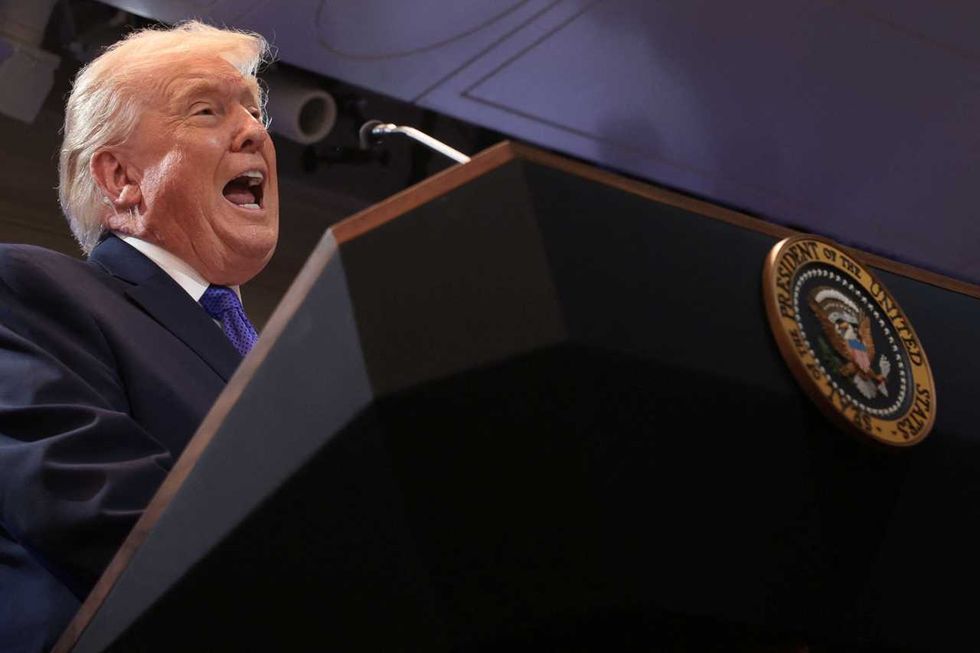
President Donald Trump blasted members of the Supreme Court who ruled against his ability to impose tariffs in a 6-3 decision.During a White House news conference
Paylaş
Rawstory2026/02/21 03:13
The Evolution of Fashion Trends in 2026

The Evolution of Fashion Trends in 2026

Fashion is an ever-changing reflection of culture, technology, and personal identity. In 2026, fashion trends are influenced not only by designers and celebrities
Paylaş
Techbullion2026/02/21 03:34
Google's AP2 protocol has been released. Does encrypted AI still have a chance?

Google's AP2 protocol has been released. Does encrypted AI still have a chance?

Following the MCP and A2A protocols, the AI Agent market has seen another blockbuster arrival: the Agent Payments Protocol (AP2), developed by Google. This will clearly further enhance AI Agents' autonomous multi-tasking capabilities, but the unfortunate reality is that it has little to do with web3AI. Let's take a closer look: What problem does AP2 solve? Simply put, the MCP protocol is like a universal hook, enabling AI agents to connect to various external tools and data sources; A2A is a team collaboration communication protocol that allows multiple AI agents to cooperate with each other to complete complex tasks; AP2 completes the last piece of the puzzle - payment capability. In other words, MCP opens up connectivity, A2A promotes collaboration efficiency, and AP2 achieves value exchange. The arrival of AP2 truly injects "soul" into the autonomous collaboration and task execution of Multi-Agents. Imagine AI Agents connecting Qunar, Meituan, and Didi to complete the booking of flights, hotels, and car rentals, but then getting stuck at the point of "self-payment." What's the point of all that multitasking? So, remember this: AP2 is an extension of MCP+A2A, solving the last mile problem of AI Agent automated execution. What are the technical highlights of AP2? The core innovation of AP2 is the Mandates mechanism, which is divided into real-time authorization mode and delegated authorization mode. Real-time authorization is easy to understand. The AI Agent finds the product and shows it to you. The operation can only be performed after the user signs. Delegated authorization requires the user to set rules in advance, such as only buying the iPhone 17 when the price drops to 5,000. The AI Agent monitors the trigger conditions and executes automatically. The implementation logic is cryptographically signed using Verifiable Credentials (VCs). Users can set complex commission conditions, including price ranges, time limits, and payment method priorities, forming a tamper-proof digital contract. Once signed, the AI Agent executes according to the conditions, with VCs ensuring auditability and security at every step. Of particular note is the "A2A x402" extension, a technical component developed by Google specifically for crypto payments, developed in collaboration with Coinbase and the Ethereum Foundation. This extension enables AI Agents to seamlessly process stablecoins, ETH, and other blockchain assets, supporting native payment scenarios within the Web3 ecosystem. What kind of imagination space can AP2 bring? After analyzing the technical principles, do you think that's it? Yes, in fact, the AP2 is boring when it is disassembled alone. Its real charm lies in connecting and opening up the "MCP+A2A+AP2" technology stack, completely opening up the complete link of AI Agent's autonomous analysis+execution+payment. From now on, AI Agents can open up many application scenarios. For example, AI Agents for stock investment and financial management can help us monitor the market 24/7 and conduct independent transactions. Enterprise procurement AI Agents can automatically replenish and renew without human intervention. AP2's complementary payment capabilities will further expand the penetration of the Agent-to-Agent economy into more scenarios. Google obviously understands that after the technical framework is established, the ecological implementation must be relied upon, so it has brought in more than 60 partners to develop it, almost covering the entire payment and business ecosystem. Interestingly, it also involves major Crypto players such as Ethereum, Coinbase, MetaMask, and Sui. Combined with the current trend of currency and stock integration, the imagination space has been doubled. Is web3 AI really dead? Not entirely. Google's AP2 looks complete, but it only achieves technical compatibility with Crypto payments. It can only be regarded as an extension of the traditional authorization framework and belongs to the category of automated execution. There is a "paradigm" difference between it and the autonomous asset management pursued by pure Crypto native solutions. The Crypto-native solutions under exploration are taking the "decentralized custody + on-chain verification" route, including AI Agent autonomous asset management, AI Agent autonomous transactions (DeFAI), AI Agent digital identity and on-chain reputation system (ERC-8004...), AI Agent on-chain governance DAO framework, AI Agent NPC and digital avatars, and many other interesting and fun directions. Ultimately, once users get used to AI Agent payments in traditional fields, their acceptance of AI Agents autonomously owning digital assets will also increase. And for those scenarios that AP2 cannot reach, such as anonymous transactions, censorship-resistant payments, and decentralized asset management, there will always be a time for crypto-native solutions to show their strength? The two are more likely to be complementary rather than competitive, but to be honest, the key technological advancements behind AI Agents currently all come from web2AI, and web3AI still needs to keep up the good work!
Paylaş
PANews2025/09/18 07:00