The post Crypto News: E-CNY Processes $2.3T As Analysts Downplay USD Threat appeared on BitcoinEthereumNews.com. Key Insights: Crypto news reveals China redesignedThe post Crypto News: E-CNY Processes $2.3T As Analysts Downplay USD Threat appeared on BitcoinEthereumNews.com. Key Insights: Crypto news reveals China redesigned

Crypto News: E-CNY Processes $2.3T As Analysts Downplay USD Threat

2026/02/21 01:11
Okuma süresi: 4 dk

Key Insights:

  • Crypto news reveals China redesigned e-CNY from digital cash to traditional bank deposits in late 2025.
  • Interest payments have been added, but the rate is extremely low at 0.05%, yielding only $50 annually on $10,000.
  • e-CNY represents only 0.2% of China’s payment system, contradicting the USD threat narrative.

Crypto news today focused on China’s digital currency called e-CNY. A group called Weiss Crypto said this currency is a big threat to the US dollar. They noted that e-CNY had processed 3.4 billion transactions worth $2.3 trillion by November 2025. That sounds huge.

But an expert from a research group called PIIE tells a very different story. Martin Chorzempa studies digital money for his job. He says the threat to the dollar is overblown, and China actually gave up on its original plan.

Crypto News: China Changed e-CNY from New Digital Money to Regular Bank Deposits

Martin Chorzempa explained that China made a major change to e-CNY in late 2025. The original idea was to create digital cash issued directly by China’s central bank. People would hold this money just like they hold physical cash. It would be a completely new type of money. This is what most people call a CBDC, which stands for central bank digital currency.

Crypto News- Why e-CNY Isn’t Significant Yet | Source: X

But China changed direction completely. Now e-CNY works like regular bank deposits instead.

When someone holds e-CNY, the money stays as a liability on a commercial bank’s books. The bank can lend this money to others, just like it can with regular deposits. The central bank no longer holds the money directly. This means e-CNY is no longer really a CBDC by most definitions. Crypto news watchers were surprised by this big shift.

Why did China make this change? The answer is simple. Banks were scared. If too many people moved their regular deposits into central bank digital money, the banks would lose funds. Banks need deposits to make loans. Without deposits, banks cannot function properly.

China decided that protecting its banking system was more important than creating revolutionary new money.

Interest Rates are Too Low to Attract Real Money

China added a new feature that lets e-CNY holders earn interest. Weiss Crypto and others promoted this as a game-changer. They said it would make e-CNY more attractive than US dollar alternatives. But the actual numbers tell a different story, according to crypto news analysis.

Chinese deposit rates are capped very low by the government. Current rates range from 0.05% to 0.5% per year. If someone puts $10,000 into e-CNY, they would earn only about $50 in one full year. Compare that to US dollar stablecoins like USDC. Americans can earn much higher rates through platforms like Coinbase. Some people get returns many times higher than what e-CNY offers.

This tiny interest rate will not convince people to move money from dollars into e-CNY. The rate is just too small to matter.

Martin Chorzempa clearly stated this in his research. The interest feature sounds good in headlines, but it does not change the competitive picture between currencies.

e-CNY is Tiny Compared to China’s Real Payment System

The 3.4 billion transactions and $2.3 trillion in total value sound impressive at first. Crypto news headlines make it seem like e-CNY is taking over China. But context matters a lot here. China’s overall digital payment system is absolutely massive. Banks plus apps like Alipay and WeChat Pay process about 1 quadrillion RMB every three months. That equals roughly 1,000 trillion RMB per quarter.

The e-CNY transactions in all of 2024 totaled only about 4.2 trillion RMB. That represents just 0.2% of China’s total payment volume. Even after years of government promotion, e-CNY remains a tiny slice of how Chinese people actually move money. Most people stick with Alipay and WeChat Pay because those apps already work perfectly well.

Cross-border use is even smaller. China promoted mBridge, an international payments solution using e-CNY. Total transactions through mBridge reached only about 4,047 deals so far. That is nothing in global payment terms. The crypto news narrative about e-CNY threatening dollar dominance does not match the actual usage numbers at all.

How e-CNY Worked Earlier | Source: X

China gave up on revolutionary digital money and chose to protect traditional banks instead. The interest rates are too low to compete. Actual usage is microscopic compared to that of existing Chinese payment systems.

Martin Chorzempa’s analysis shows the real story behind the crypto news hype. The dollar remains dominant while e-CNY becomes just another form of regular banking dressed up with some new technology.

Source: https://www.thecoinrepublic.com/2026/02/20/crypto-news-e-cny-processes-2-3t-as-analysts-downplay-usd-threat/

Piyasa Fırsatı
Lorenzo Protocol Logosu
Lorenzo Protocol Fiyatı(BANK)
$0.04004
$0.04004$0.04004
+0.93%
USD
Lorenzo Protocol (BANK) Canlı Fiyat Grafiği
Sorumluluk Reddi: Bu sitede yeniden yayınlanan makaleler, halka açık platformlardan alınmıştır ve yalnızca bilgilendirme amaçlıdır. MEXC'nin görüşlerini yansıtmayabilir. Tüm hakları telif sahiplerine aittir. Herhangi bir içeriğin üçüncü taraf haklarını ihlal ettiğini düşünüyorsanız, kaldırılması için lütfen [email protected] ile iletişime geçin. MEXC, içeriğin doğruluğu, eksiksizliği veya güncelliği konusunda hiçbir garanti vermez ve sağlanan bilgilere dayalı olarak alınan herhangi bir eylemden sorumlu değildir. İçerik, finansal, yasal veya diğer profesyonel tavsiye niteliğinde değildir ve MEXC tarafından bir tavsiye veya onay olarak değerlendirilmemelidir.

Ayrıca Şunları da Beğenebilirsiniz

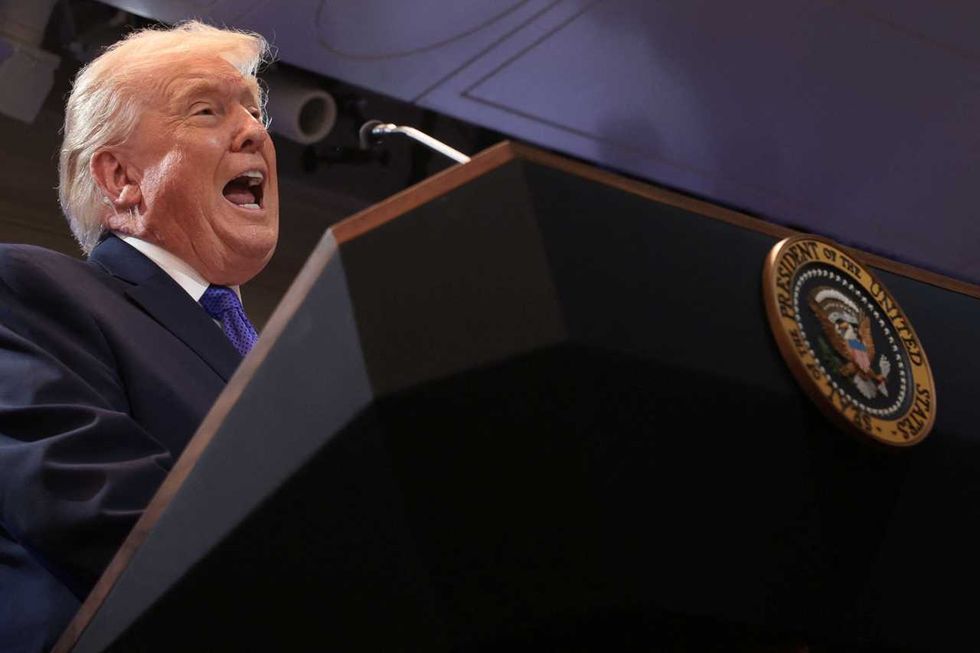
Trump 'ashamed' of 'unpatriotic and disloyal' Supreme Court after tariff decision

Trump 'ashamed' of 'unpatriotic and disloyal' Supreme Court after tariff decision

President Donald Trump blasted members of the Supreme Court who ruled against his ability to impose tariffs in a 6-3 decision.During a White House news conference
Paylaş
Rawstory2026/02/21 03:13
The Evolution of Fashion Trends in 2026

The Evolution of Fashion Trends in 2026

Fashion is an ever-changing reflection of culture, technology, and personal identity. In 2026, fashion trends are influenced not only by designers and celebrities
Paylaş
Techbullion2026/02/21 03:34
Google's AP2 protocol has been released. Does encrypted AI still have a chance?

Google's AP2 protocol has been released. Does encrypted AI still have a chance?

Following the MCP and A2A protocols, the AI Agent market has seen another blockbuster arrival: the Agent Payments Protocol (AP2), developed by Google. This will clearly further enhance AI Agents' autonomous multi-tasking capabilities, but the unfortunate reality is that it has little to do with web3AI. Let's take a closer look: What problem does AP2 solve? Simply put, the MCP protocol is like a universal hook, enabling AI agents to connect to various external tools and data sources; A2A is a team collaboration communication protocol that allows multiple AI agents to cooperate with each other to complete complex tasks; AP2 completes the last piece of the puzzle - payment capability. In other words, MCP opens up connectivity, A2A promotes collaboration efficiency, and AP2 achieves value exchange. The arrival of AP2 truly injects "soul" into the autonomous collaboration and task execution of Multi-Agents. Imagine AI Agents connecting Qunar, Meituan, and Didi to complete the booking of flights, hotels, and car rentals, but then getting stuck at the point of "self-payment." What's the point of all that multitasking? So, remember this: AP2 is an extension of MCP+A2A, solving the last mile problem of AI Agent automated execution. What are the technical highlights of AP2? The core innovation of AP2 is the Mandates mechanism, which is divided into real-time authorization mode and delegated authorization mode. Real-time authorization is easy to understand. The AI Agent finds the product and shows it to you. The operation can only be performed after the user signs. Delegated authorization requires the user to set rules in advance, such as only buying the iPhone 17 when the price drops to 5,000. The AI Agent monitors the trigger conditions and executes automatically. The implementation logic is cryptographically signed using Verifiable Credentials (VCs). Users can set complex commission conditions, including price ranges, time limits, and payment method priorities, forming a tamper-proof digital contract. Once signed, the AI Agent executes according to the conditions, with VCs ensuring auditability and security at every step. Of particular note is the "A2A x402" extension, a technical component developed by Google specifically for crypto payments, developed in collaboration with Coinbase and the Ethereum Foundation. This extension enables AI Agents to seamlessly process stablecoins, ETH, and other blockchain assets, supporting native payment scenarios within the Web3 ecosystem. What kind of imagination space can AP2 bring? After analyzing the technical principles, do you think that's it? Yes, in fact, the AP2 is boring when it is disassembled alone. Its real charm lies in connecting and opening up the "MCP+A2A+AP2" technology stack, completely opening up the complete link of AI Agent's autonomous analysis+execution+payment. From now on, AI Agents can open up many application scenarios. For example, AI Agents for stock investment and financial management can help us monitor the market 24/7 and conduct independent transactions. Enterprise procurement AI Agents can automatically replenish and renew without human intervention. AP2's complementary payment capabilities will further expand the penetration of the Agent-to-Agent economy into more scenarios. Google obviously understands that after the technical framework is established, the ecological implementation must be relied upon, so it has brought in more than 60 partners to develop it, almost covering the entire payment and business ecosystem. Interestingly, it also involves major Crypto players such as Ethereum, Coinbase, MetaMask, and Sui. Combined with the current trend of currency and stock integration, the imagination space has been doubled. Is web3 AI really dead? Not entirely. Google's AP2 looks complete, but it only achieves technical compatibility with Crypto payments. It can only be regarded as an extension of the traditional authorization framework and belongs to the category of automated execution. There is a "paradigm" difference between it and the autonomous asset management pursued by pure Crypto native solutions. The Crypto-native solutions under exploration are taking the "decentralized custody + on-chain verification" route, including AI Agent autonomous asset management, AI Agent autonomous transactions (DeFAI), AI Agent digital identity and on-chain reputation system (ERC-8004...), AI Agent on-chain governance DAO framework, AI Agent NPC and digital avatars, and many other interesting and fun directions. Ultimately, once users get used to AI Agent payments in traditional fields, their acceptance of AI Agents autonomously owning digital assets will also increase. And for those scenarios that AP2 cannot reach, such as anonymous transactions, censorship-resistant payments, and decentralized asset management, there will always be a time for crypto-native solutions to show their strength? The two are more likely to be complementary rather than competitive, but to be honest, the key technological advancements behind AI Agents currently all come from web2AI, and web3AI still needs to keep up the good work!
Paylaş
PANews2025/09/18 07:00