MARA Holdings has completed its acquisition of a 64 percent stake in French high performance computing firm Exaion, marking a major step in its expansion into artificialMARA Holdings has completed its acquisition of a 64 percent stake in French high performance computing firm Exaion, marking a major step in its expansion into artificial

MARA Holdings Buys Exaion Stake in Major AI Cloud Push

2026/02/21 02:19
Okuma süresi: 4 dk

MARA Holdings has completed its acquisition of a 64 percent stake in French high performance computing firm Exaion, marking a major step in its expansion into artificial intelligence and secure cloud services.

Key Takeaways

  • MARA Holdings acquired a 64 percent majority stake in Exaion, a subsidiary of EDF.
  • EDF Group remains a minority shareholder and customer of Exaion.
  • NJJ, backed by billionaire Xavier Niel, will take a 10 percent stake in MARA France.
  • The deal strengthens MARA’s shift from Bitcoin mining toward AI and high performance computing cloud services.

What Happened?

The acquisition, first announced on August 11, 2025, has now cleared all regulatory approvals and is officially complete. MARA now controls Exaion through its French entity, MARA France, while EDF retains a minority position and continues as a client.

The partnership also brings in NJJ, the investment vehicle of French telecom billionaire Xavier Niel, further reinforcing Exaion’s board and strategic direction.

MARA Expands Beyond Bitcoin Mining

MARA Holdings, long known as one of the largest publicly traded Bitcoin mining companies, is accelerating its pivot into artificial intelligence and high performance computing. By acquiring a majority stake in Exaion, MARA gains access to enterprise and government clients across Europe seeking secure cloud and AI infrastructure.

Exaion develops and operates high performance computing data centers and provides secure cloud and artificial intelligence services. The goal of the partnership between MARA, EDF and NJJ is to accelerate Exaion’s expansion and position it as a leading European player in digital infrastructure.

For MARA, this represents more than geographic expansion. It signals a broader transformation from a pure crypto mining company into a diversified infrastructure provider serving AI and enterprise computing demand.

Strategic Partnership With EDF and NJJ

The transaction originated from an investment agreement signed on August 11, 2025, between MARA and EDF Pulse Ventures, the venture arm of EDF Group. After fulfilling regulatory conditions, the deal has now closed.

EDF remains a minority shareholder and customer of Exaion. As one of the world’s largest low carbon energy providers, EDF brings access to a largely decarbonized electricity mix. In 2025, EDF reported 95 percent decarbonized output totaling 515 terawatt hours and carbon intensity of 26.5 grams of CO2 per kilowatt hour. The group generated €113.3 billion in consolidated sales and serves approximately 41 million customers.

France’s strong nuclear powered grid offers MARA access to stable and relatively low cost electricity, which is critical for both Bitcoin mining and AI workloads.

As part of the transaction, NJJ will acquire a 10 percent stake in MARA France. Xavier Niel and MARA CEO Fred Thiel will both join Exaion’s board of directors. The eight member board will include:

  • Three representatives appointed by MARA
  • Three representatives appointed by EDF Pulse Ventures
  • One representative appointed by NJJ
  • Exaion’s CEO and co founder

This governance structure reflects a balanced partnership between energy, infrastructure and telecom expertise.

Positioning for AI Cloud Growth

The move aligns with a wider industry trend where Bitcoin miners leverage existing power agreements, cooling systems and data center expertise to support artificial intelligence workloads. AI training demand has strained global data center capacity, creating opportunities for operators with ready infrastructure.

Recent analysis suggests the Exaion acquisition gives MARA access to established enterprise and government AI clients in Europe. The company has also strengthened its power strategy through a partnership with MPLX, securing scalable natural gas power capacity in the United States. Together, these initiatives position MARA to compete more directly in the AI cloud space.

For investors, the deal introduces a potential non Bitcoin revenue stream. Diversification into AI and high performance computing could reduce MARA’s reliance on crypto market cycles and improve revenue stability over time.

CoinLaw’s Takeaway

In my experience, this is one of the most important strategic moves MARA has made in years. I found that many Bitcoin miners talk about diversification, but few execute at this scale. By partnering with EDF and Xavier Niel, MARA is not just experimenting with AI. It is building a serious foothold in Europe’s digital infrastructure market.

If Exaion successfully expands its secure cloud and AI services, MARA could evolve into a hybrid infrastructure company with exposure to both crypto and artificial intelligence growth trends. That combination, in my view, gives the company a stronger long term story than relying on Bitcoin mining alone.

The post MARA Holdings Buys Exaion Stake in Major AI Cloud Push appeared first on CoinLaw.

Piyasa Fırsatı
Major Logosu
Major Fiyatı(MAJOR)
$0.07429
$0.07429$0.07429
+0.02%
USD
Major (MAJOR) Canlı Fiyat Grafiği
Sorumluluk Reddi: Bu sitede yeniden yayınlanan makaleler, halka açık platformlardan alınmıştır ve yalnızca bilgilendirme amaçlıdır. MEXC'nin görüşlerini yansıtmayabilir. Tüm hakları telif sahiplerine aittir. Herhangi bir içeriğin üçüncü taraf haklarını ihlal ettiğini düşünüyorsanız, kaldırılması için lütfen [email protected] ile iletişime geçin. MEXC, içeriğin doğruluğu, eksiksizliği veya güncelliği konusunda hiçbir garanti vermez ve sağlanan bilgilere dayalı olarak alınan herhangi bir eylemden sorumlu değildir. İçerik, finansal, yasal veya diğer profesyonel tavsiye niteliğinde değildir ve MEXC tarafından bir tavsiye veya onay olarak değerlendirilmemelidir.

Ayrıca Şunları da Beğenebilirsiniz

Trump 'ashamed' of 'unpatriotic and disloyal' Supreme Court after tariff decision
Trump 'ashamed' of 'unpatriotic and disloyal' Supreme Court after tariff decision

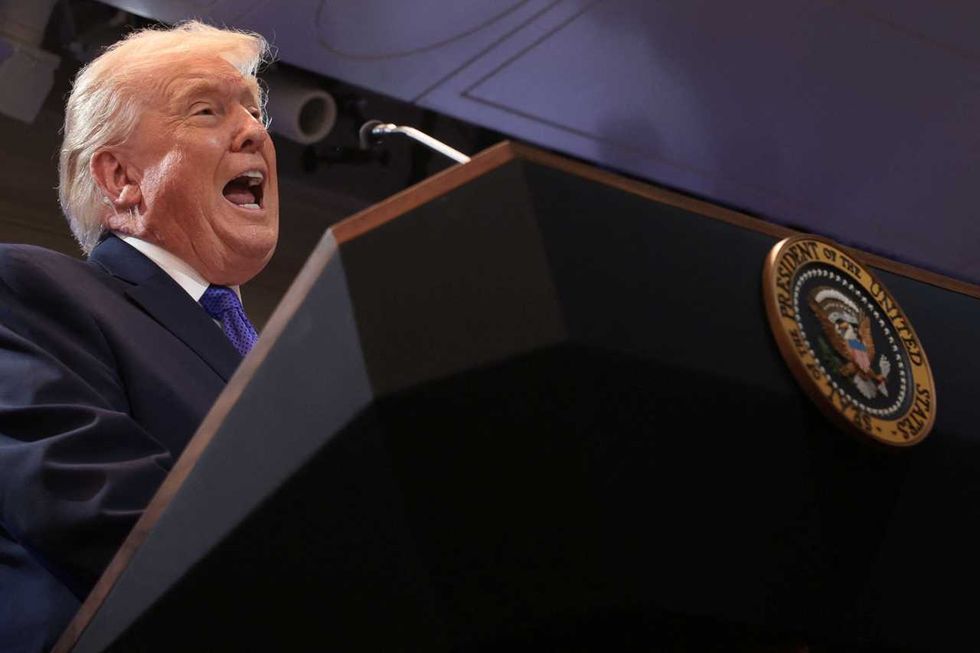
President Donald Trump blasted members of the Supreme Court who ruled against his ability to impose tariffs in a 6-3 decision.During a White House news conference
Paylaş
Rawstory2026/02/21 03:13
The Evolution of Fashion Trends in 2026

The Evolution of Fashion Trends in 2026

Fashion is an ever-changing reflection of culture, technology, and personal identity. In 2026, fashion trends are influenced not only by designers and celebrities
Paylaş
Techbullion2026/02/21 03:34
Google's AP2 protocol has been released. Does encrypted AI still have a chance?

Google's AP2 protocol has been released. Does encrypted AI still have a chance?

Following the MCP and A2A protocols, the AI Agent market has seen another blockbuster arrival: the Agent Payments Protocol (AP2), developed by Google. This will clearly further enhance AI Agents' autonomous multi-tasking capabilities, but the unfortunate reality is that it has little to do with web3AI. Let's take a closer look: What problem does AP2 solve? Simply put, the MCP protocol is like a universal hook, enabling AI agents to connect to various external tools and data sources; A2A is a team collaboration communication protocol that allows multiple AI agents to cooperate with each other to complete complex tasks; AP2 completes the last piece of the puzzle - payment capability. In other words, MCP opens up connectivity, A2A promotes collaboration efficiency, and AP2 achieves value exchange. The arrival of AP2 truly injects "soul" into the autonomous collaboration and task execution of Multi-Agents. Imagine AI Agents connecting Qunar, Meituan, and Didi to complete the booking of flights, hotels, and car rentals, but then getting stuck at the point of "self-payment." What's the point of all that multitasking? So, remember this: AP2 is an extension of MCP+A2A, solving the last mile problem of AI Agent automated execution. What are the technical highlights of AP2? The core innovation of AP2 is the Mandates mechanism, which is divided into real-time authorization mode and delegated authorization mode. Real-time authorization is easy to understand. The AI Agent finds the product and shows it to you. The operation can only be performed after the user signs. Delegated authorization requires the user to set rules in advance, such as only buying the iPhone 17 when the price drops to 5,000. The AI Agent monitors the trigger conditions and executes automatically. The implementation logic is cryptographically signed using Verifiable Credentials (VCs). Users can set complex commission conditions, including price ranges, time limits, and payment method priorities, forming a tamper-proof digital contract. Once signed, the AI Agent executes according to the conditions, with VCs ensuring auditability and security at every step. Of particular note is the "A2A x402" extension, a technical component developed by Google specifically for crypto payments, developed in collaboration with Coinbase and the Ethereum Foundation. This extension enables AI Agents to seamlessly process stablecoins, ETH, and other blockchain assets, supporting native payment scenarios within the Web3 ecosystem. What kind of imagination space can AP2 bring? After analyzing the technical principles, do you think that's it? Yes, in fact, the AP2 is boring when it is disassembled alone. Its real charm lies in connecting and opening up the "MCP+A2A+AP2" technology stack, completely opening up the complete link of AI Agent's autonomous analysis+execution+payment. From now on, AI Agents can open up many application scenarios. For example, AI Agents for stock investment and financial management can help us monitor the market 24/7 and conduct independent transactions. Enterprise procurement AI Agents can automatically replenish and renew without human intervention. AP2's complementary payment capabilities will further expand the penetration of the Agent-to-Agent economy into more scenarios. Google obviously understands that after the technical framework is established, the ecological implementation must be relied upon, so it has brought in more than 60 partners to develop it, almost covering the entire payment and business ecosystem. Interestingly, it also involves major Crypto players such as Ethereum, Coinbase, MetaMask, and Sui. Combined with the current trend of currency and stock integration, the imagination space has been doubled. Is web3 AI really dead? Not entirely. Google's AP2 looks complete, but it only achieves technical compatibility with Crypto payments. It can only be regarded as an extension of the traditional authorization framework and belongs to the category of automated execution. There is a "paradigm" difference between it and the autonomous asset management pursued by pure Crypto native solutions. The Crypto-native solutions under exploration are taking the "decentralized custody + on-chain verification" route, including AI Agent autonomous asset management, AI Agent autonomous transactions (DeFAI), AI Agent digital identity and on-chain reputation system (ERC-8004...), AI Agent on-chain governance DAO framework, AI Agent NPC and digital avatars, and many other interesting and fun directions. Ultimately, once users get used to AI Agent payments in traditional fields, their acceptance of AI Agents autonomously owning digital assets will also increase. And for those scenarios that AP2 cannot reach, such as anonymous transactions, censorship-resistant payments, and decentralized asset management, there will always be a time for crypto-native solutions to show their strength? The two are more likely to be complementary rather than competitive, but to be honest, the key technological advancements behind AI Agents currently all come from web2AI, and web3AI still needs to keep up the good work!
Paylaş
PANews2025/09/18 07:00