In 2026, the fashion industry has officially outgrown the “Fast Fashion” era of the 2010s. We have entered the age of “Ultra-Personalized Precision.” The globalIn 2026, the fashion industry has officially outgrown the “Fast Fashion” era of the 2010s. We have entered the age of “Ultra-Personalized Precision.” The global

The Intelligent Fashion: Generative Ateliers, “Phygital” Flagships, and the Bio-Fabric Revolution

2026/02/22 01:19
Okuma süresi: 6 dk

In 2026, the fashion industry has officially outgrown the “Fast Fashion” era of the 2010s. We have entered the age of “Ultra-Personalized Precision.” The global market for AI in fashion is expected to contribute between $150 billion and $275 billion to industry profits by next year. The shift this February is the move from “AI as a gimmick” to “AI as the Infrastructure.” For a modern Business, success is now measured by the reduction of overproduction—using predictive models to cut waste by 25%. Meanwhile, Digital Marketing has moved into the “Phygital” realm, where the boundary between a physical garment and its digital “Twin” has completely dissolved.

The Technological Architecture: The “Phygital” Fusion

By 2026, the “Online vs. Offline” debate is dead; they are now a single, fluid experience.

The Intelligent Fashion: Generative Ateliers, “Phygital” Flagships, and the Bio-Fabric Revolution
  • Phygital Retail (The Baseline): In February 2026, physical stores have been reimagined as “Strategic Assets” (Article 61). Shoppers walk into a flagship store and receive AI-powered “Nudges” on their phones based on their virtual browsing history. AR Mirrors allow customers to “try on” an entire capsule collection in seconds without ever stepping into a fitting room.

  • Direct-to-Device (D2D) Commerce: Using the latest satellite-linked smartphones (Article 60), high-end brands now offer “Remote Couture” consultations. A client in a remote location can have their body scanned via their phone’s LiDAR, with the data sent directly to an automated knitting machine in a regional micro-hub.

  • Smart Fabrics & IoT Threads: 2026 marks the rise of “Living Labels.” Using NFC and blockchain-backed Digital Product Passports (DPP), every garment carries its own biography. A customer can scan a sleeve to see the exact farm where the regenerative cotton was grown or the “Carbon Score” of its delivery path.

Artificial Intelligence: The Generative Design Partner

In 2026, Artificial Intelligence has moved from the back office to the designer’s desk, slashing the “Sketch-to-Shelf” timeline by 50%.

1. The Generative Atelier

Designers no longer start with a blank page. Using tools like Style3D AI, they input high-level concepts (e.g., “A zero-waste blazer inspired by 1920s Art Deco architecture”) and receive 20 production-ready 3D variations by lunch. This Technology has reduced physical sampling by 90%, saving billions in fabric scrap.

2. Agentic Inventory & “Zero-Visit” Sourcing

In 2026, AI agents act as the industry’s “Nervous System.” They monitor global trend shifts on social media in real-time and autonomously adjust factory orders. This has solved the “30% Pre-sale Loss” problem that plagued traditional retail; brands now only produce what the data proves will sell.

3. Hyper-Realistic Virtual Try-On (VTO)

VTO has moved beyond “clunky overlays.” In 2026, Physics-Based Simulation allows shoppers to see exactly how a fabric (silk vs. heavy denim) drapes, moves, and reacts to their specific body measurements. This has led to a 40% drop in return rates for e-commerce giants like Zalando and H&M.

Digital Marketing: From “Influencers” to “AI Avatars”

Digital Marketing in 2026 is an immersive, high-velocity game of Hyper-Relevance.

  • The Rise of the “Synthetic Model”: Brands are increasingly using AI-generated models (like those from Botika or VModel.AI) to represent diverse body types and ethnicities without the cost of global photoshoots. In 2026, 42% of shoppers report feeling “better represented” by AI models that match their own proportions.

  • AEO (Answer Engine Optimization) for “Vibe”: As users ask their personal AI agents, “Find me a sustainable winter coat that fits like my favorite 2022 trench,” brands are optimizing their “Style Metadata” to ensure their products are the #1 algorithmic recommendation.

  • “FashionVerse” Engagement: Brands like Tommy Hilfiger are treating video games and virtual worlds as their primary retail platforms. In 2026, “Virtual Purchases” (skins and digital wearables) have become a multi-billion dollar revenue stream, often bundled with physical “Phygital” counterparts.

Business Transformation: The “Circular” Mandate

The internal Business model of fashion has been “Green-Hardened” by regulation and consumer demand.

  • Circular-as-a-Service: In 2026, major brands have launched official “Resale and Repair” hubs within their physical stores. AI tracks the lifecycle of a garment, notifying the owner when its “Resale Value” is peak or when it’s time to send it back for “Infinitely Recyclable” fiber-to-fiber processing.

  • The Materials Revolution (Bio-Science): We are seeing the industrial scaling of Lab-Grown Bio-Fabrics. This February, high-end collections are debuting Mycelium (Mushroom) Leathers and Algae-based yarns that are not just “less harmful” but are “Regenerative”—actively capturing carbon during their growth phase.

  • On-Demand Micro-Factories: To combat ultra-fast fashion rivals like Shein, 2026 brands are moving production closer to the consumer. Small-scale, AI-driven “Micro-Factories” in urban centers can now produce a custom order and deliver it within 48 hours, eliminating the need for massive, carbon-heavy overseas shipping.

Challenges: The “Authenticity Slop” and Data Privacy

The 2026 fashion revolution faces a “Humanity Speedbump.”

  • The “Design Slop” Backlash: With AI generating thousands of designs, the market is being flooded with “Generic Luxury.” The professional challenge of 2026 is “Human Curation”—ensuring that the brand’s “DNA” and emotional story aren’t lost in the algorithmic noise.

  • The Fit-Data Dilemma: As VTO tools require precise body scans, Data Privacy has become a primary concern. In 2026, the most trusted brands are those that use “On-Device AI” (Article 52), ensuring a user’s body measurements never leave their personal phone.

Looking Forward: Toward “Sentient Style”

As we look toward 2030, “Fashion” is moving toward “Responsive Wearables.” We are approaching a world where Smart Textiles (Article 62) will change color, texture, or thermal properties based on the wearer’s mood or the environment, turning our clothes into a truly interactive “Second Skin.”

Conclusion

The convergence of Technology, Business, Digital Marketing, and Artificial Intelligence has turned “Fashion” into “Intelligent Expression.” In 2026, the winners are not those who follow the fastest trends, but those who build the most Sustainable and Seamless Ecosystems. By embracing “Intelligent Fashion,” the leaders of 2026 are ensuring that the way we dress is as smart, ethical, and unique as we are.


Would you like me to move on to the 65th article, perhaps exploring “The Intelligent Legal & Regulatory Sector: How AI Judges, ‘Smart Contracts,’ and Global Data Laws are Defining Truth in 2026”?

Comments
Piyasa Fırsatı
BIO Protocol Logosu
BIO Protocol Fiyatı(BIO)
$0.028
$0.028$0.028
-3.18%
USD
BIO Protocol (BIO) Canlı Fiyat Grafiği
Sorumluluk Reddi: Bu sitede yeniden yayınlanan makaleler, halka açık platformlardan alınmıştır ve yalnızca bilgilendirme amaçlıdır. MEXC'nin görüşlerini yansıtmayabilir. Tüm hakları telif sahiplerine aittir. Herhangi bir içeriğin üçüncü taraf haklarını ihlal ettiğini düşünüyorsanız, kaldırılması için lütfen [email protected] ile iletişime geçin. MEXC, içeriğin doğruluğu, eksiksizliği veya güncelliği konusunda hiçbir garanti vermez ve sağlanan bilgilere dayalı olarak alınan herhangi bir eylemden sorumlu değildir. İçerik, finansal, yasal veya diğer profesyonel tavsiye niteliğinde değildir ve MEXC tarafından bir tavsiye veya onay olarak değerlendirilmemelidir.

Ayrıca Şunları da Beğenebilirsiniz

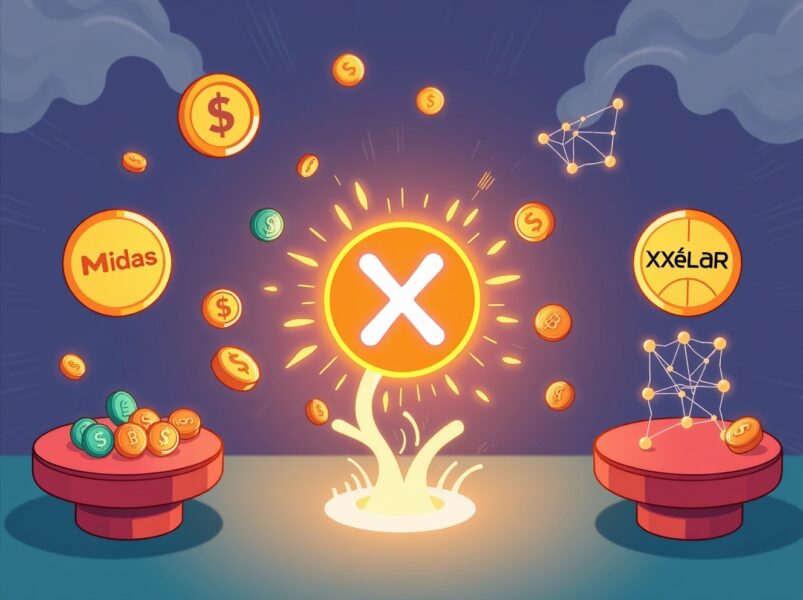
Revolutionary: Midas and Axelar Launch Tokenized XRP with 8% Target Yield

Revolutionary: Midas and Axelar Launch Tokenized XRP with 8% Target Yield

BitcoinWorld Revolutionary: Midas and Axelar Launch Tokenized XRP with 8% Target Yield The cryptocurrency world is constantly evolving, bringing exciting new opportunities for investors. A recent development has captured significant attention: the launch of tokenized XRP by Midas and Axelar. This innovative collaboration aims to transform how you interact with your XRP holdings, potentially offering an attractive yield. What is Tokenized XRP (mXRP) and Why Does it Matter? Imagine holding your favorite digital asset, XRP, but also having the ability to earn a passive income from it. That is precisely what Midas, an asset tokenization platform, has achieved by partnering with Axelar, a leading blockchain interoperability protocol. Together, they have introduced mXRP, a tokenized version of XRP that comes with a compelling target annual yield. This initiative is more than just another crypto product; it represents a significant step forward in making digital assets work harder for their holders. By tokenizing XRP, Midas is essentially creating a digital representation of the asset on a different blockchain, allowing it to participate in decentralized finance (DeFi) activities that were previously inaccessible to native XRP. The immediate appeal lies in the product’s base annual yield, which currently hovers around 8%. Midas and Axelar have publicly stated their commitment to maintaining this yield within a 6% to 8% range, providing a degree of stability and predictability often sought after in the volatile crypto market. This stable yield target is a crucial differentiator, aiming to attract both new and experienced crypto participants looking for reliable returns. How Does This Partnership Benefit XRP Holders? The collaboration between Midas and Axelar brings distinct advantages to the XRP community and the broader crypto ecosystem. Here’s a closer look at the key benefits: Enhanced Utility for XRP: Traditionally, XRP has been known for its speed and low transaction costs, primarily used for cross-border payments. With mXRP, the asset gains new utility within the DeFi space, expanding its potential applications beyond its native blockchain. Attractive Yield Opportunities: The 8% target yield on tokenized XRP is highly competitive, especially when compared to traditional savings accounts or even some other crypto staking options. This allows XRP holders to potentially grow their assets passively. Increased Accessibility: Axelar’s interoperability protocol ensures that mXRP can seamlessly move across various blockchain networks. This means greater flexibility and access to a wider range of DeFi protocols and applications for mXRP holders. Diversification of Investment Strategies: For investors looking to diversify their crypto portfolio, mXRP offers a unique blend of exposure to XRP’s value proposition combined with the income-generating potential of DeFi. Institutional Interest: The structured nature and targeted yield of products like mXRP could attract more institutional investors to the XRP ecosystem, further validating its market presence and utility. Moreover, the partnership leverages the strengths of both platforms. Midas excels in asset tokenization, providing the infrastructure to create and manage mXRP. Axelar, on the other hand, ensures secure and efficient cross-chain communication, making mXRP truly interoperable. This synergy is vital for the product’s success and broad adoption. Navigating the Future of Tokenized XRP: What Should Investors Consider? While the launch of tokenized XRP presents exciting prospects, it is important for investors to approach it with a clear understanding of the crypto landscape. The target yield, while appealing, is not guaranteed and can be subject to market conditions and the underlying mechanisms used to generate that yield. As with any crypto investment, understanding the technology, the partners involved, and the potential risks is paramount. Investors should research Midas and Axelar thoroughly, understanding their security practices, audit reports, and track records. Always remember that the crypto market can be volatile, and while attractive yields are offered, capital is always at risk. The emergence of mXRP underscores a broader trend in the digital asset space: the increasing sophistication of financial products built on blockchain technology. As more assets become tokenized and interoperability improves, we can expect to see even more innovative offerings that bridge traditional finance with the decentralized world. This evolution offers unprecedented opportunities for those willing to learn and adapt. Conclusion: A New Horizon for XRP and DeFi The collaboration between Midas and Axelar to launch tokenized XRP with an 8% target yield marks a significant milestone. It not only enhances the utility and earning potential for XRP holders but also demonstrates the power of blockchain interoperability and asset tokenization in creating new financial instruments. This development opens up a new horizon for investors seeking to integrate passive income strategies with their digital asset holdings, pushing the boundaries of what is possible in decentralized finance. Frequently Asked Questions (FAQs) Q1: What is mXRP? A1: mXRP is a tokenized XRP, a digital representation of XRP created by Midas in partnership with Axelar. It aims to offer holders a base annual yield, currently around 8%, by enabling XRP to participate in broader DeFi activities. Q2: How is the 8% target yield generated? A2: While the specific mechanisms are managed by Midas, such yields in DeFi typically come from activities like lending protocols, liquidity provision, or other yield-generating strategies. Midas and Axelar aim to maintain the base yield between 6% and 8%. Q3: Is mXRP the same as native XRP? A3: No, mXRP is a tokenized version of XRP, meaning it is a representation of XRP on a different blockchain, enabled by Midas and Axelar’s technology. Native XRP exists on the XRP Ledger. Q4: What role does Axelar play in this launch? A4: Axelar is a blockchain interoperability protocol. Its role is crucial in ensuring that mXRP can securely and seamlessly move and operate across various blockchain networks, enhancing its utility and accessibility within the DeFi ecosystem. Q5: What are the risks associated with investing in mXRP? A5: Like all cryptocurrency investments, mXRP carries risks including market volatility, smart contract risks, and potential fluctuations in the target yield. Investors should conduct their own research and understand these risks before investing. Share This Insight! Found this article on tokenized XRP insightful? Share it with your network and help others understand this exciting development in the crypto space! Your shares help us bring more valuable content to the community. To learn more about the latest crypto market trends, explore our article on key developments shaping the future of decentralized finance price action. This post Revolutionary: Midas and Axelar Launch Tokenized XRP with 8% Target Yield first appeared on BitcoinWorld.
Paylaş
Coinstats2025/09/22 19:30
Wormhole’s W token enters ‘value accrual’ phase with strategic reserve

Wormhole’s W token enters ‘value accrual’ phase with strategic reserve

Wormhole has moved beyond its distribution phase, initiating a new strategy. By allocating on-chain and off-chain protocol revenue to a dedicated treasury, the cross-chain protocol is creating a direct link between its commercial success and the value of its native…
Paylaş
Crypto.news2025/09/18 03:05
XRP Price Prediction February 2026: Senator Warren Warns Fed as Pepeto’s 100x Presale Steals the Spotlight From Ripple

XRP Price Prediction February 2026: Senator Warren Warns Fed as Pepeto’s 100x Presale Steals the Spotlight From Ripple

Senator Elizabeth Warren reportedly sent a letter to Fed Chair Jerome Powell and Treasury Secretary Scott Bessent demanding they not […] The post XRP Price Prediction
Paylaş
Coindoo2026/02/22 05:55