THE PHILIPPINES might fail to reach its payments digitalization targets by 2028 as the Bangko Sentral ng Pilipinas (BSP) noted that progress has been slow amid THE PHILIPPINES might fail to reach its payments digitalization targets by 2028 as the Bangko Sentral ng Pilipinas (BSP) noted that progress has been slow amid

PHL might miss digital payments targets, says BSP

2026/02/23 00:31
Okuma süresi: 3 dk

THE PHILIPPINES might fail to reach its payments digitalization targets by 2028 as the Bangko Sentral ng Pilipinas (BSP) noted that progress has been slow amid worries over emerging cyber risks.

BSP Governor Eli M. Remolona, Jr. said digitalization efforts are ongoing, but it might take beyond 2028 before the country can meet its targets under the Philippine Development Plan.

“Well, digitalization continues. It’s a good thing,” he told Money Talks with Cathy Yang on One News on Friday.

“At the same time, it brings with it some risks. We worry a lot about cyber risks. So, even as we encourage digitalization, we’re also trying to get the banks to also make sure that they defend themselves against cyber risks.”

Asked if the country remains on track with its target, Mr. Remolona said: “To be honest… it (digitalization) has been slow. We’re on track, but maybe it will take a couple more years than we thought to get where we want to go.”

The BSP wants digital payments to make up 60%-70% of the total volume of retail payments by 2028 in line with the Philippine Development Plan.

In 2024, online payments accounted for a 57.4% share in terms of volume and 59% in value terms in the country’s total monthly retail transactions, according to the BSP’s 2024 Status of Digital Payments in the Philippines report. These are up from 52.8% and 55.3%, respectively, in 2023. 

Earlier this month, BSP Deputy Governor Lyn I. Javier said social engineering, such as phishing scams, account takeover and identity theft, emerged as the top cyberthreat of the local banking system in the first half of 2025. This made up 76% of the total amount lost to financial fraud during the period.

This was followed by hacking, which accounted for 13% of the total losses, and card-not-present fraud with 8%.

The BSP deputy governor noted that the financial system’s digital shift is being challenged by more frequent, targeted and more scalable cyberthreats, and that interconnectedness has allowed more cybercriminals to penetrate the system through its vulnerabilities.

Among the BSP’s priority legislative agenda for the 20th Congress is the Digital Payments Bill, which seeks to advance the use of digital payments in financial transactions between the National Government and the public.

This, as BSP Deputy Governor Mamerto E. Tangonan has noted that digital collections comprise only 25% of the government’s total collections.

The 20th Congress has been working on measures aimed at modernizing the government’s payment systems.

In early February, Senator Emmanuel Joel J. Villanueva filed Senate Bill No. 1821, a measure seeking to require all government agencies and relevant entities to adopt digital payment methods for the disbursement of government funds and collection of taxes, fees, tolls, imposts and other revenues.

It is currently pending for hearing in the Senate Banks, Financial Institutions and Currencies Committee.

Enhancing the digital payments system, particularly by making cross-border payments safer and more seamless within the Southeast Asian region, is also one of the BSP’s key initiatives as part of the Philippines’ chairship in the Association of Southeast Asian Nations (ASEAN) this year.

Since last year, the central bank has formalized the ASEAN Regional Payment Connectivity program, established 26 cross-border payment linkages as of August 2025, and has been developing a multilateral remittances service for overseas workers, migrants and small businesses under Project Nexus. — Katherine K. Chan

Piyasa Fırsatı
PHILCOIN Logosu
PHILCOIN Fiyatı(PHL)
$0.01903
$0.01903$0.01903
-2.00%
USD
PHILCOIN (PHL) Canlı Fiyat Grafiği
Sorumluluk Reddi: Bu sitede yeniden yayınlanan makaleler, halka açık platformlardan alınmıştır ve yalnızca bilgilendirme amaçlıdır. MEXC'nin görüşlerini yansıtmayabilir. Tüm hakları telif sahiplerine aittir. Herhangi bir içeriğin üçüncü taraf haklarını ihlal ettiğini düşünüyorsanız, kaldırılması için lütfen [email protected] ile iletişime geçin. MEXC, içeriğin doğruluğu, eksiksizliği veya güncelliği konusunda hiçbir garanti vermez ve sağlanan bilgilere dayalı olarak alınan herhangi bir eylemden sorumlu değildir. İçerik, finansal, yasal veya diğer profesyonel tavsiye niteliğinde değildir ve MEXC tarafından bir tavsiye veya onay olarak değerlendirilmemelidir.

Ayrıca Şunları da Beğenebilirsiniz

If you put $1,000 in Intel at the start of 2025, here’s your return now

If you put $1,000 in Intel at the start of 2025, here’s your return now

The post If you put $1,000 in Intel at the start of 2025, here’s your return now appeared on BitcoinEthereumNews.com. Intel (NASDAQ: INTC) and Nvidia (NASDAQ: NVDA) announced a new partnership on Thursday, September 18, working on several generations of custom data center and computing chips designed to boost performance in hyperscale, enterprise, and consumer applications. As part of the collaboration, Nvidia, the undisputed leader of the semiconductor sector, will also invest $5 billion in Intel by purchasing its common stock at a price of $23.28 per share. Following the news, Intel stock jumped more than 30% in pre-market trading, while Nvidia saw a 3% uptick, a welcome change following weeks of shaky performance and controversies regarding its Chinese sales. Trading at $31.34 at the time of writing, INTC shares are up 54.99% year-to-date (YTD). INTC YTD stock price. Source: Google Accordingly, a $1,000 investment in the tech company at the start of the year would now be worth $1,549.90, giving you a return of $549.90. ‘The next era of computing’ The move follows a wave of fresh backing for the struggling Intel, including a nearly $9 billion U.S. government purchase of a 10% stake just weeks ago and a $2 billion investment from Japan’s SoftBank. As such, the deal has the potential to put Intel back into the game after years of trying to catch up not just with Nvidia but also AMD (NASDAQ: AMD) and Broadcom (NASDAQ: AVGO). “This historic collaboration tightly couples NVIDIA’s AI and accelerated computing stack with Intel’s CPUs and the vast x86 ecosystem — a fusion of two world-class platforms. Together, we will expand our ecosystems and lay the foundation for the next era of computing,” wrote Nvidia founder and chief executive officer (CEO), Jensen Huang.  However, the U.S. government’s direct involvement suggests that more is at stake than simply propping up Intel, as it likely reflects a broader concern about keeping America competitive…
Paylaş
BitcoinEthereumNews2025/09/18 22:47
In an era of agent explosion, how should we cope with AI anxiety?
In an era of agent explosion, how should we cope with AI anxiety?

Author: XinGPT AI is yet another movement for technological equality. A recent article titled "The Internet is Dead, Agents Live On" went viral on social media
Paylaş
PANews2026/02/23 11:33
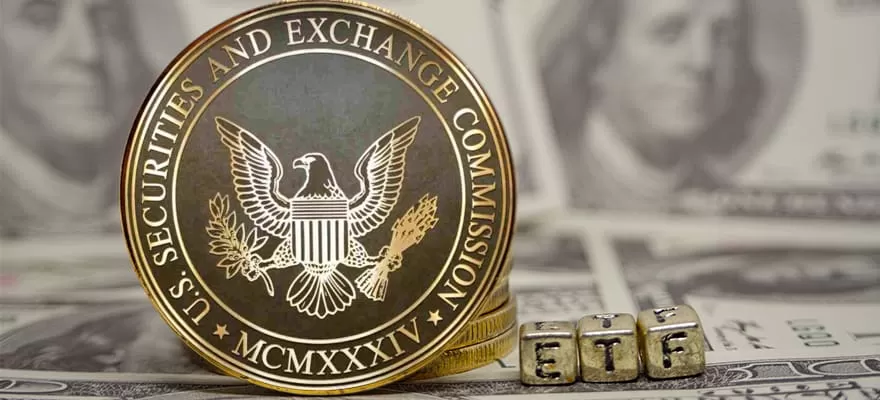
SEC Approves! Paving the Way for Altcoin ETFs: New Decision Closely Concerns 12 Altcoins Including XRP!

SEC Approves! Paving the Way for Altcoin ETFs: New Decision Closely Concerns 12 Altcoins Including XRP!

The SEC has approved general listing standards for cryptocurrency ETFs, covering 12 altcoins including XRP, Solana (SOL). Continue Reading: SEC Approves! Paving the Way for Altcoin ETFs: New Decision Closely Concerns 12 Altcoins Including XRP!
Paylaş
Coinstats2025/09/18 21:32