Vitalik Buterin Proposes TX Simulations to Boost Crypto Security

Vitalik Buterin, the co-founder of Ethereum, has floated a design concept that could reshape how users interact with wallets and smart contracts. In a Sunday post on X, he argued that security and user experience are not separate, but rather two sides of the same coin—both hinging on what users actually intend when they initiate on-chain actions. The gist is to build systems that help users verify their intent through on-chain simulations before an action is executed, potentially reducing mistakes and vulnerabilities in the process. The discussion also touched on practical guardrails, such as spending limits and multisignature thresholds, to ensure that actions align with a user’s risk appetite. The proposal is part of a broader effort to improve crypto UX without compromising the core principles of decentralization and permissionless access. X post.
Key takeaways
- Buterin envisions an intent-based layer where users see a simulated, on-chain preview of consequences before confirming an action, tying user goals to blockchain outcomes.
- The approach could extend beyond wallets and smart contracts to systems at the OS or hardware level, broadening the scope of intent verification.
- Mechanisms such as spending limits and multisig approvals are proposed to ensure execution only occurs when intent, expected outcomes, and risk limits are aligned.
- Buterin acknowledges that defining user intent is extremely complex, and there may never be a perfect security solution.
- The goal is to make routine, low-risk interactions easier while making dangerous operations harder, guided by a user’s stated preferences and risk tolerance.
Tickers mentioned: $ETH
Sentiment: Neutral
Market context: The idea arrives as Ethereum’s ecosystem continues to pursue better UX and stronger on-chain security, while debates persist about the blockchain trilemma and how to balance security, decentralization, and scalability amid rapid wallet and dApp growth.
Why it matters
The core appeal of an intent-based security model is practical: it seeks to reduce user error and opportunistic exploits by ensuring that the action a user intends to take is what actually plays out on-chain. If implemented effectively, wallet providers could offer a dynamic preview of a transaction’s on-chain effects—akin to a sandboxed simulation—that helps users catch mistakes before they sign. This could lower the barrier for non-technical users to participate in DeFi and other on-chain activities without sacrificing safety.
From a design perspective, the concept would demand a careful rethinking of user interfaces and risk signaling. Wallets and smart contract platforms would need to present clear, interpretable simulations that reflect real-world costs, slippage, and potential reverts. That implies a shift in how developers approach permission models, error handling, and fallback options. It also raises questions about standardizing risk metrics across diverse protocols, ensuring consistency across wallets, and maintaining trust when simulations align with complex, dynamic on-chain states.
Critically, the proposal acknowledges one of crypto’s enduring challenges: user intent is not a static, easily measurable target. The quoted line underscores this complexity: “It’s not because machines are flawed, or even because humans designing the machines are flawed, but because ‘the user’s intent’ is fundamentally an extremely complex object that the user themselves does not have easy access to.” Still, Buterin suggests a pragmatic path forward: the intent system could require overlapping specifications—so that actions proceed only when multiple independent signals converge with the user’s declared goals. This layered approach aims to prevent unintended consequences while avoiding excessive friction for legitimate, low-risk actions.
The broader framing ties into the blockchain trilemma—security, decentralization, and scalability. Buterin has long argued that these three are in tension, and solutions must trade one for another. In the Ethereum ecosystem, decentralization and scalability have garnered heightened focus in recent years as developers push layer-2s and architectural upgrades to relieve mainnet congestion. A robust, user-centric security enhancement could help mainstream adoption by reducing the likelihood of user error without centralizing control or compromising trust assumptions.
For researchers and practitioners, the concept invites practical experimentation. It is one thing to propose simulations in theory; it is another to integrate them into wallet UX, ensure privacy of intents, and defend against adversarial manipulation. The discussion also nods to hardware and operating-system considerations, suggesting that intent-aware security could become a cross-cutting pattern for broader devices beyond purely blockchain-native software. The path from idea to implementation would require collaboration among wallet vendors, security researchers, and standard-setting bodies to establish verifiable safety guarantees while preserving the open, permissionless ethos that underpins Ethereum.
What to watch next
- Public proposals or whitepapers from Ethereum researchers or wallet developers outlining concrete designs for on-chain intent simulations.
- Pilot experiments or beta features in wallets that test simulated consequences and multi-signal intent checks in real user flows.
- Discussions around risk models, privacy protections, and governance processes needed to validate intent-based security across different ecosystems.
- Further commentary from Vitalik or Ethereum Foundation researchers that expand on the overlap between user intent, security guarantees, and UX considerations.
Sources & verification
- Vitalik Buterin’s X post discussing intent-based security and on-chain simulations: https://x.com/VitalikButerin/status/2025653045414273438
- Starknet taps EY Nightfall to bring institutional privacy to Ethereum rails: https://cointelegraph.com/news/starknet-taps-ey-nightfall-institutional-grade-privacy
- Ethereum Foundation seal partner Stop Wallet Drainers: https://cointelegraph.com/news/ethereum-foundation-seal-partner-stop-wallet-drainers
- Blockchain trilemma discussion and its framing around security, decentralization, and scalability: https://cointelegraph.com/news/blockchain-trilemma-solved-zkevms-and-peerdas-vitalik-buterin
- Sacrificing Ethereum’s values for mainstream adoption must stop now: https://cointelegraph.com/news/sacrificing-ethereums-values-for-mainstream-adoption-must-stop-now-buterin
Intent-based security and on-chain simulations: what it could change
Ethereum (CRYPTO: ETH) has long stood at the center of a debate about how to balance safety with openness. Buterin’s latest stance argues that a system of simulated previews could help users see the chain of consequences before a transaction is broadcast. The idea aligns with a broader push in the ecosystem to reduce risky interactions—such as signing a contract that would drain funds or approve a high-velocity transfer—by making the path from action to outcome more transparent. The mechanism would likely rely on a combination of client-side simulations, server-assisted checks, and user-configurable risk controls that empower individuals to tailor their security posture without locking down their capabilities.
People familiar with the concept emphasize that any practical implementation would have to preserve the security guarantees that users expect from public blockchains. The simulations would need to be tamper-evident and auditable, with clear signals about potential edge cases, network fees, and the probability of execution under different conditions. Importantly, the model would have to respect user autonomy: it should not become a gatekeeper that blocks legitimate activities simply because a risk model flagged a worst-case scenario. The design goal remains to help users make informed decisions, not to override user intent with bureaucratic or opaque prompts.
As the ecosystem continues to evolve, the notion of intent-based security could influence wallet design, smart contract verification tooling, and even hardware-embedded protections. If the approach proves viable, it may contribute to a more intuitive onboarding experience for newcomers while providing a layered defense for seasoned users who routinely engage in high-stakes DeFi operations. The conversation is ongoing, and observers will be watching for concrete proposals, pilot deployments, and community feedback that help translate the concept into actionable features without compromising the decentralized, permissionless nature of Ethereum.
This article was originally published as Vitalik Buterin Proposes TX Simulations to Boost Crypto Security on Crypto Breaking News – your trusted source for crypto news, Bitcoin news, and blockchain updates.
Ayrıca Şunları da Beğenebilirsiniz

XRP Price Crashed 69% From its Peak
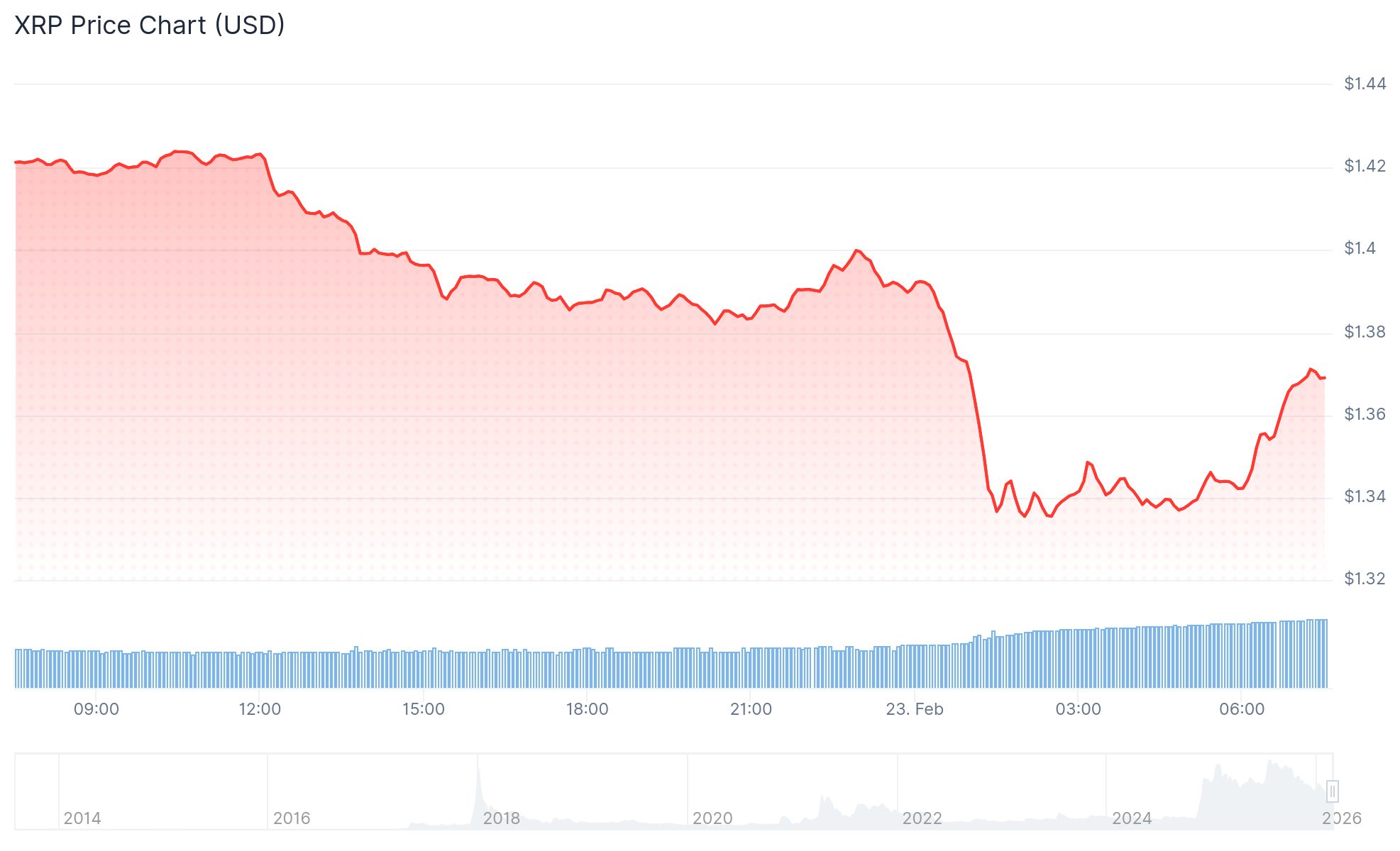
XRP Price: Falls to $1.33 as Realized Losses Hit 39-Month High – Watch These Levels