A cybersecurity veteran turned quantum infrastructure CEO warns that the cryptocurrency industry is dangerously unprepared for the imminent threat of quantum computing to blockchain security. David Carvalho, CEO of post-quantum infrastructure firm Naoris Protocol and a former ethical hacker since age 13, claims that quantum computers could silently dismantle Bitcoin’s cryptographic foundations within years, not decades. His warning comes as governments and tech giants already implement “harvest now, decrypt later” strategies, collecting encrypted blockchain data today for future decryption by quantum computers. Today, approximately 30% of Bitcoin’s circulating supply, roughly 6-7 million BTC , sits vulnerable in older address formats that expose public keys directly to potential quantum attacks. Understanding the Quantum Threat to Bitcoin’s Core Security Unlike traditional computers, which process information in binary bits of 0s and 1s, quantum computers utilize quantum bits, or “qubits,” that can exist in multiple states simultaneously through a property called superposition. This quantum advantage allows these machines to perform calculations exponentially faster than classical computers for specific mathematical problems, particularly those involving large number factorization. Bitcoin’s security relies on elliptic curve cryptography (ECC), specifically the Elliptic Curve Digital Signature Algorithm (ECDSA), which creates a mathematical relationship between public and private keys. Elliptic Curve Digital Signature Algorithm used by Bitcoin (Source: Learn Me A Bitcoin ) Current computers would require billions of years to reverse-engineer a private key from its corresponding public key due to the computational complexity of solving the discrete logarithm problem underlying ECC. However, mathematician Peter Shor demonstrated in 1999 that quantum computers could solve these factorization problems exponentially faster using Shor’s algorithm . This breakthrough would render obsolete the one-way mathematical function that protects Bitcoin wallets, enabling quantum computers to derive private keys from exposed public keys. Carvalho believes this countdown has already begun because adversaries are systematically collecting encrypted blockchain data under the “harvest now, decrypt later” model. “The adversaries collecting encrypted blockchain data right now aren’t waiting to attack today,” Carvalho explained , “They’re building data sets for tomorrow.” ⁉️ Up to 30% of all Bitcoin in circulation could be at risk of theft when Q-Day arrives in three years, according to Naoris CEO David Carvalho. #BTC #QuantumComputing #Crypto https://t.co/nuaDec03hz — Cryptonews.com (@cryptonews) July 21, 2025 Bitcoin addresses fall into different vulnerability categories, with Pay-to-Public-Key (P2PK) formats directly exposing public keys and making them immediate targets for quantum attacks. Reused Pay-to-Pubkey-Hash (P2PKH) addresses also become vulnerable once their owners move funds, as the transaction reveals the previously hidden public key. Due to the accelerating development in quantum computing, federal agencies, such as NIST, have warned since 2022 about the urgent need to adopt quantum-resistant algorithms. Bitcoin users holding funds in older address formats face the highest immediate risk, while node operators and mining infrastructure could become targets for broader network compromise attempts. Crypto’s Collision Course With Advanced Computing The quantum threat to Bitcoin reflects a broader technological inflection point where traditional cryptographic assumptions may no longer hold across digital infrastructure. Major technology companies, including IBM, Google, and Microsoft, are advancing quantum processors with ambitious timelines, with some targeting millions of qubits within this decade. The joint weapon of quantum computing with artificial intelligence creates, as Carvalho describes, an even more perilous scenario, where AI systems could automatically scan blockchain networks for vulnerabilities while quantum processors compromise cryptographic protections. Financial institutions are beginning to acknowledge these risks, with companies like BlackRock noting quantum threats in Bitcoin ETF filings and Tether CEO Paolo Ardoino warning about the impact of quantum computing on inactive wallets . 🚀 @Tether_to CEO @paoloardoino has warned that quantum computing could eventually pose a threat to inactive Bitcoin wallets. #Bitcoin #Quantum https://t.co/u8DCYrTjYw — Cryptonews.com (@cryptonews) February 9, 2025 The threat timeline varies among experts, with estimates ranging from 2027 to the mid-2030s for quantum computers capable of breaking Bitcoin’s cryptographic security. “When the tech catches up, they’ll unlock a decade of secrets in minutes,” Carvalho warned, emphasizing that quantum attacks won’t announce themselves with dramatic computational displays. The key question remains whether legacy cryptocurrencies can adapt fast enough, or if quantum-resistant blockchains will take the lead in the race to secure digital value.A cybersecurity veteran turned quantum infrastructure CEO warns that the cryptocurrency industry is dangerously unprepared for the imminent threat of quantum computing to blockchain security. David Carvalho, CEO of post-quantum infrastructure firm Naoris Protocol and a former ethical hacker since age 13, claims that quantum computers could silently dismantle Bitcoin’s cryptographic foundations within years, not decades. His warning comes as governments and tech giants already implement “harvest now, decrypt later” strategies, collecting encrypted blockchain data today for future decryption by quantum computers. Today, approximately 30% of Bitcoin’s circulating supply, roughly 6-7 million BTC , sits vulnerable in older address formats that expose public keys directly to potential quantum attacks. Understanding the Quantum Threat to Bitcoin’s Core Security Unlike traditional computers, which process information in binary bits of 0s and 1s, quantum computers utilize quantum bits, or “qubits,” that can exist in multiple states simultaneously through a property called superposition. This quantum advantage allows these machines to perform calculations exponentially faster than classical computers for specific mathematical problems, particularly those involving large number factorization. Bitcoin’s security relies on elliptic curve cryptography (ECC), specifically the Elliptic Curve Digital Signature Algorithm (ECDSA), which creates a mathematical relationship between public and private keys. Elliptic Curve Digital Signature Algorithm used by Bitcoin (Source: Learn Me A Bitcoin ) Current computers would require billions of years to reverse-engineer a private key from its corresponding public key due to the computational complexity of solving the discrete logarithm problem underlying ECC. However, mathematician Peter Shor demonstrated in 1999 that quantum computers could solve these factorization problems exponentially faster using Shor’s algorithm . This breakthrough would render obsolete the one-way mathematical function that protects Bitcoin wallets, enabling quantum computers to derive private keys from exposed public keys. Carvalho believes this countdown has already begun because adversaries are systematically collecting encrypted blockchain data under the “harvest now, decrypt later” model. “The adversaries collecting encrypted blockchain data right now aren’t waiting to attack today,” Carvalho explained , “They’re building data sets for tomorrow.” ⁉️ Up to 30% of all Bitcoin in circulation could be at risk of theft when Q-Day arrives in three years, according to Naoris CEO David Carvalho. #BTC #QuantumComputing #Crypto https://t.co/nuaDec03hz — Cryptonews.com (@cryptonews) July 21, 2025 Bitcoin addresses fall into different vulnerability categories, with Pay-to-Public-Key (P2PK) formats directly exposing public keys and making them immediate targets for quantum attacks. Reused Pay-to-Pubkey-Hash (P2PKH) addresses also become vulnerable once their owners move funds, as the transaction reveals the previously hidden public key. Due to the accelerating development in quantum computing, federal agencies, such as NIST, have warned since 2022 about the urgent need to adopt quantum-resistant algorithms. Bitcoin users holding funds in older address formats face the highest immediate risk, while node operators and mining infrastructure could become targets for broader network compromise attempts. Crypto’s Collision Course With Advanced Computing The quantum threat to Bitcoin reflects a broader technological inflection point where traditional cryptographic assumptions may no longer hold across digital infrastructure. Major technology companies, including IBM, Google, and Microsoft, are advancing quantum processors with ambitious timelines, with some targeting millions of qubits within this decade. The joint weapon of quantum computing with artificial intelligence creates, as Carvalho describes, an even more perilous scenario, where AI systems could automatically scan blockchain networks for vulnerabilities while quantum processors compromise cryptographic protections. Financial institutions are beginning to acknowledge these risks, with companies like BlackRock noting quantum threats in Bitcoin ETF filings and Tether CEO Paolo Ardoino warning about the impact of quantum computing on inactive wallets . 🚀 @Tether_to CEO @paoloardoino has warned that quantum computing could eventually pose a threat to inactive Bitcoin wallets. #Bitcoin #Quantum https://t.co/u8DCYrTjYw — Cryptonews.com (@cryptonews) February 9, 2025 The threat timeline varies among experts, with estimates ranging from 2027 to the mid-2030s for quantum computers capable of breaking Bitcoin’s cryptographic security. “When the tech catches up, they’ll unlock a decade of secrets in minutes,” Carvalho warned, emphasizing that quantum attacks won’t announce themselves with dramatic computational displays. The key question remains whether legacy cryptocurrencies can adapt fast enough, or if quantum-resistant blockchains will take the lead in the race to secure digital value.

Bitcoin’s Quantum Countdown Has Already Begun, Warns Veteran Hacker

A cybersecurity veteran turned quantum infrastructure CEO warns that the cryptocurrency industry is dangerously unprepared for the imminent threat of quantum computing to blockchain security.

David Carvalho, CEO of post-quantum infrastructure firm Naoris Protocol and a former ethical hacker since age 13, claims that quantum computers could silently dismantle Bitcoin’s cryptographic foundations within years, not decades.

His warning comes as governments and tech giants already implement “harvest now, decrypt later” strategies, collecting encrypted blockchain data today for future decryption by quantum computers.

Today, approximately 30% of Bitcoin’s circulating supply, roughly 6-7 million BTC, sits vulnerable in older address formats that expose public keys directly to potential quantum attacks.

Understanding the Quantum Threat to Bitcoin’s Core Security

Unlike traditional computers, which process information in binary bits of 0s and 1s, quantum computers utilize quantum bits, or “qubits,” that can exist in multiple states simultaneously through a property called superposition.

This quantum advantage allows these machines to perform calculations exponentially faster than classical computers for specific mathematical problems, particularly those involving large number factorization.

Bitcoin’s security relies on elliptic curve cryptography (ECC), specifically the Elliptic Curve Digital Signature Algorithm (ECDSA), which creates a mathematical relationship between public and private keys.
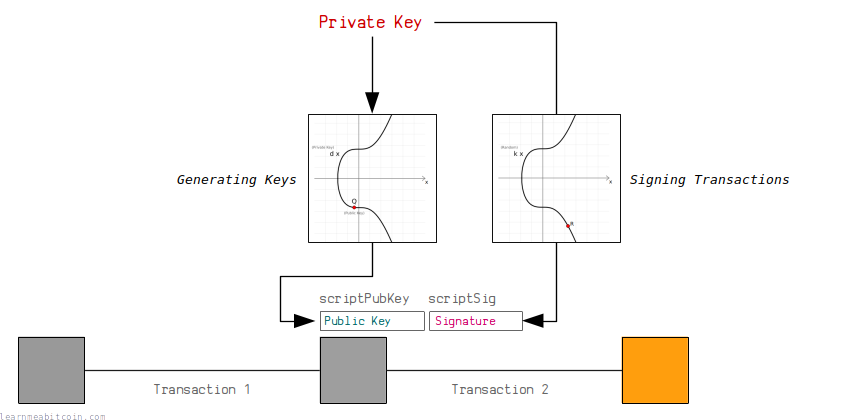
Bitcoin's Quantum Countdown Has Already Begun, Warns Veteran HackerElliptic Curve Digital Signature Algorithm used by Bitcoin (Source: Learn Me A Bitcoin)

Current computers would require billions of years to reverse-engineer a private key from its corresponding public key due to the computational complexity of solving the discrete logarithm problem underlying ECC.

However, mathematician Peter Shor demonstrated in 1999 that quantum computers could solve these factorization problems exponentially faster using Shor’s algorithm.

This breakthrough would render obsolete the one-way mathematical function that protects Bitcoin wallets, enabling quantum computers to derive private keys from exposed public keys.

Carvalho believes this countdown has already begun because adversaries are systematically collecting encrypted blockchain data under the “harvest now, decrypt later” model.

“The adversaries collecting encrypted blockchain data right now aren’t waiting to attack today,” Carvalho explained, “They’re building data sets for tomorrow.”

Bitcoin addresses fall into different vulnerability categories, with Pay-to-Public-Key (P2PK) formats directly exposing public keys and making them immediate targets for quantum attacks.

Reused Pay-to-Pubkey-Hash (P2PKH) addresses also become vulnerable once their owners move funds, as the transaction reveals the previously hidden public key.

Due to the accelerating development in quantum computing, federal agencies, such as NIST, have warned since 2022 about the urgent need to adopt quantum-resistant algorithms.

Bitcoin users holding funds in older address formats face the highest immediate risk, while node operators and mining infrastructure could become targets for broader network compromise attempts.

Crypto’s Collision Course With Advanced Computing

The quantum threat to Bitcoin reflects a broader technological inflection point where traditional cryptographic assumptions may no longer hold across digital infrastructure.

Major technology companies, including IBM, Google, and Microsoft, are advancing quantum processors with ambitious timelines, with some targeting millions of qubits within this decade.

The joint weapon of quantum computing with artificial intelligence creates, as Carvalho describes, an even more perilous scenario, where AI systems could automatically scan blockchain networks for vulnerabilities while quantum processors compromise cryptographic protections.

Financial institutions are beginning to acknowledge these risks, with companies like BlackRock noting quantum threats in Bitcoin ETF filings and Tether CEO Paolo Ardoino warning about the impact of quantum computing on inactive wallets.

The threat timeline varies among experts, with estimates ranging from 2027 to the mid-2030s for quantum computers capable of breaking Bitcoin’s cryptographic security.

“When the tech catches up, they’ll unlock a decade of secrets in minutes,” Carvalho warned, emphasizing that quantum attacks won’t announce themselves with dramatic computational displays.

The key question remains whether legacy cryptocurrencies can adapt fast enough, or if quantum-resistant blockchains will take the lead in the race to secure digital value.

Piyasa Fırsatı
Quack AI Logosu
Quack AI Fiyatı(Q)
$0.014362
$0.014362$0.014362
+1.38%
USD
Quack AI (Q) Canlı Fiyat Grafiği
Sorumluluk Reddi: Bu sitede yeniden yayınlanan makaleler, halka açık platformlardan alınmıştır ve yalnızca bilgilendirme amaçlıdır. MEXC'nin görüşlerini yansıtmayabilir. Tüm hakları telif sahiplerine aittir. Herhangi bir içeriğin üçüncü taraf haklarını ihlal ettiğini düşünüyorsanız, kaldırılması için lütfen [email protected] ile iletişime geçin. MEXC, içeriğin doğruluğu, eksiksizliği veya güncelliği konusunda hiçbir garanti vermez ve sağlanan bilgilere dayalı olarak alınan herhangi bir eylemden sorumlu değildir. İçerik, finansal, yasal veya diğer profesyonel tavsiye niteliğinde değildir ve MEXC tarafından bir tavsiye veya onay olarak değerlendirilmemelidir.

Ayrıca Şunları da Beğenebilirsiniz

First family moves on from Wall Street as Eric Trump backs crypto

First family moves on from Wall Street as Eric Trump backs crypto

Eric Trump says crypto could actually save the U.S. dollar. Not kill it. Not weaken it. On Tuesday, just hours after ringing the Nasdaq opening bell for American Bitcoin’s public debut, a company where he’s got over $500 million stashed, Eric told the Financial Times that crypto is “arguably” the reason the dollar might stay alive. “Mining bitcoin here, and being financially independent and running a kind of financial revolution out of the United States of America…I think it arguably saves the US dollar,” he said. The timing wasn’t random. Eric’s comments came while the dollar was getting dragged. This year, it’s been tanking… fast. The cause? President Donald Trump’s trade war and his endless public jabs at the Federal Reserve, which just slashed interest rates again. The Fed cut rates yesterday, for the first time this year, right after Donald’s latest round of pressure. It’s not helping. Investors are losing confidence in what’s supposed to be the safest currency on Earth. Eric says crypto is fun, family is done with Wall Street Eric isn’t just pushing crypto from the sidelines. His family has gone full throttle into the space. We’re talking a Truth Social Bitcoin ETF, a Bitcoin treasury tied to Trump Media, and two meme coins; $MELANIA and $TRUMP. Eric defended both coins, saying they were meant to be “fun,” and explained why people are buying in: “They want to bet on a coin, or they want to bet on a player. They want to bet on a celebrity, or they want to bet on a famous brand. Or they just love somebody to death, and they want to buy, you know, a kind of small piece of them, via digital currency.” And Eric doesn’t give Wall Street any credit. At all. He made it clear that everything they’ve built was done without the help of big-name banks. “It’s almost like the ultimate revenge against the big banks and modern finance,” he said. That jab came after the Trump Organization filed a lawsuit against Capital One, accusing the bank of closing their accounts in 2021 for political reasons — something the bank denies. But Eric wasn’t done. “You realise you just don’t need them. And frankly, you don’t miss them.” He added that he wasn’t just referring to Capital One, but “all” of Wall Street’s major lenders and their “top people.” Stablecoins, trillions, and the White House betting on crypto Stablecoins have traditional banks spooked. They think cash might flow out of the banking system if coins like Tether or Circle offer better returns. And that fear isn’t fake. It’s growing, especially after Congress passed the first major crypto law in July. Now the White House wants stablecoin issuers to buy up a fat slice of the Treasury’s debt. Why? Because these crypto firms make money on the interest from the bonds they hold. Last year, Eric co-founded World Liberty Financial Inc. (WLFI), a crypto company that runs a stablecoin called USD1, pegged to the U.S. dollar. That project has serious family backing. Donald held 15.75 billion WLFI tokens at the end of 2024, based on official filings. At Wednesday’s trading price, that holding was worth over $3 billion. When asked about the family’s financial gain from crypto, Eric downplayed it. “If my father cared about monetising his life, the last thing he would have done is run for president, where all we’ve done is un-monetise our life.” Your crypto news deserves attention - KEY Difference Wire puts you on 250+ top sites
Paylaş
Coinstats2025/09/18 20:41
SEC Staff Clarifies Custody Rules for Tokenized Stocks and Bonds

SEC Staff Clarifies Custody Rules for Tokenized Stocks and Bonds

The post SEC Staff Clarifies Custody Rules for Tokenized Stocks and Bonds appeared on BitcoinEthereumNews.com. The US Securities and Exchange Commission’s Trading
Paylaş
BitcoinEthereumNews2025/12/19 08:51
US Lawmakers May Limit De Minimis Tax Exemptions to Stablecoins, Excluding Bitcoin

US Lawmakers May Limit De Minimis Tax Exemptions to Stablecoins, Excluding Bitcoin

The post US Lawmakers May Limit De Minimis Tax Exemptions to Stablecoins, Excluding Bitcoin appeared on BitcoinEthereumNews.com. US lawmakers are considering de
Paylaş
BitcoinEthereumNews2025/12/19 09:28