Original author: Geek Original translation: Luffy, Foresight News I wouldn't be surprised if we've reached the end of the InfoFi era, or are approaching it. Since the rise of InfoFi, many people have made considerable profits from it, some have accumulated 5 figures, and some have even made 6 figures. But now, there are some signals that deserve our high attention. Threshold rule changes Strictly speaking, I don’t think this upgrade of Kaito is a completely bad thing. It may effectively prevent a large number of accounts from using AI to generate low-quality content to “brush up” the volume, while improving the quality of the content. However, after the upgrade, not only small accounts were affected, but many large accounts were also not spared. This led to a large number of users who relied on Kaito to choose to leave, because after the upgrade, they had almost no chance of making money through the platform. In response to this, some project owners have chosen to remove the threshold to attract small trumpeters to join. This just shows that in most cases, the small trumpet group is crucial. My opinion is that Kaito seems confused about the direction of this upgrade, and many project parties clearly don’t like this “threshold restriction.” However, it is undeniable that Kaito has performed quite well in the past few months. The token distribution plan is poor For content creators (yappers), today’s typical 0.5%-1% token distribution ratio is far from enough, as these tokens are often valued very low when they are launched. In the early days, some accounts could earn 4-5 figures through 1-2 months of promotional activities; but now, even if they participate in 3-6 months of activities, they can only earn 3-4 figures, which makes many people feel discouraged. Even top accounts, even if they produce high-quality content, find it difficult to earn substantial four-digit income. Why is this bad news for creators who rely on InfoFi? Before InfoFi's rise, many creators earned a healthy income by promoting their content as brand ambassadors or influencers. However, the compensation offered by projects on Kaito now simply cannot compare to external partnerships. Given this fact, it's no surprise that more and more creators are choosing to leave the InfoFi platform. Capital Launchpad’s dominance is evident On July 22, Kaito's "Capital Launchpad" was officially launched. The first project to be launched was Espresso, and more projects subsequently joined. This is undoubtedly a great product for Kaito, but I do have a few concerns: None of the projects that went through Kaito’s initial coin offering have yet been listed on the public market; None of these projects have announced a launch date; Most projects have overvalued valuations and token unlocking plans that are not investor-friendly. My additional perspective: Kaito was originally built as a platform specifically for InfoFi, and later decided to add additional platform features (such as Launchpad), which is a great initiative in itself. However, recently, more and more projects have chosen to join the "Capital Launchpad" rather than participate in the "Creator Leaderboard." For an InfoFi platform, this trend is clearly not optimistic. However, this is just an obvious phenomenon that I have observed, and it seems that not many people question it. Project owners prefer to work directly with KOLs rather than through the Kaito platform. It is clear that the project parties are no longer so keen to participate in InfoFi cooperation. Recently, Zachxbt published a Google Sheet listing a number of accounts that received compensation from a project. I mention this not because I’m surprised, but because the amounts paid are quite substantial, especially compared to the projects on Kaito’s “Creator Leaderboard.” I believe this has made many people realize that there are many ways to make money besides InfoFi. Since human nature is to "find ways to make more money," I believe this poses direct competition to Kaito.Original author: Geek Original translation: Luffy, Foresight News I wouldn't be surprised if we've reached the end of the InfoFi era, or are approaching it. Since the rise of InfoFi, many people have made considerable profits from it, some have accumulated 5 figures, and some have even made 6 figures. But now, there are some signals that deserve our high attention. Threshold rule changes Strictly speaking, I don’t think this upgrade of Kaito is a completely bad thing. It may effectively prevent a large number of accounts from using AI to generate low-quality content to “brush up” the volume, while improving the quality of the content. However, after the upgrade, not only small accounts were affected, but many large accounts were also not spared. This led to a large number of users who relied on Kaito to choose to leave, because after the upgrade, they had almost no chance of making money through the platform. In response to this, some project owners have chosen to remove the threshold to attract small trumpeters to join. This just shows that in most cases, the small trumpet group is crucial. My opinion is that Kaito seems confused about the direction of this upgrade, and many project parties clearly don’t like this “threshold restriction.” However, it is undeniable that Kaito has performed quite well in the past few months. The token distribution plan is poor For content creators (yappers), today’s typical 0.5%-1% token distribution ratio is far from enough, as these tokens are often valued very low when they are launched. In the early days, some accounts could earn 4-5 figures through 1-2 months of promotional activities; but now, even if they participate in 3-6 months of activities, they can only earn 3-4 figures, which makes many people feel discouraged. Even top accounts, even if they produce high-quality content, find it difficult to earn substantial four-digit income. Why is this bad news for creators who rely on InfoFi? Before InfoFi's rise, many creators earned a healthy income by promoting their content as brand ambassadors or influencers. However, the compensation offered by projects on Kaito now simply cannot compare to external partnerships. Given this fact, it's no surprise that more and more creators are choosing to leave the InfoFi platform. Capital Launchpad’s dominance is evident On July 22, Kaito's "Capital Launchpad" was officially launched. The first project to be launched was Espresso, and more projects subsequently joined. This is undoubtedly a great product for Kaito, but I do have a few concerns: None of the projects that went through Kaito’s initial coin offering have yet been listed on the public market; None of these projects have announced a launch date; Most projects have overvalued valuations and token unlocking plans that are not investor-friendly. My additional perspective: Kaito was originally built as a platform specifically for InfoFi, and later decided to add additional platform features (such as Launchpad), which is a great initiative in itself. However, recently, more and more projects have chosen to join the "Capital Launchpad" rather than participate in the "Creator Leaderboard." For an InfoFi platform, this trend is clearly not optimistic. However, this is just an obvious phenomenon that I have observed, and it seems that not many people question it. Project owners prefer to work directly with KOLs rather than through the Kaito platform. It is clear that the project parties are no longer so keen to participate in InfoFi cooperation. Recently, Zachxbt published a Google Sheet listing a number of accounts that received compensation from a project. I mention this not because I’m surprised, but because the amounts paid are quite substantial, especially compared to the projects on Kaito’s “Creator Leaderboard.” I believe this has made many people realize that there are many ways to make money besides InfoFi. Since human nature is to "find ways to make more money," I believe this poses direct competition to Kaito.

InfoFi faces a cold reception: regulatory upgrades, shrinking revenue, and platform transformation dilemmas

2025/09/09 08:00

Original author: Geek

Original translation: Luffy, Foresight News

I wouldn't be surprised if we've reached the end of the InfoFi era, or are approaching it.

Since the rise of InfoFi, many people have made considerable profits from it, some have accumulated 5 figures, and some have even made 6 figures. But now, there are some signals that deserve our high attention.

Threshold rule changes

Strictly speaking, I don’t think this upgrade of Kaito is a completely bad thing. It may effectively prevent a large number of accounts from using AI to generate low-quality content to “brush up” the volume, while improving the quality of the content.

However, after the upgrade, not only small accounts were affected, but many large accounts were also not spared. This led to a large number of users who relied on Kaito to choose to leave, because after the upgrade, they had almost no chance of making money through the platform.
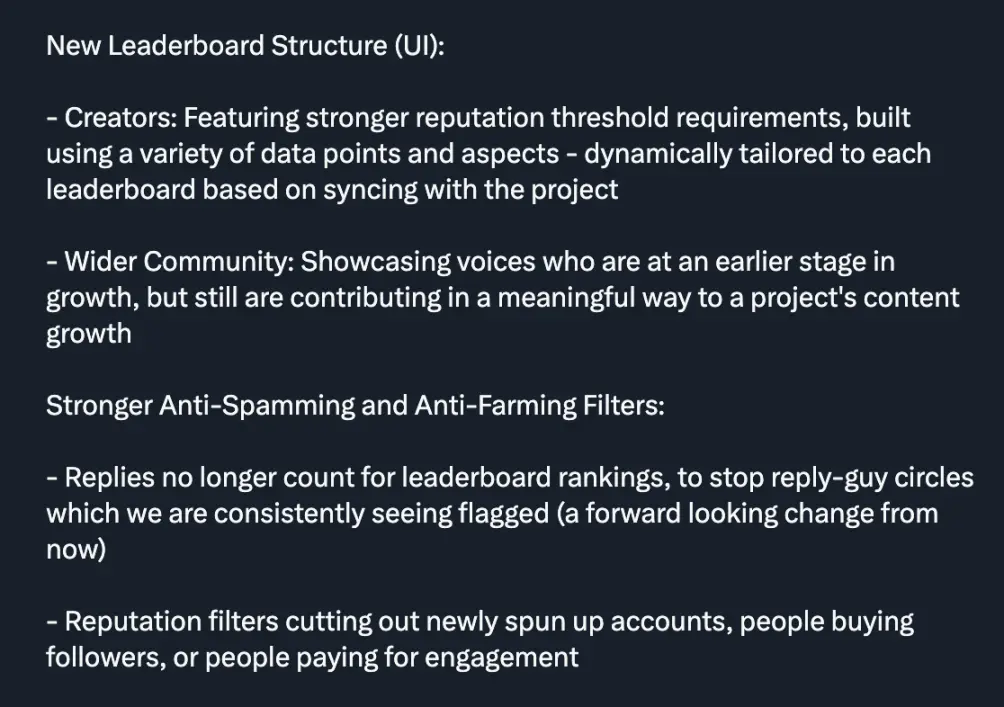
In response to this, some project owners have chosen to remove the threshold to attract small trumpeters to join. This just shows that in most cases, the small trumpet group is crucial.

My opinion is that Kaito seems confused about the direction of this upgrade, and many project parties clearly don’t like this “threshold restriction.” However, it is undeniable that Kaito has performed quite well in the past few months.

The token distribution plan is poor

For content creators (yappers), today’s typical 0.5%-1% token distribution ratio is far from enough, as these tokens are often valued very low when they are launched.

In the early days, some accounts could earn 4-5 figures through 1-2 months of promotional activities; but now, even if they participate in 3-6 months of activities, they can only earn 3-4 figures, which makes many people feel discouraged.

Even top accounts, even if they produce high-quality content, find it difficult to earn substantial four-digit income.

Why is this bad news for creators who rely on InfoFi? Before InfoFi's rise, many creators earned a healthy income by promoting their content as brand ambassadors or influencers. However, the compensation offered by projects on Kaito now simply cannot compare to external partnerships. Given this fact, it's no surprise that more and more creators are choosing to leave the InfoFi platform.

Capital Launchpad’s dominance is evident

On July 22, Kaito's "Capital Launchpad" was officially launched. The first project to be launched was Espresso, and more projects subsequently joined.

This is undoubtedly a great product for Kaito, but I do have a few concerns:

  • None of the projects that went through Kaito’s initial coin offering have yet been listed on the public market;
  • None of these projects have announced a launch date;
  • Most projects have overvalued valuations and token unlocking plans that are not investor-friendly.

My additional perspective: Kaito was originally built as a platform specifically for InfoFi, and later decided to add additional platform features (such as Launchpad), which is a great initiative in itself. However, recently, more and more projects have chosen to join the "Capital Launchpad" rather than participate in the "Creator Leaderboard." For an InfoFi platform, this trend is clearly not optimistic.

However, this is just an obvious phenomenon that I have observed, and it seems that not many people question it.

Project owners prefer to work directly with KOLs rather than through the Kaito platform.

It is clear that the project parties are no longer so keen to participate in InfoFi cooperation.

Recently, Zachxbt published a Google Sheet listing a number of accounts that received compensation from a project. I mention this not because I’m surprised, but because the amounts paid are quite substantial, especially compared to the projects on Kaito’s “Creator Leaderboard.”

I believe this has made many people realize that there are many ways to make money besides InfoFi. Since human nature is to "find ways to make more money," I believe this poses direct competition to Kaito.

Piyasa Fırsatı
MemeCore Logosu
MemeCore Fiyatı(M)
$1.3715
$1.3715$1.3715
-0.51%
USD
MemeCore (M) Canlı Fiyat Grafiği
Sorumluluk Reddi: Bu sitede yeniden yayınlanan makaleler, halka açık platformlardan alınmıştır ve yalnızca bilgilendirme amaçlıdır. MEXC'nin görüşlerini yansıtmayabilir. Tüm hakları telif sahiplerine aittir. Herhangi bir içeriğin üçüncü taraf haklarını ihlal ettiğini düşünüyorsanız, kaldırılması için lütfen [email protected] ile iletişime geçin. MEXC, içeriğin doğruluğu, eksiksizliği veya güncelliği konusunda hiçbir garanti vermez ve sağlanan bilgilere dayalı olarak alınan herhangi bir eylemden sorumlu değildir. İçerik, finansal, yasal veya diğer profesyonel tavsiye niteliğinde değildir ve MEXC tarafından bir tavsiye veya onay olarak değerlendirilmemelidir.

Ayrıca Şunları da Beğenebilirsiniz

Gold Price Hits Record High, Why Is Bitcoin Silent? Analyst Evaluates and Reveals Bitcoin Price Forecast

Gold Price Hits Record High, Why Is Bitcoin Silent? Analyst Evaluates and Reveals Bitcoin Price Forecast

Bitcoin's price hit an all-time high today, approaching $4,500. So why is there no progress in Bitcoin? Continue Reading: Gold Price Hits Record High, Why Is Bitcoin
Paylaş
Coinstats2025/12/24 03:13
Lithuania Warns Crypto Firms to Exit or License Before Dec. 31, 2025

Lithuania Warns Crypto Firms to Exit or License Before Dec. 31, 2025

The post Lithuania Warns Crypto Firms to Exit or License Before Dec. 31, 2025 appeared on BitcoinEthereumNews.com. Lithuania sets December 31, 2025, as the end
Paylaş
BitcoinEthereumNews2025/12/24 03:25
UK crypto holders brace for FCA’s expanded regulatory reach

UK crypto holders brace for FCA’s expanded regulatory reach

The post UK crypto holders brace for FCA’s expanded regulatory reach appeared on BitcoinEthereumNews.com. British crypto holders may soon face a very different landscape as the Financial Conduct Authority (FCA) moves to expand its regulatory reach in the industry. A new consultation paper outlines how the watchdog intends to apply its rulebook to crypto firms, shaping everything from asset safeguarding to trading platform operation. According to the financial regulator, these proposals would translate into clearer protections for retail investors and stricter oversight of crypto firms. UK FCA plans Until now, UK crypto users mostly encountered the FCA through rules on promotions and anti-money laundering checks. The consultation paper goes much further. It proposes direct oversight of stablecoin issuers, custodians, and crypto-asset trading platforms (CATPs). For investors, that means the wallets, exchanges, and coins they rely on could soon be subject to the same governance and resilience standards as traditional financial institutions. The regulator has also clarified that firms need official authorization before serving customers. This condition should, in theory, reduce the risk of sudden platform failures or unclear accountability. David Geale, the FCA’s executive director of payments and digital finance, said the proposals are designed to strike a balance between innovation and protection. He explained: “We want to develop a sustainable and competitive crypto sector – balancing innovation, market integrity and trust.” Geale noted that while the rules will not eliminate investment risks, they will create consistent standards, helping consumers understand what to expect from registered firms. Why does this matter for crypto holders? The UK regulatory framework shift would provide safer custody of assets, better disclosure of risks, and clearer recourse if something goes wrong. However, the regulator was also frank in its submission, arguing that no rulebook can eliminate the volatility or inherent risks of holding digital assets. Instead, the focus is on ensuring that when consumers choose to invest, they do…
Paylaş
BitcoinEthereumNews2025/09/17 23:52