Overview
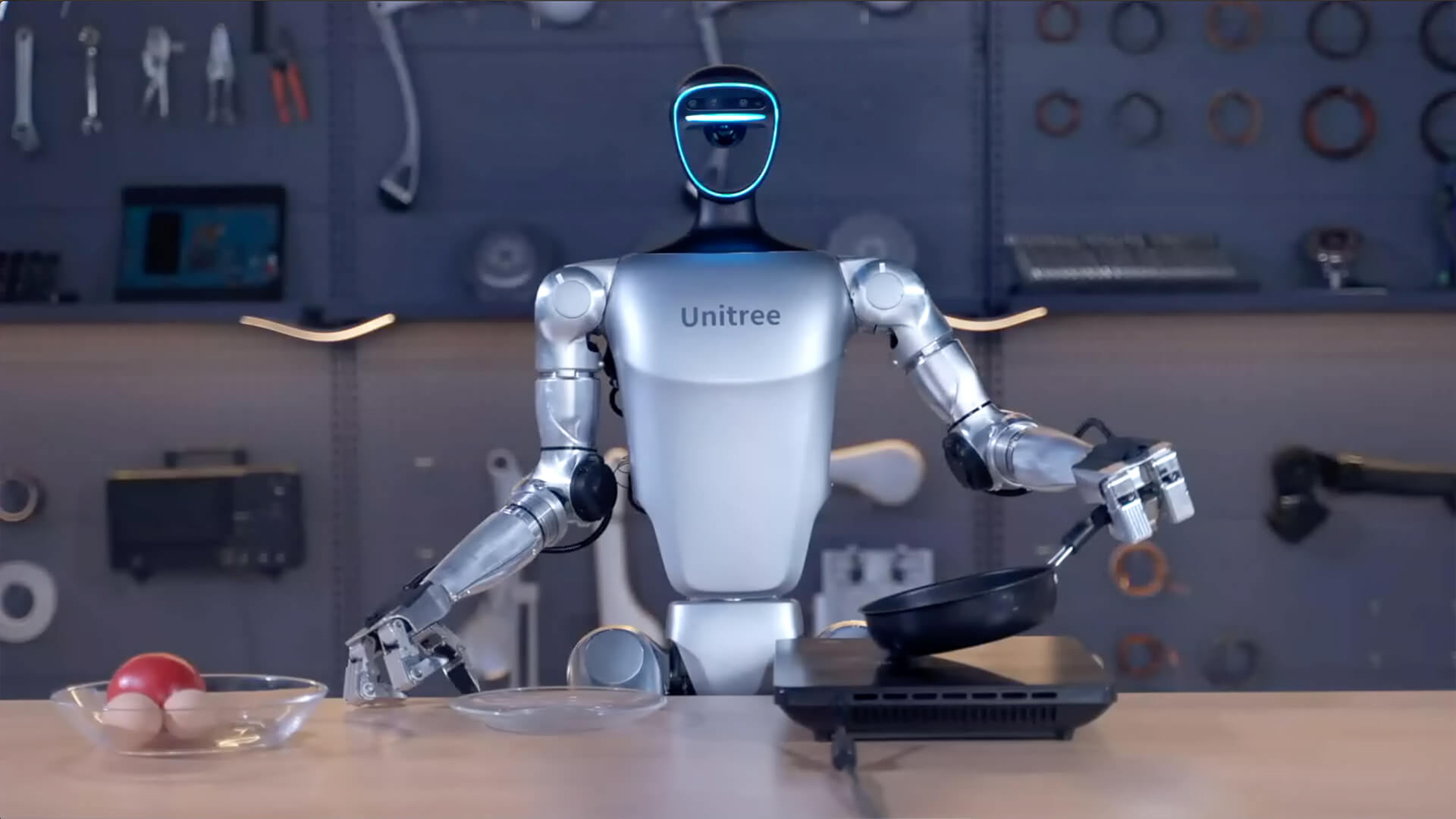
Unitree's offer price lands on August 6, and it may be the most closely watched pricing moment on China's A-share market in 2026. Based on the disclosed offering plan, the company intends to sell 40.4464 million new shares to raise roughly 4.2 billion yuan, implying a reference price near 104 yuan per share and a post-IPO base valuation around 42 billion yuan (about $6.2 billion). Almost nobody expects the stock to stay there. ChangXin Memory's 466% first-day surge on the STAR Market on July 27 has pushed secondary-market chatter around Unitree toward the 100 billion yuan mark. On one side sits real fundamentals, 2025 revenue of 1.708 billion yuan and adjusted net profit of 600 million yuan. On the other sits Figure AI, reportedly valued as high as $39 billion in private markets with no scale revenue. Unitree's price falls squarely between those extremes, and where it prints, both at issuance and in early trading, will deliver the first answer written by public markets on what a humanoid robotics company is actually worth.
Key Takeaways
Preliminary price inquiries take place on August 5 with the offer price formally set on August 6, subscriptions on August 10, final results on August 14, and a listing expected by industry watchers around August 19, pending official exchange confirmation.
Dividing the roughly 4.2 billion yuan target raise by 40.4464 million shares implies a reference price near 104 yuan per share and a post-IPO base valuation around 42 billion yuan (about $6.2 billion), an arithmetic estimate from the disclosed plan, with the final price subject to the August 6 announcement.
At 42 billion yuan, the valuation equals roughly 70 times 2025 adjusted net profit of 600.1 million yuan and about 25 times 2025 revenue of 1.708 billion yuan, while a move toward the 100 billion yuan level discussed in secondary chatter would push the trailing multiple above 160 times.
The comparables are starkly split, with US-based Figure AI reportedly valued as high as $39 billion (around 280 billion yuan) in private markets without scale revenue, while Hong Kong-listed UBTech remains loss-making, leaving Unitree as the only profitable name with volume shipments in between.
Fundamentals pull in both directions, with 2025 revenue up 335%, a 60.27% gross margin and 5,500 humanoids shipped for a world-leading share, against first-half 2026 growth slowing to roughly 40%, adjusted profit guided down 6% to 22%, and average humanoid prices falling from 590,000 to 166,400 yuan.
CXMT's 466% debut and the new US import curbs on foreign-made robots form two opposing variables around the pricing, while a free float of just 10% will amplify early volatility.
How the Offer Price Is Being Derived
Start by separating what is confirmed from what is not. Per
Gasgoo's reporting, Unitree will issue 40.4464 million shares, 10% of post-IPO capital, all new shares, with price inquiries on August 5 and subscriptions on August 10, and CITIC Securities as sponsor and lead underwriter. Per
the South China Morning Post, the offer price will be set on August 6, the day after book-building, with final results published on August 14.
Dividing the target raise by the share count yields an implied reference, roughly 4.2 billion yuan across 40.4464 million shares equals about 104 yuan per share, with post-IPO capital of about 404 million shares implying a base valuation near 42 billion yuan. It bears emphasis that this is arithmetic from the disclosed plan. The STAR Market uses market-driven book-building, the actual outcome of institutional bids may land above or below this level, and the official pricing announcement on August 6 is authoritative. Current market sentiment makes bids toward the upper end of the range the more likely scenario.
Is 42 Billion Yuan Expensive, Three Yardsticks
Yardstick One, Its Own Profit and Growth
Per
Tech Market Briefs' prospectus review, Unitree posted 2025 revenue of 1.708 billion yuan, up 335%, with a 60.27% gross margin and adjusted net profit of 600.1 million yuan. At 42 billion yuan, that equals roughly 70 times trailing adjusted earnings and about 25 times trailing sales. For a company that grew 335% last year, 70 times is not outlandish. The problem is that the growth slope is changing. Per
BigGo Finance's analysis, first-half 2026 revenue growth is guided to roughly 35.6% to 45.4%, adjusted profit is expected to fall 6% to 22%, and first-quarter net profit already dropped 47.69%. On this year's run-rate earnings, the multiple runs well above 70 times. A move toward the 100 billion yuan level discussed in secondary chatter would lift the trailing multiple above 160 times, a position that requires exponential humanoid volume growth over several years to digest.
Yardstick Two, Global Peer Pricing
The comparables are unusually fractured. Figure AI, without scale revenue, has been reported at a private valuation as high as $39 billion, roughly 280 billion yuan and more than six times Unitree's issuance valuation. Hong Kong-listed UBTech shows the opposite extreme, a listed humanoid company that remains loss-making. Unitree sits between them as the only name globally combining profitability, volume shipments (5,500 humanoids in 2025 for a 32.4% world-leading share) and a 60% gross margin. Priced on Figure AI's logic, 42 billion yuan looks cheap. Priced on traditional manufacturing earnings, it looks full. That disagreement is itself the source of the volatility to come.
Yardstick Three, the STAR Market's Temperature
Per
TechTimes' analysis, ChangXin Memory debuted on July 27 and surged 466% on day one, from an 8.66 yuan offer to a 49 yuan close, briefly carrying a market value near $490 billion. Retail enthusiasm ignited by that spectacle is expected to flood Unitree's subscription, and with only 10% of shares floated, sentiment gains extra leverage over price. The sober counterpoint is that the industrial logic differs, since CXMT rides a memory shortage narrative running into 2028 while Unitree faces early-stage commercialization with slowing growth and a price war, making the two poorly comparable.
The Business Model Question Behind Halved Prices
Unit economics are the final judge of any valuation. The prospectus shows average humanoid selling prices falling from 590,000 to 166,400 yuan, a decline of more than 70%, a deliberate volume-over-price strategy with the G1 humanoid's roughly $13,500 price tag the most aggressive in the world. The strategy holds only if scale-driven cost declines outpace price declines, preserving the 60% gross margin. The company attributes the first-half profit squeeze to surging R&D and sales spending (Q1 R&D up 38.33 million yuan year over year, plus major campaigns including the CCTV Spring Festival Gala) rather than margin collapse, a relatively healthy signal. But once a price war is driven by competitors rather than by choice, the logic inverts. The quarterly pairing of average price and gross margin after listing will be the core data testing whether 42 billion yuan, let alone more, can hold.
The other variable sits overseas. Two days before the launch, the United States announced import curbs on foreign-made humanoid and quadruped robots, effectively closing one of Unitree's largest addressable export markets. Domestic policy orders, including the directive for 10,000 humanoids deployed by the end of 2026, can fill the gap near term, but a hardware company severed from a major overseas market arguably warrants a geopolitical discount that current pricing discussion barely reflects.
What It Means for Investors
For investors able to subscribe on the A-share market, the core judgment is the relationship between the offer price and sentiment. A price set well above the 104 yuan implied reference on August 6 would mean institutions have pre-absorbed part of the premium, compressing debut elasticity. A price near the base, combined with a 10% float and CXMT-charged sentiment, makes a sharply higher open probable, though the risk of chasing scales directly with the gain.
For global investors outside the subscription, Unitree's post-listing multiples become the public yardstick for the entire robotics and embodied AI category, feeding into the pricing of US-listed robotics names, related ETFs and AI and robotics themed tokens in crypto. Some platforms already offer derivative instruments around the name, and
MEXC has listed USDT-settled futures tied to Unitree, usable for tracking how market expectations of its price evolve around the debut. These contracts are highly volatile, and understanding the product mechanics and keeping leverage tightly controlled is essential before participating.
What to Watch Next and Where the Risks Sit
Four Checkpoints Along the Pricing Chain
The August 6 pricing announcement is the first checkpoint, with institutional bids relative to the 104 yuan implied reference serving as professional capital's real vote on valuation. The August 10 subscription multiple is the second, with the scale of oversubscription previewing the debut's supply-demand imbalance. The opening and closing prints on listing day (expected by industry watchers around August 19) form the third, establishing the sector's public valuation anchor. The first post-listing quarterly report is the fourth, where overseas revenue share, average humanoid prices and gross margin begin measuring the distance between sentiment pricing and fundamentals.
Risks That Must Be Priced In
Valuation risk leads, since a CXMT-style debut would place the stock at levels requiring years of high growth to digest while the company itself flags decelerating growth. Competitive and pricing risk follows, as a 70% decline in average prices signals a price war underway and any slippage in gross margin strikes the valuation model directly. Geopolitical risk is third, with the true impact of US import curbs surfacing gradually in order data. Liquidity structure risk is fourth, since a 10% float amplifies moves in both directions and extreme two-way volatility is the norm, not the exception, for debuts of this profile.
Exclusive View from James Mitchell
What genuinely matters about this pricing is that it drags humanoid robotics valuation from narrative back to arithmetic for the first time. At 42 billion yuan, 70 times trailing adjusted earnings and 25 times trailing sales are not extreme numbers in themselves. What is extreme is what sits on either side of them, Figure AI's roughly 280 billion yuan no-revenue private mark on one flank and UBTech's persistent losses on the other. Unitree's public price will force the sector to answer a question it has so far avoided, whether humanoid robotics companies should be anchored to software platform multiples or to advanced manufacturing multiples. My read is that markets will price the former in the short run and converge toward the latter over time, and that convergence process is precisely where the volatility will come from.
Two misreadings look likely. The first is treating the 104 yuan implied reference as an official price. It is merely the arithmetic of the target raise divided by the share count, and the actual outcome of the August 6 book-building can deviate meaningfully. Mistaking an estimate for a commitment is the most common error in new-issue analysis. The second is treating profitability as a safety cushion. Unitree is indeed the rare profitable name in the category, but guidance for adjusted profit to fall 6% to 22% in the first half means the direction of earnings is diverging from the direction of the valuation, and paying 70 times for a company with declining profit is an entirely different risk exposure from paying 70 times for one whose profit is doubling.
What investors should track next is a chain of three numbers, the premium of the August 6 offer price over the 104 yuan reference, the August 10 subscription multiple, and the turnover structure on listing day. Quantitatively, the first two jointly determine the scale of the debut's supply-demand imbalance, while day-one turnover reveals how quickly subscription capital takes profit, and together the three preview the first post-listing month better than any valuation model.
For cross-asset investors, Unitree's pricing is a live specimen of how a narrative asset gets repriced by public markets, a process structurally identical to what happens in crypto. When an asset priced only in private markets (whether pre-IPO equity or an early-stage token) moves into continuous public pricing, volatility typically rises before it settles and valuation converges toward cash flow, a recurring pattern. Understanding Unitree's price discovery over the coming weeks carries direct methodological value for judging any asset transitioning from private narrative to public verification, including AI and robotics themed projects in crypto. Until the anchor is established, respecting volatility and controlling position size matters more than predicting levels.
FAQ
What is Unitree's IPO price?
The offer price has not been formally set and will be announced on August 6 after preliminary inquiries on August 5. Dividing the roughly 4.2 billion yuan target raise by the 40.4464 million shares on offer implies a reference near 104 yuan per share, corresponding to a post-IPO base valuation around 42 billion yuan. This is arithmetic from the disclosed plan only. The STAR Market uses market-driven book-building, the final price is determined by institutional bids, and the official pricing announcement is authoritative.
What multiples does a 42 billion yuan valuation imply?
Against 2025 adjusted net profit of 600.1 million yuan, 42 billion yuan equals roughly 70 times trailing earnings, and against 2025 revenue of 1.708 billion yuan, about 25 times trailing sales. A move toward the 100 billion yuan level discussed in secondary-market chatter would push the trailing earnings multiple above 160 times. With first-half 2026 adjusted profit guided down 6% to 22%, forward multiples run higher still, and digesting the valuation depends on humanoid volumes scaling substantially over the coming years.
Is Unitree worth more or less than Figure AI?
They embody two valuation logics. Figure AI has been reported at a private valuation as high as $39 billion (around 280 billion yuan) without scale revenue, priced on long-horizon narrative. Unitree's issuance valuation is about 42 billion yuan but comes with 1.708 billion yuan of 2025 revenue, 600 million yuan of adjusted profit, 5,500 humanoids shipped and a 60.27% gross margin. Unitree's listing supplies the first continuously market-priced benchmark, and the vast gap between the two marks shows the sector's pricing framework has not yet converged.
Why is the humanoid price cut from 590,000 to 166,400 yuan seen positively?
It is a deliberate volume-over-price strategy. The G1's roughly $13,500 price is the most aggressive in the world, aimed at capturing share during the scaling window, and the 32.4% global shipment share in 2025 validated the approach. The condition is that costs fall faster than prices, which the 60.27% gross margin has so far supported. The risk arrives when the price war is driven by competitors rather than by choice, making the quarterly pairing of average price and gross margin the core verification metric after listing.
Will the debut surge like ChangXin Memory?
Possible but not directly comparable. Factors favoring a sharply higher open include the 10% free float, subscription fever ignited by CXMT's 466% debut, and the scarcity of the first humanoid robotics stock on the A-share market. But the industrial logic differs, since CXMT rides a memory shortage narrative into 2028 while Unitree faces growth slowing to roughly 40% and steep price declines in early commercialization. The larger the debut gain, the more future growth is pre-spent, and the risk of chasing scales with the move.
How can investors without an A-share account get exposure?
Overseas investors cannot subscribe directly. Feasible routes include trading through Stock Connect after listing if the name is included in the eligible universe, and derivative instruments on some platforms, with MEXC listing USDT-settled Unitree futures that track shifting market expectations around the debut. It bears emphasis that such contracts are extremely volatile and reflect market expectations rather than the live A-share price, so understanding the mechanics and strictly controlling leverage and position size is essential before participating.
What is the biggest risk to Unitree's valuation?
Four risks need pricing. Valuation risk, since a large debut surge would place the stock at levels requiring years of high growth to digest while the company itself flags deceleration. Competitive risk, as the 70%-plus decline in average prices signals a price war and gross margin is the valuation model's lifeline. Geopolitical risk, with US import curbs closing a major export market and the real impact yet to appear in order data. And liquidity risk, since the 10% float amplifies swings in both directions, with declines on sentiment reversals just as violent as the rallies.
Disclaimer
This content is provided for informational purposes only and does not constitute investment advice, financial advice, legal advice, tax advice or a recommendation to buy or sell any asset. Prices of equities, new listings, derivatives and crypto assets can move sharply, with newly listed stocks and related derivative instruments particularly volatile and capable of significant gains or losses within very short periods. Past performance, technical indicators and on-chain data cannot guarantee future results, and the price estimates, valuation multiples and scenarios presented here are built on public information available before the pricing announcement, so actual outcomes may differ materially, with the official announcements of the Shanghai Stock Exchange, the China Securities Regulatory Commission and Unitree Robotics taking precedence. Readers should conduct their own research and reach independent conclusions based on their financial circumstances, investment objectives and risk tolerance, consulting licensed professionals where appropriate. The MEXC Crypto Pulse Team accepts no liability for any direct or indirect losses arising from the use of or reliance on this content.
About the Author
James Mitchell specializes in technical analysis, market trends, and trading strategies for both Bitcoin and altcoins. Based in London, he has over 10 years of experience in financial markets. Before joining MEXC Learn, James worked as a senior analyst at a leading European investment firm, where he developed expertise in risk management and quantitative trading. His transition to cryptocurrency markets began in 2017, and he has since become recognized for his data-driven approach. He holds a Master's degree in Financial Economics from the London School of Economics. His analytical approach combines traditional technical analysis with on-chain metrics to provide readers with actionable insights.
Areas of Expertise:
Research References