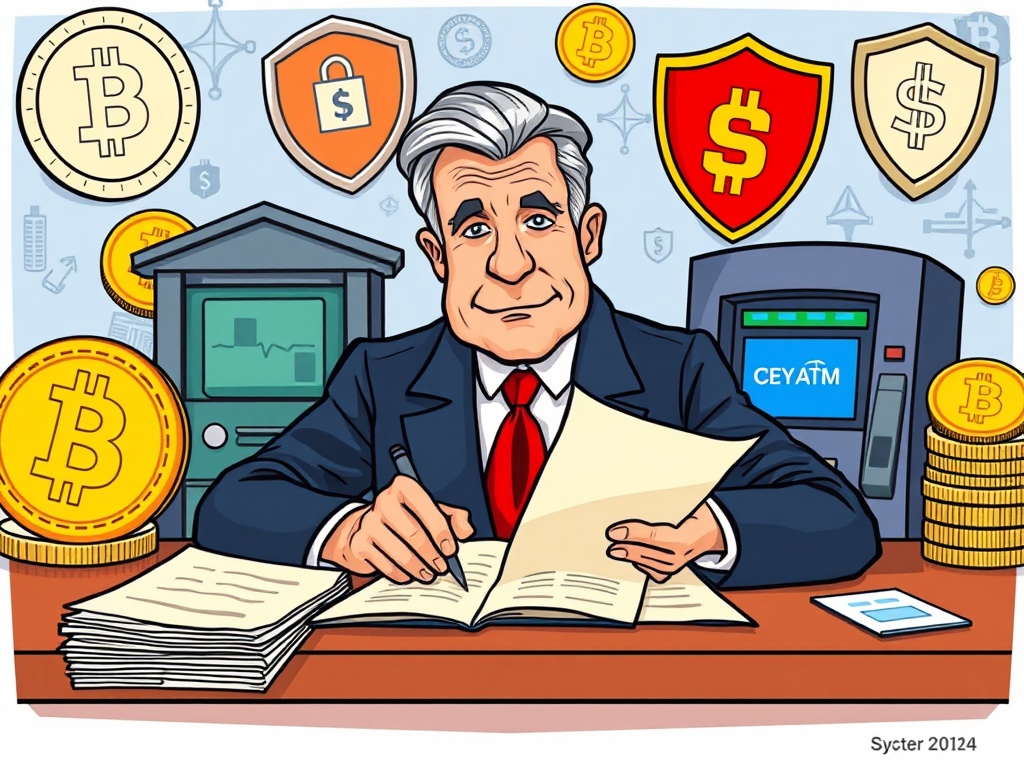
BitcoinWorld Crucial Crypto Consumer Protections: Illinois Enacts Groundbreaking Laws The digital asset landscape is constantly evolving, bringing both exciting opportunities and new challenges. For a long time, the crypto world operated with minimal oversight, leading to concerns about investor safety. However, a significant shift is underway, particularly in Illinois, where groundbreaking efforts are strengthening crypto consumer protections. This move marks a pivotal moment, setting a precedent for how states can safeguard their citizens in the rapidly expanding digital economy. Why Are Crypto Consumer Protections So Important? In the past, the lack of clear regulations in the crypto space often left consumers vulnerable. Fraud, hacks, and insufficient recourse for victims were common issues. This created an environment where trust could be easily eroded. Therefore, robust crypto consumer protections are not just about compliance; they are about building a secure and trustworthy ecosystem where individuals can engage with digital assets confidently. These new laws aim to bridge the gap between traditional financial safeguards and the innovative world of cryptocurrency. Governor JB Pritzker of Illinois recently took a decisive step, signing two crucial bills into law. These legislative actions reflect a commitment to creating a safer environment for anyone interacting with digital assets, ensuring that Illinois residents benefit from the innovation of crypto without facing undue risks. This progressive stance contrasts sharply with previous federal approaches that favored deregulation, signaling a clear direction for the state’s financial future. Unpacking the Digital Assets and Consumer Protection Act One of the cornerstone pieces of legislation is the Digital Assets and Consumer Protection Act (DACPA). This act grants significant authority to the Illinois Department of Financial and Professional Regulation (IDFPR) over crypto exchanges and businesses operating within the state. The goal is to bring these digital asset firms in line with the standards expected of traditional financial institutions. Key provisions of DACPA include: Financial Safeguards: Firms must maintain adequate financial reserves to protect customer funds. Cybersecurity Measures: Strict protocols are required to prevent data breaches and unauthorized access. Anti-Fraud Measures: Companies must implement robust systems to detect and prevent fraudulent activities. Risk Disclosure: Businesses must clearly inform consumers about the inherent risks associated with crypto investments. Customer Service Standards: Companies are expected to provide responsive and effective customer support, mirroring traditional finance. This comprehensive approach to crypto consumer protections ensures that firms are accountable and that consumers have clear avenues for assistance and recourse. Regulating Crypto ATMs: The Digital Asset Kiosk Act Beyond exchanges, the second bill, the Digital Asset Kiosk Act, specifically targets the growing number of crypto ATMs. These kiosks, while convenient, have sometimes been exploited for scams, leaving victims with little recourse. Illinois is now stepping up to regulate this segment, enhancing crypto consumer protections at the point of transaction. The new regulations for crypto ATMs include: Operator Registration: All crypto ATM operators must register with the state, increasing transparency. Refund Obligations: Operators are now mandated to provide refunds to victims of scams facilitated through their kiosks. Fee Cap: A significant measure is the 18% fee cap on transactions, preventing exorbitant charges. Daily Transaction Limit: For new users, a $2,500 daily transaction limit is imposed, acting as a safeguard against large, potentially fraudulent transactions. These measures are designed to curb illicit activities and ensure fair practices for individuals using crypto ATMs, making them a safer entry point into the digital asset world. What Do These Crypto Consumer Protections Mean for You? For residents of Illinois, these new laws bring a much-needed layer of security and trust to the crypto landscape. Whether you are an experienced investor or new to digital assets, you can now interact with greater confidence, knowing that specific safeguards are in place. The state’s proactive stance on crypto consumer protections serves as a model for other jurisdictions considering how to regulate this dynamic industry effectively. Governor Pritzker emphasized that these are “common-sense protections for investors and consumers.” This legislation highlights a growing recognition among policymakers that while innovation is vital, it must be balanced with robust oversight to prevent harm. As the crypto market continues to mature, such regulatory frameworks will play a crucial role in fostering broader adoption and ensuring long-term stability. Summary of Enhanced Security Illinois has truly set a benchmark with its comprehensive approach to digital asset regulation. By signing the Digital Assets and Consumer Protection Act and the Digital Asset Kiosk Act, Governor Pritzker has championed significant crypto consumer protections. These laws not only provide clarity for businesses but also empower consumers with greater security, transparency, and recourse. This proactive legislative action is a testament to Illinois’ commitment to fostering a responsible and secure digital economy for everyone. Frequently Asked Questions (FAQs) What are the two new crypto bills signed in Illinois? Illinois Governor JB Pritzker signed two bills: the Digital Assets and Consumer Protection Act and the Digital Asset Kiosk Act. Both aim to enhance crypto consumer protections within the state. What does the Digital Assets and Consumer Protection Act cover? This act grants the Illinois Department of Financial and Professional Regulation (IDFPR) authority over crypto exchanges and businesses. It requires them to maintain financial safeguards, adopt cybersecurity and anti-fraud measures, disclose investment risks, and follow customer service standards similar to traditional finance. How does the Digital Asset Kiosk Act protect consumers? The Digital Asset Kiosk Act regulates crypto ATMs. It mandates operator registration, requires refund obligations for scam victims, sets an 18% fee cap, and imposes a $2,500 daily transaction limit for new users. What is the fee cap for crypto ATMs in Illinois? The Digital Asset Kiosk Act introduces an 18% fee cap on transactions conducted at crypto ATMs in Illinois, aiming to prevent excessive charges. Why did Illinois enact these laws? Illinois enacted these laws to provide common-sense protections for investors and consumers in the digital asset space. The aim is to create a more secure and trustworthy environment for interacting with cryptocurrencies, addressing previous vulnerabilities and risks. Did you find this information helpful? Share this article with your friends and on social media to spread awareness about these important new crypto consumer protections in Illinois! To learn more about the latest crypto market trends, explore our article on key developments shaping Bitcoin price action. This post Crucial Crypto Consumer Protections: Illinois Enacts Groundbreaking Laws first appeared on BitcoinWorld and is written by Editorial TeamBitcoinWorld Crucial Crypto Consumer Protections: Illinois Enacts Groundbreaking Laws The digital asset landscape is constantly evolving, bringing both exciting opportunities and new challenges. For a long time, the crypto world operated with minimal oversight, leading to concerns about investor safety. However, a significant shift is underway, particularly in Illinois, where groundbreaking efforts are strengthening crypto consumer protections. This move marks a pivotal moment, setting a precedent for how states can safeguard their citizens in the rapidly expanding digital economy. Why Are Crypto Consumer Protections So Important? In the past, the lack of clear regulations in the crypto space often left consumers vulnerable. Fraud, hacks, and insufficient recourse for victims were common issues. This created an environment where trust could be easily eroded. Therefore, robust crypto consumer protections are not just about compliance; they are about building a secure and trustworthy ecosystem where individuals can engage with digital assets confidently. These new laws aim to bridge the gap between traditional financial safeguards and the innovative world of cryptocurrency. Governor JB Pritzker of Illinois recently took a decisive step, signing two crucial bills into law. These legislative actions reflect a commitment to creating a safer environment for anyone interacting with digital assets, ensuring that Illinois residents benefit from the innovation of crypto without facing undue risks. This progressive stance contrasts sharply with previous federal approaches that favored deregulation, signaling a clear direction for the state’s financial future. Unpacking the Digital Assets and Consumer Protection Act One of the cornerstone pieces of legislation is the Digital Assets and Consumer Protection Act (DACPA). This act grants significant authority to the Illinois Department of Financial and Professional Regulation (IDFPR) over crypto exchanges and businesses operating within the state. The goal is to bring these digital asset firms in line with the standards expected of traditional financial institutions. Key provisions of DACPA include: Financial Safeguards: Firms must maintain adequate financial reserves to protect customer funds. Cybersecurity Measures: Strict protocols are required to prevent data breaches and unauthorized access. Anti-Fraud Measures: Companies must implement robust systems to detect and prevent fraudulent activities. Risk Disclosure: Businesses must clearly inform consumers about the inherent risks associated with crypto investments. Customer Service Standards: Companies are expected to provide responsive and effective customer support, mirroring traditional finance. This comprehensive approach to crypto consumer protections ensures that firms are accountable and that consumers have clear avenues for assistance and recourse. Regulating Crypto ATMs: The Digital Asset Kiosk Act Beyond exchanges, the second bill, the Digital Asset Kiosk Act, specifically targets the growing number of crypto ATMs. These kiosks, while convenient, have sometimes been exploited for scams, leaving victims with little recourse. Illinois is now stepping up to regulate this segment, enhancing crypto consumer protections at the point of transaction. The new regulations for crypto ATMs include: Operator Registration: All crypto ATM operators must register with the state, increasing transparency. Refund Obligations: Operators are now mandated to provide refunds to victims of scams facilitated through their kiosks. Fee Cap: A significant measure is the 18% fee cap on transactions, preventing exorbitant charges. Daily Transaction Limit: For new users, a $2,500 daily transaction limit is imposed, acting as a safeguard against large, potentially fraudulent transactions. These measures are designed to curb illicit activities and ensure fair practices for individuals using crypto ATMs, making them a safer entry point into the digital asset world. What Do These Crypto Consumer Protections Mean for You? For residents of Illinois, these new laws bring a much-needed layer of security and trust to the crypto landscape. Whether you are an experienced investor or new to digital assets, you can now interact with greater confidence, knowing that specific safeguards are in place. The state’s proactive stance on crypto consumer protections serves as a model for other jurisdictions considering how to regulate this dynamic industry effectively. Governor Pritzker emphasized that these are “common-sense protections for investors and consumers.” This legislation highlights a growing recognition among policymakers that while innovation is vital, it must be balanced with robust oversight to prevent harm. As the crypto market continues to mature, such regulatory frameworks will play a crucial role in fostering broader adoption and ensuring long-term stability. Summary of Enhanced Security Illinois has truly set a benchmark with its comprehensive approach to digital asset regulation. By signing the Digital Assets and Consumer Protection Act and the Digital Asset Kiosk Act, Governor Pritzker has championed significant crypto consumer protections. These laws not only provide clarity for businesses but also empower consumers with greater security, transparency, and recourse. This proactive legislative action is a testament to Illinois’ commitment to fostering a responsible and secure digital economy for everyone. Frequently Asked Questions (FAQs) What are the two new crypto bills signed in Illinois? Illinois Governor JB Pritzker signed two bills: the Digital Assets and Consumer Protection Act and the Digital Asset Kiosk Act. Both aim to enhance crypto consumer protections within the state. What does the Digital Assets and Consumer Protection Act cover? This act grants the Illinois Department of Financial and Professional Regulation (IDFPR) authority over crypto exchanges and businesses. It requires them to maintain financial safeguards, adopt cybersecurity and anti-fraud measures, disclose investment risks, and follow customer service standards similar to traditional finance. How does the Digital Asset Kiosk Act protect consumers? The Digital Asset Kiosk Act regulates crypto ATMs. It mandates operator registration, requires refund obligations for scam victims, sets an 18% fee cap, and imposes a $2,500 daily transaction limit for new users. What is the fee cap for crypto ATMs in Illinois? The Digital Asset Kiosk Act introduces an 18% fee cap on transactions conducted at crypto ATMs in Illinois, aiming to prevent excessive charges. Why did Illinois enact these laws? Illinois enacted these laws to provide common-sense protections for investors and consumers in the digital asset space. The aim is to create a more secure and trustworthy environment for interacting with cryptocurrencies, addressing previous vulnerabilities and risks. Did you find this information helpful? Share this article with your friends and on social media to spread awareness about these important new crypto consumer protections in Illinois! To learn more about the latest crypto market trends, explore our article on key developments shaping Bitcoin price action. This post Crucial Crypto Consumer Protections: Illinois Enacts Groundbreaking Laws first appeared on BitcoinWorld and is written by Editorial Team

Crucial Crypto Consumer Protections: Illinois Enacts Groundbreaking Laws

2025/08/19 12:05
Okuma süresi: 6 dk
Bu içerikle ilgili geri bildirim veya endişeleriniz için lütfen [email protected] üzerinden bizimle iletişime geçin.

BitcoinWorld

Crucial Crypto Consumer Protections: Illinois Enacts Groundbreaking Laws

The digital asset landscape is constantly evolving, bringing both exciting opportunities and new challenges. For a long time, the crypto world operated with minimal oversight, leading to concerns about investor safety. However, a significant shift is underway, particularly in Illinois, where groundbreaking efforts are strengthening crypto consumer protections. This move marks a pivotal moment, setting a precedent for how states can safeguard their citizens in the rapidly expanding digital economy.

Why Are Crypto Consumer Protections So Important?

In the past, the lack of clear regulations in the crypto space often left consumers vulnerable. Fraud, hacks, and insufficient recourse for victims were common issues. This created an environment where trust could be easily eroded. Therefore, robust crypto consumer protections are not just about compliance; they are about building a secure and trustworthy ecosystem where individuals can engage with digital assets confidently. These new laws aim to bridge the gap between traditional financial safeguards and the innovative world of cryptocurrency.

Governor JB Pritzker of Illinois recently took a decisive step, signing two crucial bills into law. These legislative actions reflect a commitment to creating a safer environment for anyone interacting with digital assets, ensuring that Illinois residents benefit from the innovation of crypto without facing undue risks. This progressive stance contrasts sharply with previous federal approaches that favored deregulation, signaling a clear direction for the state’s financial future.

Unpacking the Digital Assets and Consumer Protection Act

One of the cornerstone pieces of legislation is the Digital Assets and Consumer Protection Act (DACPA). This act grants significant authority to the Illinois Department of Financial and Professional Regulation (IDFPR) over crypto exchanges and businesses operating within the state. The goal is to bring these digital asset firms in line with the standards expected of traditional financial institutions.

Key provisions of DACPA include:

  • Financial Safeguards: Firms must maintain adequate financial reserves to protect customer funds.
  • Cybersecurity Measures: Strict protocols are required to prevent data breaches and unauthorized access.
  • Anti-Fraud Measures: Companies must implement robust systems to detect and prevent fraudulent activities.
  • Risk Disclosure: Businesses must clearly inform consumers about the inherent risks associated with crypto investments.
  • Customer Service Standards: Companies are expected to provide responsive and effective customer support, mirroring traditional finance.

This comprehensive approach to crypto consumer protections ensures that firms are accountable and that consumers have clear avenues for assistance and recourse.

Regulating Crypto ATMs: The Digital Asset Kiosk Act

Beyond exchanges, the second bill, the Digital Asset Kiosk Act, specifically targets the growing number of crypto ATMs. These kiosks, while convenient, have sometimes been exploited for scams, leaving victims with little recourse. Illinois is now stepping up to regulate this segment, enhancing crypto consumer protections at the point of transaction.

The new regulations for crypto ATMs include:

  • Operator Registration: All crypto ATM operators must register with the state, increasing transparency.
  • Refund Obligations: Operators are now mandated to provide refunds to victims of scams facilitated through their kiosks.
  • Fee Cap: A significant measure is the 18% fee cap on transactions, preventing exorbitant charges.
  • Daily Transaction Limit: For new users, a $2,500 daily transaction limit is imposed, acting as a safeguard against large, potentially fraudulent transactions.

These measures are designed to curb illicit activities and ensure fair practices for individuals using crypto ATMs, making them a safer entry point into the digital asset world.

What Do These Crypto Consumer Protections Mean for You?

For residents of Illinois, these new laws bring a much-needed layer of security and trust to the crypto landscape. Whether you are an experienced investor or new to digital assets, you can now interact with greater confidence, knowing that specific safeguards are in place. The state’s proactive stance on crypto consumer protections serves as a model for other jurisdictions considering how to regulate this dynamic industry effectively.

Governor Pritzker emphasized that these are “common-sense protections for investors and consumers.” This legislation highlights a growing recognition among policymakers that while innovation is vital, it must be balanced with robust oversight to prevent harm. As the crypto market continues to mature, such regulatory frameworks will play a crucial role in fostering broader adoption and ensuring long-term stability.

Summary of Enhanced Security

Illinois has truly set a benchmark with its comprehensive approach to digital asset regulation. By signing the Digital Assets and Consumer Protection Act and the Digital Asset Kiosk Act, Governor Pritzker has championed significant crypto consumer protections. These laws not only provide clarity for businesses but also empower consumers with greater security, transparency, and recourse. This proactive legislative action is a testament to Illinois’ commitment to fostering a responsible and secure digital economy for everyone.

Frequently Asked Questions (FAQs)

What are the two new crypto bills signed in Illinois?

Illinois Governor JB Pritzker signed two bills: the Digital Assets and Consumer Protection Act and the Digital Asset Kiosk Act. Both aim to enhance crypto consumer protections within the state.

What does the Digital Assets and Consumer Protection Act cover?

This act grants the Illinois Department of Financial and Professional Regulation (IDFPR) authority over crypto exchanges and businesses. It requires them to maintain financial safeguards, adopt cybersecurity and anti-fraud measures, disclose investment risks, and follow customer service standards similar to traditional finance.

How does the Digital Asset Kiosk Act protect consumers?

The Digital Asset Kiosk Act regulates crypto ATMs. It mandates operator registration, requires refund obligations for scam victims, sets an 18% fee cap, and imposes a $2,500 daily transaction limit for new users.

What is the fee cap for crypto ATMs in Illinois?

The Digital Asset Kiosk Act introduces an 18% fee cap on transactions conducted at crypto ATMs in Illinois, aiming to prevent excessive charges.

Why did Illinois enact these laws?

Illinois enacted these laws to provide common-sense protections for investors and consumers in the digital asset space. The aim is to create a more secure and trustworthy environment for interacting with cryptocurrencies, addressing previous vulnerabilities and risks.

Did you find this information helpful? Share this article with your friends and on social media to spread awareness about these important new crypto consumer protections in Illinois!

To learn more about the latest crypto market trends, explore our article on key developments shaping Bitcoin price action.

This post Crucial Crypto Consumer Protections: Illinois Enacts Groundbreaking Laws first appeared on BitcoinWorld and is written by Editorial Team

Piyasa Fırsatı
Brainedge Logosu
Brainedge Fiyatı(LEARN)
$0.006783
$0.006783$0.006783
+0.16%
USD
Brainedge (LEARN) Canlı Fiyat Grafiği
Sorumluluk Reddi: Bu sitede yeniden yayınlanan makaleler, halka açık platformlardan alınmıştır ve yalnızca bilgilendirme amaçlıdır. MEXC'nin görüşlerini yansıtmayabilir. Tüm hakları telif sahiplerine aittir. Herhangi bir içeriğin üçüncü taraf haklarını ihlal ettiğini düşünüyorsanız, kaldırılması için lütfen [email protected] ile iletişime geçin. MEXC, içeriğin doğruluğu, eksiksizliği veya güncelliği konusunda hiçbir garanti vermez ve sağlanan bilgilere dayalı olarak alınan herhangi bir eylemden sorumlu değildir. İçerik, finansal, yasal veya diğer profesyonel tavsiye niteliğinde değildir ve MEXC tarafından bir tavsiye veya onay olarak değerlendirilmemelidir.

Ayrıca Şunları da Beğenebilirsiniz

Facts Vs. Hype: Analyst Examines XRP Supply Shock Theory

Facts Vs. Hype: Analyst Examines XRP Supply Shock Theory

Prominent analyst Cheeky Crypto (203,000 followers on YouTube) set out to verify a fast-spreading claim that XRP’s circulating supply could “vanish overnight,” and his conclusion is more nuanced than the headline suggests: nothing in the ledger disappears, but the amount of XRP that is truly liquid could be far smaller than most dashboards imply—small enough, in his view, to set the stage for an abrupt liquidity squeeze if demand spikes. XRP Supply Shock? The video opens with the host acknowledging his own skepticism—“I woke up to a rumor that XRP supply could vanish overnight. Sounds crazy, right?”—before committing to test the thesis rather than dismiss it. He frames the exercise as an attempt to reconcile a long-standing critique (“XRP’s supply is too large for high prices”) with a rival view taking hold among prominent community voices: that much of the supply counted as “circulating” is effectively unavailable to trade. His first step is a straightforward data check. Pulling public figures, he finds CoinMarketCap showing roughly 59.6 billion XRP as circulating, while XRPScan reports about 64.7 billion. The divergence prompts what becomes the video’s key methodological point: different sources count “circulating” differently. Related Reading: Analyst Sounds Major XRP Warning: Last Chance To Get In As Accumulation Balloons As he explains it, the higher on-ledger number likely includes balances that aggregators exclude or treat as restricted, most notably Ripple’s programmatic escrow. He highlights that Ripple still “holds a chunk of XRP in escrow, about 35.3 billion XRP locked up across multiple wallets, with a nominal schedule of up to 1 billion released per month and unused portions commonly re-escrowed. Those coins exist and are accounted for on-ledger, but “they aren’t actually sitting on exchanges” and are not immediately available to buyers. In his words, “for all intents and purposes, that escrow stash is effectively off of the market.” From there, the analysis moves from headline “circulating supply” to the subtler concept of effective float. Beyond escrow, he argues that large strategic holders—banks, fintechs, or other whales—may sit on material balances without supplying order books. When you strip out escrow and these non-selling stashes, he says, “the effective circulating supply… is actually way smaller than the 59 or even 64 billion figure.” He cites community estimates in the “20 or 30 billion” range for what might be truly liquid at any given moment, while emphasizing that nobody has a precise number. That effective-float framing underpins the crux of his thesis: a potential supply shock if demand accelerates faster than fresh sell-side supply appears. “Price is a dance between supply and demand,” he says; if institutional or sovereign-scale users suddenly need XRP and “the market finds that there isn’t enough XRP readily available,” order books could thin out and prices could “shoot on up, sometimes violently.” His phrase “circulating supply could collapse overnight” is presented not as a claim that tokens are destroyed or removed from the ledger, but as a market-structure scenario in which available inventory to sell dries up quickly because holders won’t part with it. How Could The XRP Supply Shock Happen? On the demand side, he anchors the hypothetical to tokenization. He points to the “very early stages of something huge in finance”—on-chain tokenization of debt, stablecoins, CBDCs and even gold—and argues the XRP Ledger aims to be “the settlement layer” for those assets.He references Ripple CTO David Schwartz’s earlier comments about an XRPL pivot toward tokenized assets and notes that an institutional research shop (Bitwise) has framed XRP as a way to play the tokenization theme. In his construction, if “trillions of dollars in value” begin settling across XRPL rails, working inventories of XRP for bridging, liquidity and settlement could rise sharply, tightening effective float. Related Reading: XRP Bearish Signal: Whales Offload $486 Million In Asset To illustrate, he offers two analogies. First, the “concert tickets” model: you think there are 100,000 tickets (100B supply), but 50,000 are held by the promoter (escrow) and 30,000 by corporate buyers (whales), leaving only 20,000 for the public; if a million people want in, prices explode. Second, a comparison to Bitcoin’s halving: while XRP has no programmatic halving, he proposes that a sudden adoption wave could function like a de facto halving of available supply—“XRP’s version of a halving could actually be the adoption event.” He also updates the narrative context that long dogged XRP. Once derided for “too much supply,” he argues the script has “totally flipped.” He cites the current cycle’s optics—“XRP is sitting above $3 with a market cap north of around $180 billion”—as evidence that raw supply counts did not cap price as tightly as critics claimed, and as a backdrop for why a scarcity narrative is gaining traction. Still, he declines to publish targets or timelines, repeatedly stressing uncertainty and risk. “I’m not a financial adviser… cryptocurrencies are highly volatile,” he reminds viewers, adding that tokenization could take off “on some other platform,” unfold more slowly than enthusiasts expect, or fail to get to “sudden shock” scale. The verdict he offers is deliberately bound. The theory that “XRP supply could vanish overnight” is imprecise on its face; the ledger will not erase coins. But after examining dashboard methodologies, escrow mechanics and the behavior of large holders, he concludes that the effective float could be meaningfully smaller than headline supply figures, and that a fast-developing tokenization use case could, under the right conditions, stress that float. “Overnight is a dramatic way to put it,” he concedes. “The change could actually be very sudden when it comes.” At press time, XRP traded at $3.0198. Featured image created with DALL.E, chart from TradingView.com
Paylaş
NewsBTC2025/09/18 11:00
Shiba Inu Leader Breaks Silence on $2.4M Shibarium Exploit, Confirms Active Recovery
Shiba Inu Leader Breaks Silence on $2.4M Shibarium Exploit, Confirms Active Recovery

The lead developer of Shiba Inu, Shytoshi Kusama, has publicly addressed the Shibarium bridge exploit that occurred recently, draining $2.4 million from the network. After days of speculation about his involvement in managing the crisis, the project leader broke his silence.Kusama emphasized that a special ”war room” has been set up to restore stolen finances and enhance network security. The statement is his first official words since the bridge compromise occurred.”Although I am focusing on AI initiatives to benefit all our tokens, I remain with the developers and leadership in the war room,” Kusama posted on social media platform X. He dismissed claims that he had distanced himself from the project as ”utterly preposterous.”The developer said that the reason behind his silence at first was strategic. Before he could make any statements publicly, he must have taken time to evaluate what he termed a complex and deep situation properly. Kusama also vowed to provide further updates in the official Shiba Inu channels as the team comes up with long-term solutions.Attack Details and Immediate ResponseAs highlighted in our previous article, targeted Shibarium's bridge infrastructure through a sophisticated attack vector. Hackers gained unauthorized access to validator signing keys, compromising the network's security framework.The hackers executed a flash loan to acquire 4.6 million BONE ShibaSwap tokens. The validator power on the network was majority held by them after this purchase. They were able to transfer assets out of Shibarium with this control.The response of Shibarium developers was timely to limit the breach. They instantly halted all validator functions in order to avoid additional exploitation. The team proceeded to deposit the assets under staking in a multisig hardware wallet that is secure.External security companies were involved in the investigation effort. Hexens, Seal 911, and PeckShield are collaborating with internal developers to examine the attack and discover vulnerabilities.The project's key concerns are network stability and the protection of user funds, as underlined by the lead developer, Dhairya. The team is working around the clock to restore normal operations.In an effort to recover the funds, Shiba Inu has offered a bounty worth 5 Ether ($23,000) to the hackers. The bounty offer includes a 30-day deadline with decreasing rewards after seven days.Market Impact and Recovery IncentivesThe exploit caused serious volatility in the marketplace of Shiba Inu ecosystem tokens. SHIB dropped about 6% after the news of the attack. However, The token has bounced back and is currently trading at around $0.00001298 at the time of writing.SHIB Price Source CoinMarketCap
Paylaş
Coinstats2025/09/18 02:25
BlackRock and Marvel Studios Acquire Big Stakes in Mutual Capital

BlackRock and Marvel Studios Acquire Big Stakes in Mutual Capital

BlackRock and Marvel Studios acquire major stakes in Mutual Capital, boosting its role as a leader in asset tokenization.]]>
Paylaş
Crypto News Flash2025/09/18 17:10